2016-12-07

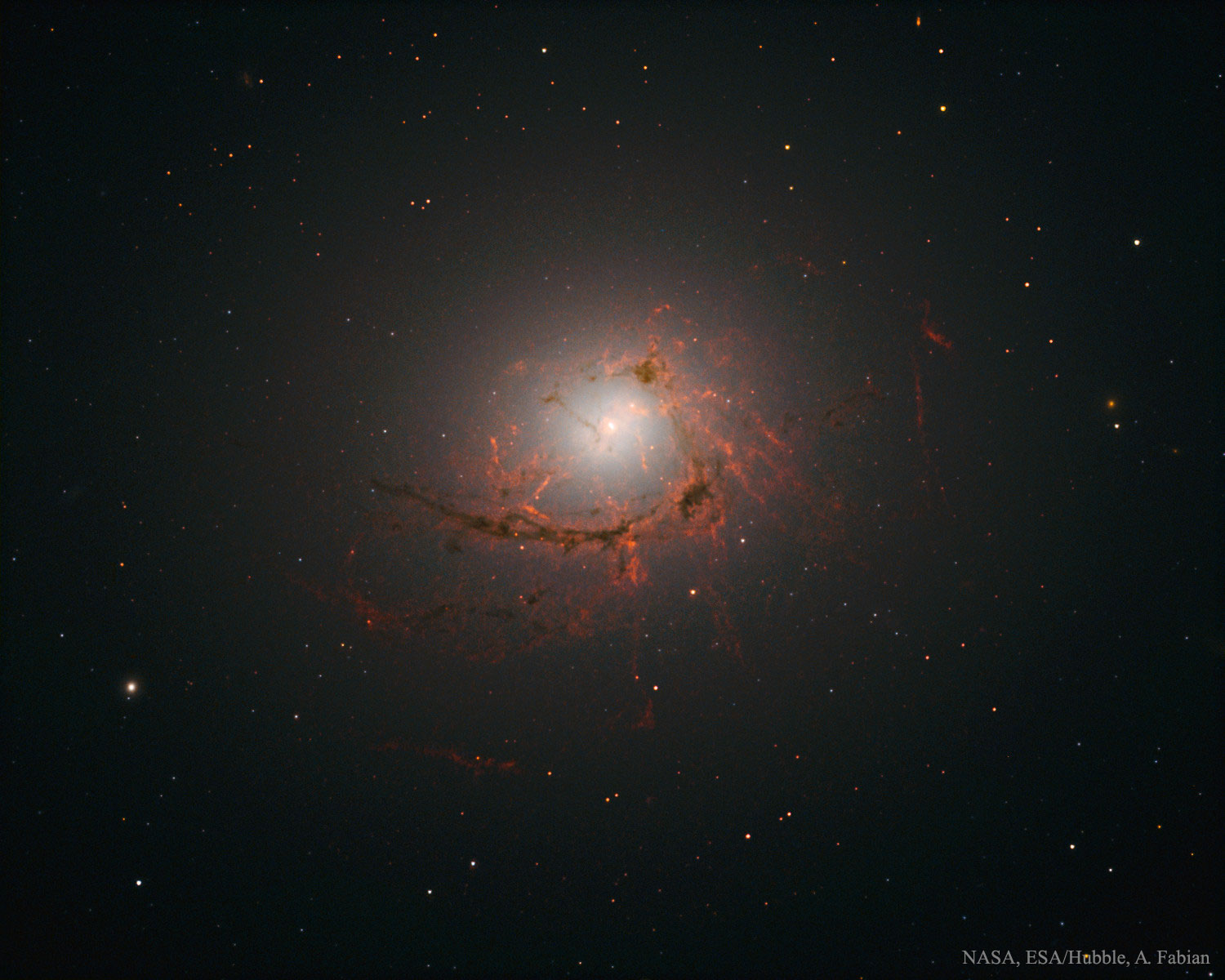
Astronomy picture of the day - 2016 December 7 - NGC 4696: Filaments around a Black Hole

See Explanation.  Clicking on the picture will download
 the highest resolution version available.
NGC 4696: Filaments around a Black Hole 
Image Credit: NASAESAHubbleA. Fabian
Explanation: What's happening at the center of elliptical galaxy NGC 4696? There, long tendrils of gas and dust have been imaged in great detail as shown by this recently released image from the Hubble Space Telescope. These filaments appear to connect to the central region of the galaxy, a region thought occupied by a supermassive black holeSpeculation holds that this black hole pumps out energy that heats surrounding gas, pushes out cooler filaments of gas and dust, and shuts down star formation. Balanced by magnetic fields, these filaments then appear to spiral back in toward and eventually circle the central black holeNGC 4696 is the largest galaxy in the Centaurus Cluster of Galaxies, located about 150 million light years from Earth. The featured image shows a region about 45,000 light years across.

2016-12-06

Astronomy picture of the day - 2016 December 6 - Aurora over Jupiter's South Pole from Juno

See Explanation.  Clicking on the picture will download
 the highest resolution version available.
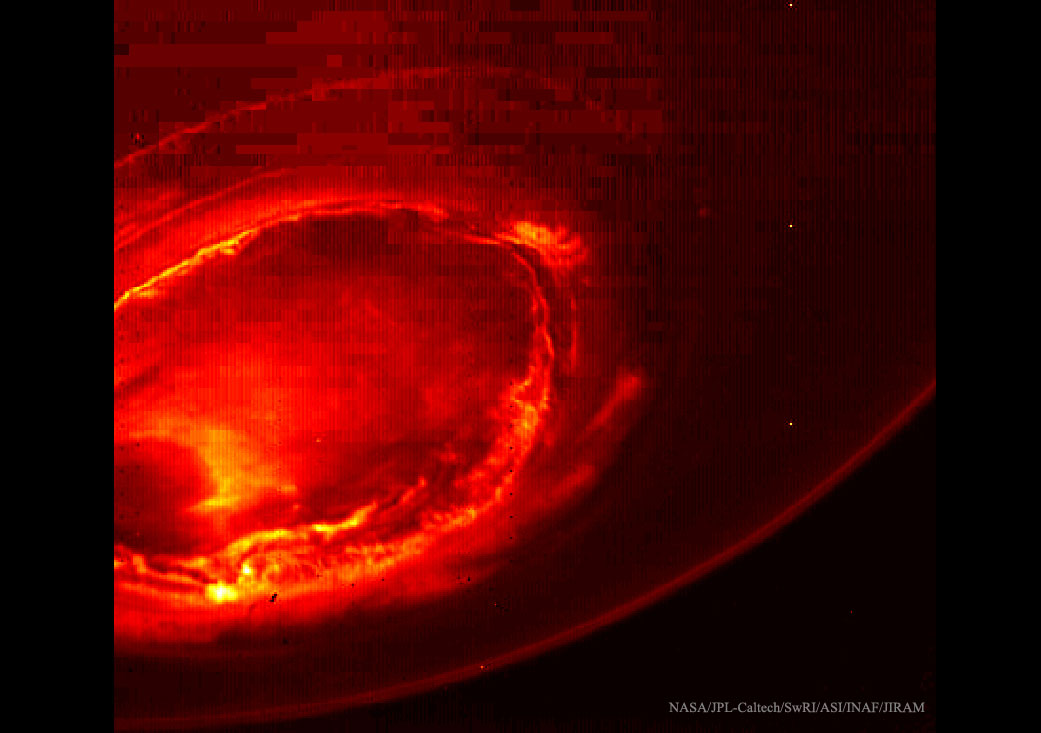
Aurora over Jupiter's South Pole from Juno 
Image Credit: NASAJPL-CaltechSwRIASIINAFJIRAM
Explanation: Why is there a glowing oval over Jupiter's South Pole? Aurora. Near the closest part of its first pass near Jupiter in August, NASA's robotic spacecraft Juno captured this dramatic infrared image of a bright auroral ring. Auroras are caused by high energy particles from the Sun interacting with a planet's magnetic field, and ovals around magnetic poles are common. Data from Juno are giving preliminary indications that Jupiter's magnetic field and aurorae are unexpectedly powerful and complex. Unfortunately, a computer glitch caused Juno to go into safe mode during its last pass near the Jovian giant in September. That glitch has now been resolved, making Juno ready for its next pass over Jupiter's cloud tops this coming Sunday.

2016-12-05

Astronomy picture of the day - 2016 December 5 - Lightning over Colorado

See Explanation.  Clicking on the picture will download
 the highest resolution version available.
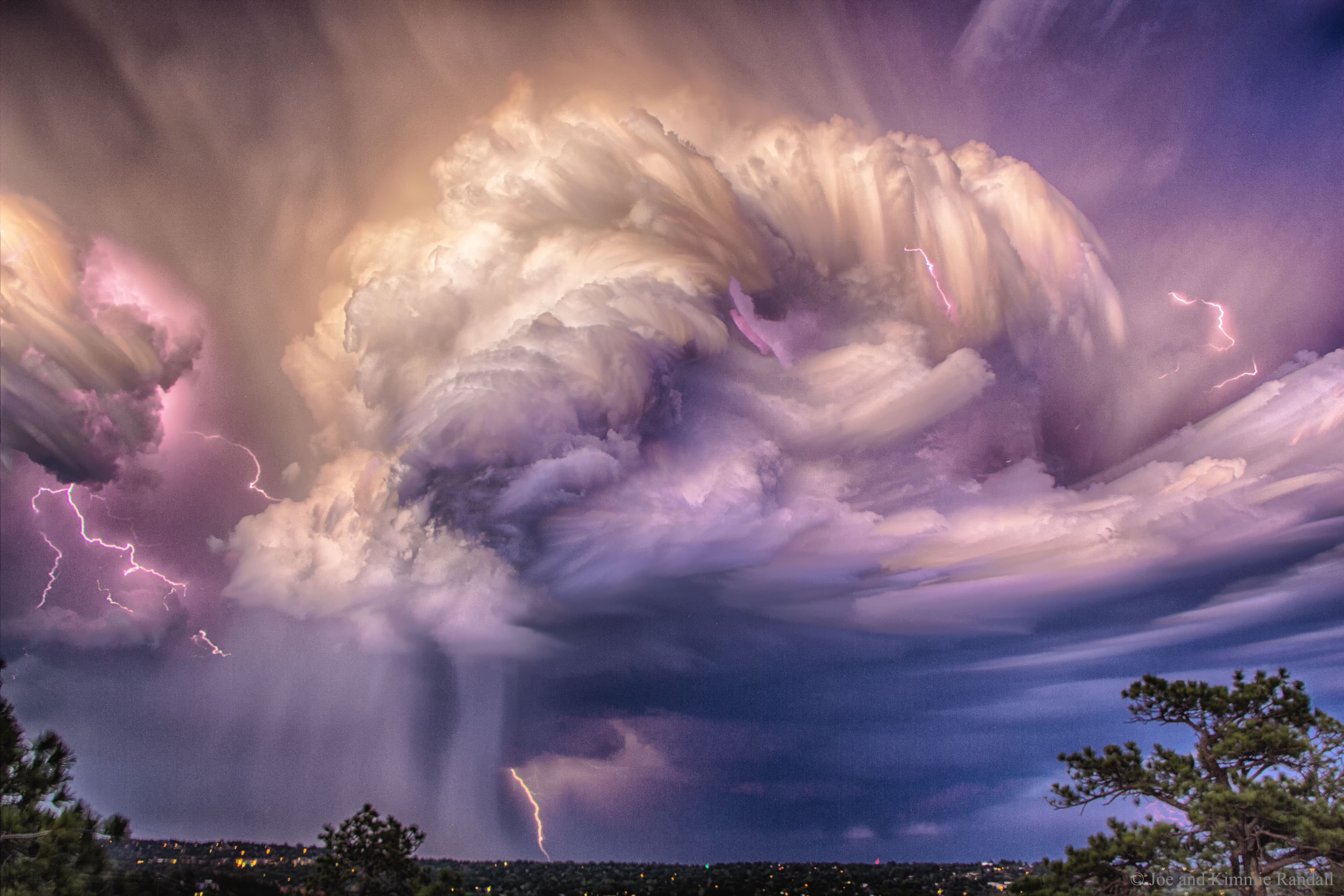
Lightning over Colorado 
Image Credit & Copyright: Joe Randall
Explanation: Have you ever watched a lightning storm in awe? Join the crowd. Oddly, nobody knows exactly how lightning is produced. What is known is that charges slowly separate in some clouds causing rapid electrical discharges (lightning), but how electrical charges get separated in clouds remains a topic of much research. Lightning usually takes a jagged course, rapidly heating a thin column of air to about three times the surface temperature of the Sun. The resulting shock wave starts supersonically and decays into the loud sound known as thunder. Lightning bolts are common in clouds during rainstorms, and on average 44 lightning bolts occur on the Earth every second. Pictured, over 60 images were stacked to capture the flow of lightning-producing storm clouds in July over Colorado SpringsColoradoUSA.

2016-12-04

Astronomy picture of the day - 2016 December 4 - Orion and Official Star Names

See Explanation.
Moving the cursor over the image will bring up an annotated version.
Clicking on the image will bring up the highest resolution version
available.
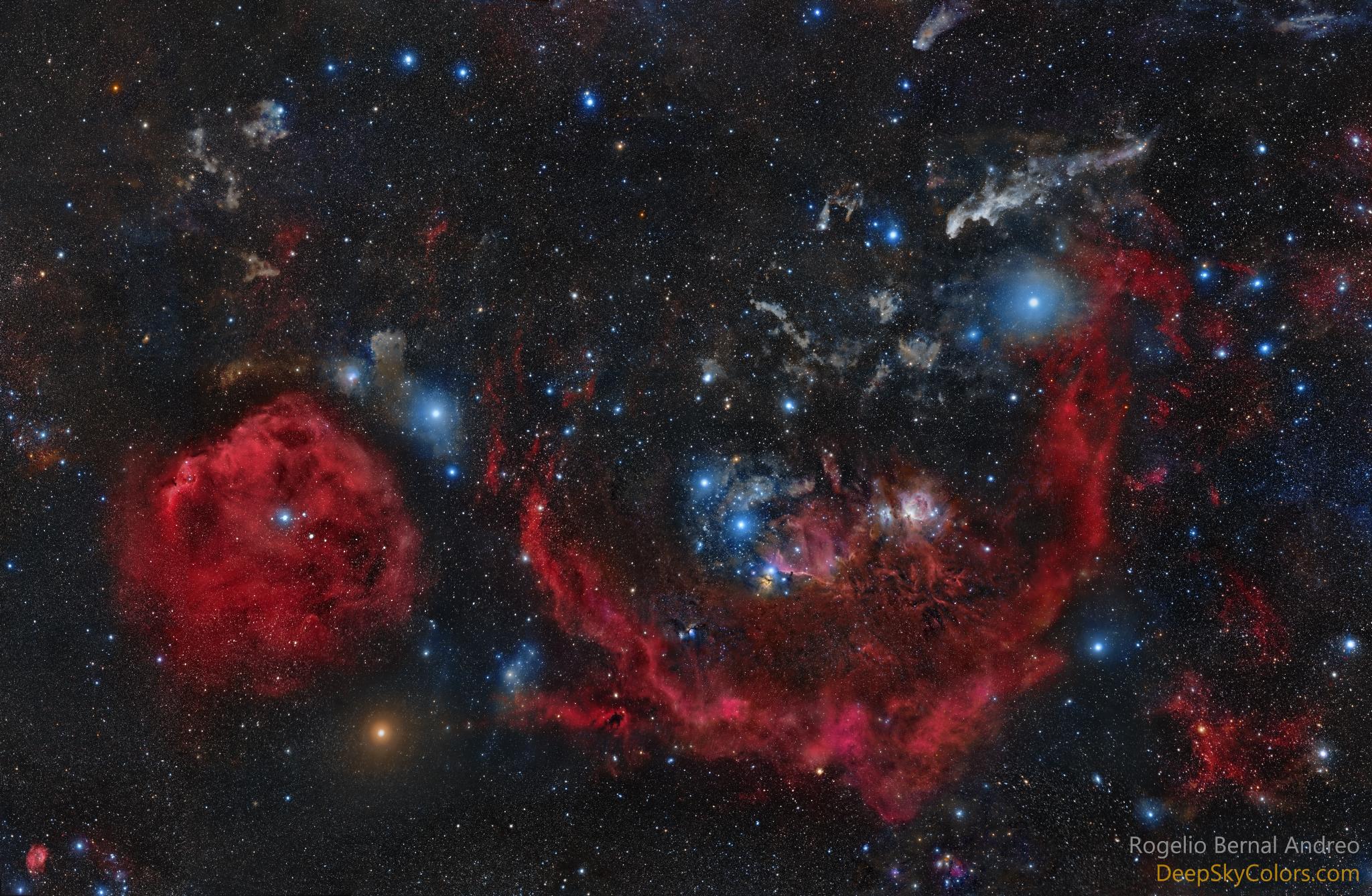
Orion and Official Star Names 
Image Credit & Copyright: Rogelio Bernal Andreo
Explanation: Familiar stars in Orion and constellations across the sky now have official names. Over the past year, the International Astronomical Union, the only body officially tasked with naming stars, approved names already in common use for 227 of the brightest stars, including the most famous stars on the sky SiriusPolaris, and Betelgeuse. Pictured, the constellation of Orion is shown with several of these now-official star names superposed. Spanning about 30 degrees, this breath-taking vista stretches across the well-known constellation from head to toe (left to right) and beyond. The common names for all three stars in Orion's belt are also now official. At 1,500 light years away, the Great Orion Nebula is the closest large star forming region, here visible just right and below center. Also visible are famous nebulae including the Horsehead Nebula and the Witch Head Nebula. Of course, the Orion Nebula and bright stars are easy to see with the unaided eye, but dust clouds and emission from the extensive interstellar gas in this nebula-rich complex, are too faint and much harder to record. In the featured mosaic of broadband telescopic images, additional image data acquired with a narrow hydrogen alpha filter was used to bring out the pervasive tendrils of energized atomic hydrogen gas like in the arc of the giant Barnard's Loop.

2016-12-03

Astronomy picture of the day - 2016 December 3 - Galaxies in Pegasus

See Explanation.  Clicking on the picture will download
 the highest resolution version available.
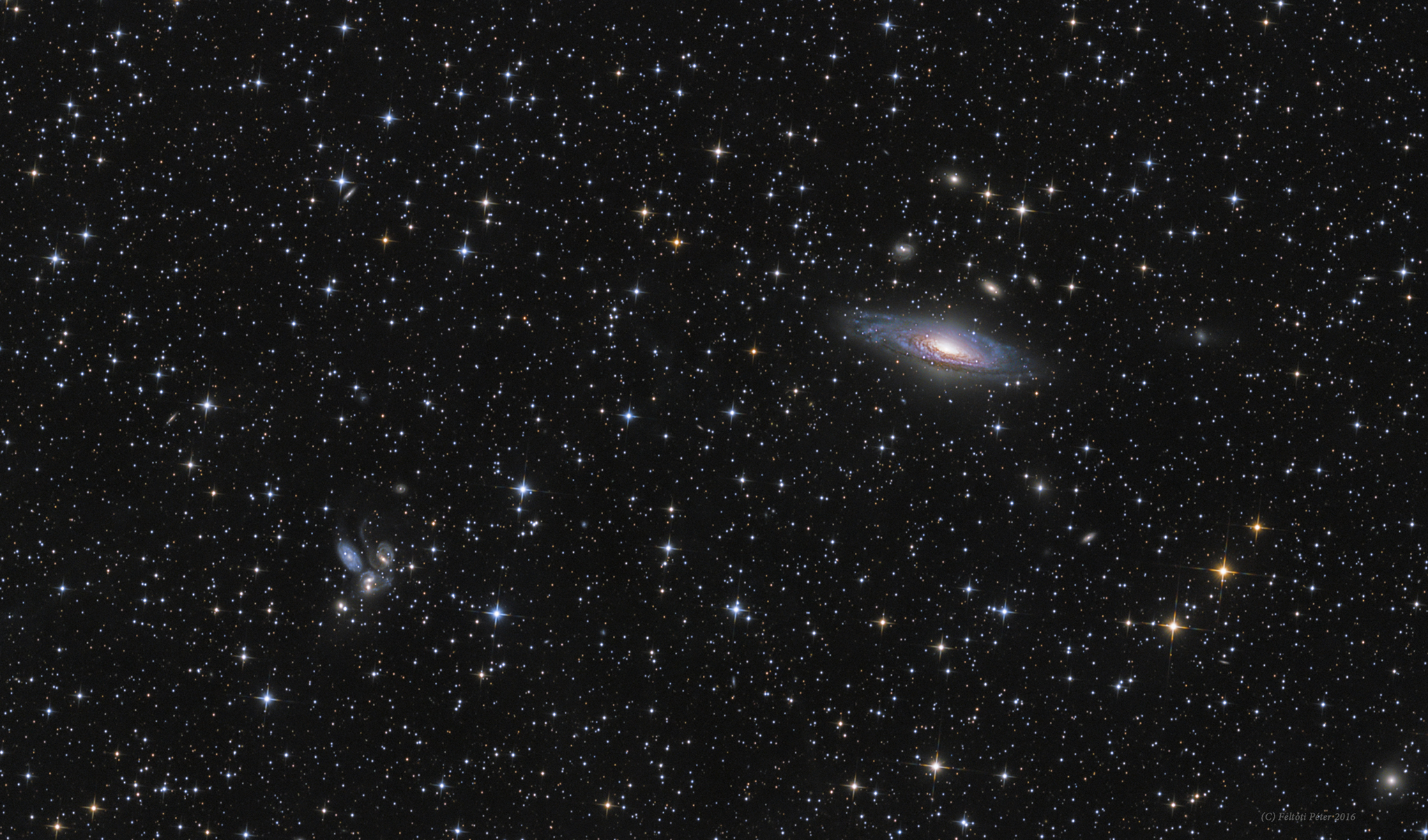
Galaxies in Pegasus 
Image Credit & Copyright: Péter Feltóti
Explanation: This wide, sharp telescopic view reveals galaxies scattered beyond the stars of the Milky Way at the northern boundary of the high-flying constellation Pegasus. Prominent at the upper right is NGC 7331. A mere 50 million light-years away, the large spiral is one of the brighter galaxies not included in Charles Messier's famous 18th century catalog. The disturbed looking group of galaxies at the lower left is well-known as Stephan's Quintet. About 300 million light-years distant, the quintet dramatically illustrates a multiple galaxy collision, its powerful, ongoing interactions posed for a brief cosmic snapshot. On the sky, the quintet and NGC 7331 are separated by about half a degree.

2016-12-02

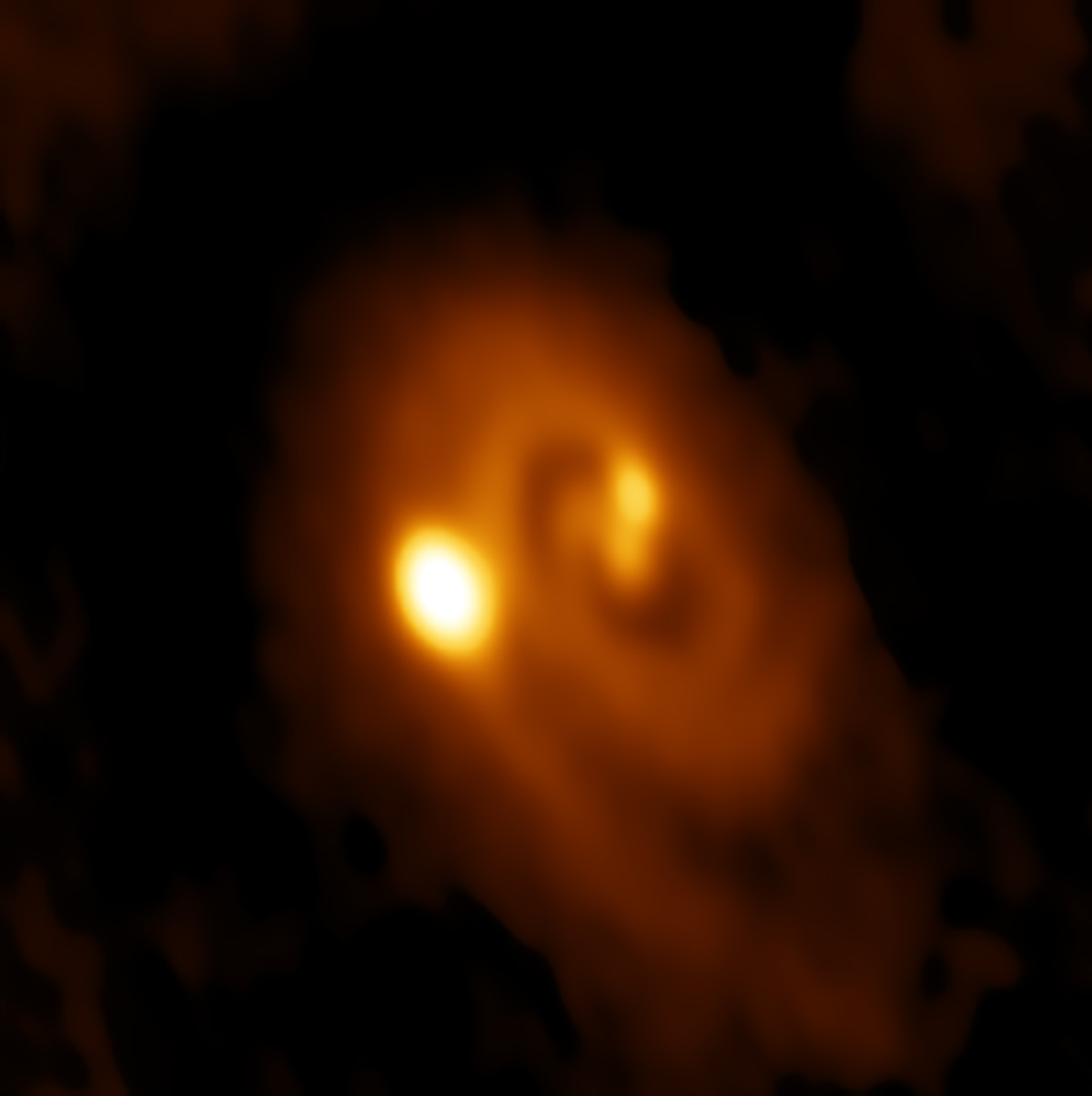
Astronomy picture of the day - 2016 December 2 - A Triple Star is Born

See Explanation.  Clicking on the picture will download
 the highest resolution version available.
A Triple Star is Born 
Image Credit: Bill Saxton, ALMA (ESO/NAOJ/NRAO), NRAO/AUI/NSF - Publication: John Tobin (Univ. Oklahoma/Leiden) et al.
Explanation: A triple star system is forming, enshrouded within this dusty natal disk some 750 light-years away in the Perseus molecular cloud. Imaged at millimeter wavelengths by the Atacama Large Millimeter/submillimeter Array(ALMA) in Chile, the extreme close-up shows two protostars separated by a mere 61 AU (1 AU is the Earth-Sun distance) with a a third some 183 AU from the central protostar. The ALMA image also reveals a clear spiral structure indicating instability and fragmentation led to the multiple protostellar objects within the disk. Astronomers estimate that the system, cataloged as L1448 IRS3B, is less than 150,000 years old. Captured at an early phase, the starforming scenario is likely not at all uncommon, since almost half of all sun-like stars have at least one companion.

2016-12-01

Joe Cocker - "Now that you're gone" - Video - Music

Afficher l'image d'origine
"Now that you're gone"

Expressões populares portuguesas - Ave de mau agouro

Afficher l'image d'origine

Significado: Diz-se de pessoa portadora de más notícias ou que, com a sua presença, anuncia desgraças.

Origem: O conhecimento do futuro é uma das preocupações inerentes ao ser humano. Quase tudo servia para, de maneiras diversas, se tentar obter esse conhecimento. As aves eram um dos recursos que se utilizava. Para se saberem os bons ou maus auspícios (avis spicium) consultavam-se as aves. No tempo dos áugures romanos, a predição dos bons ou maus acontecimentos era feita através da leitura do seu voo, canto ou entranhas. Os pássaros que mais atentamente eram seguidos no seu voo, ouvidos nos seus cantos e aos quais se analisavam as vísceras eram a águia, o abutre, o milhafre, a coruja, o corvo e a gralha. Ainda hoje perdura, popularmente, a conotação funesta com qualquer destas aves.

Palacios cariocas - Palácio Amarelo


Localizado no centro histórico da cidade de Petrópolis, na praça Visconde de Mauá, o Palácio Amarelo foi construído em meados do século XIX e, desde 1897, abriga a sede da Câmara Municipal de Petrópolis.

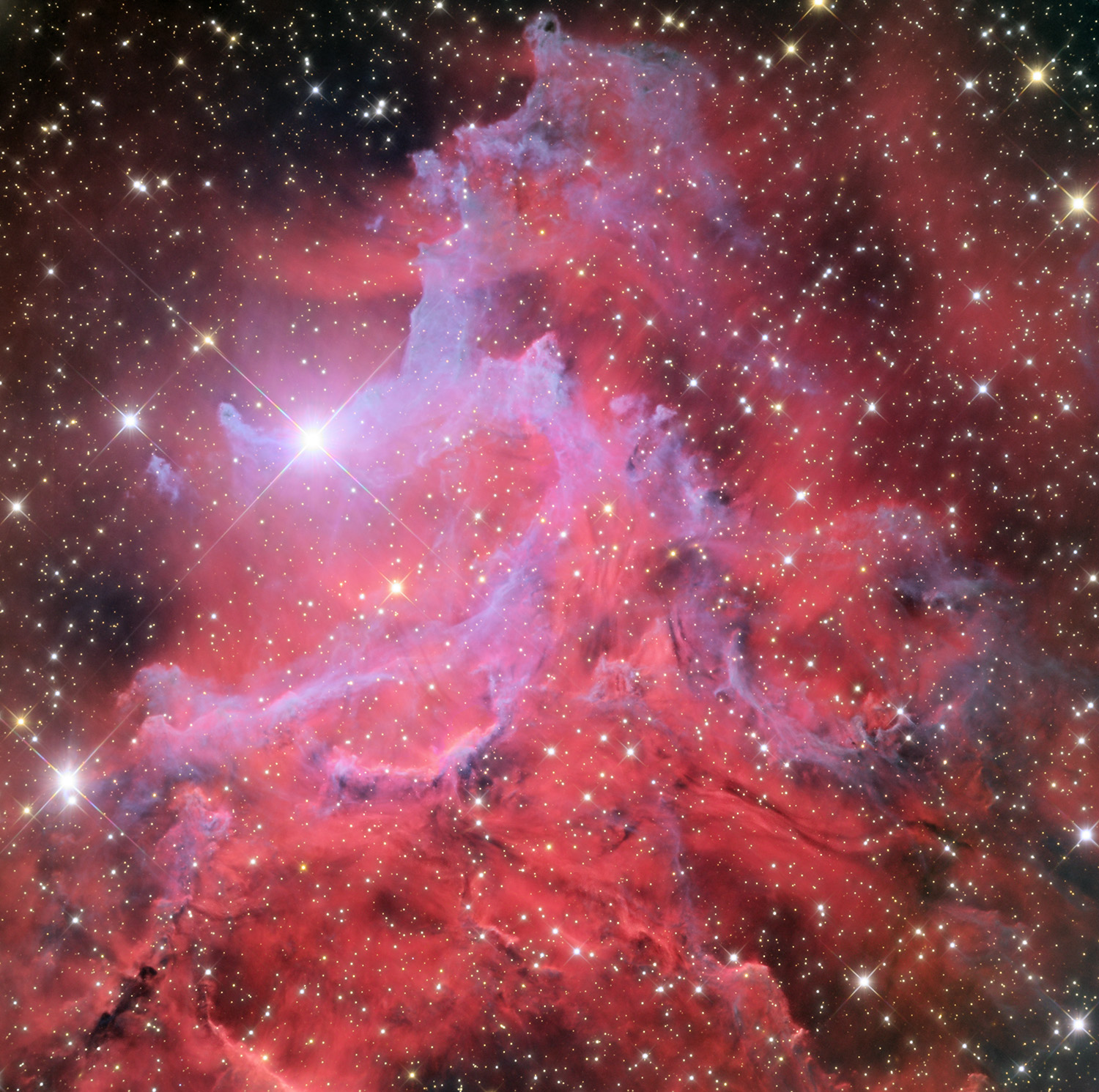
Astronomy picture of the day - 2016 December 1 - Flaming Star Nebula

See Explanation.  Clicking on the picture will download
 the highest resolution version available.
Flaming Star Nebula 
Image Credit & Copyright: Adam BlockMt. Lemmon SkyCenterUniv. Arizona
Explanation: A runaway star lights the Flaming Star Nebula in this cosmic scene. Otherwise known as IC 405, the Flaming Star Nebula's billowing interstellar clouds of gas and dust lie about 1,500 light-years away toward the constellation of Auriga. AE Aurigae, the bright star at upper left in the frame, is a massive and intensely hot O-type star moving rapidly through space, likely ejected from a collision of multiple star-systems in the vicinity of the Orion Nebula millions of years ago. Now close to IC 405, the high-speed star's ionizing ultraviolet radiation powers the visible reddish glow as the nebula's hydrogen atoms are stripped of their electrons and recombine. Its intense blue starlight is reflected by the nebula's dusty filaments. Like all massive stars AE Aurigae will be short-lived though, furiously burning through its supply of fuel for nuclear fusion and exploding as a supernova. The colorful telescopic snapshot spans about 5 light-years at the estimated distance of the Flaming Star Nebula.