Estúdio Horácio Novais, Praça dos Restauradores e avenida da Liberdade, Lisboa, sem data Colecções da Fundação Calouste Gulbenkian, Lisboa, Portugal (Flickr Commons)
2017-02-04
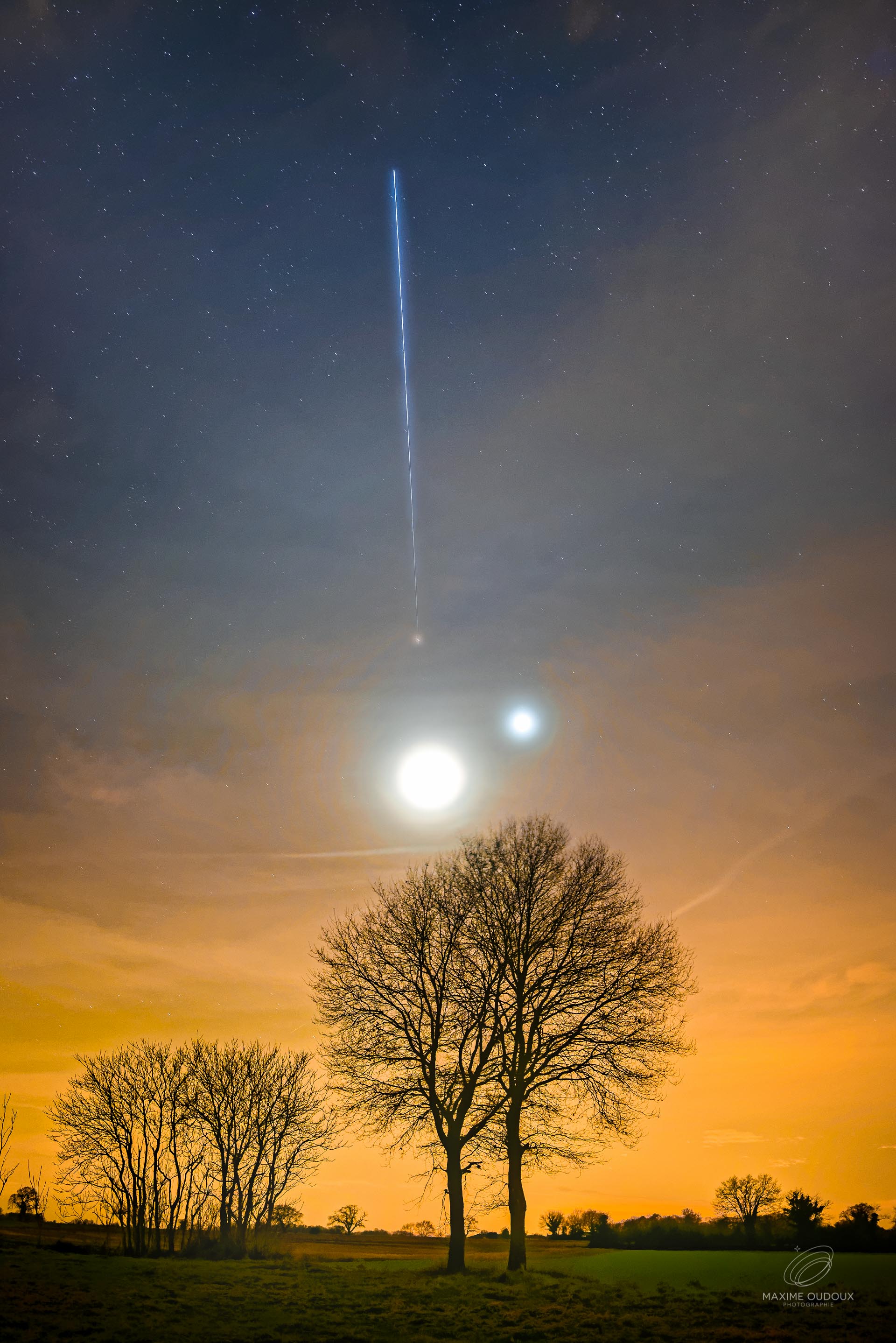
Astronomy picture of the day - 2017 February 4 - Conjunction of Four

Image Credit & Copyright: Maxime Oudoux
Explanation: On January 31, a waxing crescent Moon, brilliant Venus, and fainter Mars gathered in the fading twilight, hanging above the western horizon just after sunset on planet Earth. In this combined evening skyscape, the lovely celestial triangle is seen through clouds and haze. Still glinting in sunlight, from low Earth orbit the International Space Station briefly joined the trio that evening in skies near Le Lude, France. The photographer's line-of-sight to the space station was remarkably close to Mars as the initial exposure began. As a result, the station's bright streak seems to leap from the Red Planet, moving toward darker skies at the top of the frame.
2017-02-03
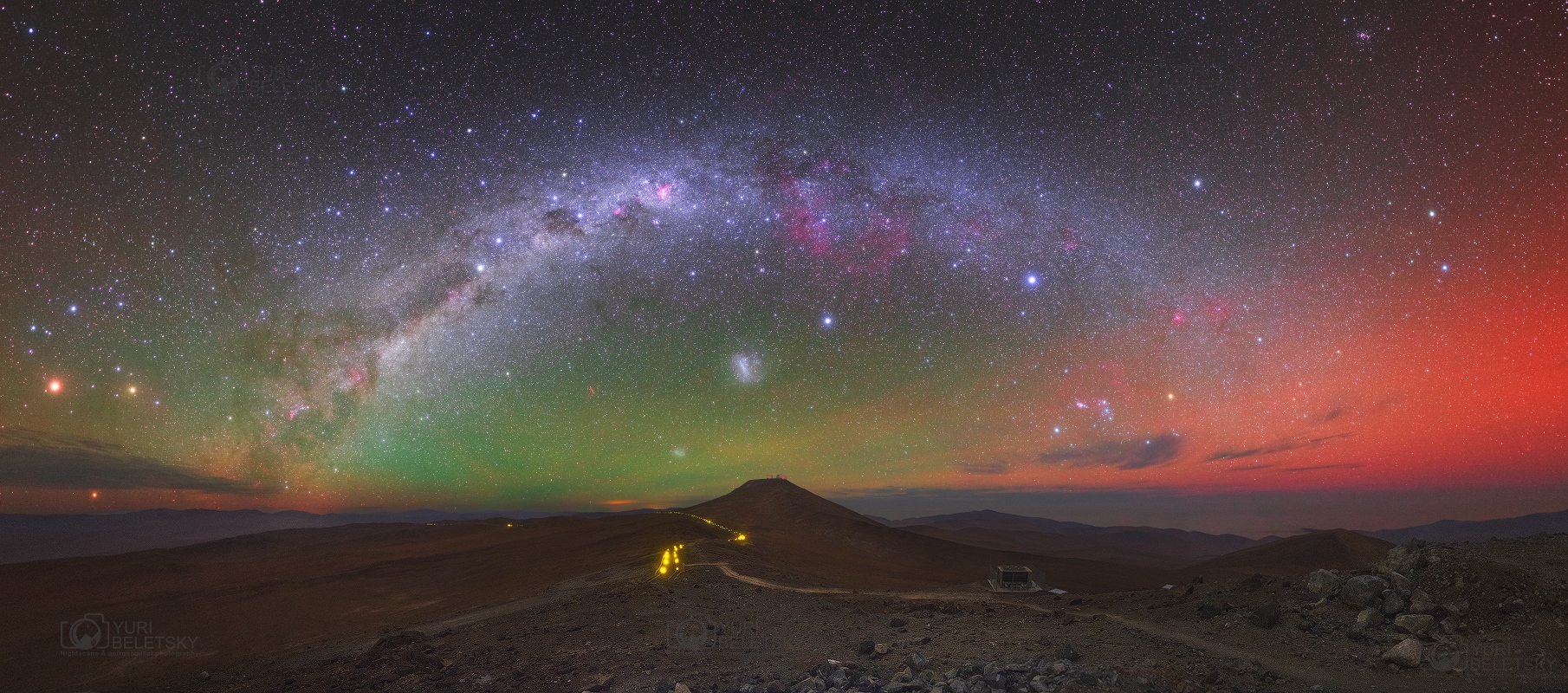
Astronomy picture of the day - 2017 February 3 - Milky Way with Airglow Australis

Image Credit & Copyright: Yuri Beletsky (Carnegie Las Campanas Observatory, TWAN)
Explanation: Captured last April after sunset on a Chilean winter's night an exceptionally intense airglow flooded this scene. The panoramic skyscape is also filled with stars, clusters, and nebulae along the southern Milky Way including the Large and Small Magellanic clouds. Originating at an altitude similar to aurorae, the luminous airglow is due to chemiluminescence, the production of light through chemical excitation. Commonly recorded with a greenish tinge by sensitive digital cameras, both red and green airglow emission here is predominately from atmospheric oxygen atoms at extremely low densities and has often been present in southern hemisphere nights during the last few years. Like theMilky Way on that dark night the strong airglow was visible to the eye, but seen without color. Mars, Saturn, and bright star Antares in Scorpius form the celestial triangle anchoring the scene on the left. The road leads toward the 2,600 meter high mountain Cerro Paranal and the European Southern Observatory's Very Large Telescopes.
2017-02-02
Expressões populares portuguesas - Dose para cavalo
Significado:
Quantidade excessiva; demasiado.
Origem:
Dose para cavalo, dose para elefante ou dose para leão são algumas das variantes que circulam com o mesmo significado e atendem às preferências individuais dos falantes. Supõe-se que o cavalo, por ser forte; o elefante, por ser grande, e o leão, por ser valente, necessitam de doses exageradas de remédio para que este possa produzir o efeito desejado. Com a ampliação do sentido, dose para cavalo e suas variantes é o exagero na ampliação de qualquer coisa desagradável, ou mesmo aquelas que só se tornam desagradáveis com o exagero.
Fotografia - Lisboa noturna - Praça do Rossio em direcção às ruínas do Carmo
Estúdio Horácio Novais, Praça do Rossio em direcção às ruínas do Carmo, Lisboa, sem data Colecções da Fundação Calouste Gulbenkian, Lisboa, Portugal (Flickr Commons)
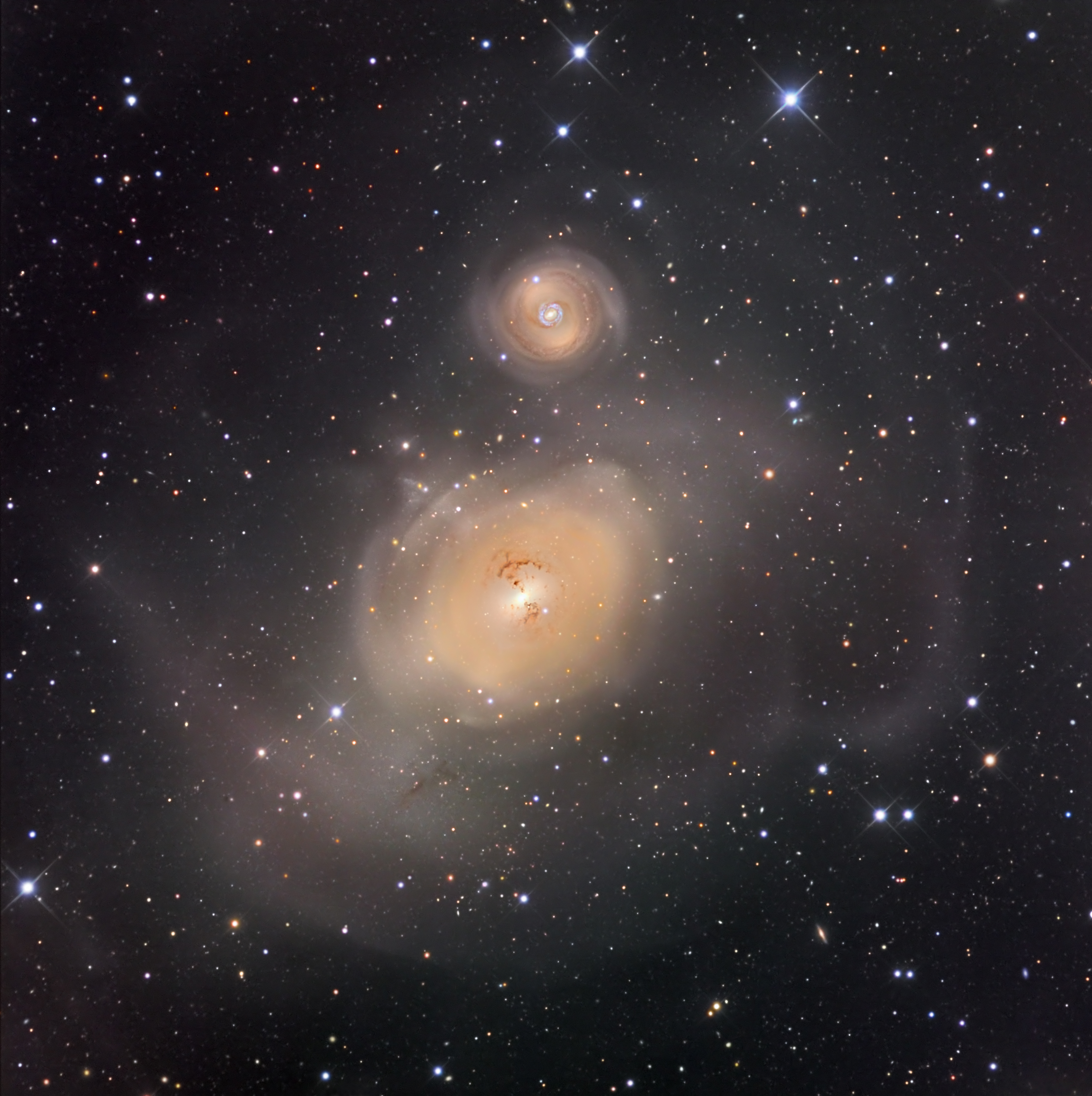
Astronomy picture of the day - 2017 February 2 - NGC 1316: After Galaxies Collide

Image Credit & Copyright: Steve Mazlin, Warren Keller, and Steve Menaker (SSRO / UNC / PROMPT / CTIO)
Explanation: An example of violence on a cosmic scale, enormous elliptical galaxy NGC 1316 lies about 75 million light-years away toward Fornax, the southern constellation of the Furnace. Investigating the startling sight, astronomers suspect the giant galaxy of colliding with smaller neighbor NGC 1317 seen just above, causing far flung loops and shells of stars. Light from their close encounter would have reached Earth some 100 million years ago. In the deep, sharp image, the central regions of NGC 1316 and NGC 1317 appear separated by over 100,000 light-years. Complex dust lanes visible within also indicate that NGC 1316 is itself the result of a merger of galaxies in the distant past. Found on the outskirts of the Fornax galaxy cluster, NGC 1316 is known as Fornax A. One of the visually brightest of the Fornax cluster galaxies it is one of the strongest and largest radio sources with radio emission extending well beyond this telescopic field-of-view, over several degrees on the sky.
2017-02-01
Astronomy picture of the day - 2017 February 1 - Four Planets Orbiting Star HR 8799
Video Credit & CC BY License: J. Wang (UC Berkeley) & C. Marois (Herzberg Astrophysics), NExSS (NASA), Keck Obs.
Explanation: Does life exist outside our Solar System? To help find out, NASA has created the Nexus for Exoplanet System Science (NExSS) to better locate and study distant star systems that hold hope of harboring living inhabitants. A new observational result from a NExSS collaboration is the featured time-lapse video of recently discovered planets orbiting the star HR 8799. The images for the video were taken over seven years from the Keck Observatory in Hawaii. Four exoplanets appear as white dots partially circling their parent star, purposefully occluded in the center. The central star HR 8799 is slightly larger and more massive than our Sun, while each of the planets is thought to be a few times the mass of Jupiter. The HR 8799 system lies about 130 light years away toward the constellation of the Flying Horse (Pegasus). Research will now continue on whether any known or potential planets -- or even moons of these planets -- in the HR 8799 star system could harbor life.
2017-01-31
Expressões populares portuguesas - Dar um lamiré
Origem:
Trata-se da forma aglutinada da expressão «lá, mi, ré», que designa o diapasão, instrumento usado
na afinação de instrumentos ou vozes; a partir deste significado, a expressão foi-se fixando como palavra
autónoma com significação própria, designando qualquer sinal que dê começo a uma actividade.
Historicamente, a expressão «dar um lamiré» está, portanto, ligada à música (cf. Dicionário Houaiss da Língua
Portuguesa).
Nota: Escreve-se lamiré, com o r pronunciado como em caro.
Estúdio Mário Novais, Avenida Almirante Reis, Lisboa, sem data Colecções daFundação Calouste Gulbenkian, Lisboa, Portugal (Flickr Commons)
Inscription à :
Commentaires (Atom)