2017-04-28

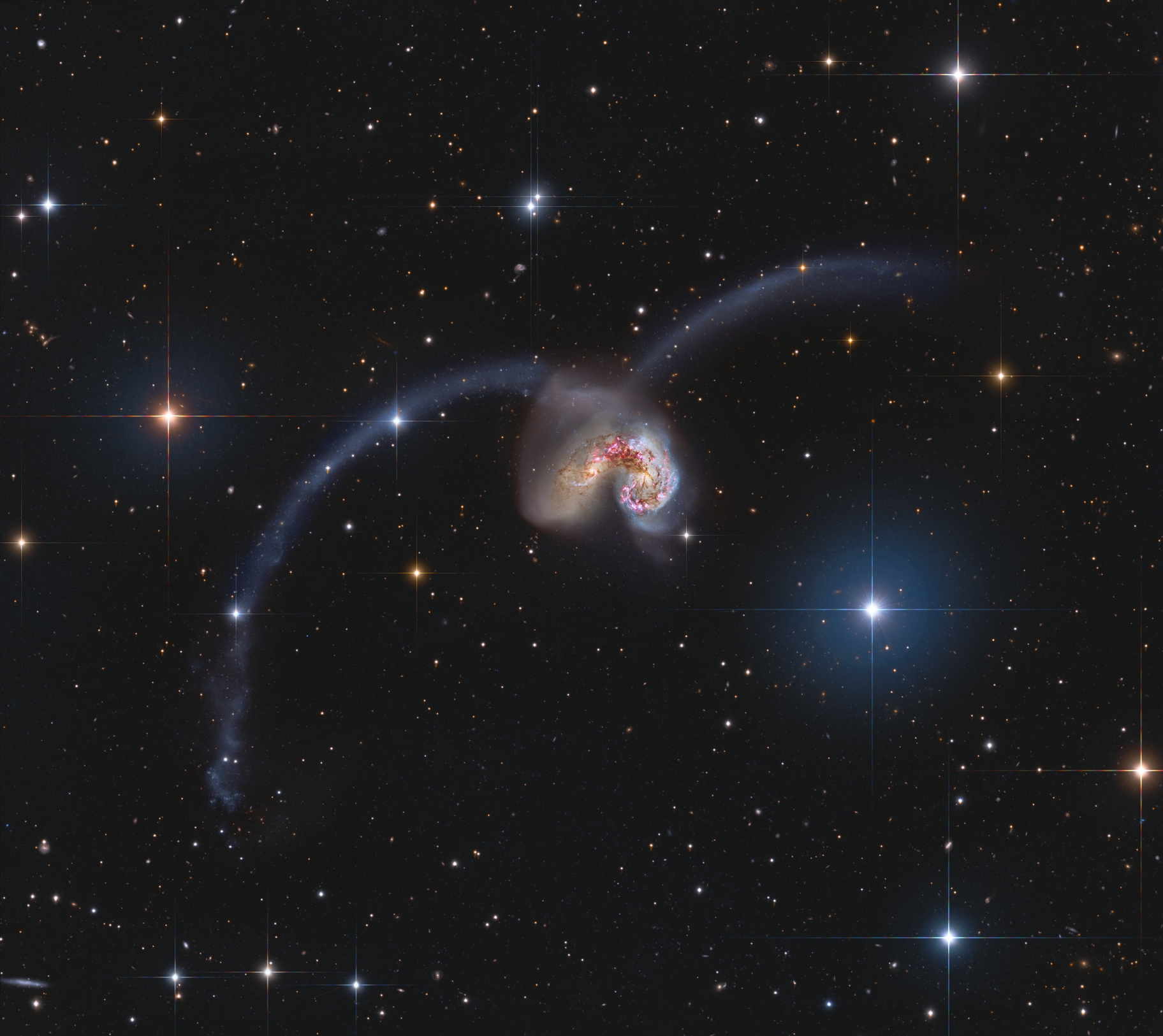
Astromy picture of the day - 2017 April 28 - Exploring the Antennae

See Explanation.  Clicking on the picture will download
 the highest resolution version available.
Exploring the Antennae 
Image Credit & Copyright: Data; Subaru, NAOJNASA/ESA/Hubble - Assembly and Processing; Roberto Colombari


Explanation: Some 60 million light-years away in the southerly constellation Corvus, two large galaxies are colliding. Stars in the two galaxies, cataloged as NGC 4038 and NGC 4039, very rarely collide in the course of theponderous cataclysm that lasts for hundreds of millions of years. But the galaxies' large clouds of molecular gas and dust often do, triggering furious episodes of star formation near the center of the cosmic wreckage. Spanning over 500 thousand light-years, this stunning view also reveals new star clusters and matter flung far from the scene of the accident by gravitational tidal forces. The remarkable mosaicked image was constructed using data from the ground-based Subaru telescope to bring out large-scale and faint tidal streams, and Hubble Space Telescope data of extreme detail in the bright cores. The suggestive visual appearance of the extended arcing structures gives the galaxy pair its popular name - The Antennae.

2017-04-27

Fotos - "Barreiro antigo" (Portugal)

"Barreiro antigo"

Astronomy picture of the day - 2017 April 27 - Lyrids in Southern Skies

See Explanation.
Moving the cursor over the image will bring up an alternate version.
Clicking on the image will bring up the highest resolution version
available.
Lyrids in Southern Skies 
Image Credit & CopyrightYuri Beletsky (Carnegie Las Campanas ObservatoryTWAN)
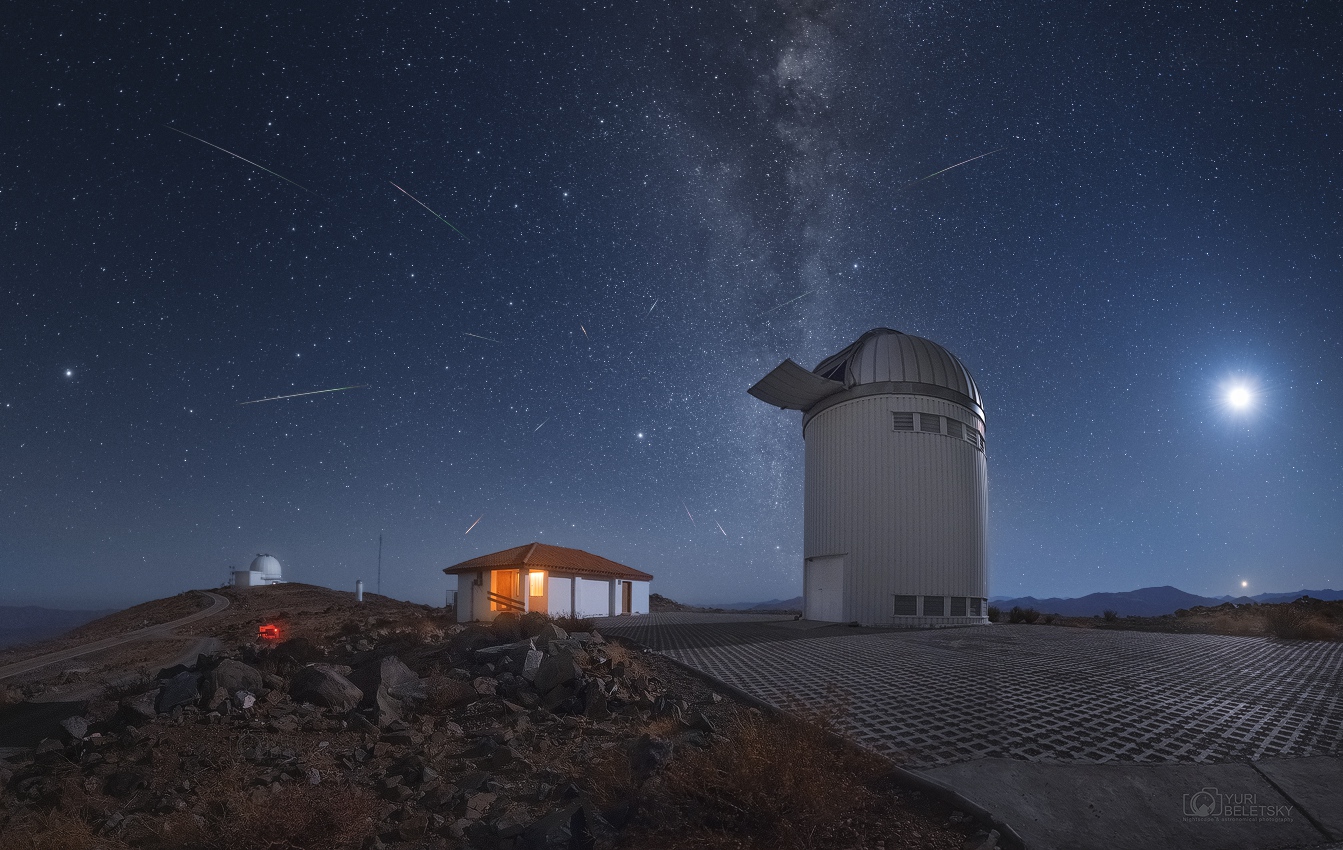
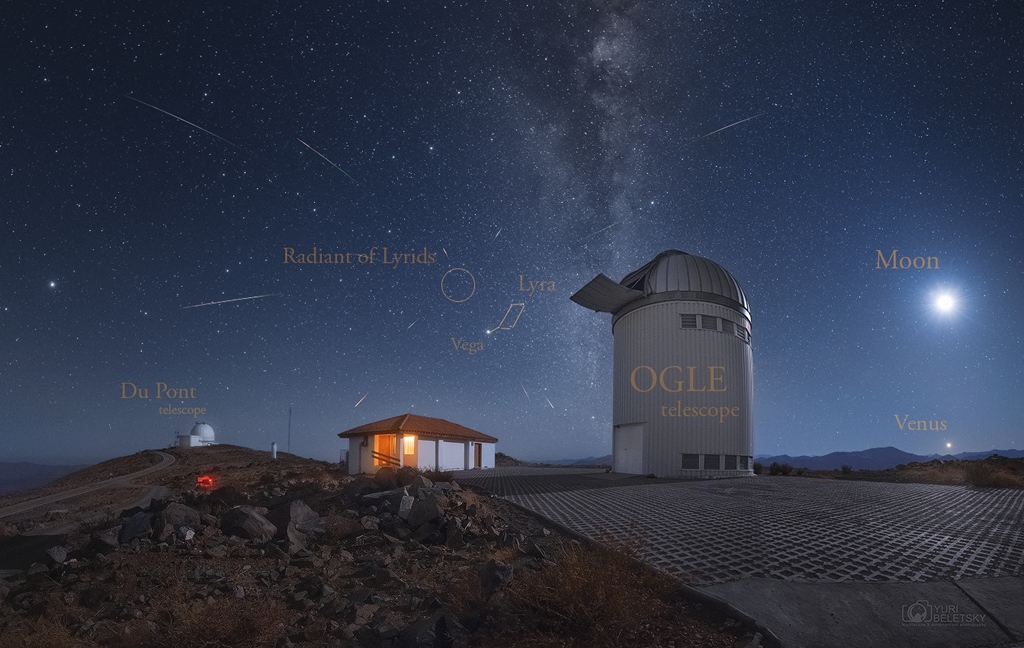
Explanation: Earth's annual Lyrid meteor shower peaked before dawn on April 22nd, as our fair planet plowed through dust from the tail of long-period comet Thatcher. Seen from the high, dark, and dry Atacama desert a waning crescent Moon and brilliant Venus join Lyrid meteor streaks in this composited view. Captured over 5 hours on the night of April 21/22, the meteors stream away from the shower's radiant, a point not very far on the sky from Vega,alpha star of the constellation Lyra. The radiant effect is due to perspective as the parallel meteor tracks appear to converge in the distance. In the foreground are domes of the Las Campanas Observatory housing (left to right) the 2.5 meter du Pont Telescope and the 1.3 meter Optical Gravitational Lensing Experiment (OGLE) telescope.

2017-04-26

Imagens - Desertos curiosos do Mundo - Khongoryn Els en Mongolia.

Desiertos curiosos
Khongoryn Els en Mongolia.

Fotos - Barreiro antigo (Portugal)

"Barreiro antigo"

02-04-2017
JoanMira

Astronomy picture of the day - 2017 April 26 - Mt. Etna Lava Plume

See Explanation.  Clicking on the picture will download
 the highest resolution version available.
Mt. Etna Lava Plume 
Image Credit & Copyright: Dario Giannobile
Explanation: Mt. Etna has been erupting for hundreds of thousands of years. Located in SicilyItalythe volcano produces lava fountains over one kilometer high. Mt. Etna is not only one of the most active volcanoes on Earth, it is one of the largest, measuring over 50 kilometers at its base and rising nearly 3 kilometers high. Pictured in mid-March, a spectacular lava plume erupts upwards, dangerous molten volcanic bombs fly off to the sides, while hot lava flows down the volcano's exterior. The Earth's rotation is discernable on this carefully time, moon-lit, long duration image as star trails.

Astronomy picyure of the day - 2017 April 25 - A Split Ion Tail for Comet Lovejoy E4

See Explanation.  Clicking on the picture will download
 the highest resolution version available.
A Split Ion Tail for Comet Lovejoy E4 
Image Credit & Copyright: Fritz Helmut Hemmerich
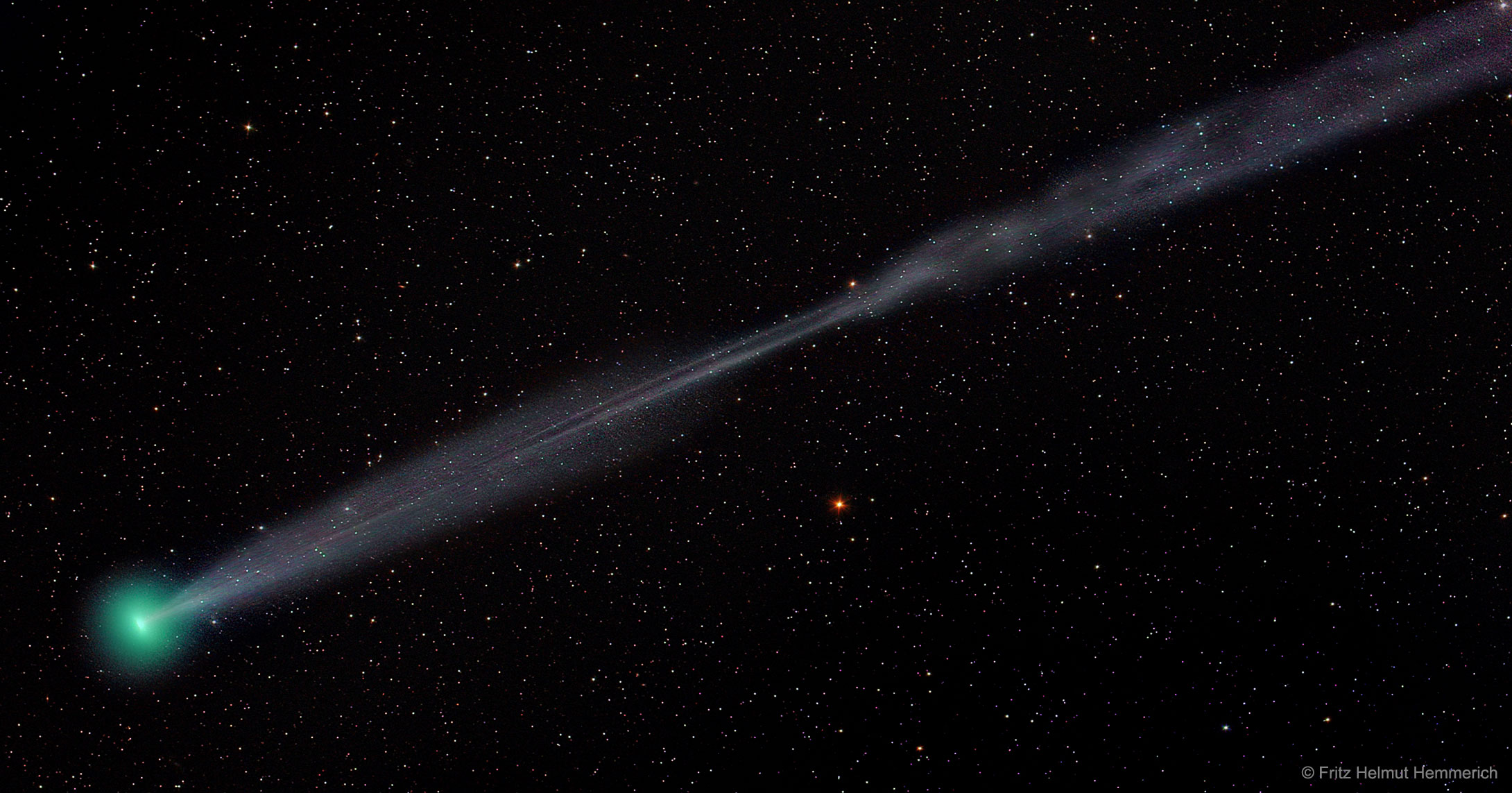
Explanation: What's happened to Comet Lovejoy? In the pictured image, a processed composite, the comet was captured early this month after brightening unexpectedly and sporting a long and intricate ion tail. Remarkably, thetypically complex effect of the Sun's wind and magnetic field here caused the middle of Comet Lovejoy's ion tail to resemble the head of a needle. Comet C/2017 E4 (Lovejoy) was discovered only last month by noted cometdiscoverer Terry Lovejoy. The comet reached visual magnitude 7 earlier this month, making it a good target for binoculars and long duration exposure cameras. What's happened to Comet Lovejoy (E4) since this image was taken might be considered even more remarkable -- the comet's nucleus appeared to be disintegrating and fading as it neared its closest approach to the Sun two days ago.

2017-04-24

Astronomy picture of the day - 2017 April 24 - A White Battle in the Black Sea

See Explanation.  Clicking on the picture will download
 the highest resolution version available.
A White Battle in the Black Sea 
Image Credit: NASAAquaMODIS
Explanation: Trillions have died in the Earth's seas. Calcified shields of the dead already make up the white cliffs of Dover. The battle between ball-shaped light-colored single-celled plants -- phytoplankton called coccolithophores -- and even smaller, diamond-shaped viruses dubbed coccolithoviruses -- has raged for tens of millions of years. To help fight this battle, the coccolithophores create their chalky armor by absorbing carbon dioxide from the atmosphere.This battle is so epic that coccolithophores actually remove a significant fraction of Earth's atmospheric carbon dioxide, bolstering the breathability of air for animals including humans. Pictured in this 2012 image from NASA's Aqua satellite, the Black Sea was turned light blue by coccolithophore blooms.

2017-04-23

Astronomy picture of the day - 2017 April 23 - The Holographic Principle

See Explanation.  Clicking on the picture will download
 the highest resolution version available.
The Holographic Principle 
Image Credit: Caltech
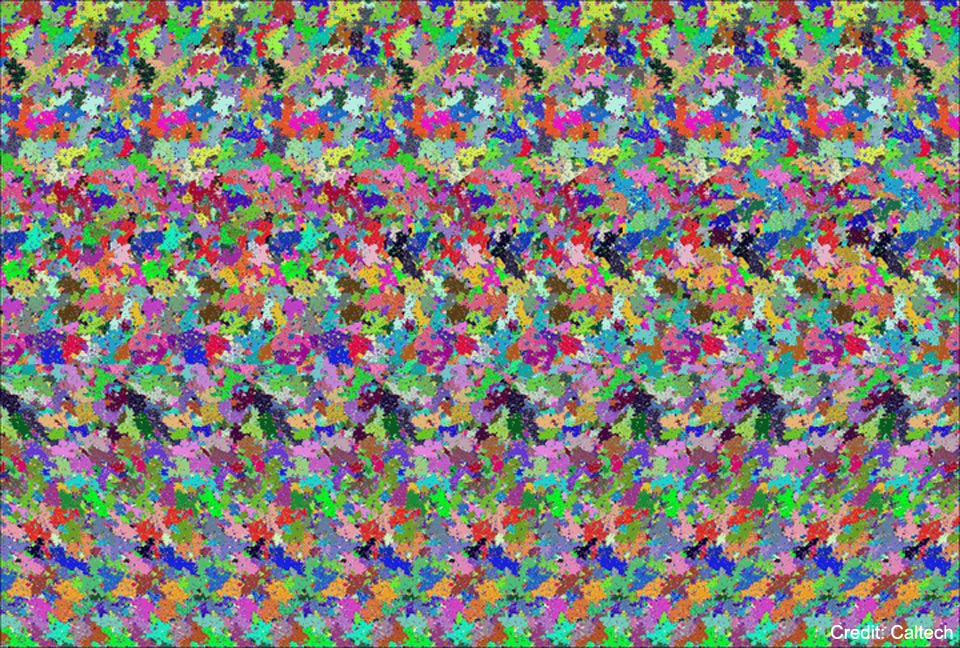
Explanation: Is this picture worth a thousand words? According to the Holographic Principle, the most information you can get from this image is about 3 x 1065 bits for a normal sized computer monitor. The Holographic Principle, yet unproven, states that there is a maximum amount of information content held by regions adjacent to any surface. Therefore, counter-intuitively, the information content inside a room depends not on the volume of the room but on the area of the bounding walls. The principle derives from the idea that the Planck length, the length scale where quantum mechanics begins to dominate classical gravity, is one side of an area that can hold only about one bit of information. The limit was first postulated by physicist Gerard 't Hooft in 1993. It can arise from generalizations from seemingly distant speculation that the information held by a black hole is determined not by its enclosed volume but by the surface area of its event horizon. The term "holographic" arises from a hologram analogy where three-dimension images are created by projecting light though a flat screen. Beware, other people looking at the featured image may not claim to see 3 x 1065 bits -- they might claim to see a teapot.