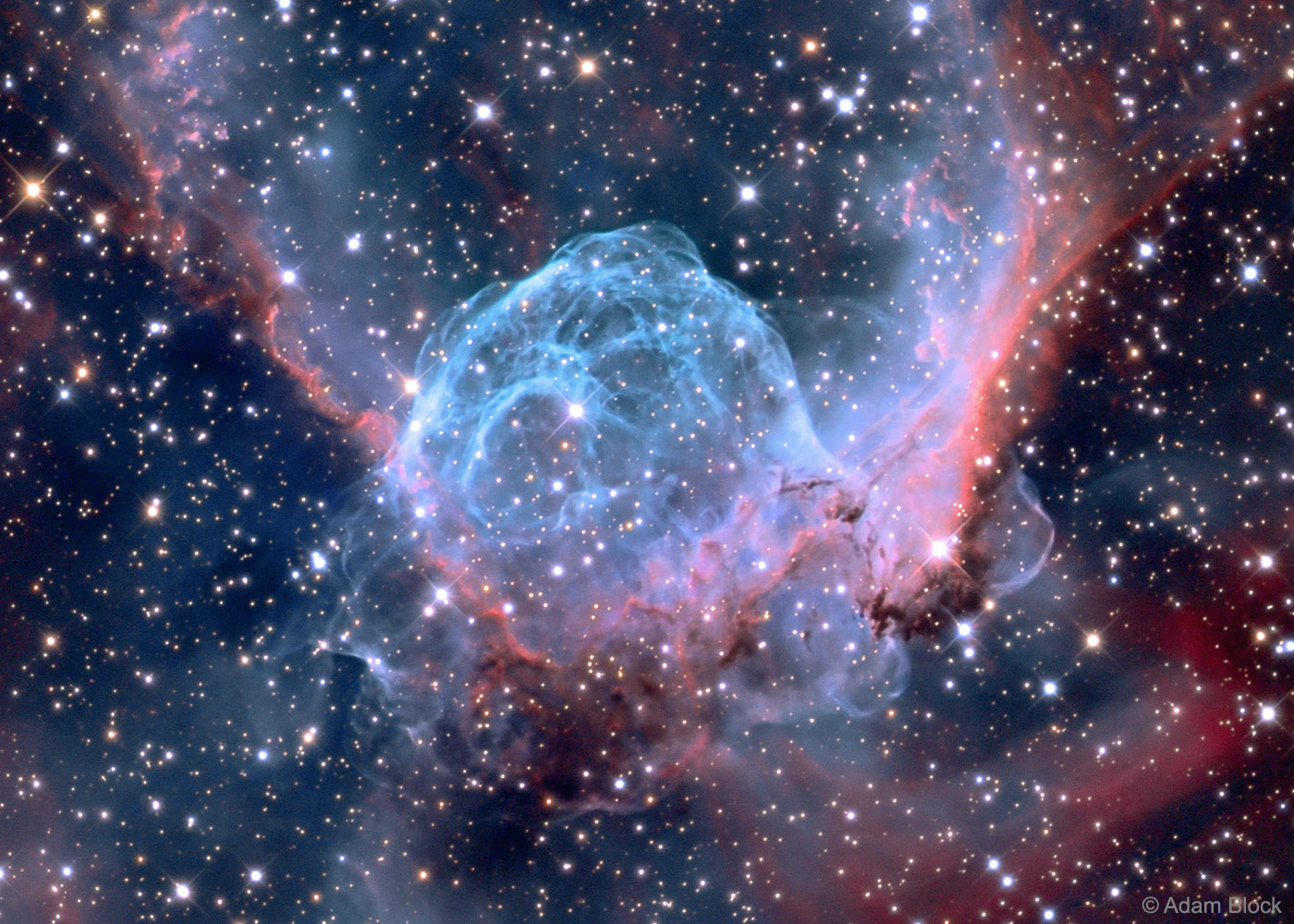
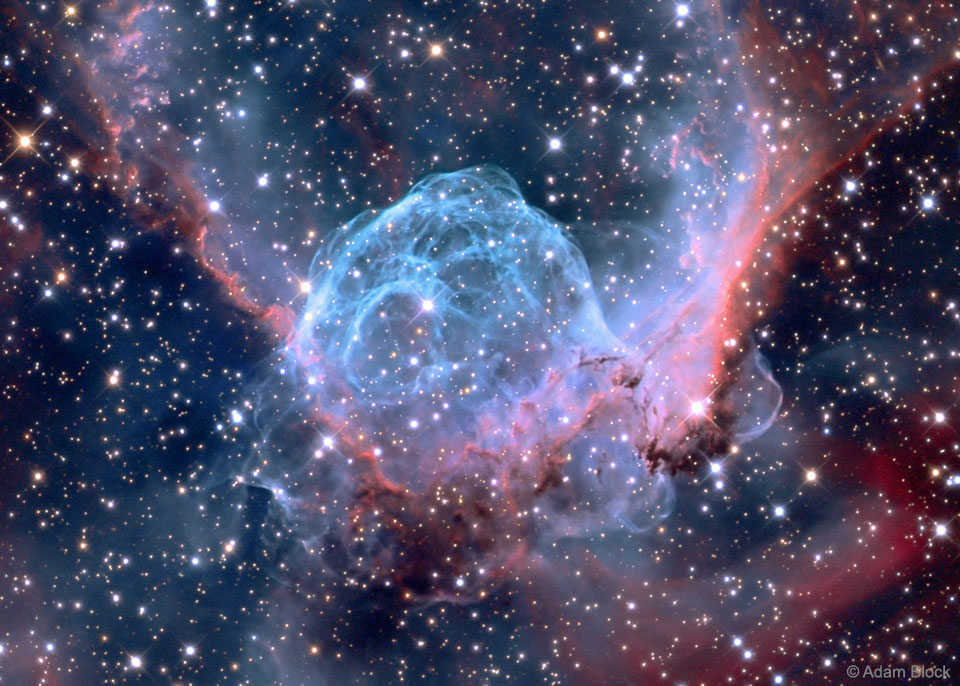
 Thor's Helmet Emission Nebula
Image Credit & Copyright: Adam Block, Mt. Lemmon SkyCenter, U. Arizona
Explanation: This helmet-shaped cosmic cloud with wing-like appendages is popularly called Thor's Helmet. Heroically sized even for a Norse god, Thor's Helmet spans about 30 light-years across. In fact, the helmet is more like an interstellar bubble, blown as a fast wind -- from the bright star near the center of the bubble's blue-hued region -- sweeps through a surrounding molecular cloud. This star, a Wolf-Rayet star, is a massive and extremely hot giant starthought to be in a brief, pre-supernova stage of evolution. Cataloged as NGC 2359, the emission nebula is located about 12,000 light-years away toward the constellation of the Big Dog (Canis Major). The sharp image, made using broadband and narrowband filters, captures striking details of the nebula's filamentary gas and dust structures. The blue color originates from strong emission from oxygen atoms in the nebula.
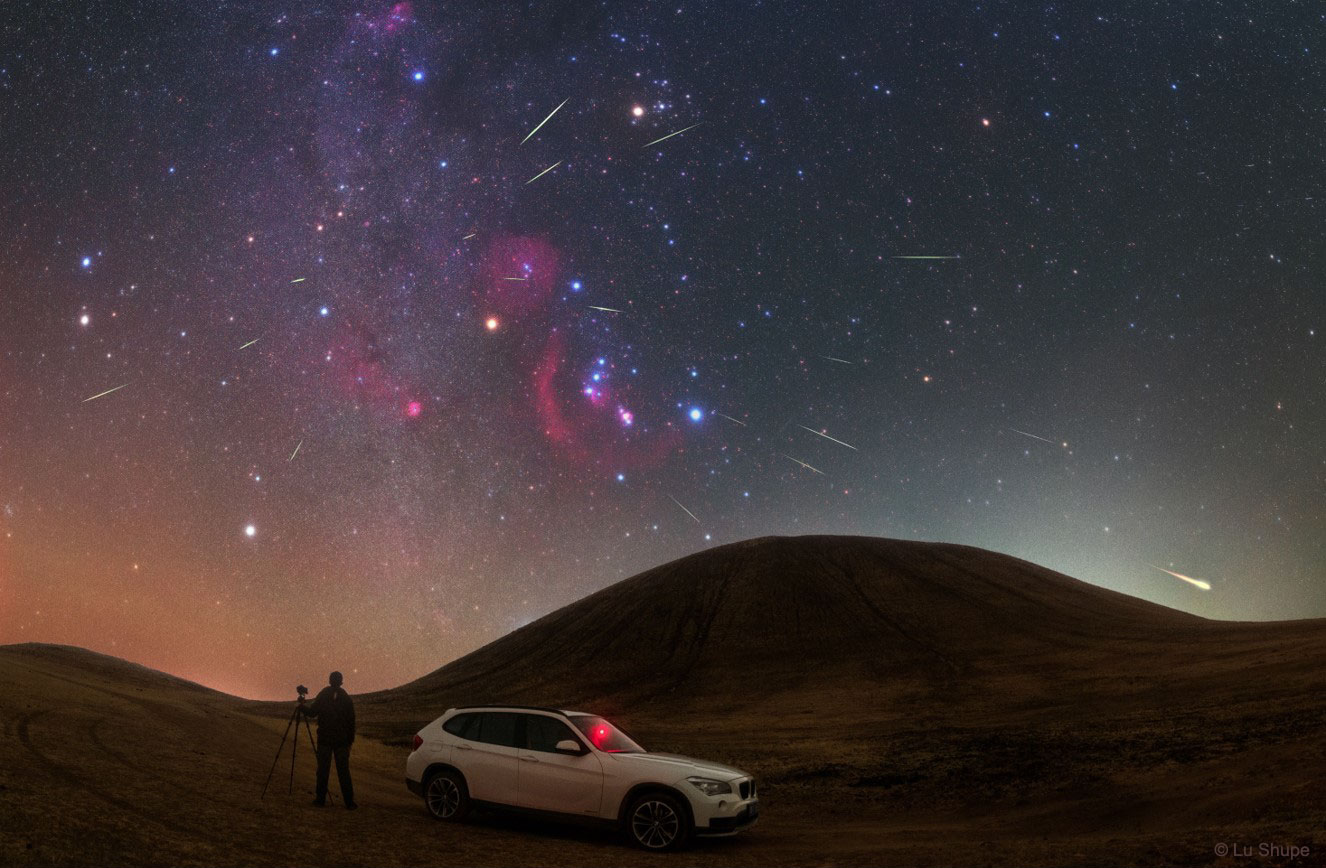
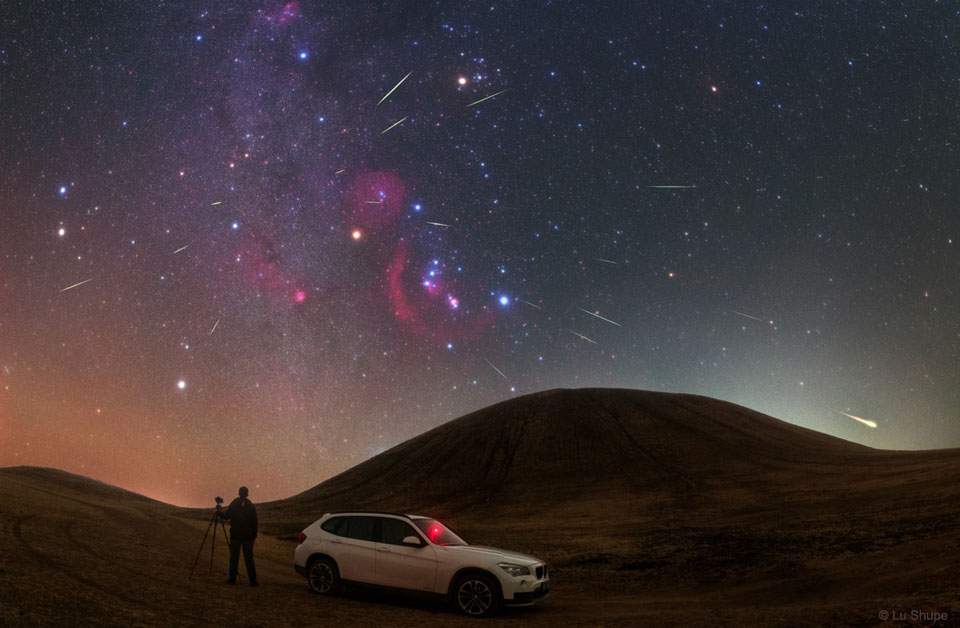 Orionid Meteors from Orion
Image Credit & Copyright: Lu Shupei
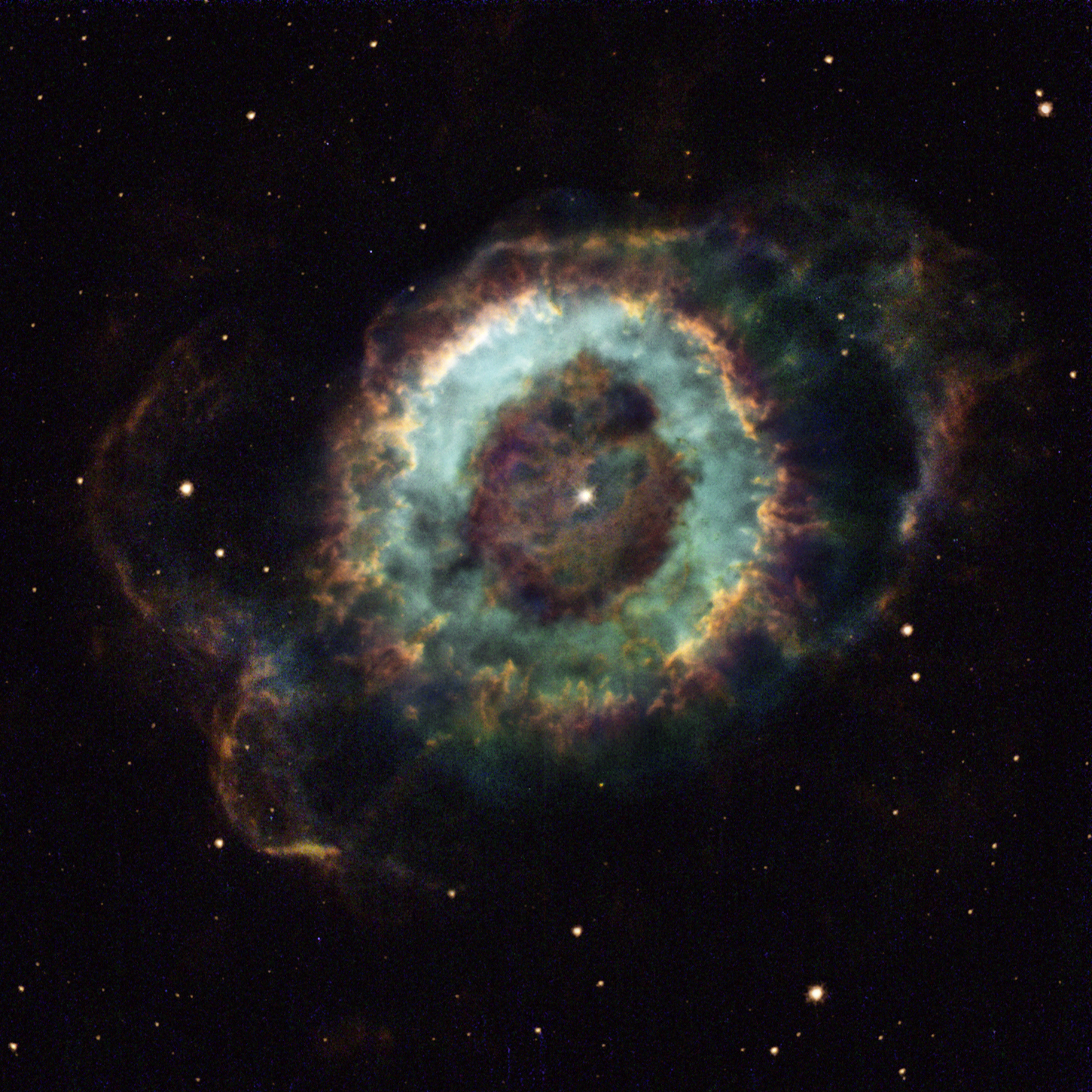
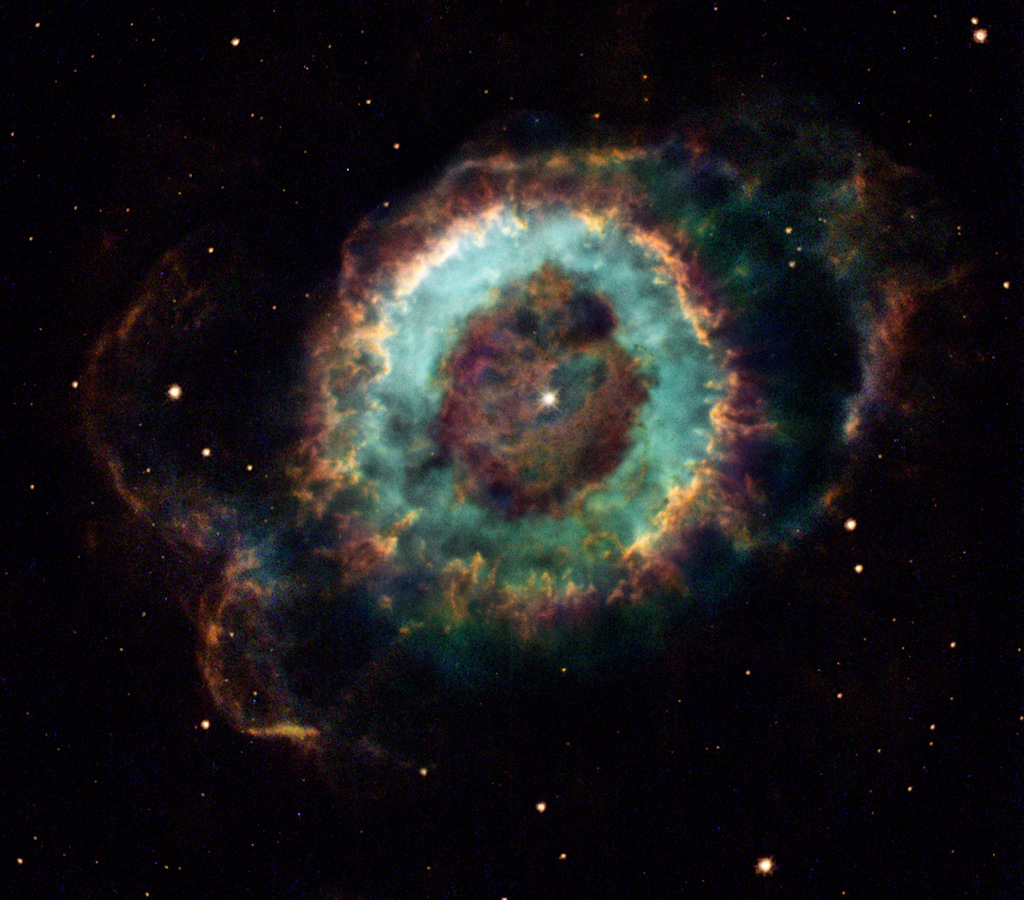 NGC 6369: The Little Ghost Nebula
Image Credit: Hubble Heritage Team, NASA
Explanation: Wraithlike NGC 6369 is a faint apparition in night skies popularly known as the Little Ghost Nebula. It was discovered by 18th century astronomer Sir William Herschel as he used a telescope to explore the medicinalconstellation Ophiucus. Herschel historically classified the round and planet-shaped nebula as a Planetary Nebula. But planetary nebulae in general are not at all related to planets. Instead they are gaseous shrouds created at the end of a sun-like star's life, the dying star's outer layers expanding into space while its core shrinks to become a white dwarf. The transformed white dwarf star, seen near the center, radiates strongly at ultraviolet wavelengths and powers the expanding nebula's glow. Surprisingly complex details and structures of NGC 6369 are revealed in this tantalizing image composed from Hubble Space Telescope data. The nebula's main round structure is about a light-year across and the glow from ionized oxygen, hydrogen, and nitrogen atoms are colored blue, green, and red respectively. Over 2,000 light-years away, the Little Ghost Nebula offers a glimpse of the fate of our Sun, which could produce its own planetary nebula about 5 billion years from now.
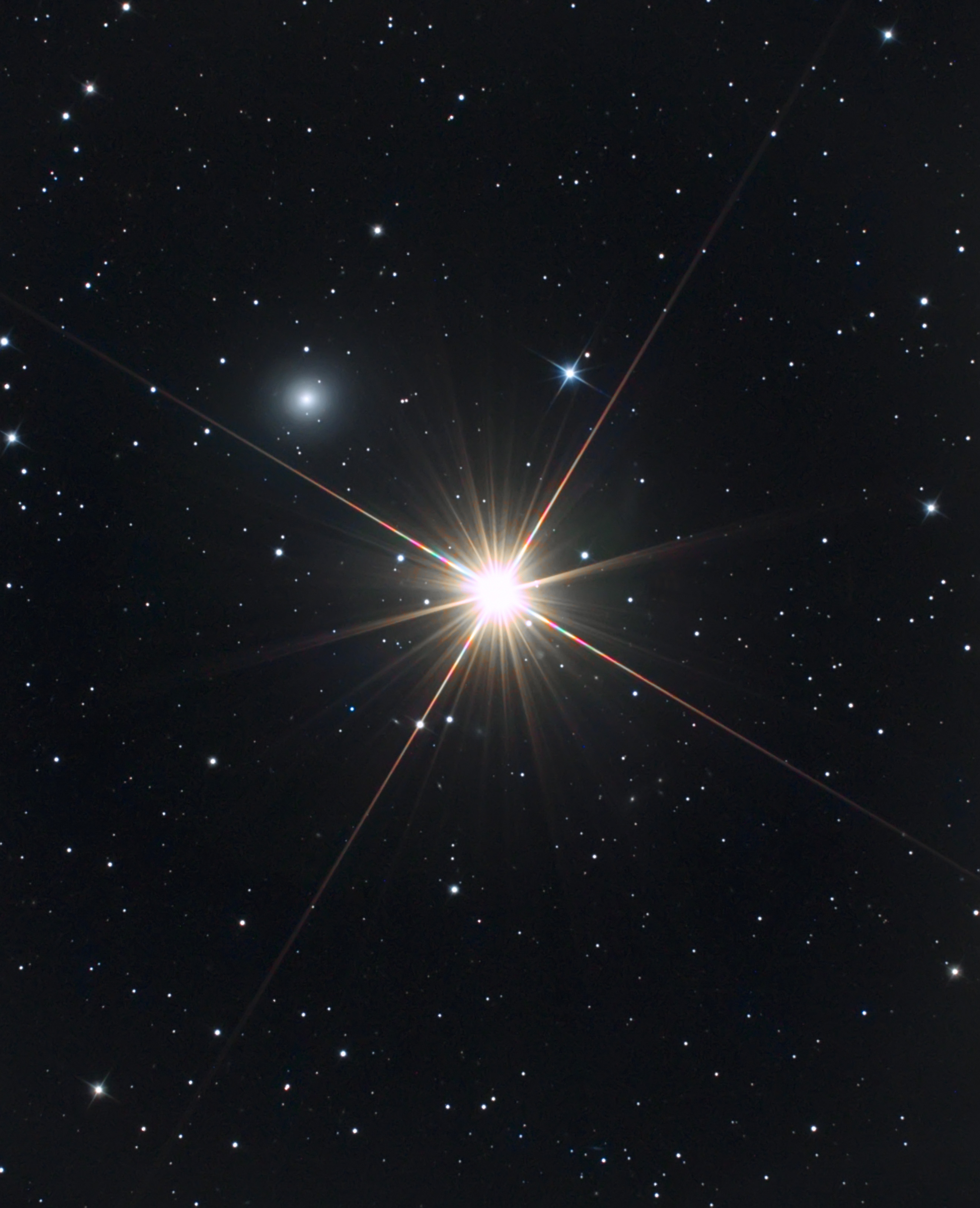
 Mirach's Ghost
Image Credit & Copyright: Kent Wood
Explanation: As far as ghosts go, Mirach's Ghost isn't really that scary. Mirach's Ghost is just a faint, fuzzy galaxy, well known to astronomers, that happens to be seen nearly along the line-of-sight to Mirach, a bright star. Centered inthis star field, Mirach is also called Beta Andromedae. About 200 light-years distant, Mirach is a red giant star, cooler than the Sun but much larger and so intrinsically much brighter than our parent star. In most telescopic views, glare and diffraction spikes tend to hide things that lie near Mirach and make the faint, fuzzy galaxy look like a ghostly internal reflection of the almost overwhelming starlight. Still, appearing in this sharp image just above and to the left of Mirach, Mirach's Ghost is cataloged as galaxy NGC 404 and is estimated to be some 10 million light-years away.