Crédit Photo : Shutterstock – Natoe

Crédit Photo : Shutterstock – Natoe
2023 February 6
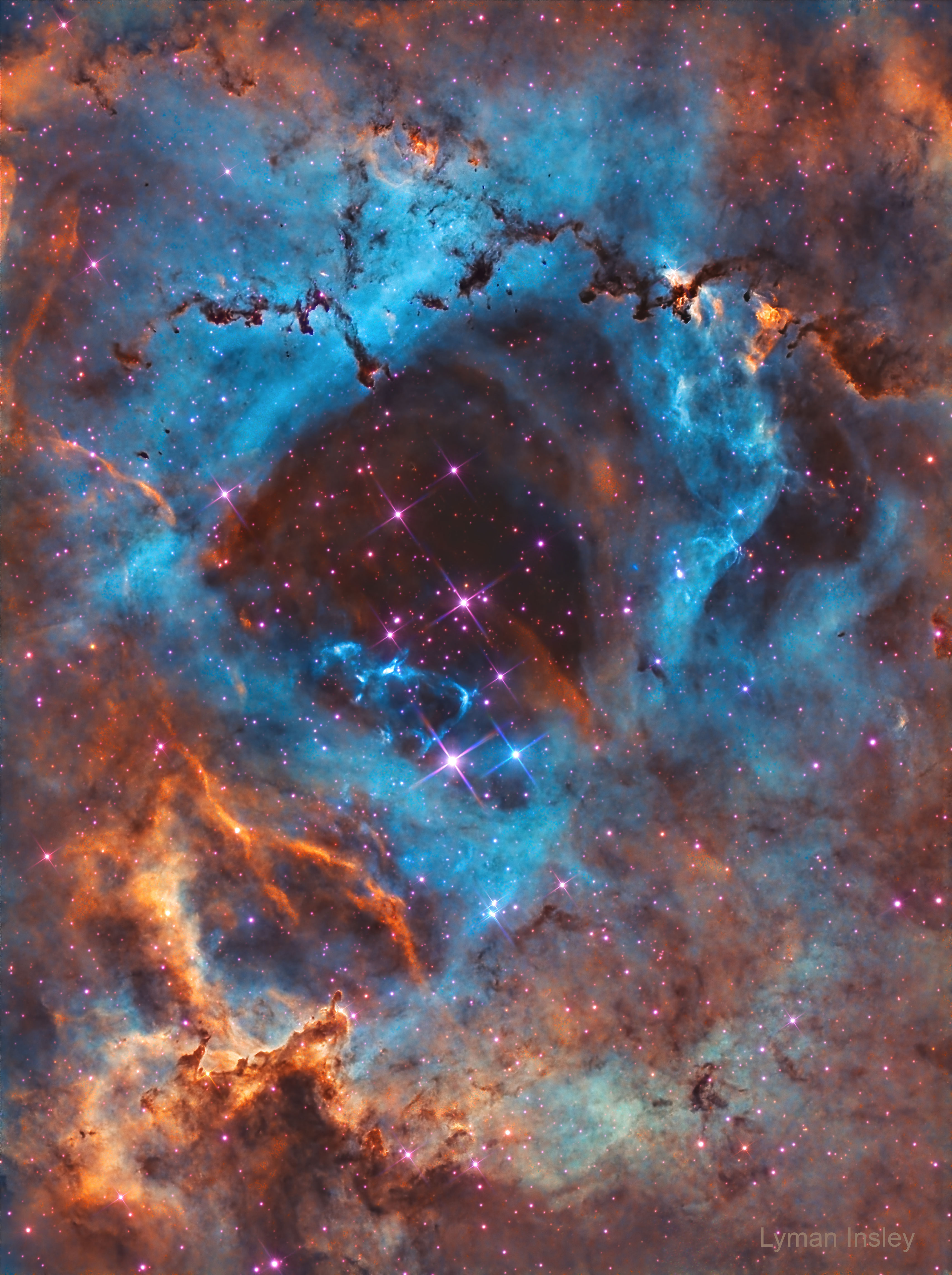
Explanation: In the heart of the Rosette Nebula lies a bright cluster of stars that lights up the nebula. The stars of NGC 2244 formed from the surrounding gas only a few million years ago. The featured image taken in mid-January using multiple exposures and very specific colors of Sulfur (shaded red), Hydrogen (green), and Oxygen (blue), captures the central region in tremendous detail. A hot wind of particles streams away from the cluster stars and contributes to an already complex menagerie of gas and dust filaments while slowly evacuating the cluster center. The Rosette Nebula's center measures about 50 light-years across, lies about 5,200 light-years away, and is visible with binoculars towards the constellation of the Unicorn (Monoceros).

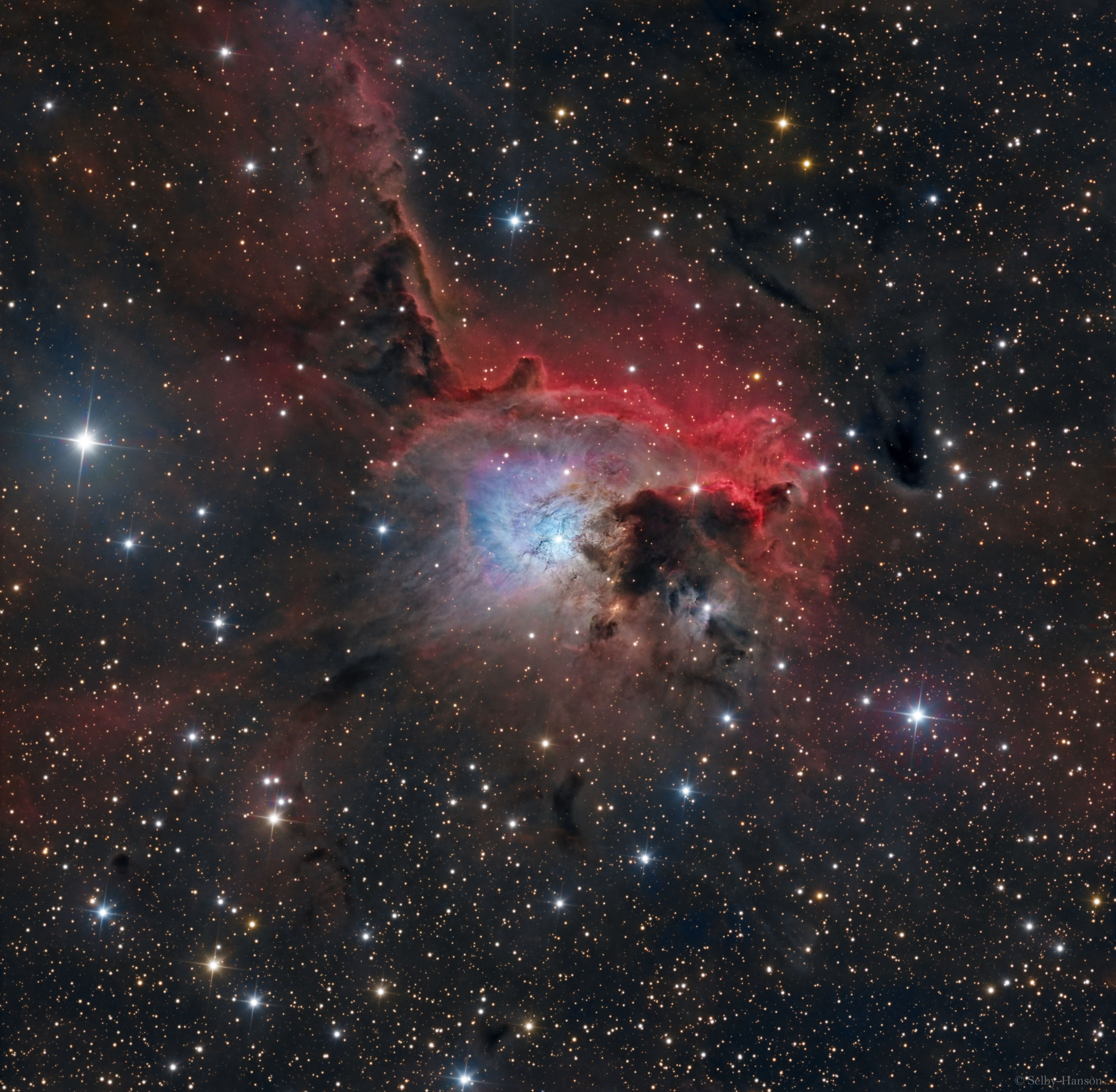
Explanation: Centered in this colorful cosmic canvas, NGC 2626 is a beautiful, bright, blue reflection nebula in the southern Milky Way. Next to an obscuring dust cloud and surrounded by reddish hydrogen emission from large H II region RCW 27 it lies within a complex of dusty molecular clouds known as the Vela Molecular Ridge. NGC 2626 is itself a cloud of interstellar dust reflecting blue light from the young hot embedded star visible within the nebula. But astronomical explorations reveal many other young stars and associated nebulae in the star-forming region. NGC 2626 is about 3,200 light-years away. At that distance this telescopic field of view would span about 30 light-years along the Vela Molecular Ridge.