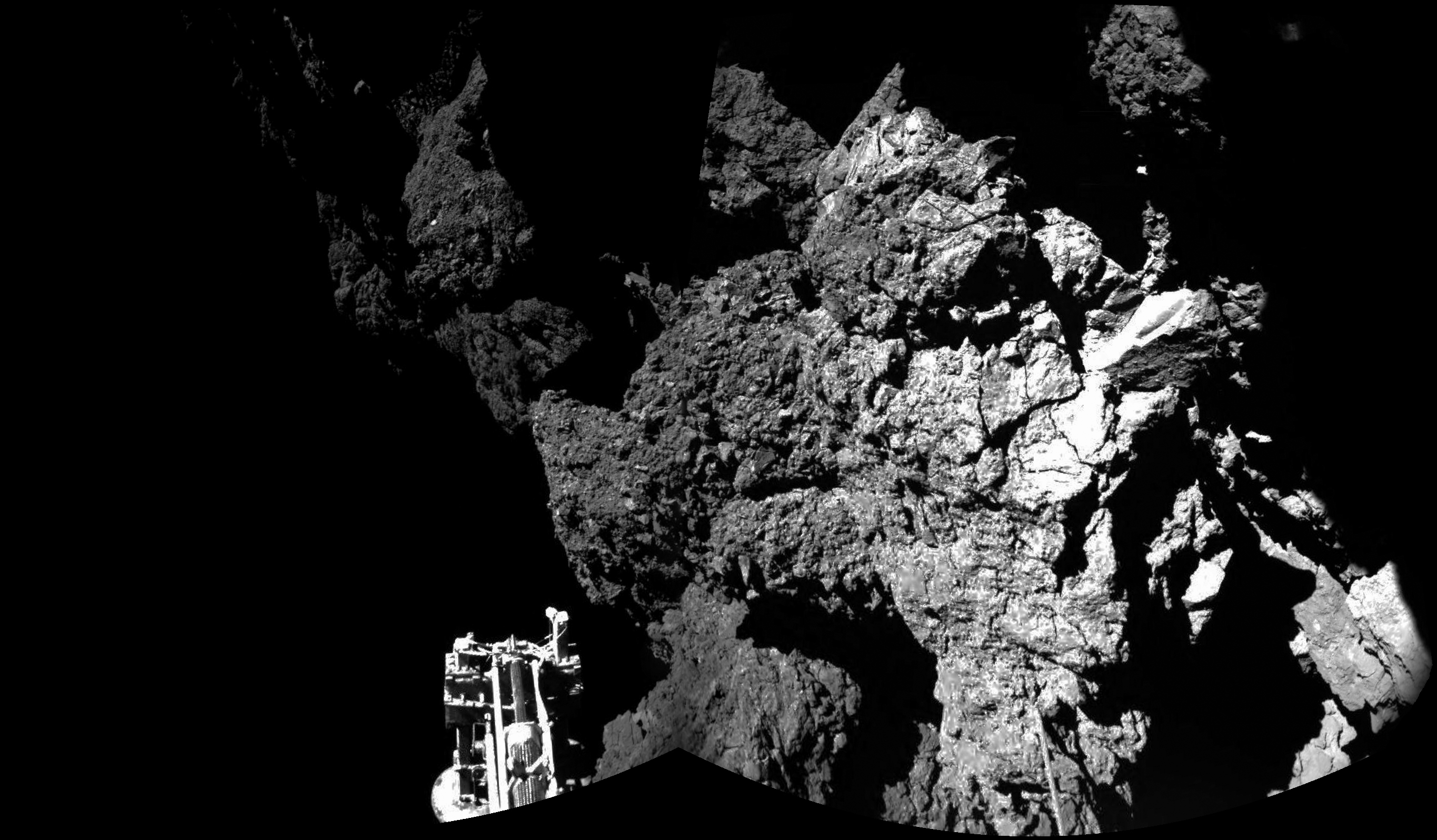
Explanation: The Rosetta Mission lander is safely on a comet. One of Philae's feet appears at the bottom left of this spectacular image of the surface of C67/P Churyumov-Gerasimenko. Still a happy lander, Philae bounced twice before settling and returning images from the surface, traveling a kilometer or so after initially touching at the targeted site Agilkia. A surface panorama suggests that the lander has come to rest tilted and near a shadowing wall, with its solar panels getting less illumination that hoped. Philae's science instruments are working as planned and data is being relayed during communications windows, when the Rosetta spacecraft is above the lander's new horizon.
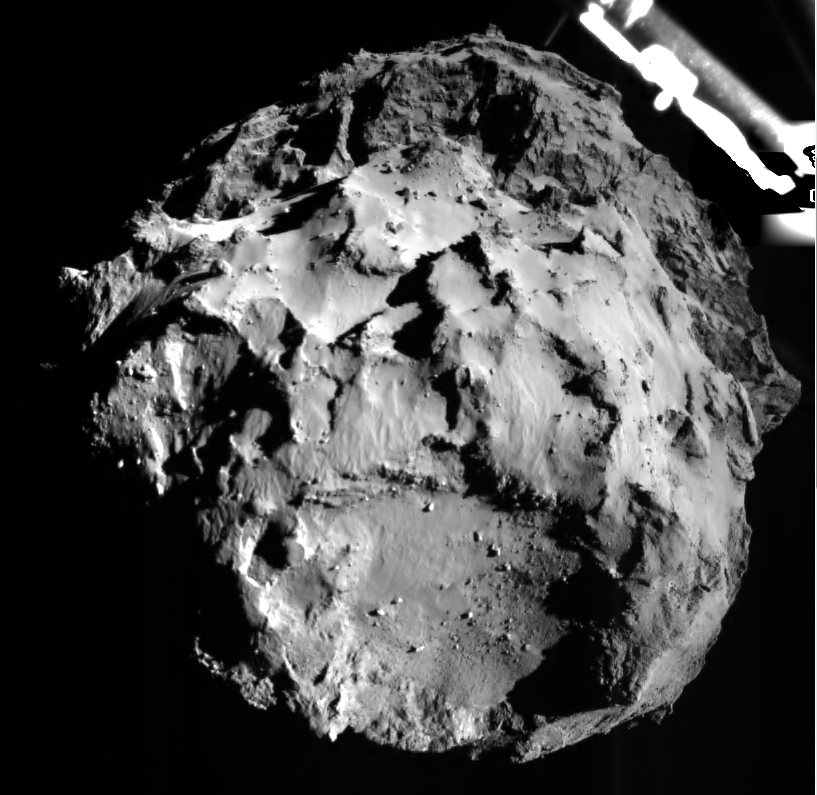
Explanation: Yesterday, thefirst soft landing on a comet took place some 500 million kilometers from planet Earth as theRosetta missionlander Philae settled on the nucleus ofC67/P Churyumov-Gerasimenko. The landing site, dubbed Agilkia, is located near the center ofthis remarkable imagesnapped by Philae's ROLIS (ROsetta Lander Imaging System) camera. Taken from a distance of about 3 kilometers the image has a resolution of about 3 meters per pixel at the surface.After Philae's release from the orbiter, its seven-hour longdescent was madewithout propulsion or guidance. Following its descent the lander is in place, though its anchoring harpoon system did not fire. For 2.5 days the lander is intended to conduct its mainscience mission returning extensive images and data. An extended surface mission may be possible if sunlight and dust conditions allow solar panels to recharge Philae's battery.
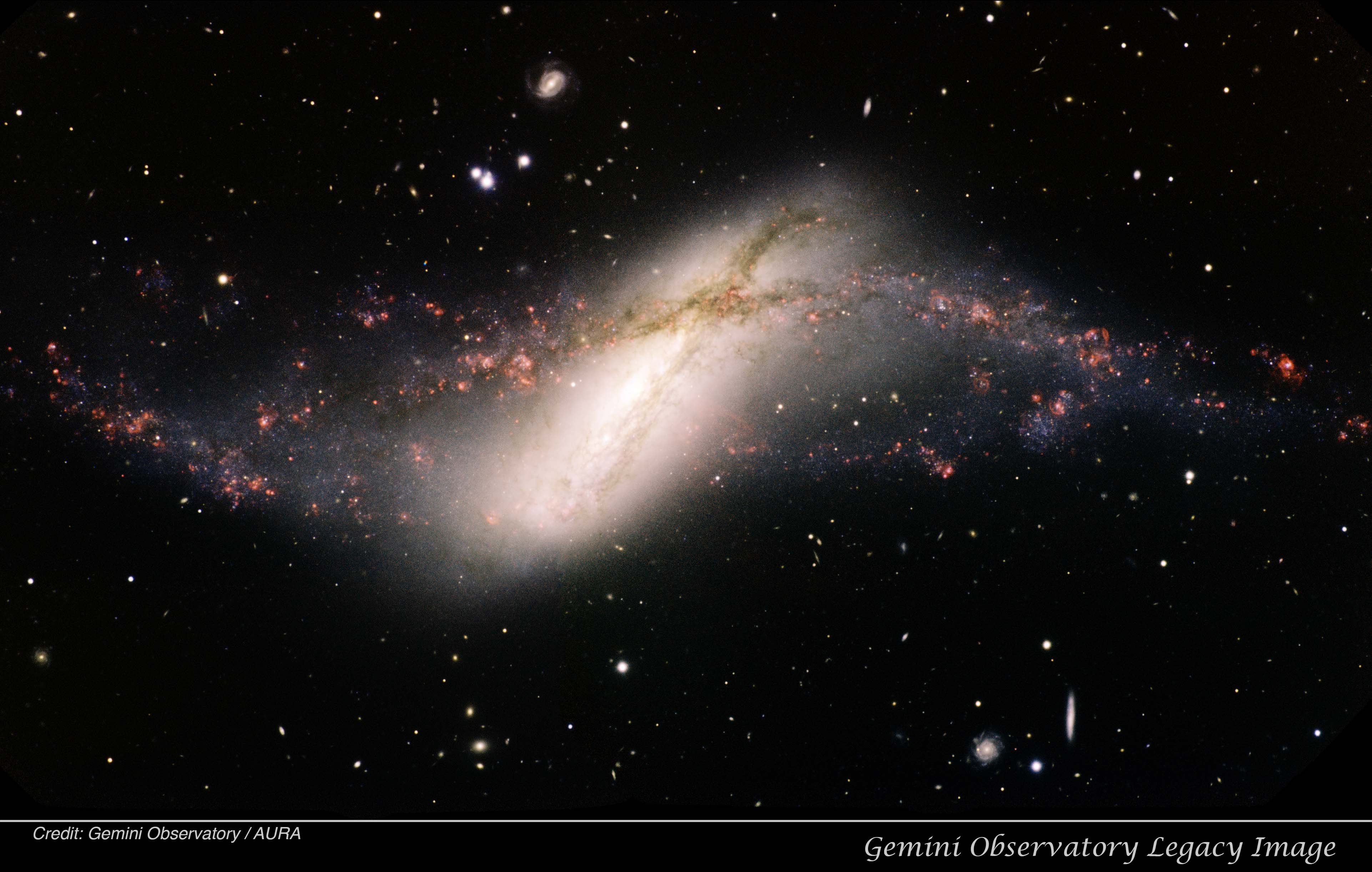
Explanation: NGC 660 is featured inthis cosmic snapshot, a sharp composite of broad and narrow band filter image data from the Gemini North telescopeon Mauna Kea. Over 20 million light-years away and swimming within the boundaries of theconstellation Pisces, NGC 660's peculiar appearance marks it asa polar ring galaxy. A rare galaxy type, polar ring galaxies have a substantial population of stars, gas, and dustorbiting in rings nearly perpendicular to the plane of the galactic disk.The bizarre-looking configuration could have been caused by the chance capture of material from a passing galaxy by a disk galaxy, with the captured debris eventually strung out in a rotating ring. The violent gravitational interaction would account for the myriad pinkish star forming regions scattered along NGC 660's ring.The polar ring component can also be used to explore the shape of the galaxy's otherwise unseendark matter halo by calculating thedark matter's gravitational influence on the rotation of the ring and disk. Broader than the disk, NGC 660's ring spans over 50,000 light-years.
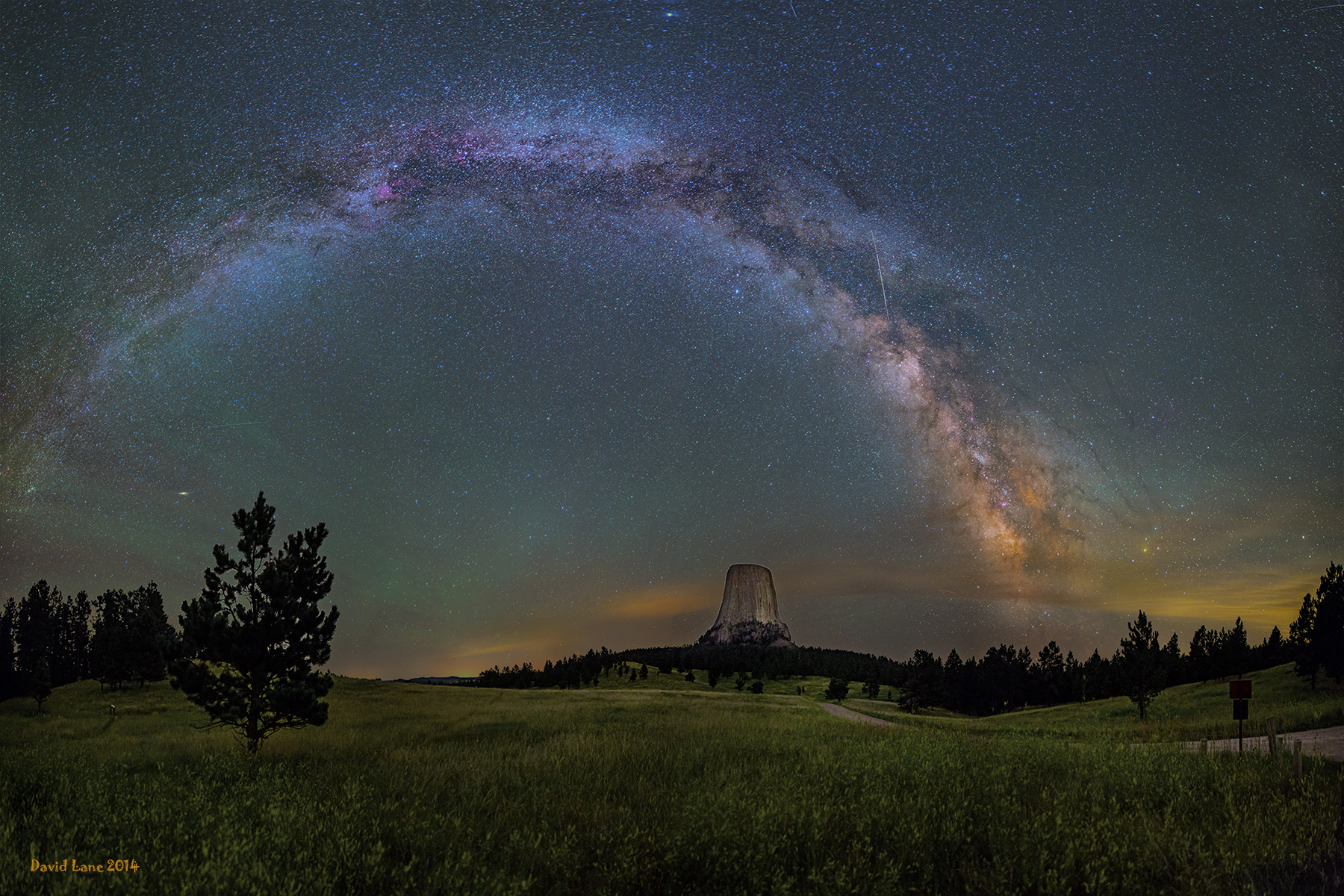
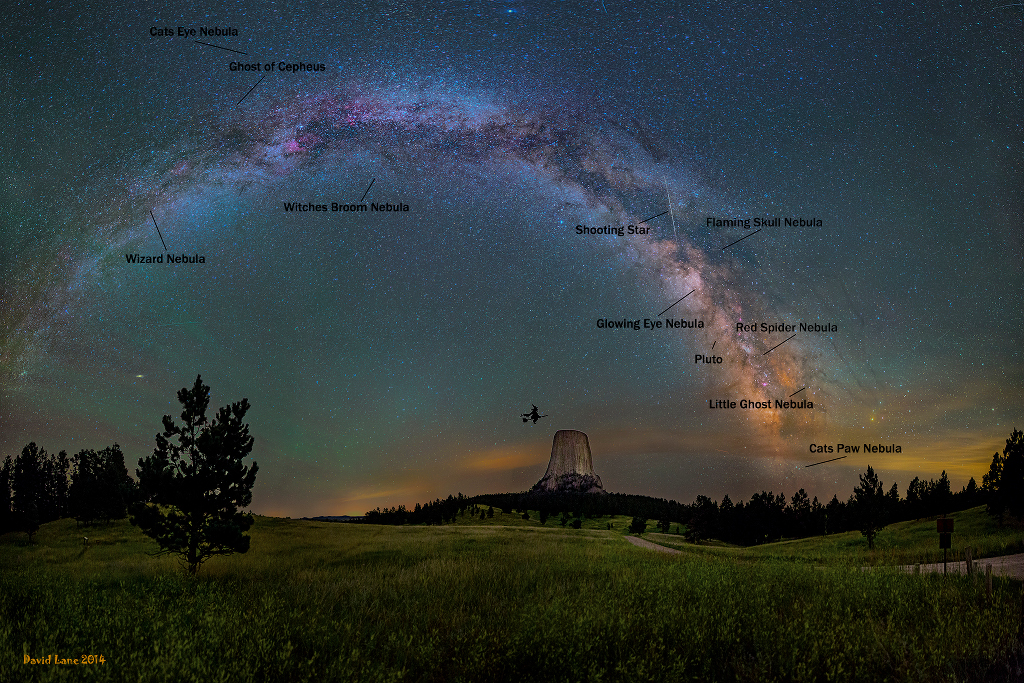
Explanation: A mysterious formation known asDevils Tower rises into the dark above northeastern Wyoming's prairie landscape in this 16 frame panoramic view. Seen against the night sky's thin, pale clouds and eerie greenairglow, star clusters and nebulae of the Milky Way arc toward the galaxy'scentral realmat right. Of course the scene contains the Milky Way's own haunting and grisly visagesof halloween, includingghosts, a flaming skull, a glowing eye and a witch's broom. To find them, slide your cursor over the picture or just follow this link,if you dare.
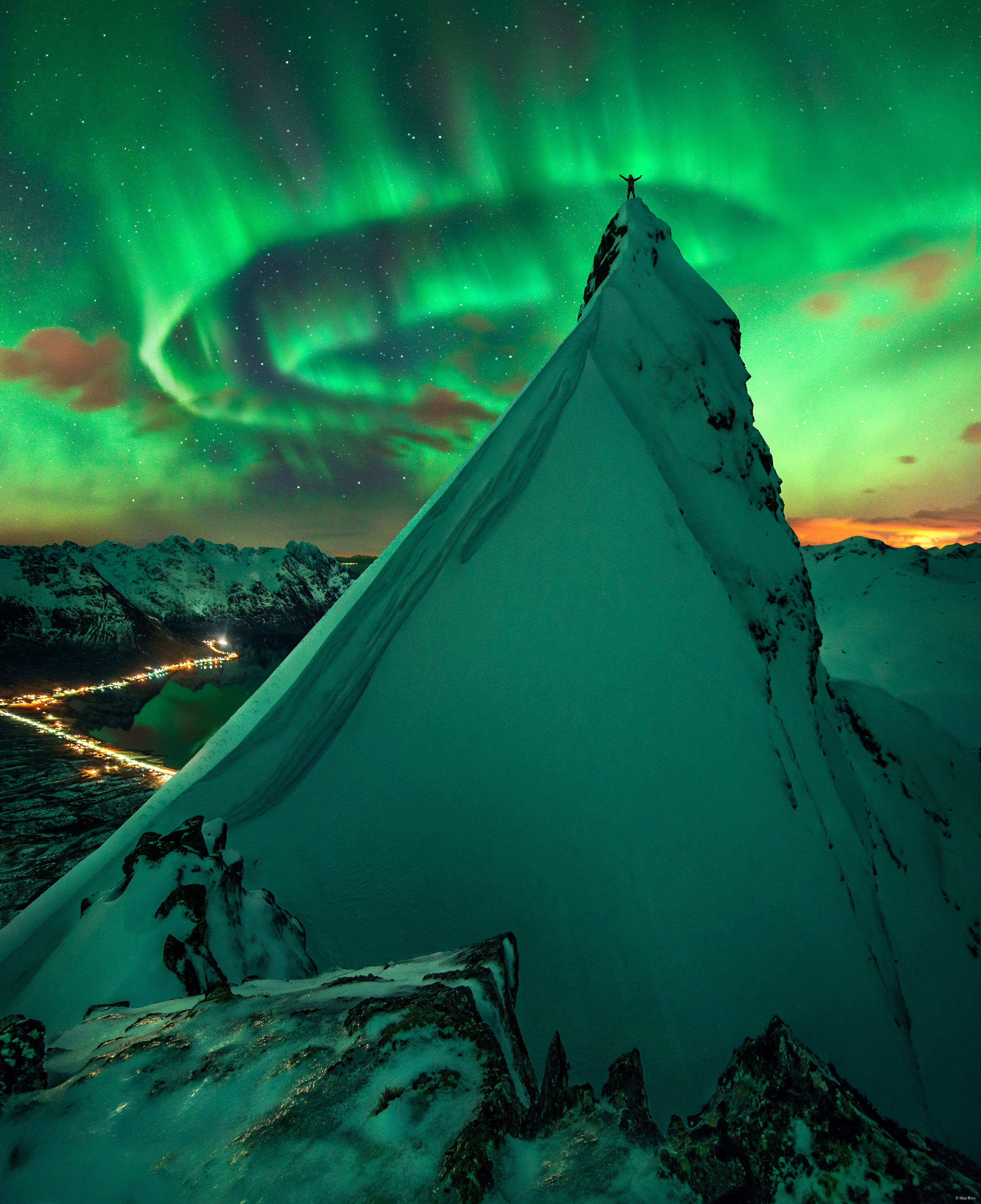
In Green Company: Aurora over Norway Image Credit & Copyright: Max Rive
Explanation: Raise your arms if you see an aurora. With those instructions, two nights went by with, well, clouds -- mostly. On the third night of returning to same peaks, though, the sky not only cleared up but lit up with a spectacular auroral display. Arms went high in the air, patience and experience paid off, and the amazing featured image was captured. The setting is a summit of the Austnesfjordenfjord close to the town of Svolvear on the Lofoten islands in northern Norway. The time was early March. Our Sun has been producing an abundance of picturesque aurora of late as it is near the time of its maximum surface activity in its 11-year magnetic cycle.
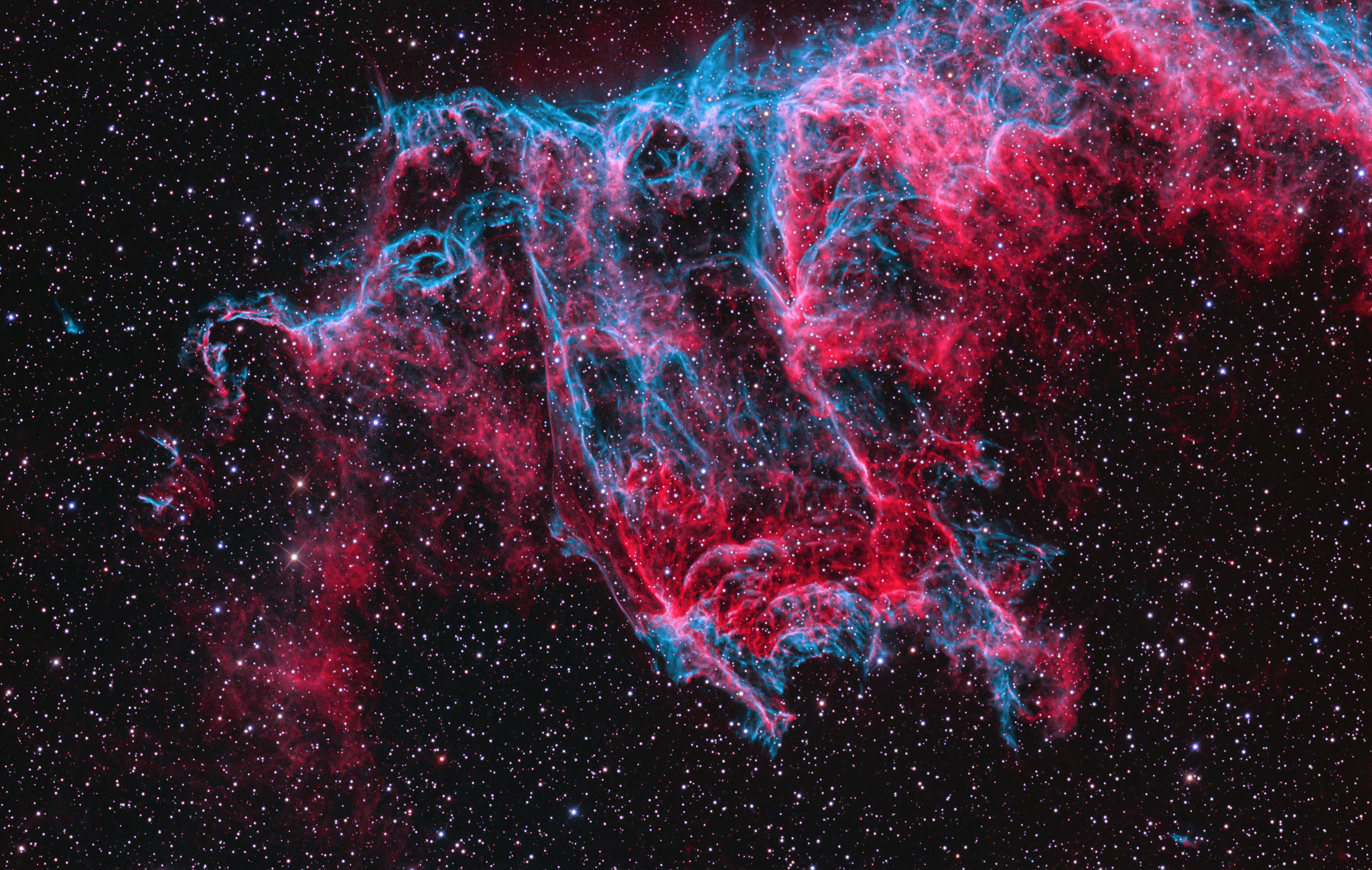
Explanation: Frighteningforms and scary faces are a mark of the Halloween season. They also hauntthis cosmic close-up of the eastern Veil Nebula. The Veil Nebula itself is a large supernova remnant, the expanding debris cloud from the death explosion of a massive star. While the Veil is roughly circular in shape and covers nearly 3 degrees on the sky in the constellation Cygnus, this portion of the eastern Veil spans only 1/2 degree, about the apparent sizeof the Moon. That translates to 12 light-years at the Veil's estimated distance, a reassuring 1,400 light-years from planet Earth. In the composite of image data recorded through broad andnarrow band filters, emission from hydrogen atoms in the remnant is shown in red with strong emission from oxygen atoms in blue-green hues. Of course, in the western part of the Veil lies another seasonal apparition,the Witch's Broom.