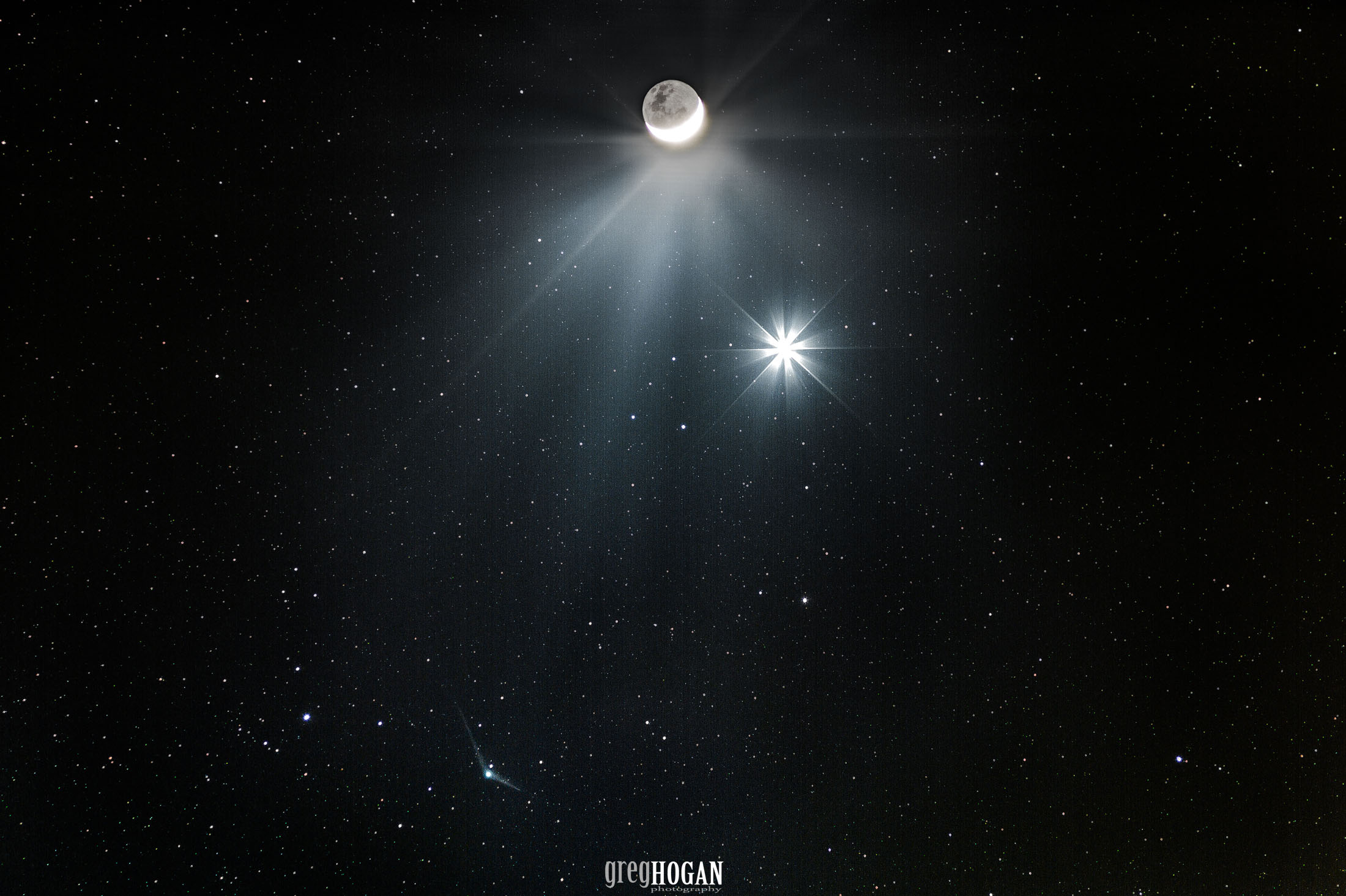
Explanation: A crescent Moon and brilliant Venus met in predawn skies on December 7, a beautiful conjunction of planet Earth's two brightest celestial beacons after the Sun. Harder to see but also on the scene was Comet Catalina (C/2013 US10). The fainter comet clearly sporting two tails, lunar night side, bright sunlit lunar crescent, and brilliant morning star, are all recorded here by combining short and long exposures of the same field of view. Pointing down and right, Catalina's dust tail tends to trail behind the comet's orbit. Its ion tail, angled toward the top left of the frame, is blowing away from the Sun. Discovered in 2013, the new visitor from the Oort cloud was closest to the Sun on November 15 and is now outbound, headed for its closest approach to Earth in mid-January.
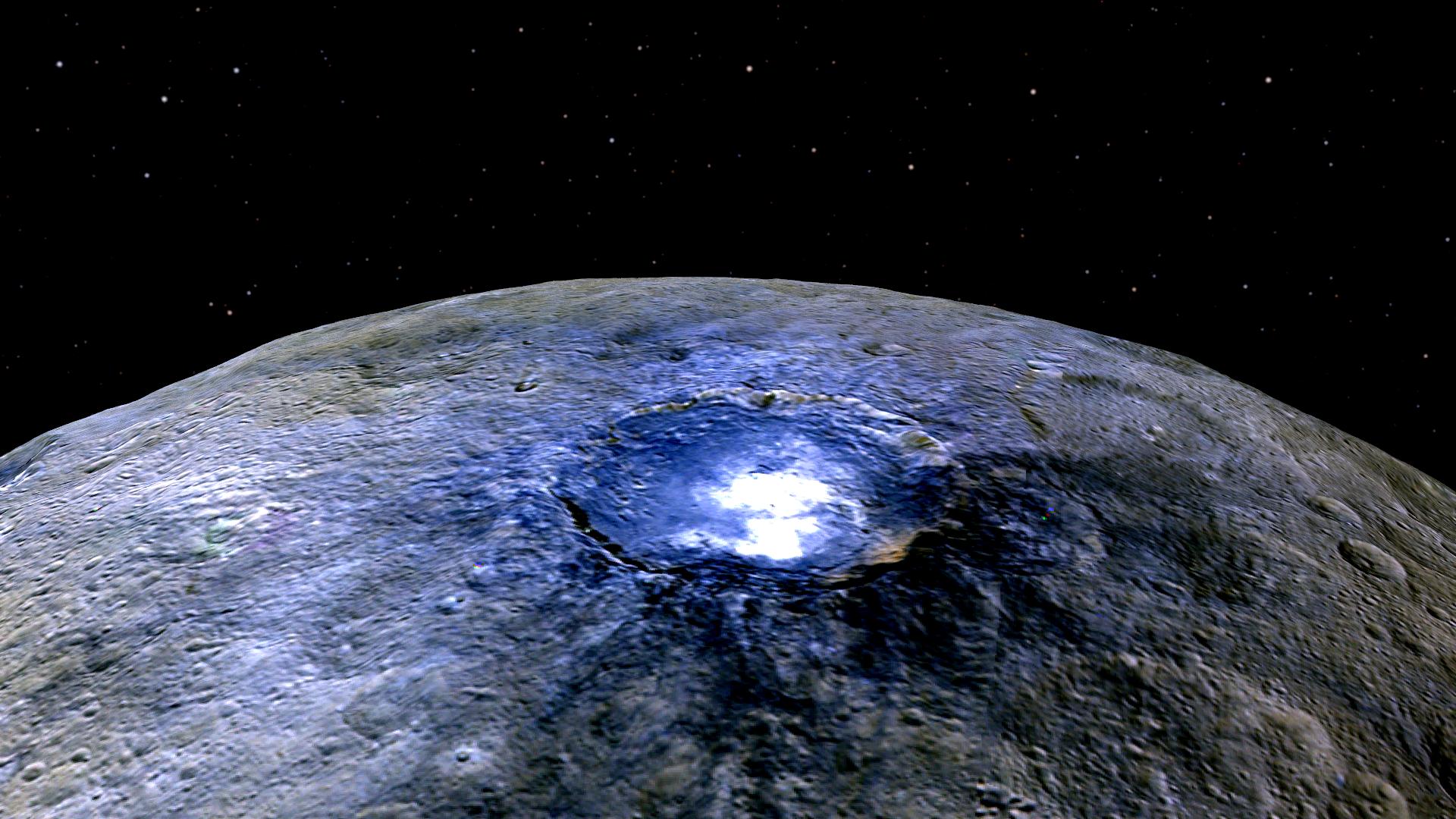
The Brightest Spot on Ceres Image Credit: NASA, JPL-Caltech, UCLA, MPS/DLR/IDA
Explanation: Dwarf planet Ceres is the largest object in the Solar System's main asteroid belt with a diameter of about 950 kilometers. Exploring Ceres from orbit since March, the Dawn spacecraft's camera has revealed about 130 or so mysterious bright spots, mostly associated with impact craters scattered around the small world's otherwise dark surface. The brightest one is near the center of the 90 kilometer wide Occator Crater, seen in this dramatic false color view combining near-infrared and visible light image data. A study now finds the bright spot's reflected light properties are probably most consistent with a type of magnesium sulfate called hexahydrite. Of course, magnesium sulfate is also known to Earth dwellers as epsom salt. Haze reported inside Occator also suggests the salty material could be left over as a mix of salt and water-ice sublimates on the surface. Since impacts would have exposed the material, Ceres' numerous and widely scattered bright spots may indicate the presence of a subsurface shell of ice-salt mix. In mid-December, Dawn will begin taking observations from its closest Ceres mapping orbit.
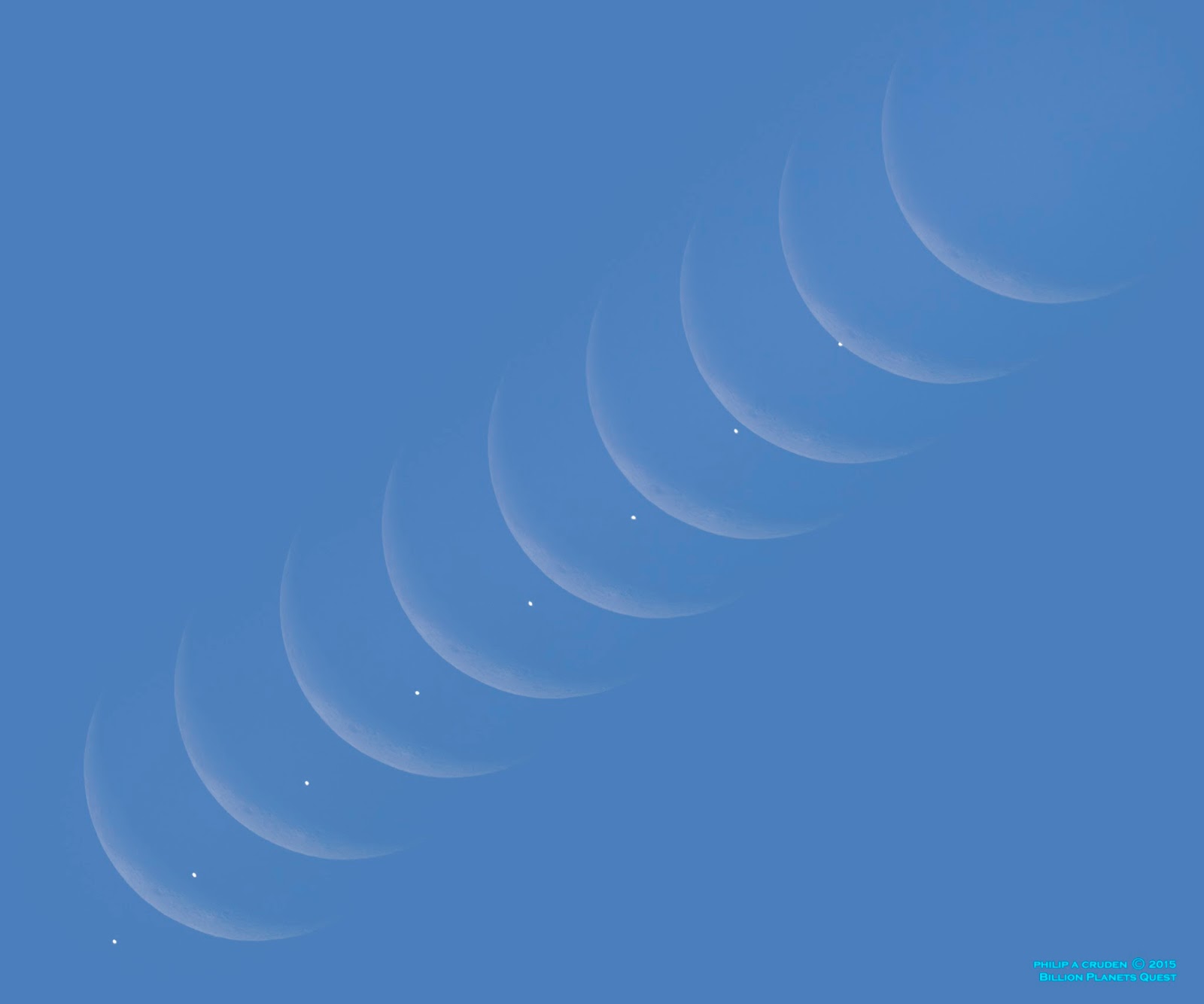
Explanation: Venus now appears as Earth's brilliant morning star, standing in a line-up of planets above the southeastern horizon before dawn. For most, the silvery celestial beacon rose predawn in a close pairing with an old crescent Moon on Monday, December 7. But also widely seen from locations in North and Central America, the lunar crescent actually occulted or passed in front of Venus during Monday's daylight hours. This time series follows the daytime approach of Moon and morning star in clear blue skies from Phoenix, Arizona. The progression of nine sharp telescopic snapshots, made between 9:30am and 9:35am local time, runs from lower left to upper right, when Venus winked out behind the bright lunar limb.
Son excelentes cazadores, capaces de trepar a los árboles para atrapar a sus presas. Su nombre proviene de la parroquia Catahoula de Louisiana, de donde se habría originado esta raza.