2015-09-15

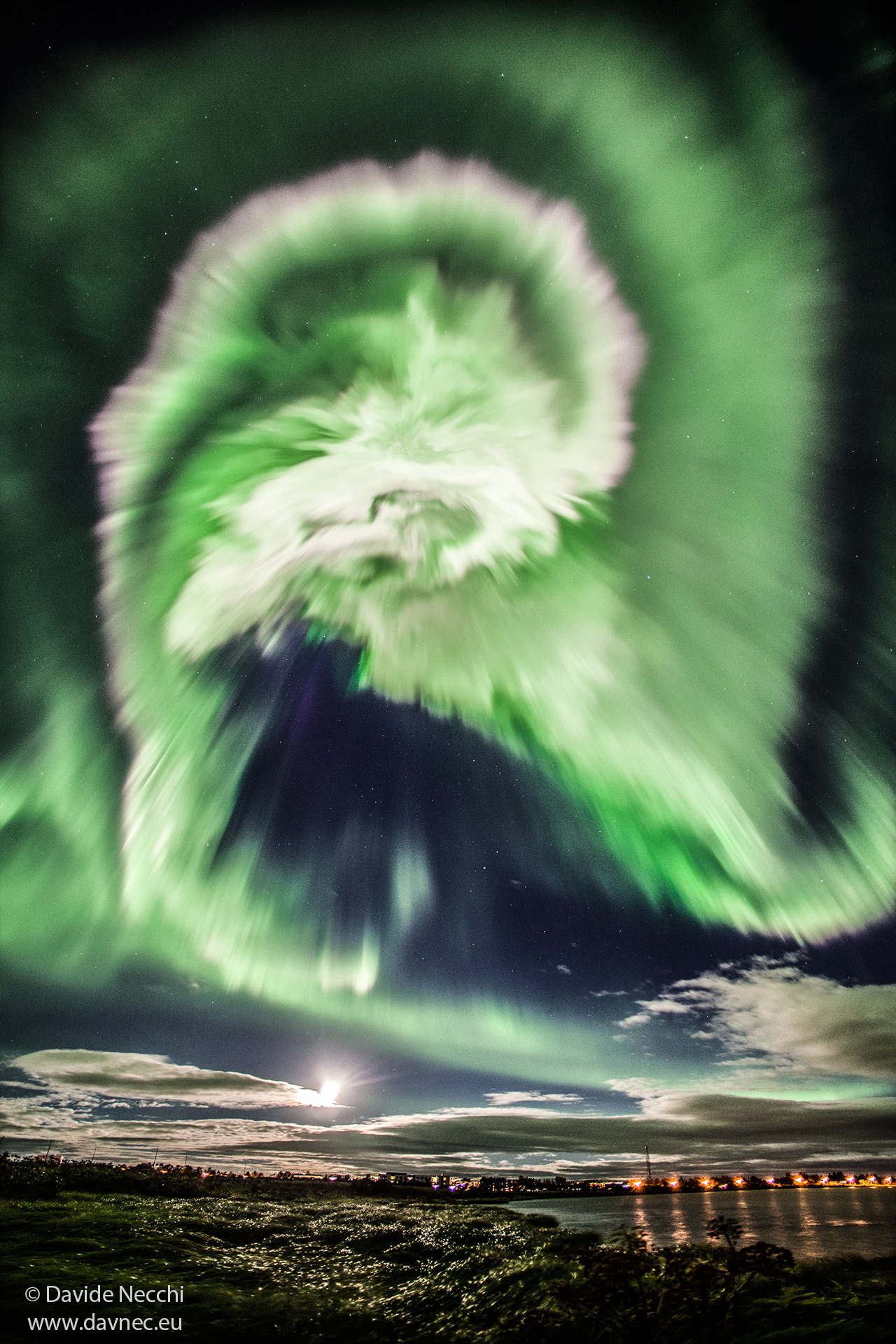
Astronomy picture of the day - 2015 September 15 - A Spiral Aurora over Iceland

See Explanation.  Clicking on the picture will download
 the highest resolution version available.
A Spiral Aurora over Iceland 
Image Credit & Copyright: Davide Necchi
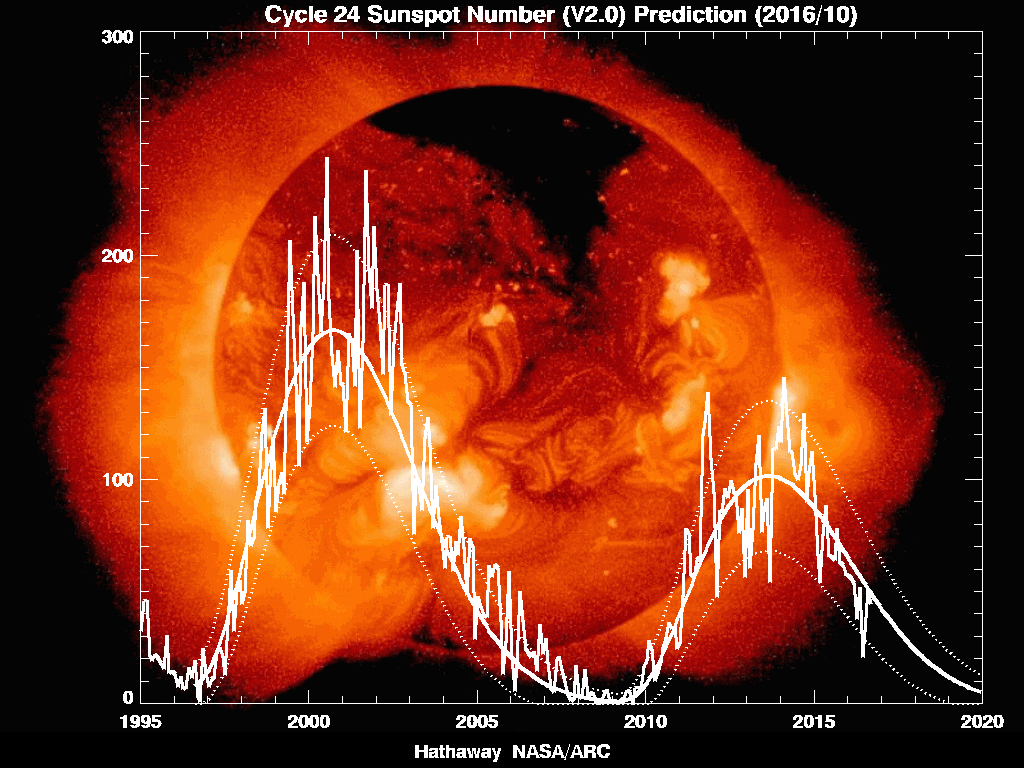
Explanation: What's happened to the sky? Aurora! Captured late last month, this aurora was noted by Icelanders for its great brightness and quick development. The aurora resulted from a solar storm, with high energy particles bursting out from the Sun and through a crack in Earth's protective magnetosphere a few days later. Although a spiral pattern can be discerned, creative humans might imagine the complex glow as an atmospheric apparition of any number of common icons. In the foreground of the featured image is the Ölfusá River, while the lights illuminate a bridge in Selfoss City. Just beyond the low clouds is a nearly full Moon. The liveliness of the Sun -- and the resulting auroras on Earth -- is slowly diminishing as the Sun emerges from a Solar maximum of surface activity and evolves towards a historically more quite period in its 11-year cycle. In fact, solar astronomers are waiting to see if the coming Solar minimum will be as unusually quiet as the last one, where sometimes months would go by with no discernible sunspots or other active solar phenomena.

2015-09-13

Astronomy picture of the day - 2015 September 13 - A Partial Solar Eclipse over Texas

See Explanation.  Clicking on the picture will download
 the highest resolution version available.
A Partial Solar Eclipse over Texas 
Image Credit & Copyright: Jimmy Westlake (Colorado Mountain College) & Linda Westlake
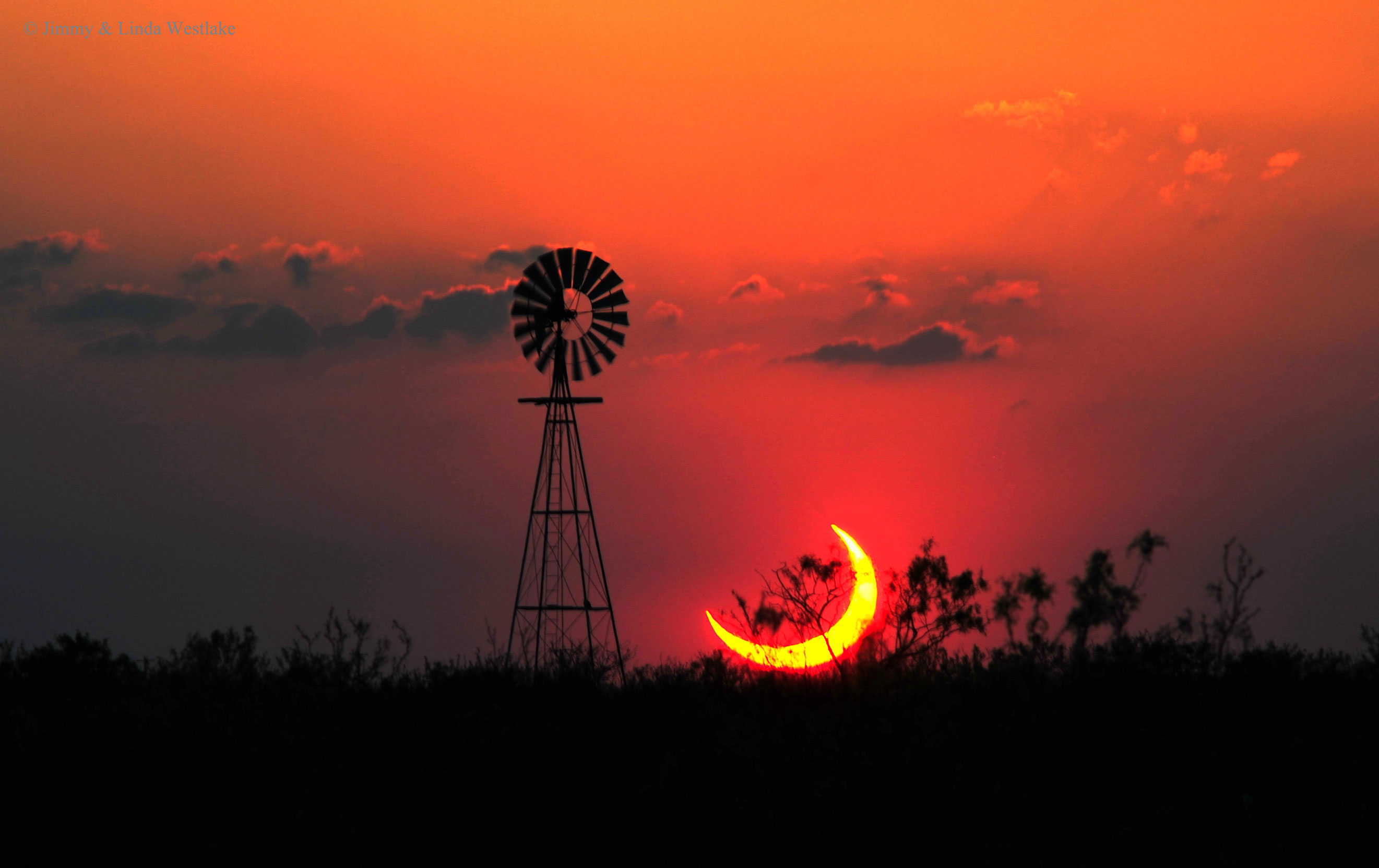
Explanation: It was a typical Texas sunset except that most of the Sun was missing. The location of the missing piece of the Sun was not a mystery -- it was behind the Moon. Featured here is one of the more interesting images taken of a partial solar eclipse that occurred in 2012, capturing a temporarily crescent Sun setting in a reddened sky behind brush and a windmill. The image was taken about 20 miles west of SundownTexas, USA, just after the ring of fireeffect was broken by the Moon moving away from the center of the Sun. Today a new partial solar eclipse of the Sun will be visible from Earth. Unfortunately for people who live in Texas, today's eclipse can only be seen from southern Africa and Antarctica.

2015-09-11

Carlos Paião "Cinderela' - Video - Musica

"Cinderela"

Hino galego - Audio - Musica

PÔR DO SOL NO MAR. OCASO. RIA DE VIGO. PAISAGENS. GALIZA. ESPANHA
Hino galego

Astronomy picture of the day - 2015 September 11 - A Giant Squid in the Flying Bat

See Explanation.  Clicking on the picture will download
 the highest resolution version available.
A Giant Squid in the Flying Bat 
Image Credit & CopyrightSteve Cannistra (StarryWonders)
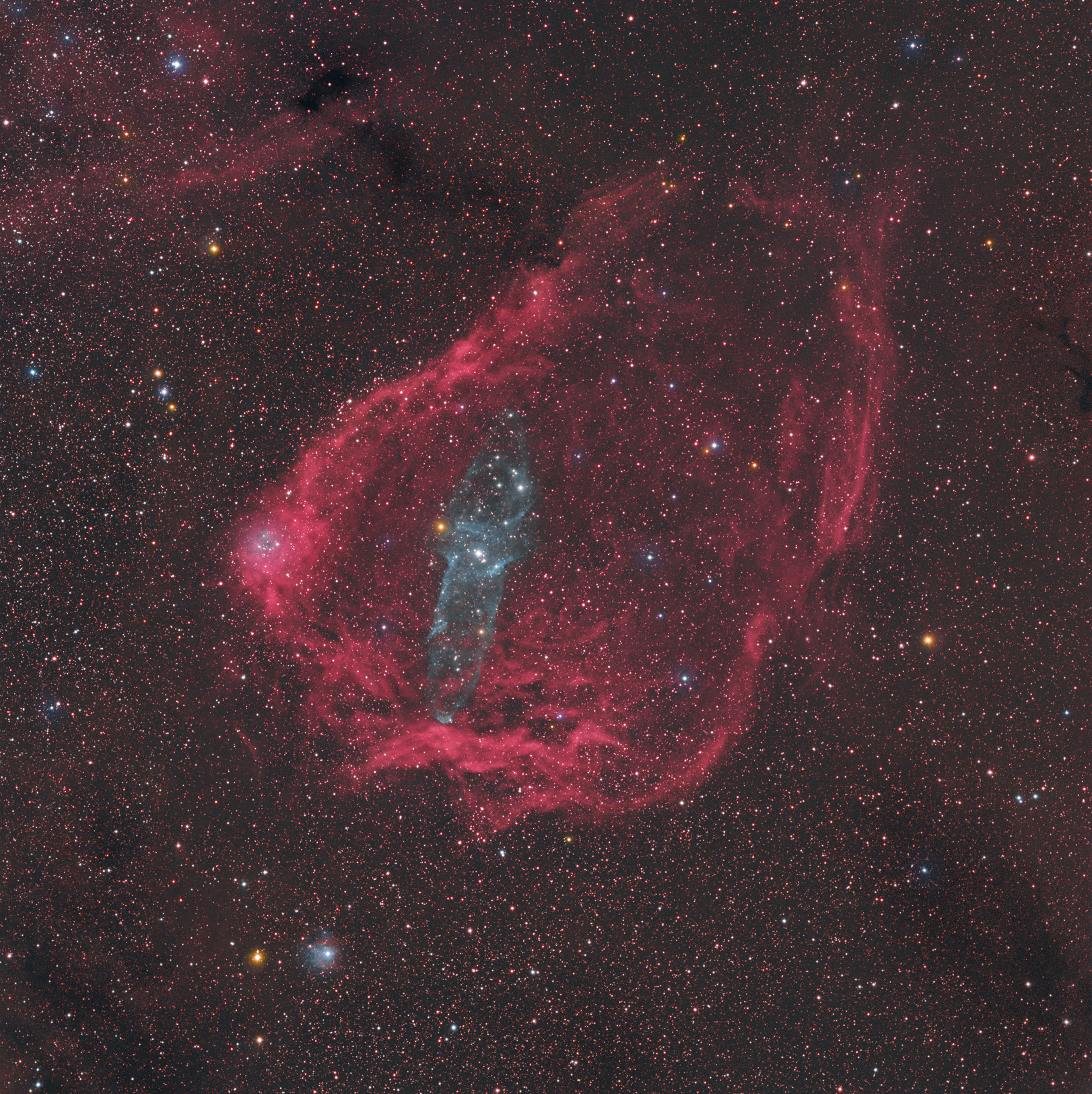
Explanation: Very faint but also very large on planet Earth's sky, a giant Squid Nebula cataloged as Ou4, and Sh2-129 also known as the Flying Bat Nebula, are both caught in this scene toward the royal constellation Cepheus.Composed with a total of 20 hours of broadband and narrowband data, the telescopic field of view is almost 4 degrees or 8 Full Moons across. Discovered in 2011 by French astro-imager Nicolas Outters, the Squid Nebula's alluringbipolar shape is distinguished here by the telltale blue-green emission from doubly ionized oxygen atoms. Though apparently completely surrounded by the reddish hydrogen emission region Sh2-129, the true distance and nature of the Squid Nebula have been difficult to determine. Still, a recent investigation suggests Ou4 really does lie within Sh2-129 some 2,300 light-years away. Consistent with that scenario, Ou4 would represent a spectacular outflow driven by atriple system of hot, massive stars, cataloged as HR8119, seen near the center of the nebula. If so, the truly giant Squid Nebula would physically be nearly 50 light-years across.

2015-09-10

Texto - "O Pifaro leiteiro" - Documento invulgar do nosso correspondente Peter Abrunheira do Riacho de fevereiro

Preciosidade alentejana. Beja, ano de 1771. Fenomenal! Isto é uma reliquiaDescrição peculiar,  num português precioso usado na época . O rapaz usou o pífaro leiteiro ( já tinha ouvido chamar-lhe muitos nomes, este é mais um ) no vaso da rapariga. (so faltava referir as partes fodengas!)


"Vistos os autos, se prova que , indo a autora para a fonte, lhe saiu ao encontro o réu, e, levantando-lhe o faldistério, lhe encaixou o pifaro leiteiro no vaso natural, e, esgaravatando,  ficou consumada a desfloração. Portanto condeno o réu a que pague as custas e selos e receba a moça e o absolvo das garras da lei. Beja, 25 de novembro de 1771. O juiz (a) Doutor Manuel da Costa Silva Araujo" 

A relação deste pênis para esse corpo humano está completamente FORA de proporção.


Peter Abrunheira - Riacho de Fevereiro - Europa Lateral

Astronomy picture of the day - 2015 September 10 - Earthrise

See Explanation.  Clicking on the picture will download
 the highest resolution version available.
Earthrise 
Image Credit: Apollo 8NASA
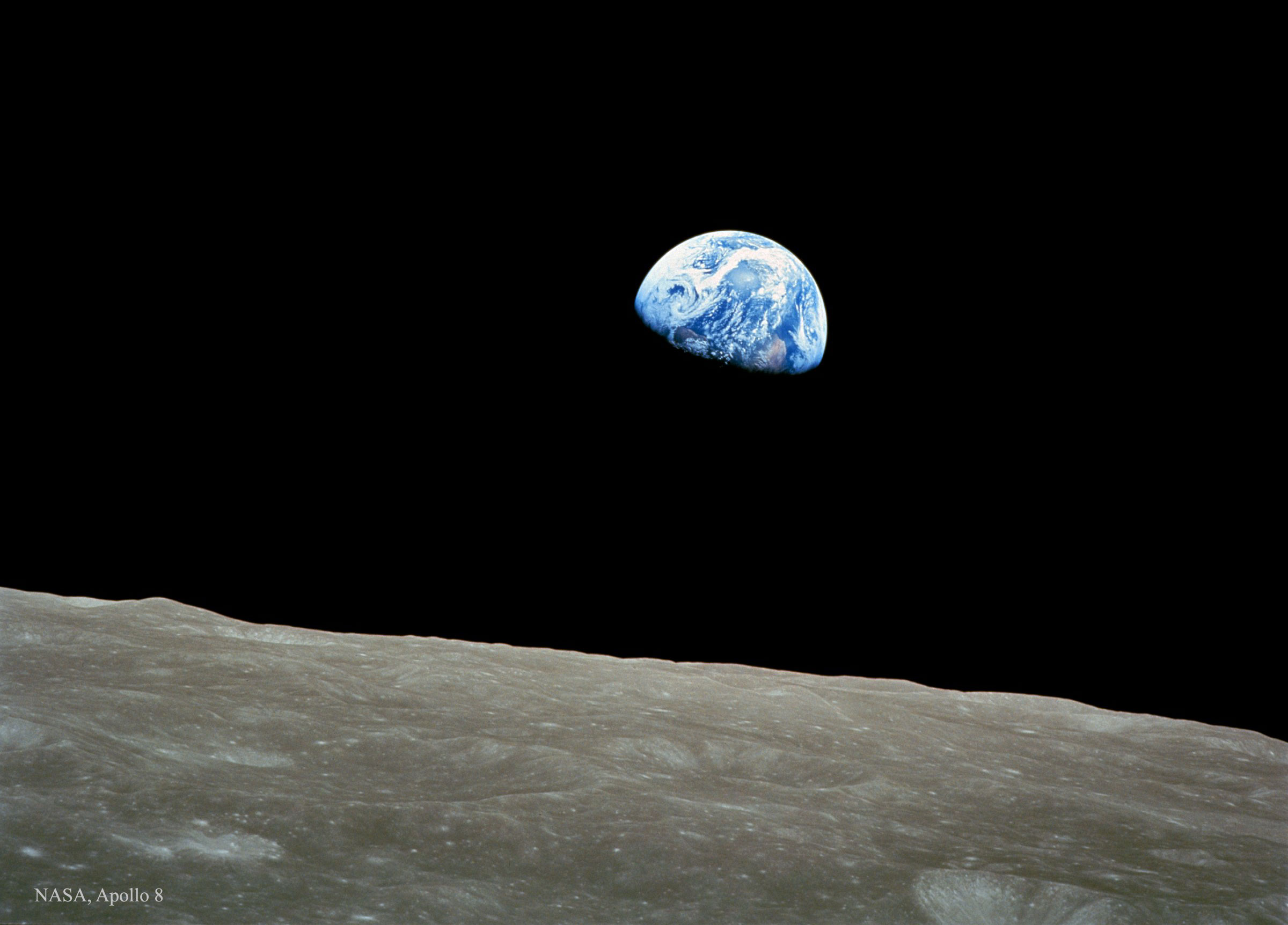
Explanation: What's that rising over the edge of the Moon? Earth. About 47 years ago, in December of 1968, the Apollo 8 crew flew from the Earth to the Moon and back again. Frank BormanJames Lovell, and William Anderswere launched atop a Saturn V rocket on December 21, circled the Moon ten times in their command module, and returned to Earth on December 27. The Apollo 8 mission's impressive list of firsts includes: the first humans to journey to the Earth's Moon, the first to fly using the Saturn V rocket, and the first to photograph the Earth from deep space. As the Apollo 8 command module rounded the farside of the Moon, the crew could look toward the lunar horizonand see the Earth appear to rise, due to their spacecraft's orbital motion. Their famous picture of a distant blue Earth above the Moon's limb was a marvelous gift to the world.