2016-12-28

Palácios cariocas - Palácio Universitário

No Palácio Universitário, localizado na Praia Vermelha, está a Universidade Federal do Rio de Janeiro (UFRJ), também chamada de Universidade do Brasil, a maior universidade federal do país.

O prédio fora construído em 1842, em estilo neoclássico, para ser um hospício, o Hospício de Pedro II, que funcionou entre 1852 e 1944. Em 1949 foi reinaugurado pelo Presidente Eurico Gaspar Dutra para ser a sede da reitoria da Universidade do Brasil.

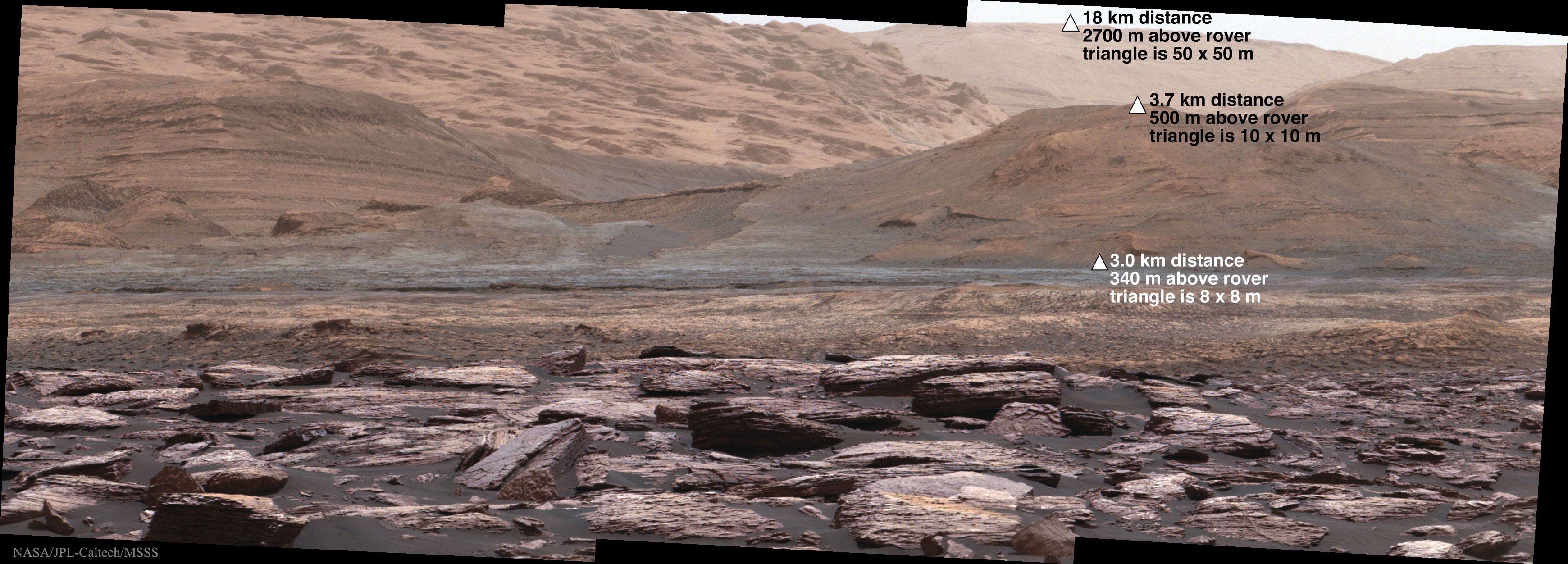
Astronomy picture of the day - 2016 December 28 - Curiosity Surveys Lower Mount Sharp on Mars

See Explanation.  Clicking on the picture will download
 the highest resolution version available.
Curiosity Surveys Lower Mount Sharp on Mars 
Image Credit: NASAJPL-CaltechMSSS;


Explanation: If you could stand on Mars -- what might you see? If you were the Curiosity rover, then just last month you would have contemplated the featured image -- a breathtaking panorama of the lower portion of Mount Sharp. The colors have been adjusted to mimic lighting familiar to Earthlings. Surveyed here was a rocky plain before increasingly high rolling hills. The rounded hills in the middle distance, called the Sulfate Unit, are Curiosity's highest currently planned destination. One reason these hills are interesting is because sulfates are an energy source for some micro-organisms. The immediate path forward, though, was toward the southeast on the left part of the image.

2016-12-27

Pink Floyd - "Coming back to life" - Video - Music

Pink Floyd | General Photographs
"Coming back to life"

Palacios cariocas - Museu de Belas Artes

Tombado pelo Instituto do Patrimônio Histórico e Artístico Nacional desde 1973, o edifício, construído em 1909, no Centro do Rio de Janeiro, teve como inspiração o Museu do Louvre, em Paris.
O acervo do museu conta com mais de 22.000 itens, desde 1808, trazidos por Dom João VI, até o início do século XX.

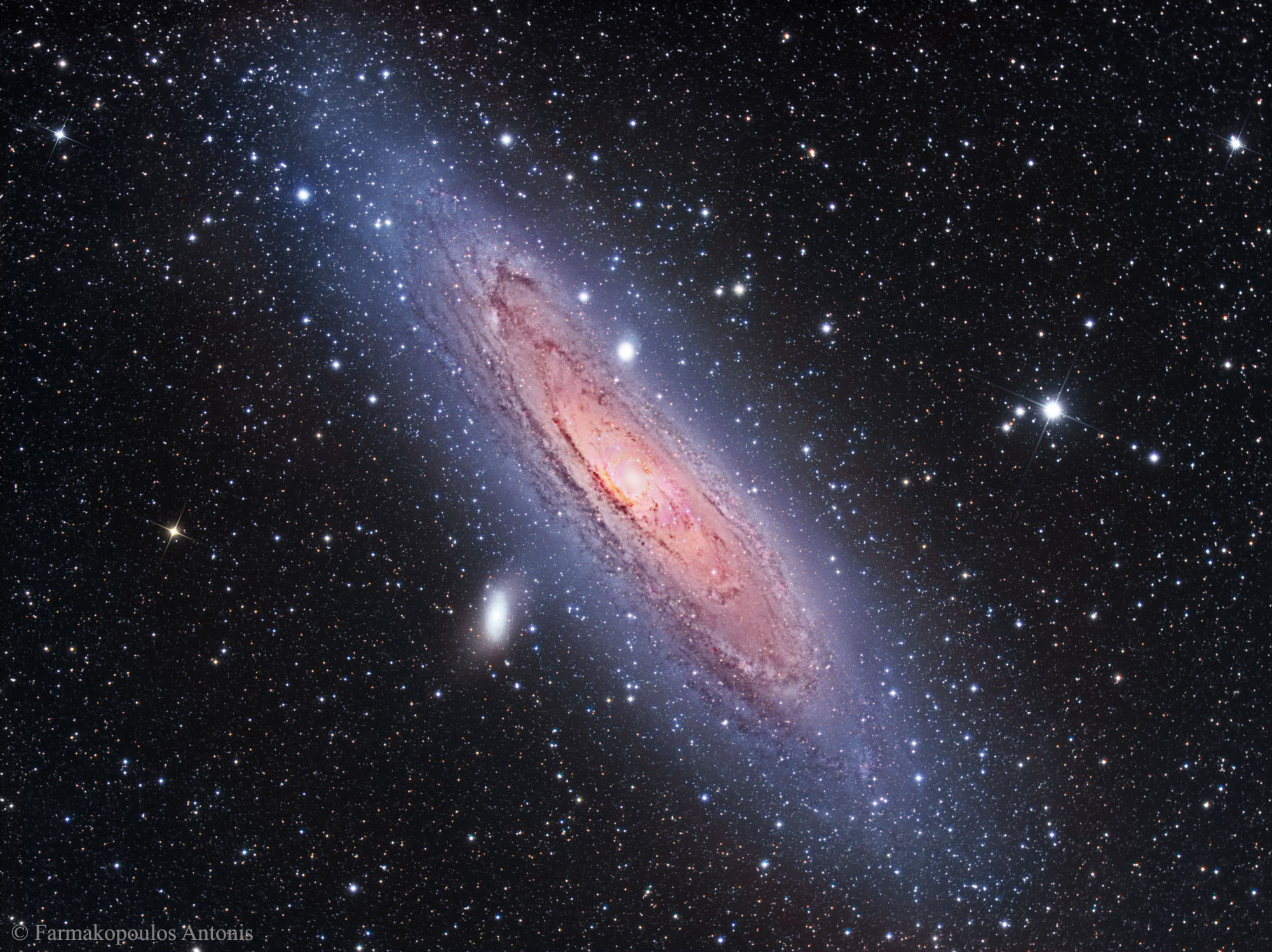
Astronomy picture of the day - 2016 December 27 - M31: The Andromeda Galaxy

See Explanation.  Clicking on the picture will download
 the highest resolution version available.
M31: The Andromeda Galaxy 
Image Credit & Copyright: Farmakopoulos Antonis
Explanation: What is the nearest major galaxy to our own Milky Way Galaxy? Andromeda. In fact, our Galaxy is thought to look much like Andromeda. Together these two galaxies dominate the Local Group of galaxies. The diffuse light from Andromeda is caused by the hundreds of billions of stars that compose it. The several distinct stars that surround Andromeda's image are actually stars in our Galaxy that are well in front of the background object. Andromedais frequently referred to as M31 since it is the 31st object on Messier's list of diffuse sky objects. M31 is so distant it takes about two million years for light to reach us from there. Although visible without aid, the featured image of M31is a digital mosaic of several frames taken with a small telescope. Much about M31 remains unknown, including exactly how many billions of years it will before it collides with our home galaxy.

2016-12-26

Grupos de Serpa, Pias e Vila Nova de S. Bento - "Vamos la saindo" - Video - Musica - Ao vivo

Afficher l'image d'origine
"Vamos la saindo"

Sting - "All would envy" - Video - Music

"All would envy"

Palacios cariocas - Palácio de São Cristóvão

Localizado no Parque da Quinta da Boa Vista, no Rio de Janeiro, este palácio tem bastante história para contar, foi a residência da família real portuguesa entre os anos de 1808 e 1821, passou a pertencer à família imperial brasileira de 1822 a 1889, foi a sede da primeira Assembleia Constituinte Republicana de 1889 a 1891 e, em 1892, se tornou a sede do Museu Nacional, função que exerce até hoje.
O Museu Nacional tem parceria com a Universidade Federal do Rio de Janeiro e é um dos mais importantes museus do país, sendo também o maior museu de história natural e antropológica da América Latina.

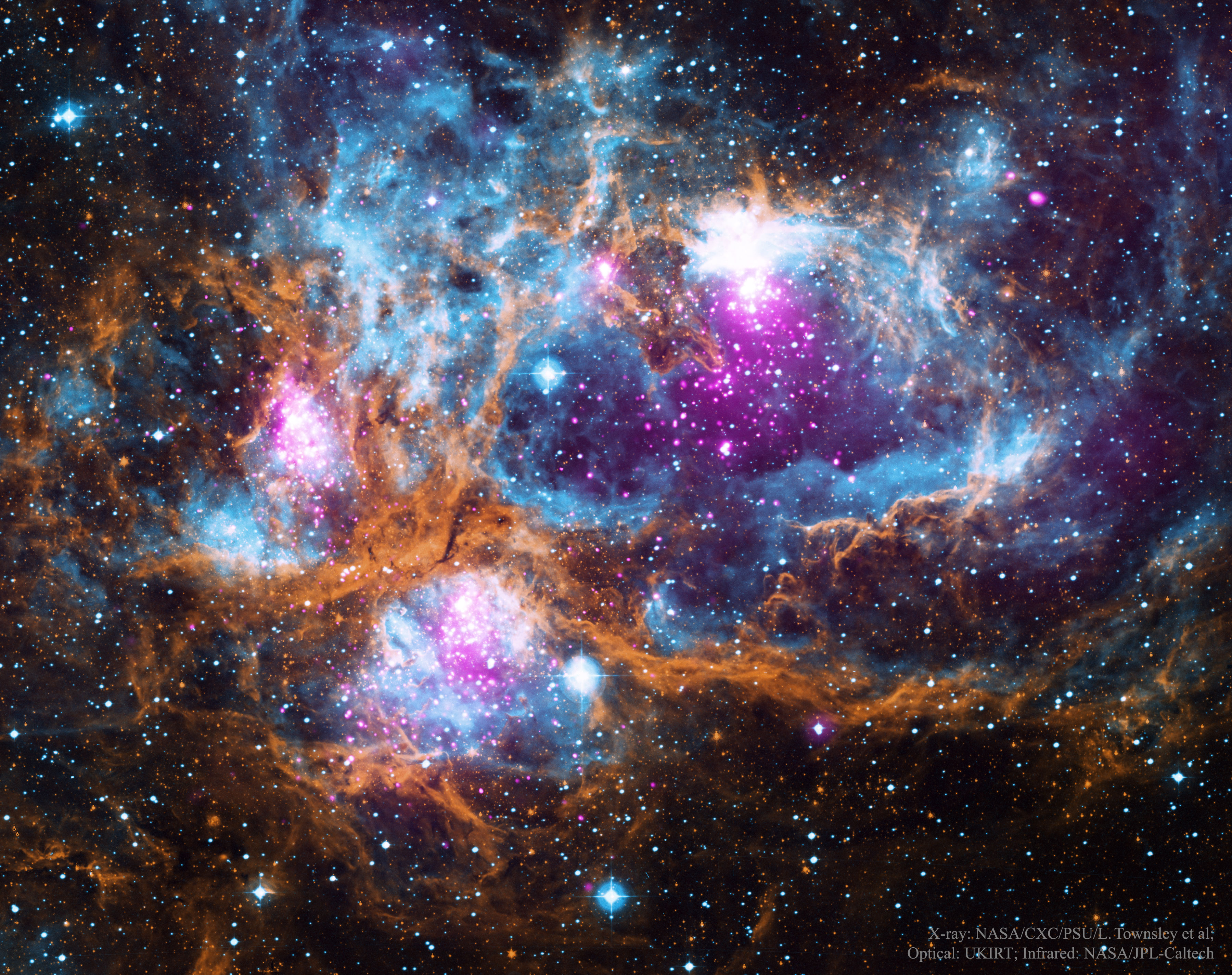
Astronomy picture of the day - 2016 December 26 - NGC 6357: Stellar Wonderland

See Explanation.  Clicking on the picture will download
 the highest resolution version available.
NGC 6357: Stellar Wonderland 
Image Credit: X-ray: NASA/CXC/PSU/L. Townsley et al; Optical: UKIRT; Infrared: NASA/JPL-Caltech
Explanation: For reasons unknown, NGC 6357 is forming some of the most massive stars ever discovered. This complex wonderland of star formation consists of numerous filaments of dust and gas surrounding huge cavities ofmassive star clusters. The intricate patterns are caused by complex interactions between interstellar winds, radiation pressures, magnetic fields, and gravity. The featured image includes not only visible light taken by the UKIRT Telescope in Hawaii (blue) as part of the SuperCosmos Sky Surveys, but infrared light from NASA's orbiting Spitzer Space Telescope (orange) and X-ray light from NASA's orbiting Chandra X-ray Observatory (pink). NGC 6357spans about 100 light years and lies about 5,500 light years away toward the constellation of the Scorpion. Within 10 million years, the most massive stars currently seen in NGC 6357 will have exploded.

2016-12-25

Artigo - Avião militar russo despenha-se no mar Negro com 92 pessoas a bordo


Um avião militar russo que transportava 92 pessoas, incluindo o famoso coro militar Alexandrov, despenhou-se durante a madrugada pouco depois de descolar na zona do mar Negro, avança a imprensa russa, citando o Ministério da Defesa da Rússia. Os destroços do avião terão sido encontrados no mar Negro.
No avião seguiam 84 passageiros e oito tripulantes. O aparelho partiu às 05:40 (02:40 em Lisboa) de Adler, na zona balnear de Sochi, na costa do Mar Negro, e realizava um voo de rotina para a base russa Hmeimim, na costa da cidade síria de Latakia, quando desapareceu dos radares. Entre os passageiros estariam ainda vários jornalistas russos.
Segundo a televisão Al Jazeera, o avião estaria em Socchi a reabastecer e as condições meterológicas eram praticamente ideais quando descolou. Dois minutos depois de o fazer terá desaparecido dos radares, sem enviar qualquer pedido de ajuda ou alerta. Os destroços terão sido encontrados a cerca de seis quilómetros da costa.
O avião militar voava para a Síria, onde o coro da Exército russo tinha agendado um concerto de ano novo para os militares russos no terreno.
“Fragmentos do avião Tu-154 do Ministério da Defesa russa foram encontrados a 1,5 quilómetros da costa da cidade de Sochi, no Mar Negro, a uma profundidade entre 50 e 70 metros”, indicou o ministério.
Observador - Portugal