2017-06-11

Astronomy picture of the day - 2017 June 11 - IC 418: The Spirograph Nebula

See Explanation.  Clicking on the picture will download
 the highest resolution version available.
IC 418: The Spirograph Nebula 
Image Credit: NASAESA, and the Hubble Heritage Team (STScI/AURA); Acknowledgement: R. Sahai (JPL) et al.
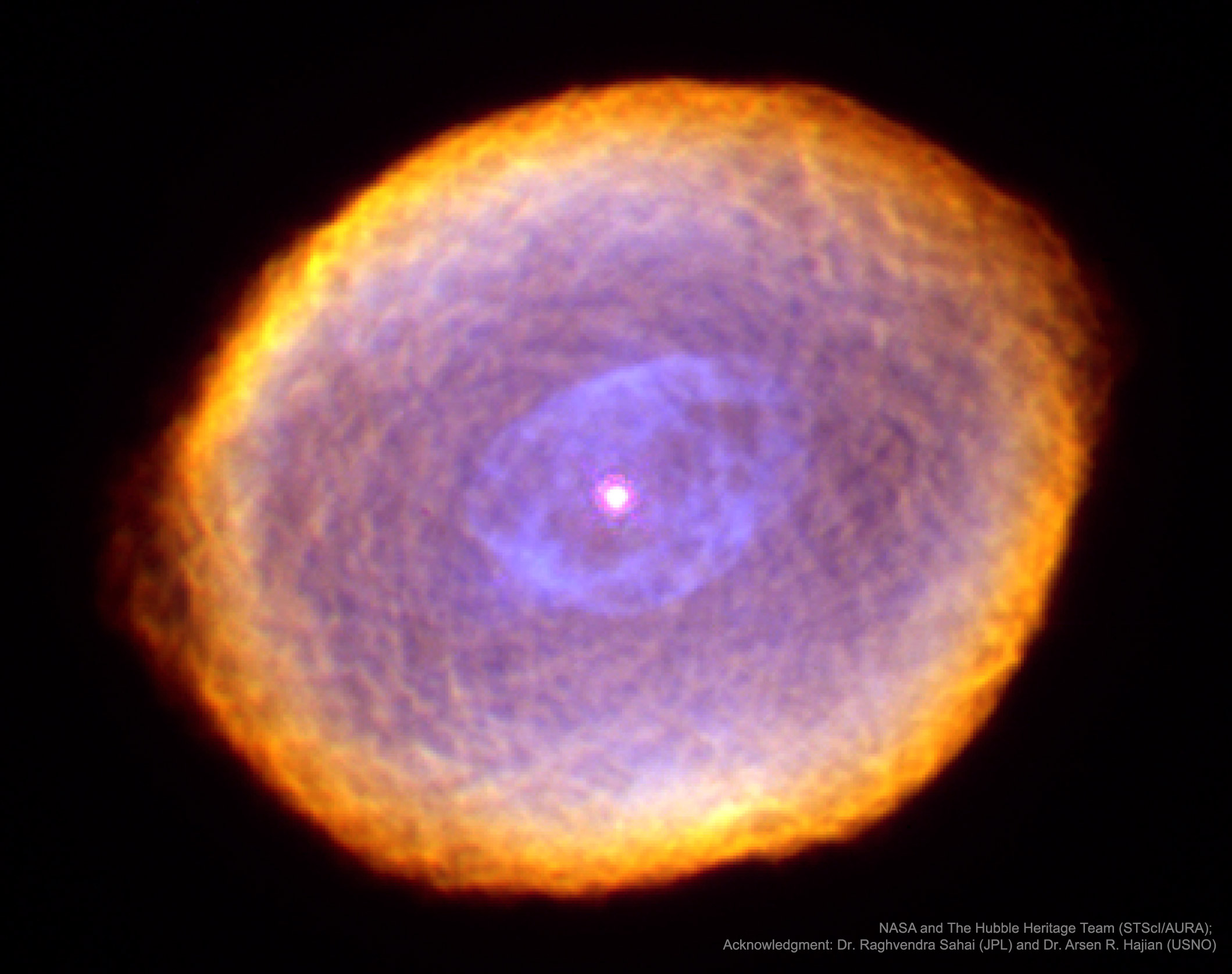
Explanation: What is creating the strange texture of IC 418? Dubbed the Spirograph Nebula for its resemblance to drawings from a cyclical drawing toolplanetary nebula IC 418 shows patterns that are not well understood. Perhaps they are related to chaotic winds from the variable central star, which changes brightness unpredictably in just a few hours. By contrast, evidence indicates that only a few million years ago, IC 418 was probably a well-understood star similar to our Sun. Only a few thousand years ago, IC 418 was probably a common red giant star. Since running out of nuclear fuel, though, the outer envelope has begun expanding outward leaving a hot remnant core destined to become a white-dwarf star, visible in the image center. The light from the central core excites surrounding atoms in the nebula causing them to glow. IC 418 lies about 2000 light-years away and spans 0.3 light-years across. This false-color image taken from the Hubble Space Telescope reveals the unusual details.

2017-06-10

Astronomy picture of the day - 2017 June 10 - Saturn in the Milky Way

See Explanation.  Clicking on the picture will download
 the highest resolution version available.
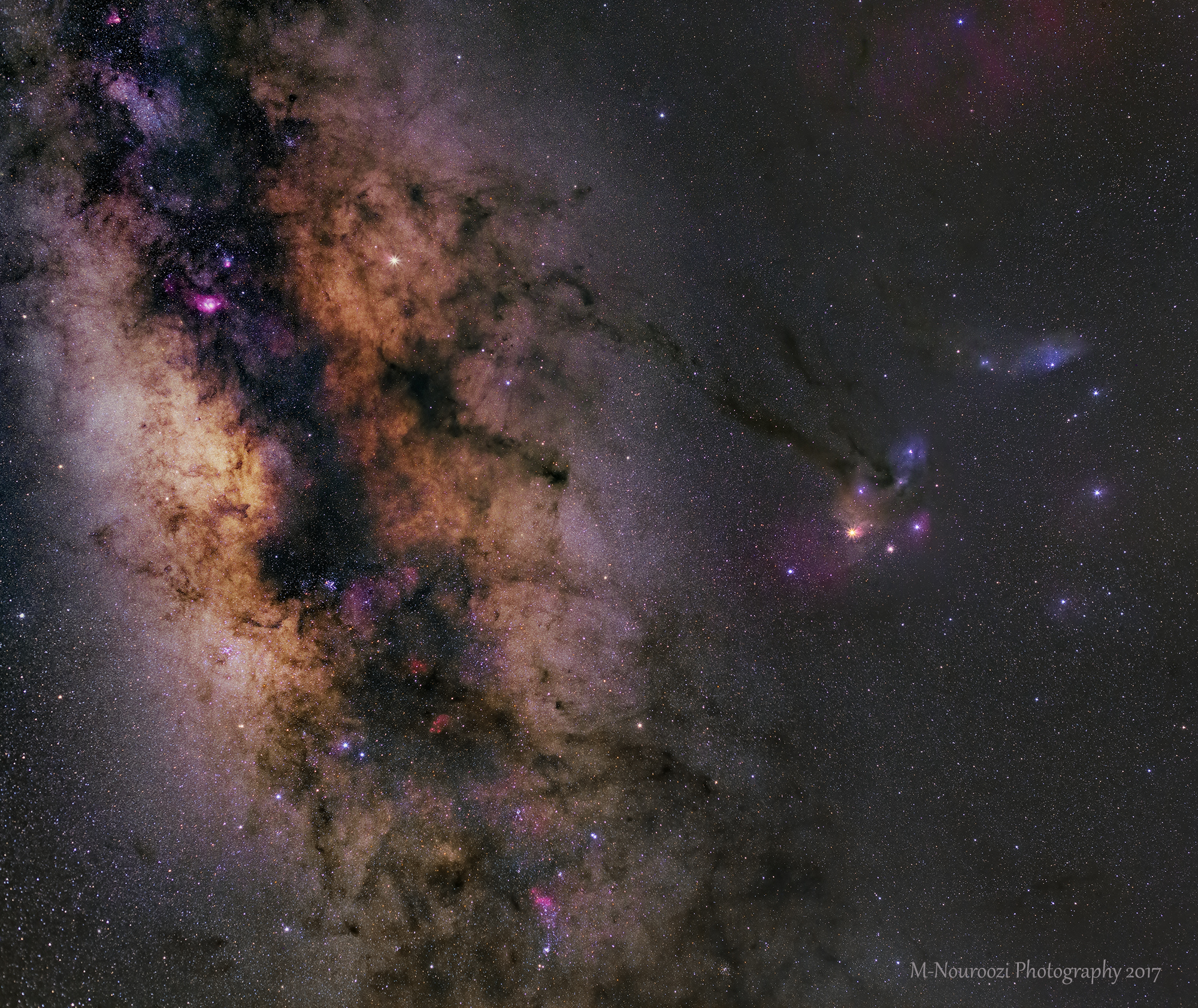
Saturn in the Milky Way 
Image Credit & CopyrightMohammad Nouroozi


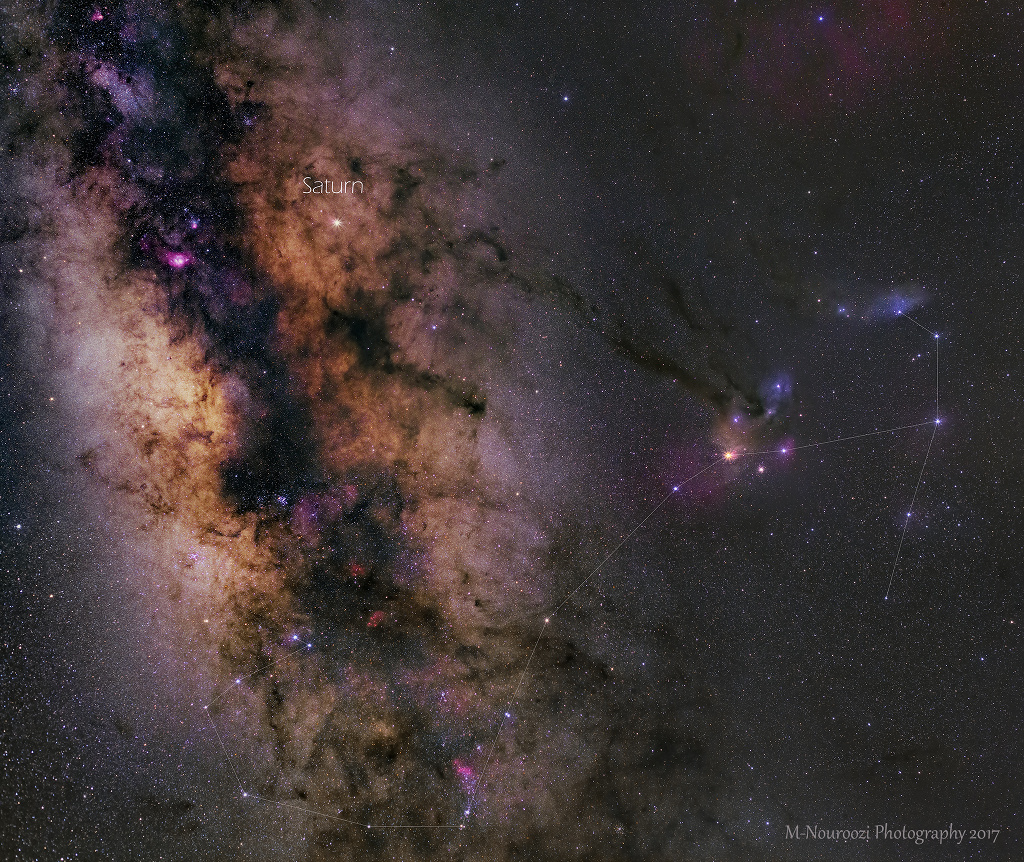
Explanation: Saturn is near opposition in planet Earth's sky. Rising at sunset and shining brightly throughout the night, it also lies near a line-of-sight to crowded starfields, nebulae, and obscuring dust clouds along the Milky Way. Whitish Saturn is up and left of center in this gorgeous central Milky Way skyscape, a two panel mosaic recorded earlier this month. You can find the bright planet above the bowl of the dusty Pipe nebula, and just beyond the end of adark river to Antares, alpha star of the constellation Scorpius. For now the best views of the ringed giant planet are from the Saturn-orbiting Cassini spacecraft, though. Diving close, Cassini's Grand Finale orbit number 8 is in progress.

2017-06-09

Expressões populares portuguesas - Estar na berlinda


Significado: Estar em evidência, em foco.


Origem: Estar expressão relaciona-se com os jogos de prendas, em que, da roda, sai uma pessoa que vai para a berlinda, onde se sujeita aos comentários dos outros jogadores. Depois, de acordo com as variantes, ou adivinha a autoria dos comentários ou escolhe um deles, sempre sem saber quem os fez. O responsável pela observação eleita será o próximo a ir para a berlinda. Foi por isso que a expressão passou a ser usada em relação às pessoas que estão em evidência ou despertam a curiosidade dos outros, ficando sujeitas a todo o tipo de ditos e mexericos.


Atestada desde finais do século XIX, esta palavra parece ter vindo do italiano "berlina" - zombaria. Mas berlinda é também a designação de uma carruagem usada outrora, cujo nome provém do francês "bérline", que, por sua vez, tem origem no nome da capital alemã, Berlim. É que foi esta a cidade que viu nascer, no século XVIII, o primeiro exemplar dessa carruagem, concebida por Filipe Chiese. Tinha quatro rodas, quatro assentos e era suspensa inicialmente por tiras de couro, que, mais tarde, foram substituídas por molas. O -d- que passou a integrar berlinda pode justificar-se por influência do adjectivo linda, devido à elegância do coche.

Astronomy picture of the day - 2017 June 9 - M27: Not a Comet

See Explanation.  Clicking on the picture will download
 the highest resolution version available.
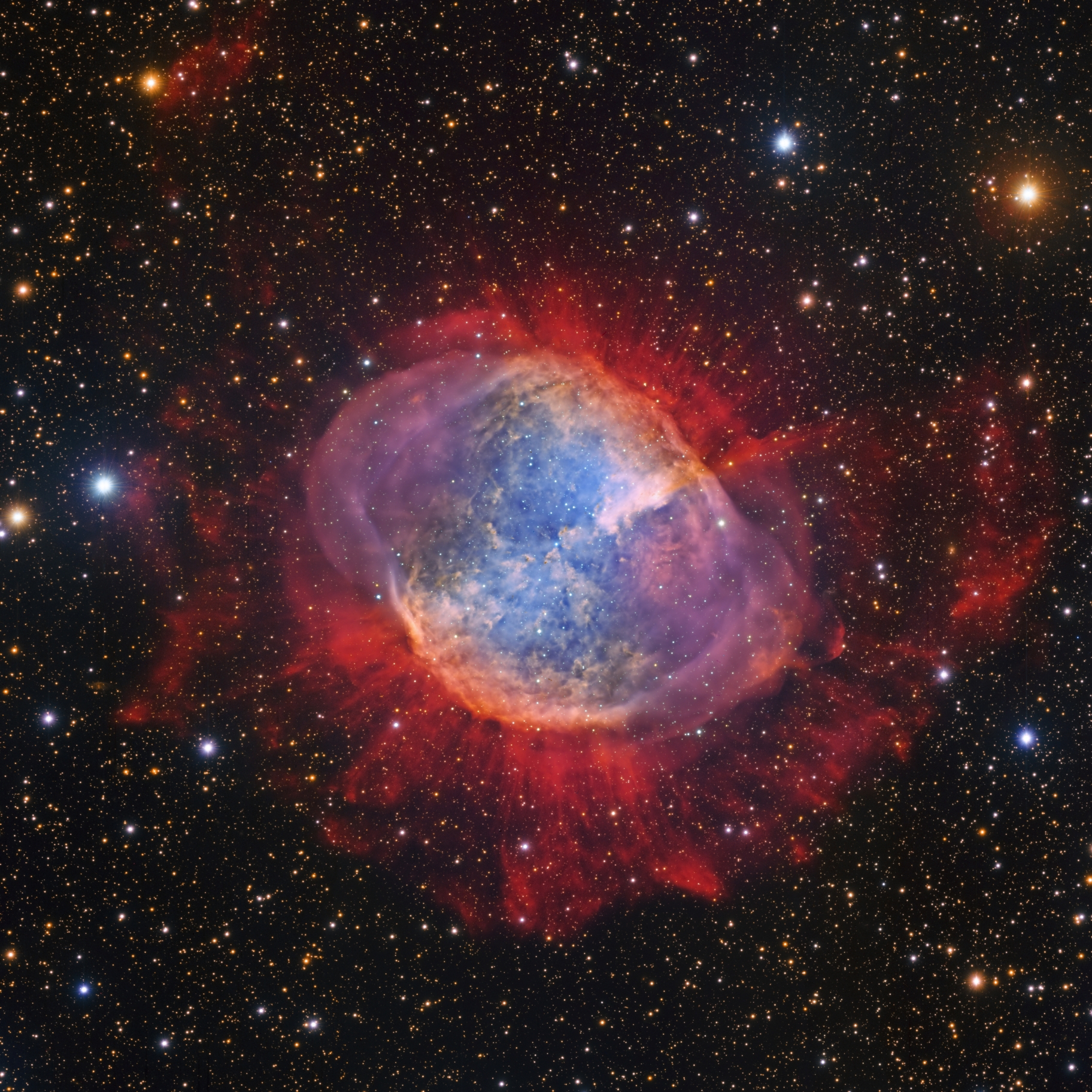
M27: Not a Comet 
Image Credit & Copyright: Data; Subaru, NAOJAssembly and Processing; Roberto Colombari
Explanation: While hunting for comets in the skies above 18th century France, astronomer Charles Messier diligently kept a list of the things he encountered that were definitely not comets. This is number 27 on his now famous not-a-comet list. In fact, 21st century astronomers would identify it as a planetary nebula, but it's not a planet either, even though it may appear round and planet-like in a small telescope. Messier 27 (M27) is an excellent example of agaseous emission nebula created as a sun-like star runs out of nuclear fuel in its core. The nebula forms as the star's outer layers are expelled into space, with a visible glow generated by atoms excited by the dying star's intense but invisible ultraviolet light. Known by the popular name of the Dumbbell Nebula, the beautifully symmetric interstellar gas cloud is over 2.5 light-years across and about 1,200 light-years away in the constellation VulpeculaThis spectacular color image incorporates broad and narrowband observations recorded by the 8.2 meter Subaru telescope.

2017-06-08

Astronomy picture of the day - 2017 June 8 - Firefall by Moonlight

See Explanation.  Clicking on the picture will download
 the highest resolution version available.
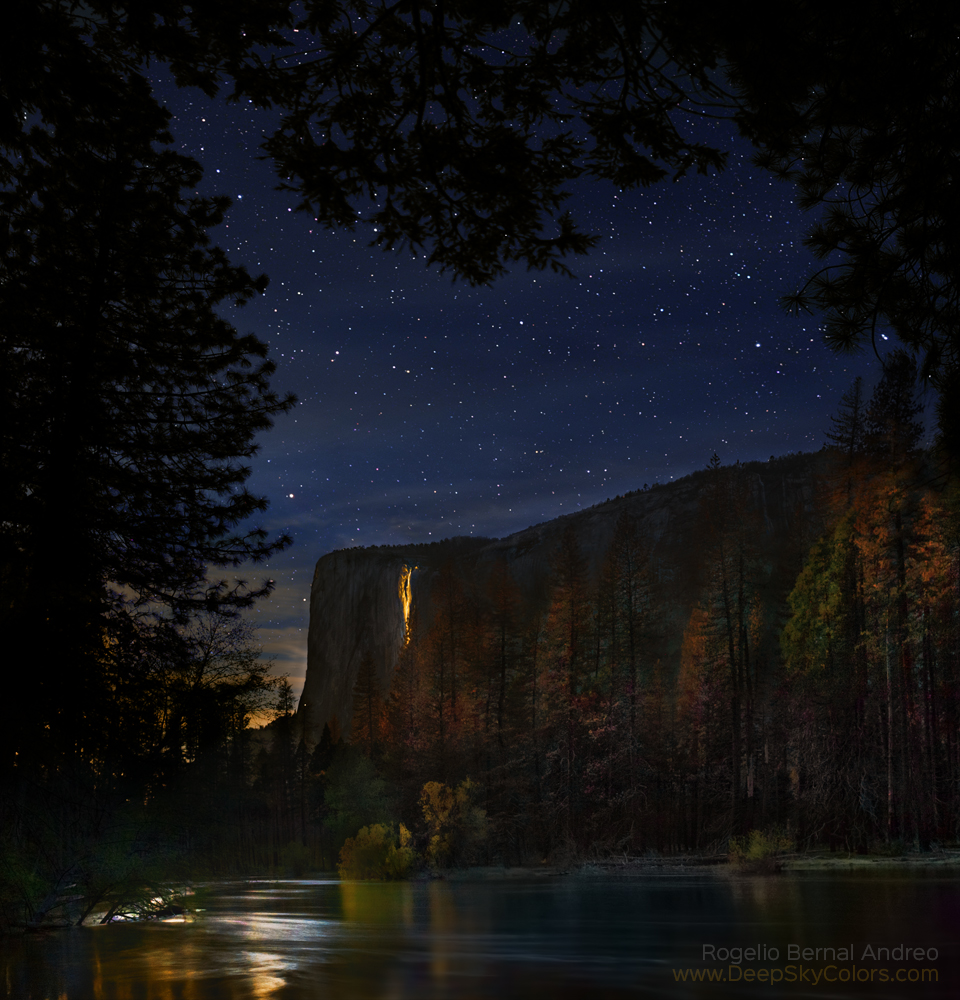
Firefall by Moonlight 
Image Credit & Copyright: Rogelio Bernal Andreo (Deep Sky Colors)


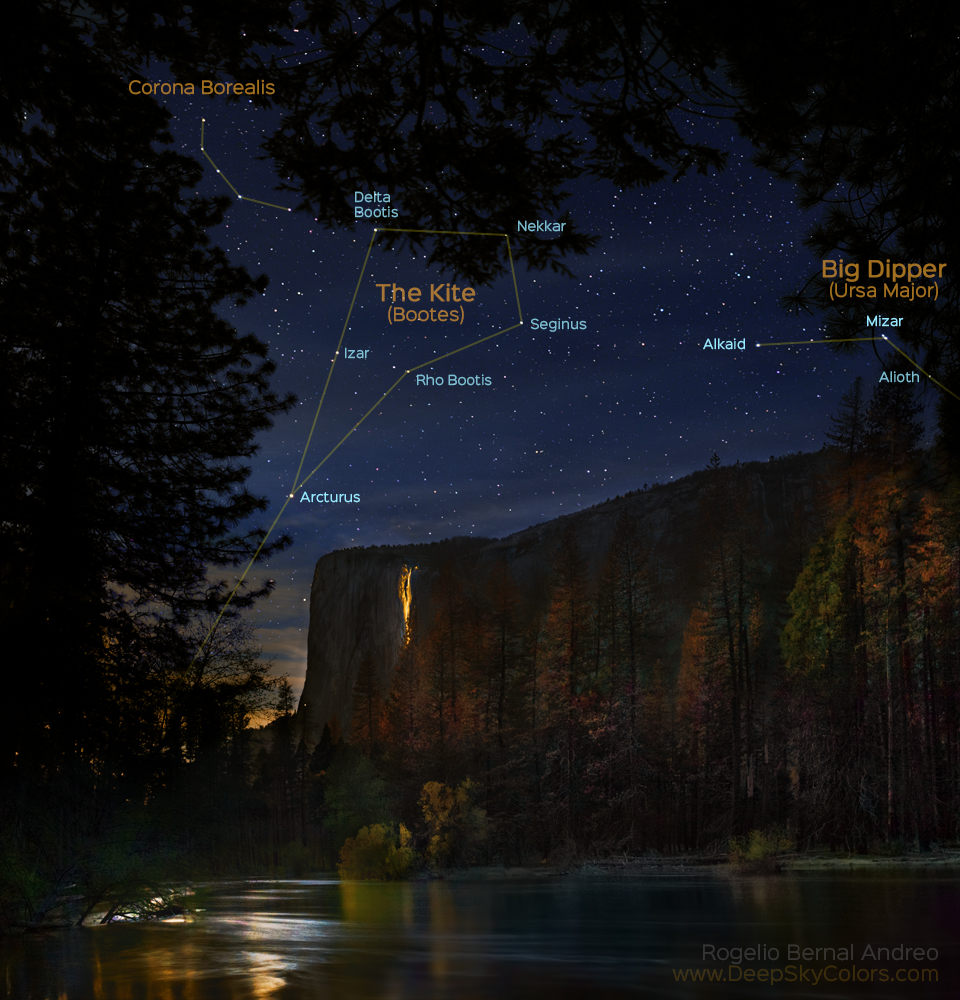
Explanation: On certain dates in February, an elusive firefall can be spotted at sunset in Yosemite National Park, when the weather cooperates and the direction to the setting Sun is just right. Often photographed from vantage points below, at the right moment the park's seasonal Horsetail Fall is isolated in the shadows of the steep walls of El Capitan but still illuminated with rays of sunlight reflected by the angled rockface directly behind the flow, briefly giving the waterfall a dramatic fiery appearance. The Horsetail firefall is more rarely photographed at moonset under a starry night sky, though. Even more elusive by moonlight, the firefall effect can also be seen when skies are clear and a bright Moon sets at the right direction along the western horizon. Skies were clear and stars were shining for this well-planned photograph of the Horsetail firefall lit by a gibbous Moon setting in the early morning hours of May 9.

2017-06-07

Astronomy picture of the day - 2017 June 7 - Orbiting Jupiter

Résultat de recherche d'images pour "image jupiter"


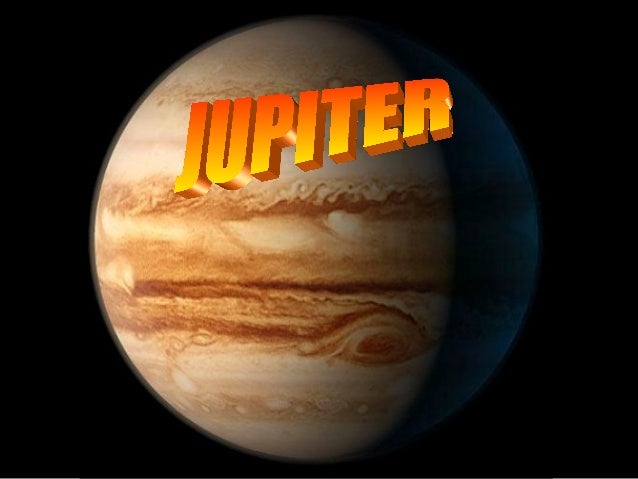
Orbiting Jupiter 
Video Credit & LicenseNASAJunoSwRIMSSSGerald EichstadtSean Doran
Explanation: What would it be like to orbit Jupiter? The dramatic featured video depicts just this and was made from images taken by NASA's Juno spacecraft currently orbiting the Jovian giant. Juno recently completed its sixth passnear Jupiter during its looping elliptical six-week orbit. As the time-lapse video starts, alternating dark and light cloud bands passed underneath the spacecraft as it approaches Jupiter's South Pole. These clouds contain complex textures involving eddies, swirls, ovals, and extended clouds that are have no direct analog from Earth. As the spacecraft passes beneath Jupiter, new cloud patterns devoid of long bands emerge but are again rich with alien swirls and ovals. Over the next few years, Juno will continue to orbit and probe Jupiter, determine atmospheric water abundance, and attempt to determine if Jupiter has a solid surface underneath these fascinating clouds.

2017-06-06

Kovacs - "My love" - Video - Music

Résultat de recherche d'images pour "image singer Kovacs - my love"
"My love"

Blue - "Breathe easy" - Video - Music

Résultat de recherche d'images pour "image blue"
"Breathe easy"

Astronomy picture of the day - 2017 June 6 - The Case of the Missing Star

See Explanation.  Clicking on the picture will download
 the highest resolution version available.
The Case of the Missing Star 
Image Credit: NASAESAHubbleC. Kochanek (OSU)
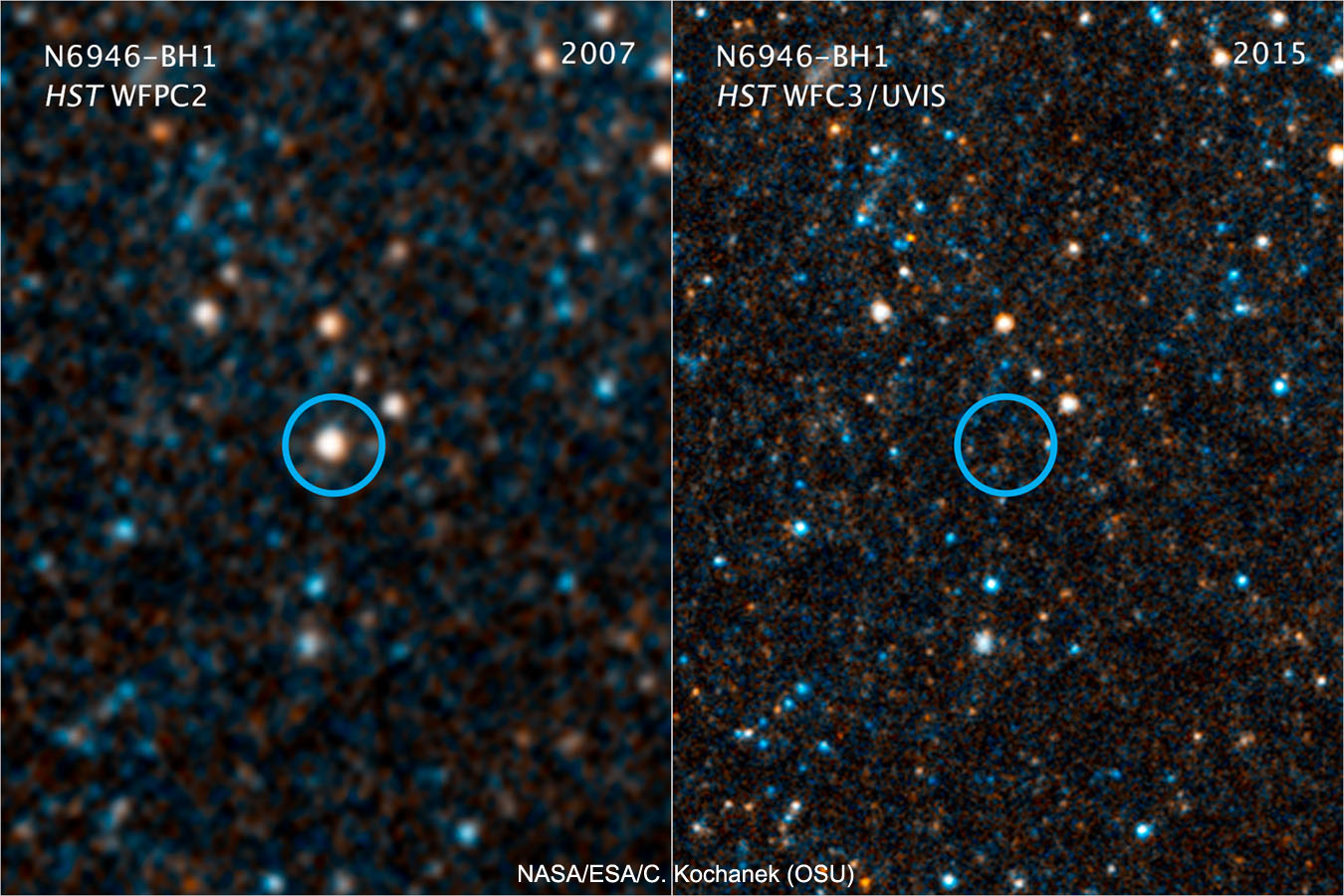
Explanation: What's happened to giant star N6946-BH1? It was there just a few years ago -- Hubble imaged it. Now there's only a faint glow. What's curiouser, no bright supernova occurred -- although the star did brightened significantly for a few months. The leading theory is that, at about 25 times the mass of our Sun, N6946-BH1's great gravity held much of the star together during its final tumultuous death throes, after which most the star sunk into ablack hole of its own making. If so, then what remained outside of the black hole likely then formed an accretion disk that emits comparatively faint infrared light as it swirls around, before falling in. If this mode of star death is confirmed with other stars, it gives direct evidence that a very massive star can end its life with a whimper rather than a bang.

2017-06-05

Astronomy picture of the day - 2017 June 5 - Highlights of the Summer Sky

See Explanation.  Clicking on the picture will download
 the highest resolution version available.
Highlights of the Summer Sky 
Illustration Credit & Copyright: Universe2go.com
Explanation: What's up in the sky this summer? The featured graphic gives a few highlights for Earth's northern hemisphere. Viewed as a clock face centered at the bottom, early summer sky events fan out toward the left, while late summer events are projected toward the right. Objects relatively close to Earth are illustrated, in general, as nearer to the cartoon figure with the telescope at the bottom center -- although almost everything pictured can be seen without a telescope. Highlights of this summer's sky include that Jupiter will be visible after sunset during June, while Saturn will be visible after sunset during August. A close grouping of the Moon, Venus and the bright star Aldebaran will occur during mid-July. In early August, the Perseids meteor shower peaks. Surely the most famous pending astronomical event occurring this summer, though, will be a total eclipse of the Sun visible over a thin cloud-free swath across the USA on 21 August.