Nombre total de pages vues

2015-02-04

Imagens do Mundo - Verde burbujeante (Champagne Pool, Nueva Zelanda)

Verde burbujeante (Champagne Pool, Nueva Zelanda)

Las emanaciones de CO2 que surgen de las profundidaes de este lago recordaron a alguien las burbujas que bailan en una copa de champán. De ahí su nombre: Champagne Pool (piscina de champán). Eso sí, en lugar de estar fresquito como un cava listo para brindar, la temperatura del agua supera los 70ºC. El lago está situado en la isla Norte de Nueva Zelanda, en Wai-o-tapu, una zona de actividad volcánica y geotermal.

Astronomy picture of the day - 04-02-2015 - Stars, Sprites, Clouds, Auroras

See Explanation.  Clicking on the picture will download
 the highest resolution version available.
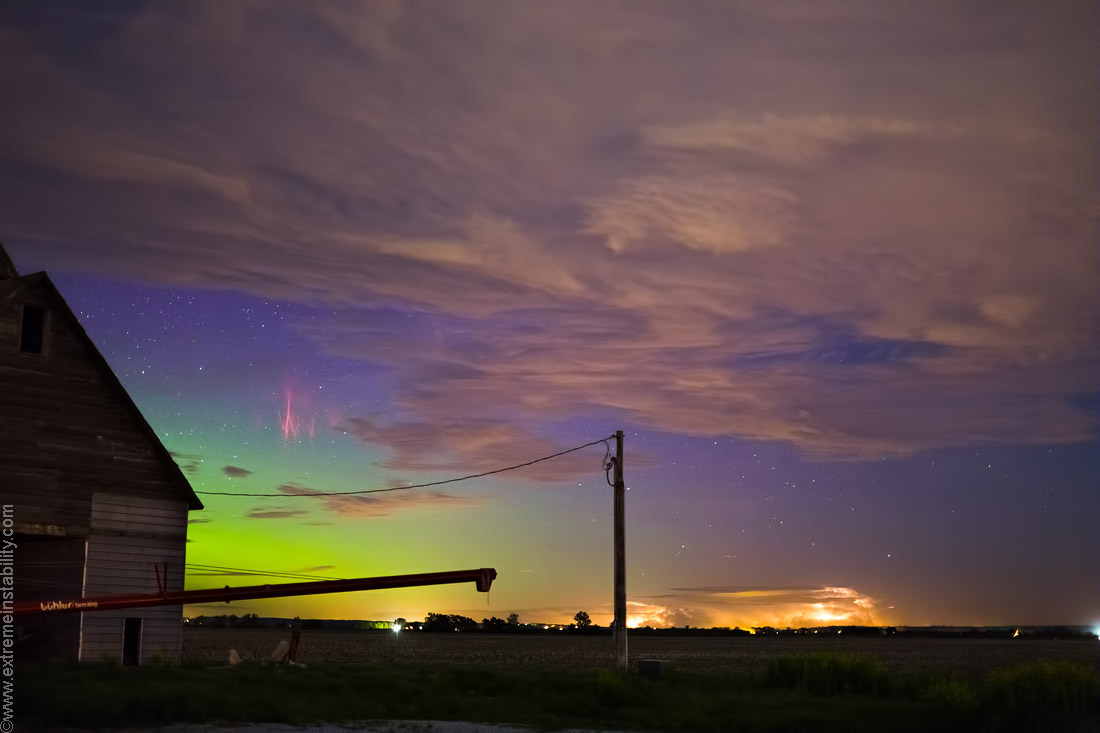
Stars, Sprites, Clouds, Auroras 
Image Credit & Copyright: Mike Hollingshead (Extreme Instability)
Explanation: What are those red streaks in the sky? While photographing unexpected auroras over a distant thunderstorm, something extraordinary happened: red sprites. This brief instance of rarely imaged high-altitude lightning flashed so bright that it was witnessed by several people independently. Pictured over Minnesota, USA in May 2013, these red sprites likely followed an extremely powerful low-altitude conventional lightning bolt. Captured in thefeatured frame are a house and electrical pole in the foreground, thick clouds in the lower atmosphere, a lightning storm on the horizon, distant red sprites and green aurora in the upper atmosphere, and distant stars from our local neighborhood of the Milky Way Galaxy. The spectacular image is thought to be only the second known case of sprites and auroras photographed together, and possibly the first in true color.

2015-02-03

Imagens do Mundo - "Gelo" - Marktoberdorf - Alemanha

Detalle de unos carámbanos de hielo en Marktoberdorf, al sur de Alemania.

Imagens do Mundo - "A arvore e a neve" - Bogen - Alemanha

Un árbol es fotografiado en un campo cubierto de nieve cerca de la ciudad bávara de Bogen, en el sur de Alemania.

Imagens do Mundo - Inundações em Dalgopol (Bulgaria)

Vista aérea de la ciudad de Dalgopol (Bulgaria) tras las lluvias caídas en la zona.

Foto - "Aufrery sous la neige" - Toulouse - France

"Aufrery sous la neige"

03-02-2015
JoanMira

Astronomy picture of the day - 03-02-2015 - Jets from Comet Churyumov-Gerasimenko

See Explanation.  Clicking on the picture will download
 the highest resolution version available.
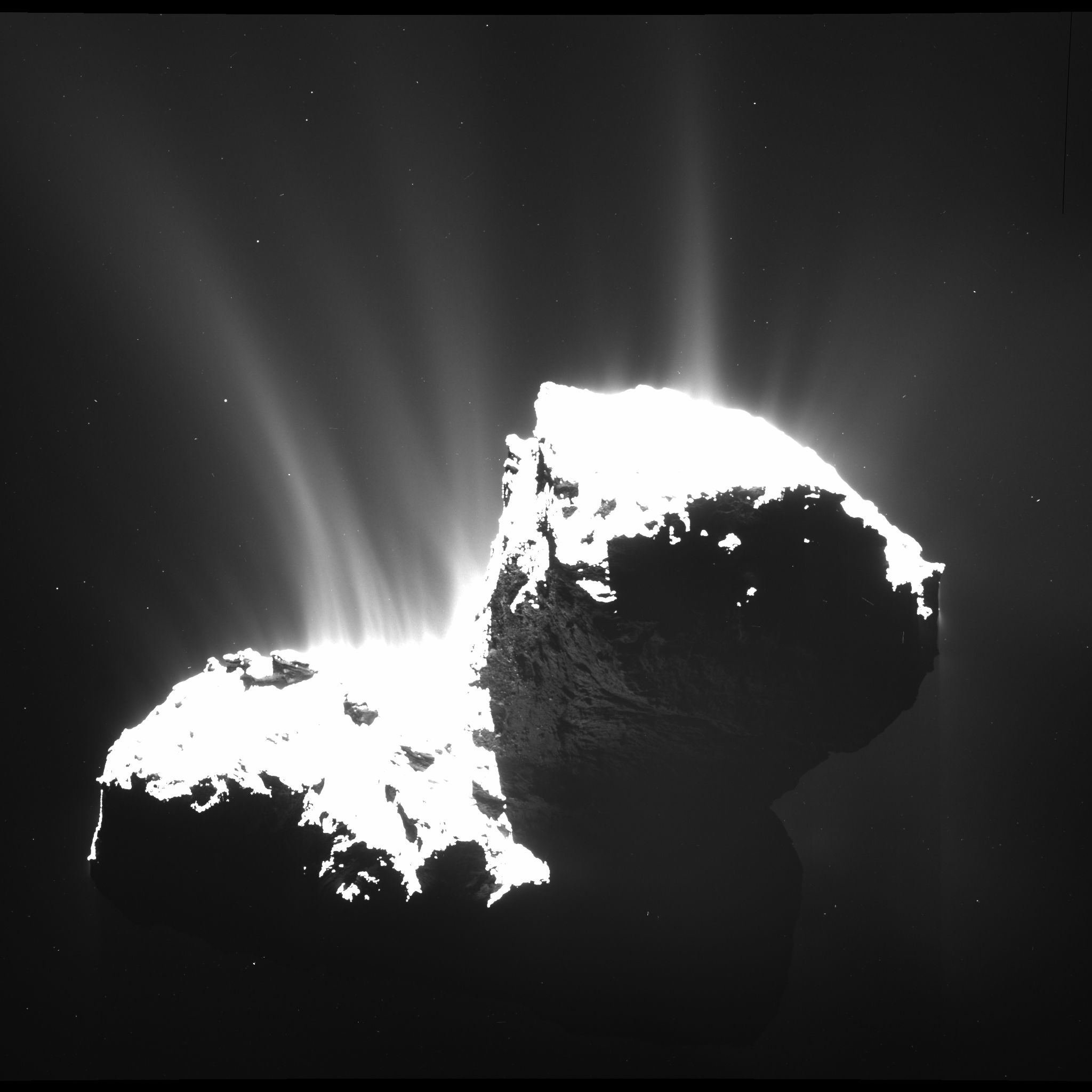
Jets from Comet Churyumov-Gerasimenko 
Image CreditESA / Rosetta / MPS for OSIRIS TeamMPS/UPD/LAM/IAA/SSO/INTA/UPM/DASP/IDA 
Explanation: Where do comet tails come from? Although it is common knowledge that comet tails and comas originate from comet nuclei, exactly how that happens is an active topic of research. One of the best images yet of emerging jets is shown in the featured image, taken last November by the robotic Rosetta spacecraft in orbit around the Comet 67P/Churyumov-Gerasimenko (Comet CG), and released last month. The overexposed picture shows plumes of gas and dust escaping numerous places from the Comet CG's nucleus as it nears the Sun and heats up. Although Comet CG is currently further out from the Sun than Mars, its orbit will take it almost as close as the Earth this coming August, at which time its jet activity is expected to increase by a factor of about 100. You've likely seen some debris from comet nuclei before but in another form -- when sand-sized bits end their journey through the Solar System by impacting the atmosphere of Earth as meteors.

2015-02-02

Foto - Igreja Saint Sernin - Toulouse - France

Igreja "Saint Sernin" - Toulouse

02-02-2015
JoanMira

Corson - "Raise me up" - Video - Musique

"Raise me up"

Astronomy picture of the day - 02-02-2015 - Titan Seas Reflect Sunlight

See Explanation.  Clicking on the picture will download
 the highest resolution version available.
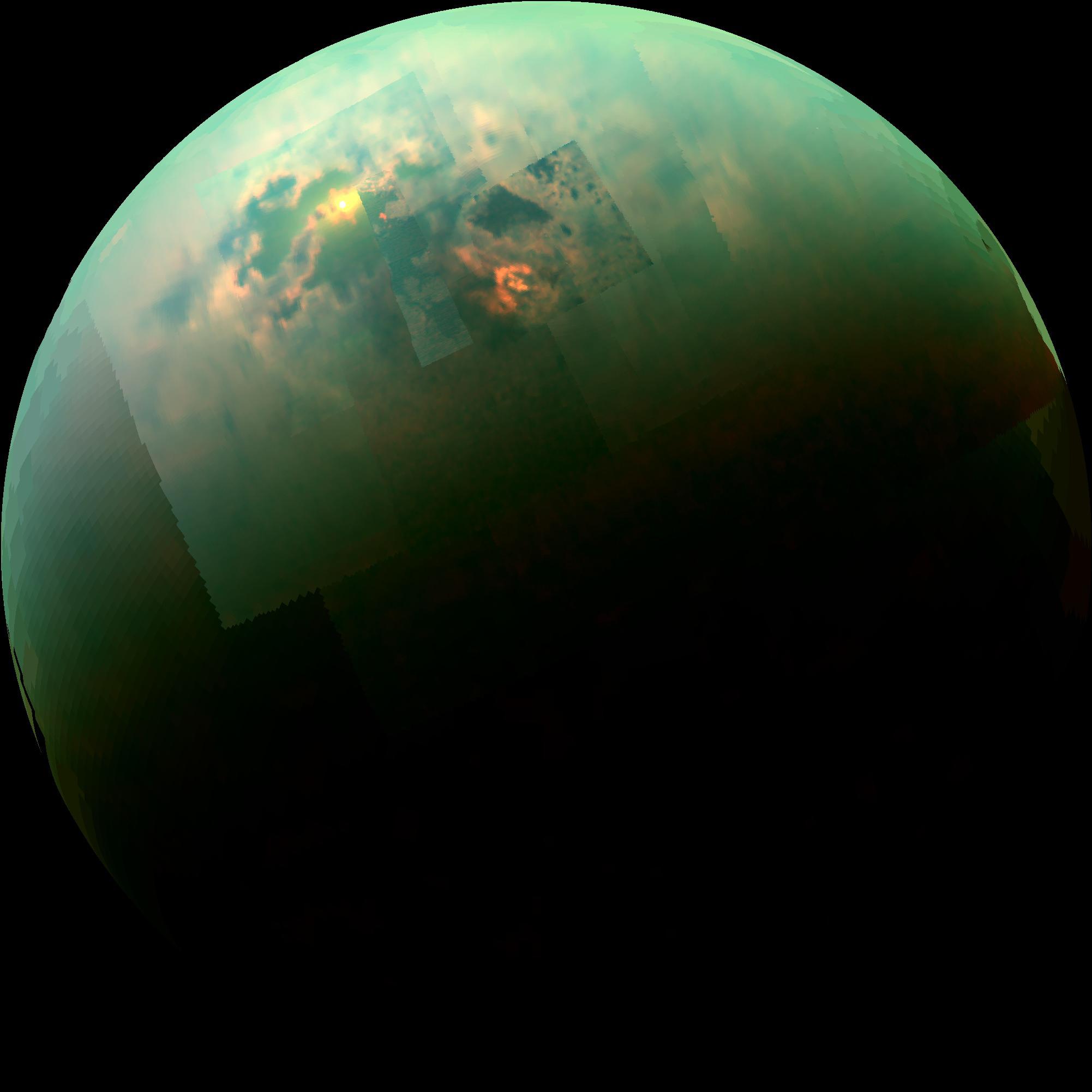
Titan Seas Reflect Sunlight 
Image Credit: VIMS TeamU. ArizonaESANASA
Explanation: Why would the surface of Titan light up with a blinding flash? The reason: a sunglint from liquid seas. Saturn's moon Titan has numerous smooth lakes of methane that, when the angle is right, reflect sunlight as if they were mirrors. Pictured here in false-color, the robotic Cassini spacecraft orbiting Saturn imaged the cloud-covered Titan last summer in different bands of cloud-piercing infrared light. This specular reflection was so bright it saturated one of Cassini's infrared cameras. Although the sunglint was annoying -- it was also useful. The reflecting regions confirm that northern Titan houses a wide and complex array of seas with a geometry that indicates periods of significant evaporation. During its numerous passes of our Solar System's most mysterious moon, Cassini has revealed Titan to be a world with active weather -- including times when it rains a liquefied version of natural gas.