2015-02-17

Carro explode ao ser atingido por condutora embriagada (Video)

Um acidente bizarro foi registrado na estrada Florida Turnpike, na altura deBoca Raton (EUA). 

A picape, que estava parada no acostamento da rodovia, foi atingida na traseira por um carro, guiado por uma mulher embriagada. Logo após a colisão, a picape explodiu e foi consumida pelas chamas. Por sorte, os dois ocupantes do veículo abalroado conseguiram escapar sem ferimentos graves, segundo a emissora KHOU. 

A motorista, identificada como Nina Rodríguez, moradora de Boynton Beach, foi presa logo depois.

Assista ao acidente

Carreteras alucinantes del mundo - Tráilers y caribúes

Prudencia, valentía y ajustarse bien el cinturón. La Dalton Highway, en Alaska, solo apta para locos del volante.

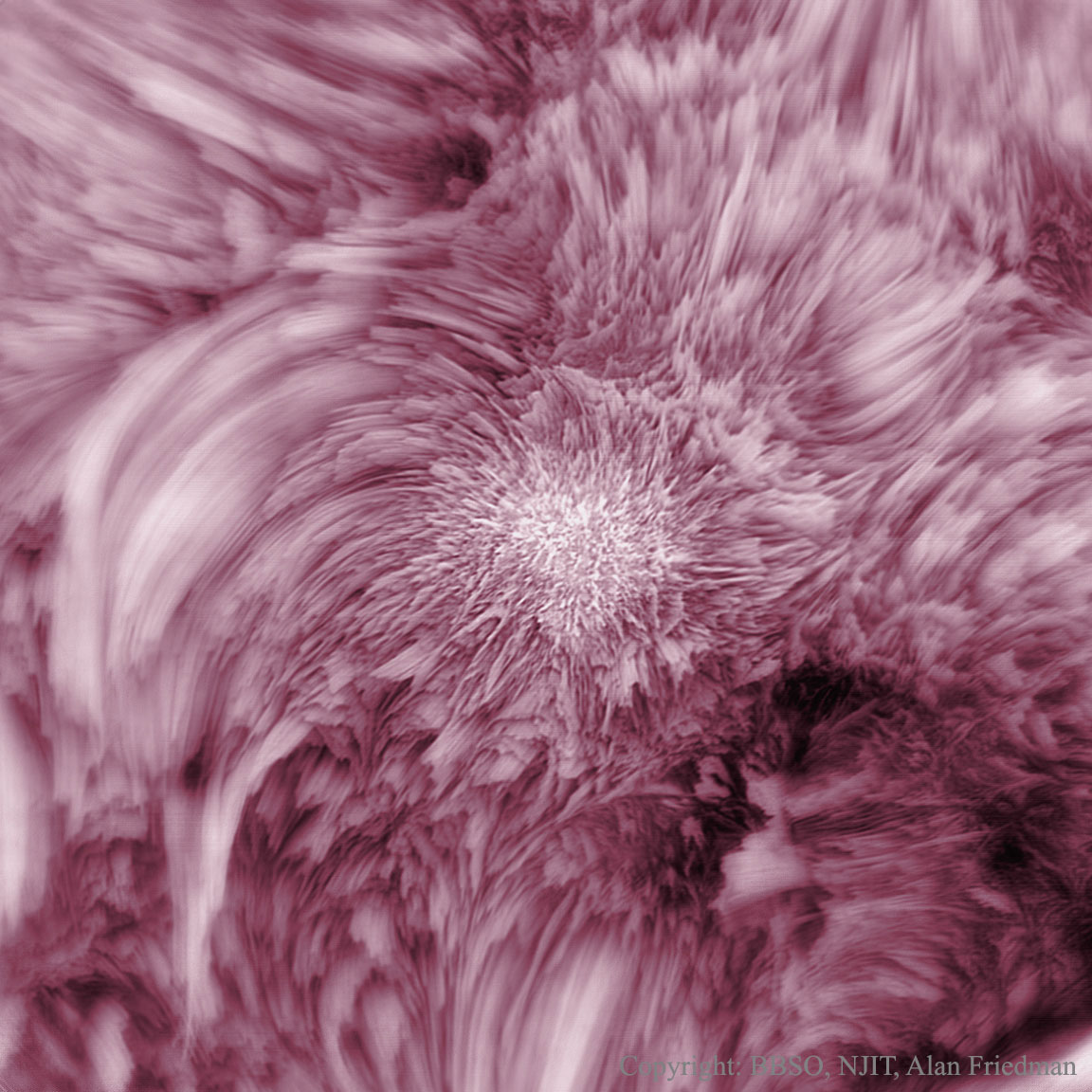
Astronomy picture of the day - 17-02-2015 - Fibrils Flower on the Sun

See Explanation.  Clicking on the picture will download
 the highest resolution version available.
Fibrils Flower on the Sun 
Image Credit & Copyright: Big Bear Solar Obs.NJITAlan Friedman (Averted Imagination)
Explanation: When does the Sun look like a flower? In a specific color of red light emitted by hydrogen, as featured here, some regions of the solar chromosphere may resemble a rose. The color-inverted image was taken in 2014 October and shows active solar region 2177. The petals dominating the frame are actually magnetically confined tubes of hot plasma called fibrils, some of which extend longer the diameter of the Earth. In the central region many of these fibrils are seen end-on, while the surrounding regions are typically populated with curved fibrils. When seen over the Sun's edge, these huge plasma tubes are called spicules, and when they occur in passive regions they are termedmottles. Sunspot region 2177 survived for several more days before the complex and tumultuous magnetic field poking through the Sun's surface evolved yet again.

2015-02-16

Foto - "Campo magico" - Aufrery - Toulouse - France - 16-02-2015

"Campo magico" - Aufrery

16-02-2015
JoanMira

Imagens do Mundo - Carnaval de Veneza - Italia

Carnaval em Veneza [Foto: Reuters]

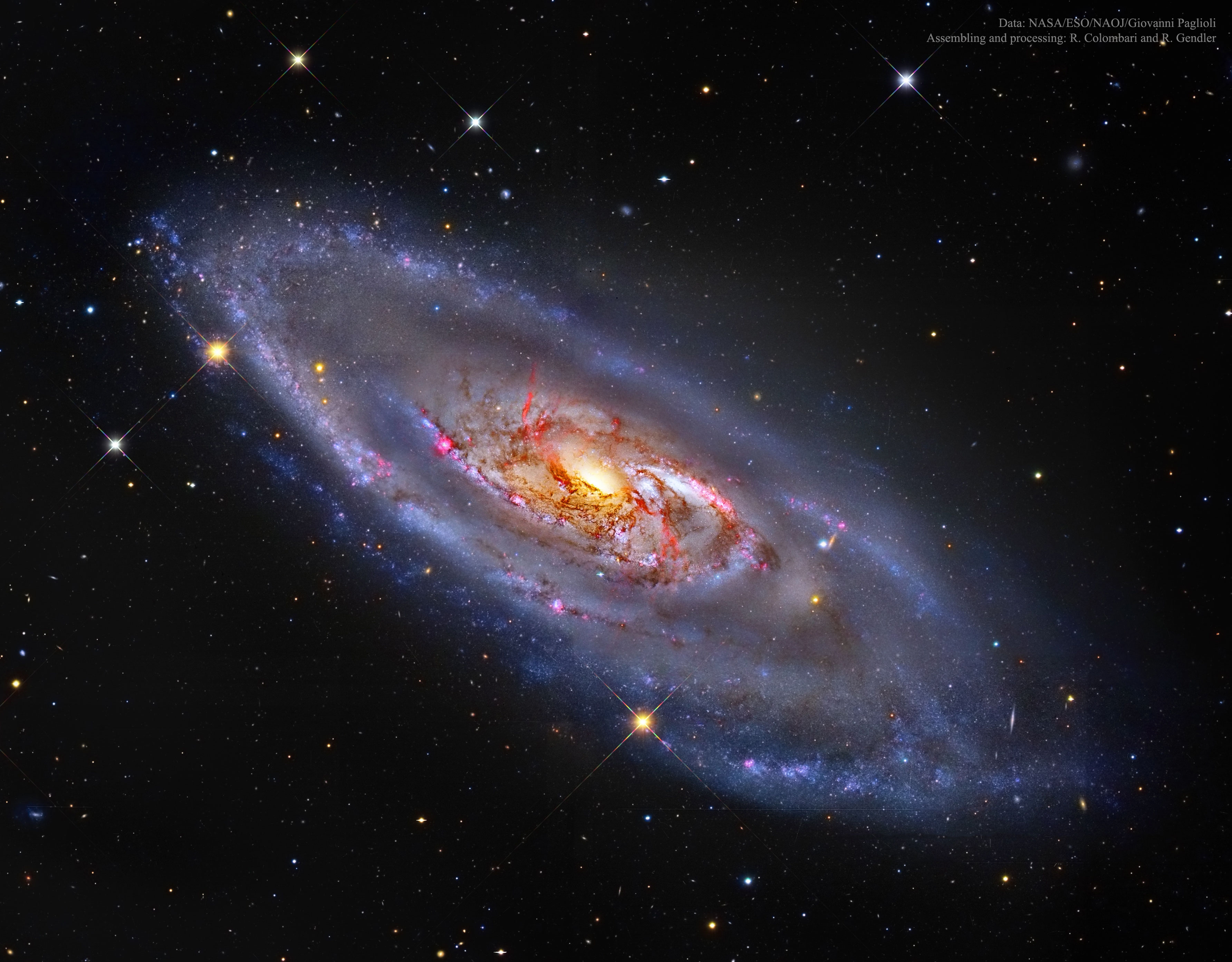
Astronomy picture of the day - 16-02-2015 - M106: A Spiral Galaxy with a Strange Center

See Explanation.  Clicking on the picture will download
 the highest resolution version available.
M106: A Spiral Galaxy with a Strange Center 
Image Credit: NASAESO , NAOJ, Giovanni Paglioli; Assembling and processing: R. Colombari and R. Gendler
Explanation: What's happening at the center of spiral galaxy M106? A swirling disk of stars and gas, M106's appearance is dominated by blue spiral arms and red dust lanes near the nucleus, as shown in the featured image. The core of M106 glows brightly in radio waves and X-rays where twin jets have been found running the length of the galaxy. An unusual central glow makes M106 one of the closest examples of the Seyfert class of galaxies, where vast amounts of glowing gas are thought to be falling into a central massive black holeM106, also designated NGC 4258, is a relatively close 23.5 million light years away, spans 60 thousand light years across, and can be seen with a small telescope towards the constellation of the Hunting Dogs (Canes Venatici).

2015-02-15

Manuel Cargaleiro - "Painel de azulejos no metro de Paris Champs Elysées" - (Grandes Pintores Portugueses)

Manuel Cargaleiro Ceramista e pintor português, Manuel Cargaleiro nasceu em 1927 e viveu ao sul do Tejo. Foi professor de cerâmica na Escola de Artes Decorativas António Arroio, em Lisboa. O artista criou a Fundação Manuel Cargaleiro e doou algumas das suas obras. A sua obra dispersa-se pela cerâmica, pintura, gravura, guache, tapeçaria e desenho, tendo executado painéis cerâmicos para o Jardim Municipal de Almada, fachada da Igreja de Moscavide (1956), fachada do Instituto Franco-Português de Lisboa (1983), estação do Metro de Champs Elysées-Clémenceau, de Paris (1995), painel para a escola com o seu nome no Seixal (1998), estação de serviço de Óbidos na auto-estrada do Atlântico (2000), fonte do Jardim Público de Castelo Branco (2004) e estação de metro de Lisboa Colégio Militar/Luz (Metro de Lisboa).

Painel de azulejos no metro de Paris Champs Elysées Manuel Cargaleiro
 Painel de azulejos no metro de Paris Champs Elysées, Manuel Cargaleiro

Foto - "Aufrery" - Toulouse - France - 15-02-2015

"Aufrery"

15-02-2015
JoanMira

Imagens do Mundo - El río de los cinco colores (Caño Cristales, Colombia)

Rojo, amarillo, verde, azul, negro... Las algas de agua dulce que crecen en el fondo del lecho de Caño Cristales tiñen este río colombiano de colores que parece irreales. Las plantas pertenecen a la especie 'macarenia clavígera' y han convertido este rincón selvático de la sierra de la Macarena en una atracción turística a unos nueve kilómetros del municipio del mismo nombre.

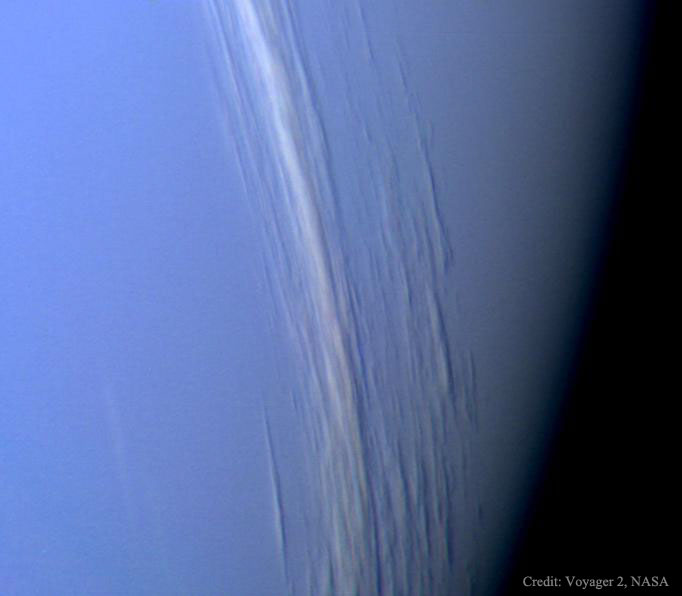
Astronomy picture of the day - 15-02-2015 - Two Hours Before Neptune

See Explanation.  Clicking on the picture will download
 the highest resolution version available.
Two Hours Before Neptune 
Image Credit: Voyager 2, NASA
Explanation: Two hours before closest approach to Neptune in 1989, the Voyager 2 robot spacecraft snapped this picture. Clearly visible for the first time were long light-colored cirrus-type clouds floating high in Neptune's atmosphere. Shadows of these clouds can even be seen on lower cloud decks. Most of Neptune's atmosphere is made of hydrogen and helium, which is invisible. Neptune's blue color therefore comes from smaller amounts of atmospheric methane, which preferentially absorbs red light. Neptune has the fastest winds in the Solar System, with gusts reaching 2000 kilometers per hour. Speculation holds that diamonds may be created in the dense hot conditions that exist under the cloud tops of Uranus and Neptune. Twenty-six years later, NASA's New Horizons is poised to be the first spacecraft to zoom past Pluto this July.