Explanation: Connecting the Pipe Nebula to the colorful region near bright star Antares is a dark cloud dubbed the Dark River, flowing from the picture's left edge. Murky looking, the Dark River's appearance is caused by dustobscuring background starlight, although the dark nebula contains mostly hydrogen and molecular gas. Surrounded by dust, Antares, a red supergiant star, creates an unusual bright yellowish reflection nebula. Above it, bright blue double star Rho Ophiuchi is embedded in one of the more typical bluish reflection nebulae, while red emission nebulae are also scattered around the region. Globular star cluster M4 is just seen above and right of Antares, though it lies far behind the colorful clouds, at a distance of some 7,000 light-years. The Dark River itself is about 500 light years away. The colorful skyscape is a mosaic of telescopic images spanning nearly 10 degrees (20 Full Moons) across the sky in the constellation of the Scorpion (Scorpius).
Nombre total de pages vues
2015-02-22
Astronomy picture of the day - 22-02-2015 - The Dark River to Antares
2015-02-21
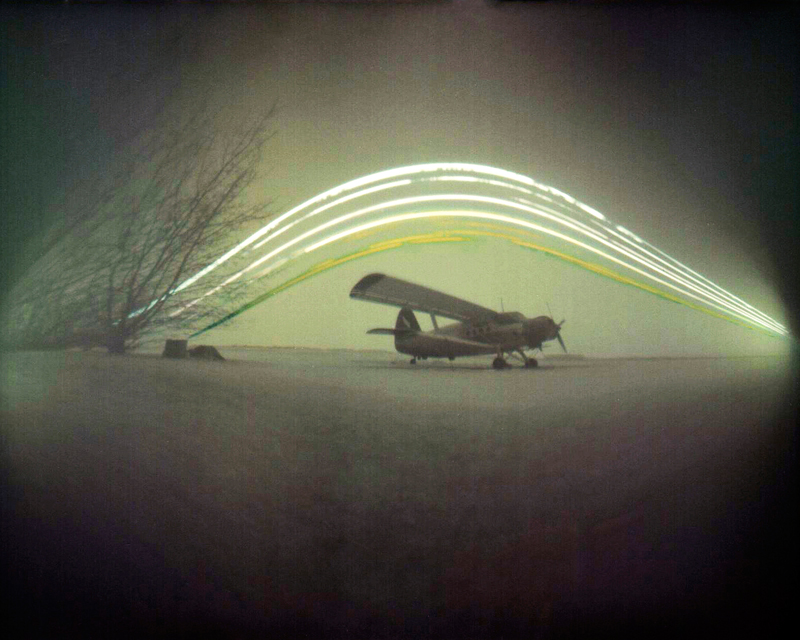
Astronomy picture of the day - 21-02-2015 - 45 Days in the Sun
Image Credit & Copyright: Csaba Kovács
Explanation: From January 11 to February 25 2013, a pinhole camera sat in a field near Budapest, Hungary, planet Earth to create this intriguing solargraph. And for 45 days, an old Antonov An-2 biplane stood still while the Sun rose and set. The camera's continuous exposure began about 20 days after the northern hemispere's winter solstice, so each day the Sun's trail arcs steadily higher through the sky. These days in the Sun were recorded on a piece of black and white photosensitive paper tucked in to the simple plastic film container. The long exposure produced a visible color image on the paper that was then digitally scanned. Of course, cloudy days left gaps in the solargraph's Sun trails.
2015-02-20
Imagens de Carnaval no Mundo - Figuras diabolicas em Portugal (?!)...
'Los Caretos de Podence' (Portugal) son figuras diabólicas que se visten con trajes de colores, realizados con colchas y que utilizan mascaras hechas de latas, madera o cuero, con la nariz puntiaguda. (17 de febrero de 2015)
FRANCISCO SECO (AP)
Inscription à :
Commentaires (Atom)