2015-04-24

Imagens do Mundo - Uma aguia em Italia

Un águila sobrevuela a los espectadores durante una exhibición en el zoo italiano, Zoom Torino, en Cumiana (Italia).

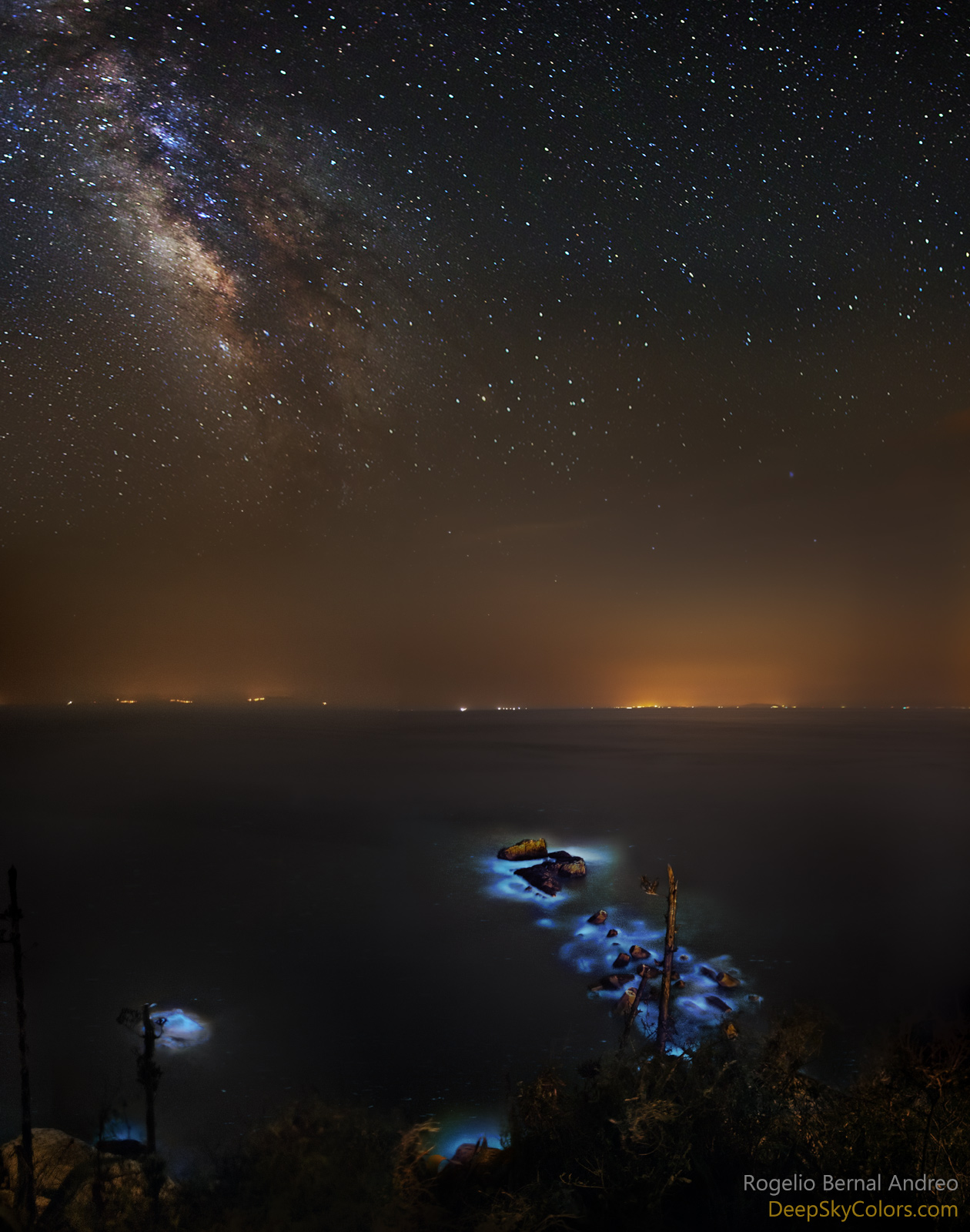
Astronomy picture of the day - 2015 April 24 - Blue Tears and the Milky Way

See Explanation.  Clicking on the picture will download
 the highest resolution version available.
Blue Tears and the Milky Way 
Image Credit & CopyrightRogelio Bernal Andreo (Deep Sky Colors)
Explanation: Lapping at rocks along the shore of the Island of Nangan, Taiwan, planet Earth, waves are infused with a subtle blue light in this sea and night skyscape. Composed of a series of long exposures made on April 16 the image captures the faint glow from Noctiluca scintillans. Also known as sea sparkles or blue tears, the marine plankton's bioluminescence is stimulated by wave motion. City lights along the coast of mainland China shine beneath low clouds in the west but stars and the faint Milky Way still fill the night above. Over the horizon the galaxy's central bulge and dark rifts seem to echo the rocks and luminous waves.

2015-04-23

Foto - "Por esses campos fora"

"Por esses campos fora"

Aufrery, 2 de abril de 2015
JoanMira

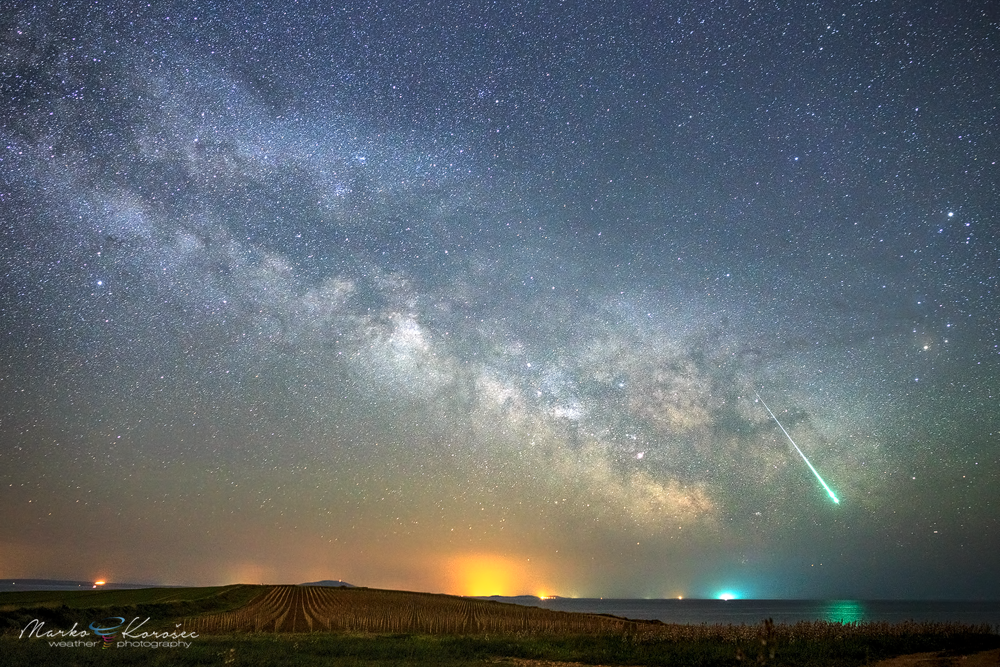
Astronomy picture of the day - 2015 April 24 - Meteor in the Milky Way

See Explanation.  Clicking on the picture will download
 the highest resolution version available.
Meteor in the Milky Way 
Image Credit & CopyrightMarko Korosec
Explanation: Earth's April showers include the Lyrid Meteor Shower, observed for more than 2,000 years when the planet makes its annual passage through the dust stream of long-period Comet Thatcher. A grain of that comet's dust, moving 48 kilometers per second at an altitude of 100 kilometers or so, is swept up in this night sky view from the early hours of April 21. Flashing toward the southeastern horizon, the meteor's brilliant streak crosses the central region of the rising Milky Way. Its trail points back toward the shower's radiant in the constellation Lyra, high in the northern springtime sky and off the top of the frame. The yellowish hue of giant star Antares shines to the right of the Milky Way's bulge. Higher still is bright planet Saturn, near the right edge. Seen from Istra, Croatia, the Lyrid meteor's greenish glow reflects in the waters of the Adriatic Sea.

2015-04-22

Astronomy picture of the day - 2015 April 22 - Colorful Star Clouds in Cygnus

See Explanation.  Clicking on the picture will download
 the highest resolution version available.
Colorful Star Clouds in Cygnus 
Image Credit & Copyright: André van der Hoeven
Explanation: Stars can form in colorful surroundings. Featured here is a star forming region rich in glowing gas and dark dust toward the constellation of the Swan (Cygnus), near the bright star Sadr. This region, which spans about 50 light years, is part of the Gamma Cygni nebula which lies about 1,800 light years distant. Toward the right of the image is Barnard 344, a dark and twisted dust cloud rich in cool molecular gas. A dramatic wall of dust and red-glowinghydrogen gas forms a line down the picture center. While the glowing red gas is indicative of small emission nebulas, the blue tinted areas are reflection nebulas -- starlight reflecting from usually dark dust grains. The Gamma Cygni nebula will likely not last the next billion years, as most of the bright young stars will explode, most of the dust will be destroyed, and most of the gas will drift away.

2015-04-21

Foto - "Angelita" - Andorra - 26-08-2011

"Angelita"

Andorra, 26-08-2011
JoanMira

Astronomy picture of the day - 21-04-2015 - Vesta Trek: A Digital Model of Asteroid Vesta

Vesta Trek: A Digital Model of Asteroid Vesta
Image Credit: NASAJPLLMMPSSERVIUSGSDLR
Explanation: You can explore asteroid Vesta. Recently, NASA's robotic spaceship Dawn visited Vesta, the second largest object in our Solar System's main asteroid belt, which lies between Mars and Jupiter. During a year-long stopover, Dawn's cameras photographed Vesta's entire surface, documenting all of the minor planet's major mountains and craters. These images have now been combined into a digital model that allows anyone with a full-featured browser to fly all around Vesta, virtually, and even zoom in on interesting surface features, by just dragging and clicking. If desired, the initially flat 2D map can be wrapped into a nearly spherical object by clicking on the 3D icon at the bottom. Dawn departed Vesta in 2012 and is now just beginning to photograph and explore the mysteries of the largest object in the asteroid belt: dwarf-planet Ceres.

Jean Jacques Goldman - "Nuit" - Video - Musique

Jean-Jacques Goldman (photo : en 2004) reviendra-t-il sous les feux de la rampe pour ses soixantes ans ?
"Nuit"

(se coucher tard...) 

Foto - "Costa de Caparica" - 13-10-2011

"Costa de Caparica"

13-10-2011
JoanMira