2015-06-20

A verdade das propostas gregas de que a maior parte dos media não falam!


Ministro das Finanças grego publicou no seu site o discurso que fez no Eurogrupo. As propostas que levou não incluem reformas, nem mais restrições orçamentais. O Eurogrupo encolheu os ombros.

O “único antídoto contra a propaganda e as fugas maliciosas de informação é a transparência”. É com esta declaração que o ministro das Finanças grego justifica a divulgação da sua intervenção no Eurogrupo de quinta-feira, onde se podem ler as propostas que quis fazer chegar aos líderes europeus.
Nesse discurso, Varoufakis insistiu numa renegociação da dívida – que os outros países só aceitam rever depois de um eventual acordo, promessas de estudo de reformas com a OCDE (sem calendário) e a recusa de novas restrições, seja em impostos, seja em cortes de pensões. À saída da reunião, o comissário Moscovici e outros ministros das Finanças fizeram questão de desvalorizar, desafiando Varoufakis a apresentar propostas “credíveis”. A líder do FMI disse mesmo que só valeria a pena negociar com “adultos na sala”.
O documento é divulgado no site de Yanis Varoufakis com um desafio aos leitores: “Leiam e façam a vossa avaliação sobre se as propostas do governo grego servem de base para um entendimento.”
1. Pensões. É o tema que mais parece separar os credores de Atenas. O plano diz que a diferença entre as propostas do governo grego e as exigências europeias vale apenas 0,5% do Produto Interno Bruto (PIB) e propõe medidas administrativas para resolver essa diferença em 2016. Varoufakis não percebe como uma diferença “minúscula pode causar dano massivo à integridade da zona euro”. As propostas passam por eliminar a fraude nos fundos de pensões, minimizar reformas antecipadas e erradicar o trabalho não pago.
2. Cumprimento de metas orçamentais. Atenas propõe a introdução de travão automático do défice que esteja assegurado na legislação e monitorizado por um conselho orçamental independente. Se surgirem sinais de violação das metas de excedente orçamental, serão desencadeados, de forma automática, cortes transversais na despesa de forma a impedir um desvio face ao limite fixado. É um mecanismo de salvaguarda que, segundo Varoufakis, garante a solvência do Estado enquanto o governo mantém a margem de manobra para definir as políticas.
3. Dívida. A proposta aponta para uma “racionalização” do calendário de pagamentos da dívida a credores institucionais que aponta para novos financiamentos por parte das instituições europeias para recomprar as obrigações gregas que estão nas mãos do BCE. Esta operação estaria condicionada ao cumprimento de reformas por parte de Atenas. A Grécia quer ainda beneficiar do programa de compra de ativos do Banco Central Europeu e obter fundos do Plano Junker para reanimar a economia.
4. Impostos. Em vez de aumentar o IVA, o governo grego aposta numa nova cultura de cumprimento fiscal, defendendo a introdução de incentivos aos cumpridores (um caminho que também foi seguido em Portugal, mas acompanhado de subida de impostos) e criação de uma autoridade tributária independente.
5. Economia. O executivo propõe agenda “alargada e otimizada” de privatizações, liberalização de vários mercados de produto e um programa para gerir o crédito malparado, mas limitando a execução de garantias e hipotecas.
6. Estado. A reforma do Estado. Tal como Portugal, também a Grécia pediu ajuda à OCDE (Organização para a Cooperação e Desenvolvimento Económico) para desenhar estas reformas. Presume-se que Atenas dispensa a ajuda do FMI nesta matéria.
Observador - Portugal

Zone euro. La Grèce et l'UE au bord de la rupture

“Mon grand divorce grec”,titre The Economist en une. S’inspirant du film Mariage à la grecque (My Big Fat Greek Wedding, 2002), le magazine britannique file la métaphore du divorce pour décrire la possible rupture entre la Grèce et l’Union Européenne.
En cause : les difficultés qu’a le pays à rembourser sa dette de 1,6 milliard d’euros auprès du Fonds monétaire international (FMI) d’ici au 30 juin. Pour y parvenir, Athènes tente d’obtenir le débloquage d’une tranche d’aide de la part de ses créanciers (Union européenne, Banque centrale européenne et FMI) qui exigent en retour l’application de nouvelles mesures d’austérité.
“Le divorce serait un désastre pour tout le monde”, avertit The Economist et, “à moins que la Grèce et la zone euro ne changent les termes de leur relation, rester ensemble ne serait pas beaucoup mieux”.

Courrier International - France

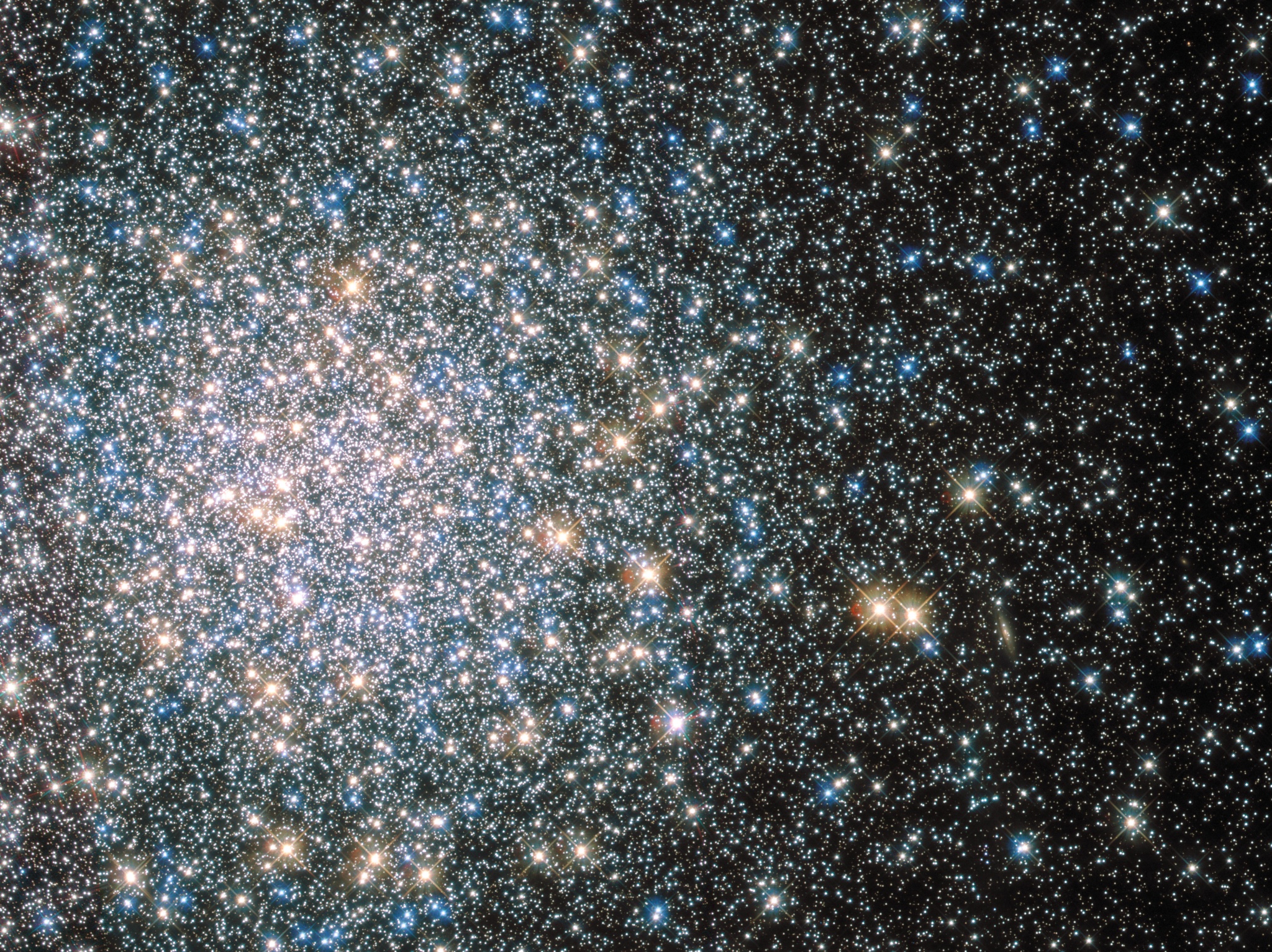
Astronomy picture of the day - 2015 June 20 - Hubble's Messier 5

2015 June 20
See Explanation.  Clicking on the picture will download
 the highest resolution version available.
Hubble's Messier 5 
Image Credit: HSTESANASA


Explanation: "Beautiful Nebula discovered between the Balance [Libra] & the Serpent [Serpens] ..." begins the description of the 5th entry in 18th century astronomer Charles Messier's famous catalog of nebulae and star clusters. Though it appeared to Messier to be fuzzy and round and without stars, Messier 5 (M5) is now known to be a globular star cluster, 100,000 stars or more, bound by gravity and packed into a region around 165 light-years in diameter. It lies some 25,000 light-years away. Roaming the halo of our galaxy, globular star clusters are ancient members of the Milky Way. M5 is one of the oldest globulars, its stars estimated to be nearly 13 billion years old. The beautiful star cluster is a popular target for Earthbound telescopes. Of course, deployed in low Earth orbit on April 25, 1990, the Hubble Space Telescope has also captured its own stunning close-up view that spans about 20 light-years near the central region of M5. Even close to its dense core at the left, the cluster's aging red and blue giant stars and rejuvenated blue stragglers stand out in yellow and blue hues in the sharp color image.

2015-06-19

Aconteceu a 19 de junho

 1731 - Nasce Machado de Castro      Faleceu a 17 de Novembro de 1822
A 19 de Junho de 1731, nasce, em Coimbra, o escultor português Joaquim Machado de Castro. A sua obra mais conhecida é a estátua equestre do rei D. José I, no Terreiro do Paço, em Lisboa.


O Leme - Portugal

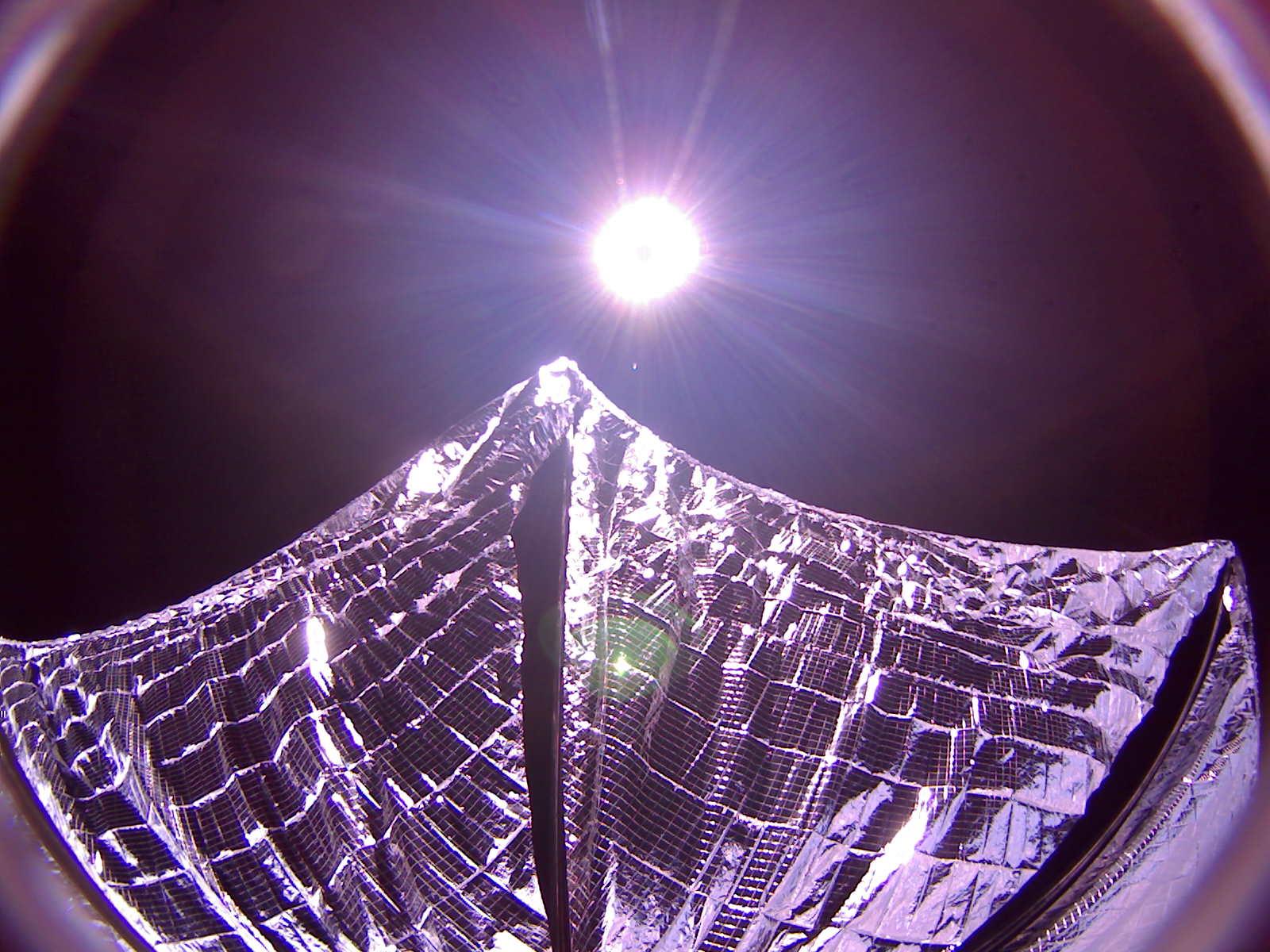
Astronomy picture of the day - 2015 June 19 - LightSail A

See Explanation.  Clicking on the picture will download
 the highest resolution version available.
LightSail A 
Image Credit: The Planetary Society
Explanation: Hitching a ride to low Earth orbit, LightSail A accomplished a challenging test mission, unfurling its 32 square meter mylar solar sail on June 7. This dramatic image from one of the bread loaf sized spacecraft's fisheye cameras captures the deployed sail glinting in sunlight. Sail out and visible to Earthbound observers before its final orbit, LightSail A reentered the atmosphere last weekend. Its succesful technology demonstration paves the way for the LightSail B spacecraft, scheduled for launch in April 2016. Once considered the stuff of science fiction, sailing through space was suggested 400 years ago by astronomer Johannes Kepler who observed comet tails blown by the solar wind. But modern solar sail designs, like the one tested by LightSail A, rely on the small but continuous pressure from sunlight itself for thrust.

2015-06-18

Raul Ferrão (poema) Gonçalo Ferreira (musica) - "Rio dos meus poemas" (Barreiro) - Slides - Musica

"Rio dos meus poemas"
(Tejo - Barreiro)

Aconteceu a 18 de junho


 1942 - Nascimento de Paul McCartney
A 18 de Junho de 1942, nasce, em Liverpool (Inglaterra), o músico britânico James Paul McCartney. Foi um dos quatro Beatles, tendo composto, conjuntamente com John Lennon, a maioria das melodias daquele grupo. Após a dissolução dos Beatles, iniciou uma carreira a solo. Actuou em Portugal no Rock in Rio 2005.
 2010 - Morte do José Saramago      Faleceu a 16 de Novembro de 1922
José Calvário, arquivo Caras
A 18 de Junho de 2010, morre, em Lanzarote, José de Sousa Saramago, escritor, argumentista, jornalista, dramaturgo, contista, romancista e poeta português. Foi galardoado com o Nobel de Literatura de 1998.


O Leme - Portugal

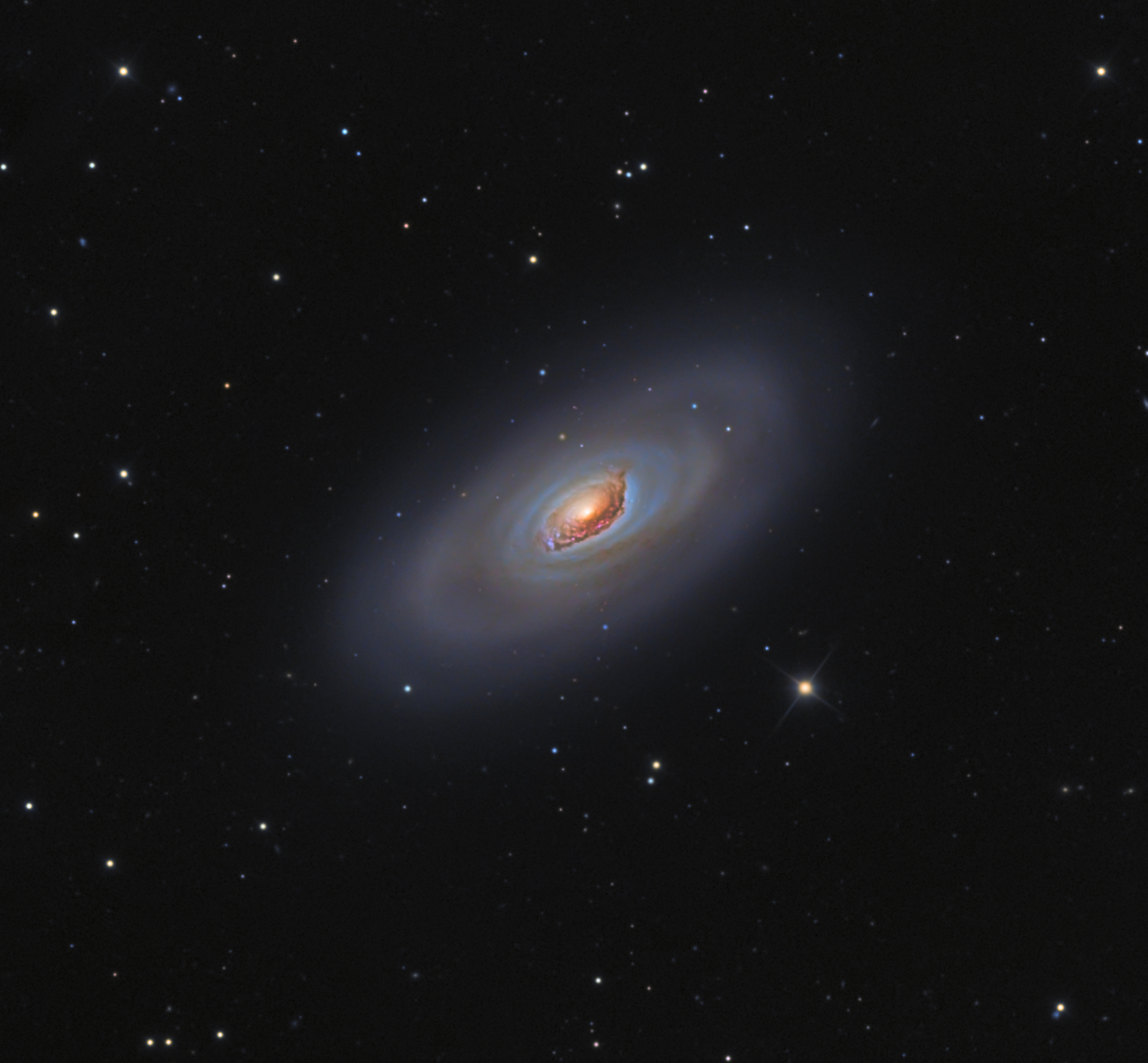
Astronomy picture of the day - 2015 June 18 - M64: The Black Eye Galaxy

See Explanation.  Clicking on the picture will download
 the highest resolution version available.
M64: The Black Eye Galaxy 
Image Credit & CopyrightMichael MillerJimmy Walker
Explanation: This big, bright, beautiful spiral galaxy is Messier 64, often called the Black Eye Galaxy or the Sleeping Beauty Galaxy for its heavy-lidded appearance in telescopic views. M64 is about 17 million light-years distant in the otherwise well-groomed northern constellation Coma Berenices. In fact, the Red Eye Galaxy might also be an appropriate moniker in this colorful composition. The enormous dust clouds obscuring the near-side of M64's central regionare laced with the telltale reddish glow of hydrogen associated with star forming regions. But they are not this galaxy's only peculiar feature. Observations show that M64 is actually composed of two concentric, counter-rotating systems. While all the stars in M64 rotate in the same direction as the interstellar gas in the galaxy's central region, gas in the outer regions, extending to about 40,000 light-years, rotates in the opposite direction. The dusty eye and bizarre rotation is likely the result of a billion year old merger of two different galaxies.

2015-06-17

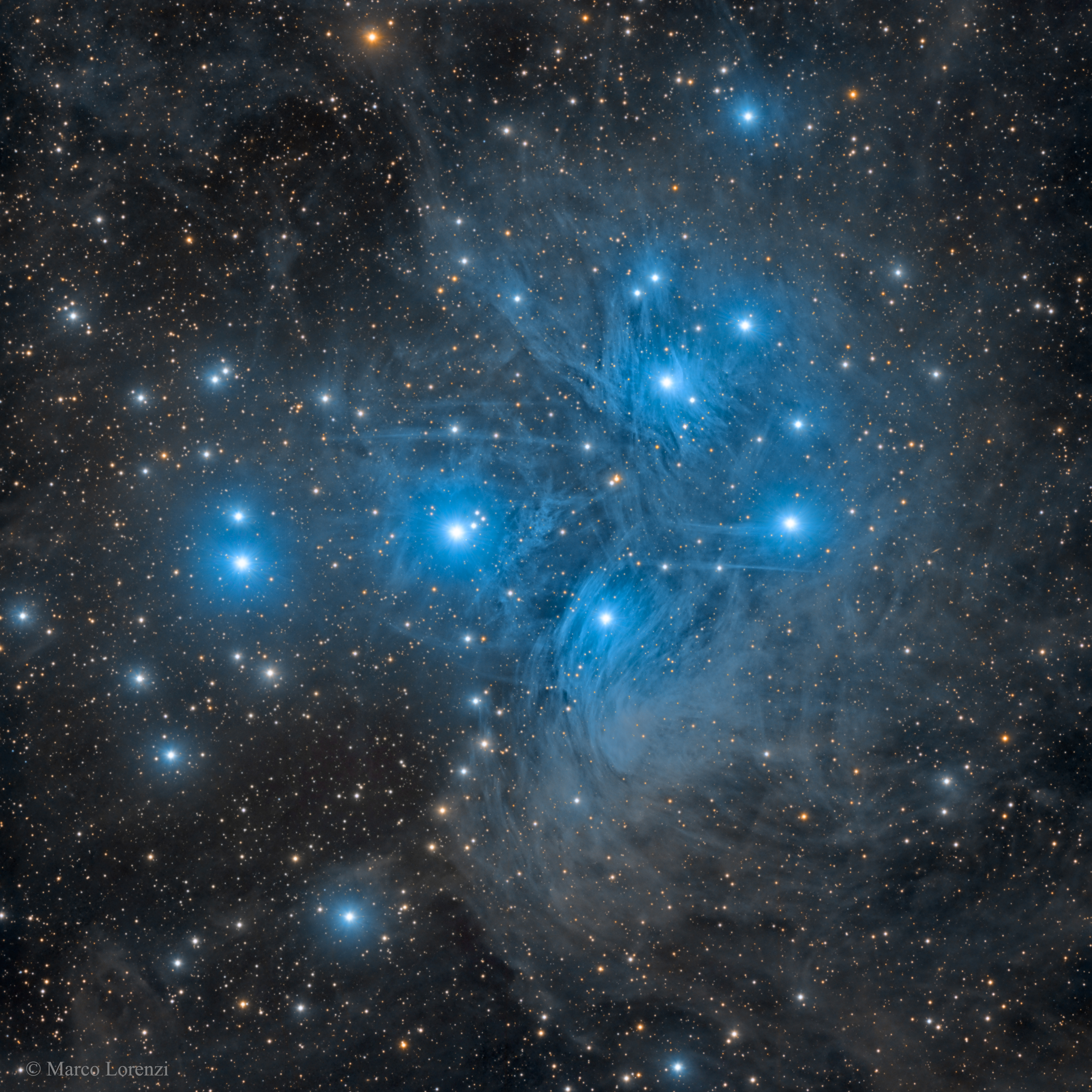
Astronomy picture of the day - 2015 June 17 - M45: The Pleiades Star Cluster

See Explanation.  Clicking on the picture will download
 the highest resolution version available.
M45: The Pleiades Star Cluster 
Image Credit & Copyright: Marco Lorenzi (Glittering Lights)
Explanation: Have you ever seen the Pleiades star cluster? Even if you have, you probably have never seen it as dusty as this. Perhaps the most famous star cluster on the sky, the bright stars of the Pleiades can be seen without binoculars from even the depths of a light-polluted city. With a long exposure from a dark location, though, the dust cloud surrounding the Pleiades star cluster becomes very evident. The featured exposure took over 12 hours and covers a sky area several times the size of the full moon. Also known as the Seven Sisters and M45the Pleiades lies about 400 light years away toward the constellation of the Bull (Taurus). A common legend with a modern twist is that one of the brighter stars faded since the cluster was named, leaving only six stars visible to the unaided eye. The actual number of Pleiades stars visible, however, may be more or less than seven, depending on the darkness of the surrounding sky and the clarity of the observer's eyesight.

2015-06-16

Aconteceu a 16 de junho

 1963 - Valentina Tereshkova, a primeira mulher no espaço
A 16 de junho de 1963, Valentina Vladimirovna Tereshkova torna-se a primeira mulher no espaço ao pilotar a nave soviética Vostok 6.


 1996 - Morte de David Mourão-Ferreira      Nasceu a 24 de Fevereiro de 1927
A 16 de Junho de 1996, morre, em Lisboa, o escritor, poeta e professor da Faculdade de Letras da Universidade de Lisboa, David Mourão-Ferreira.
  

O Leme - Portugal