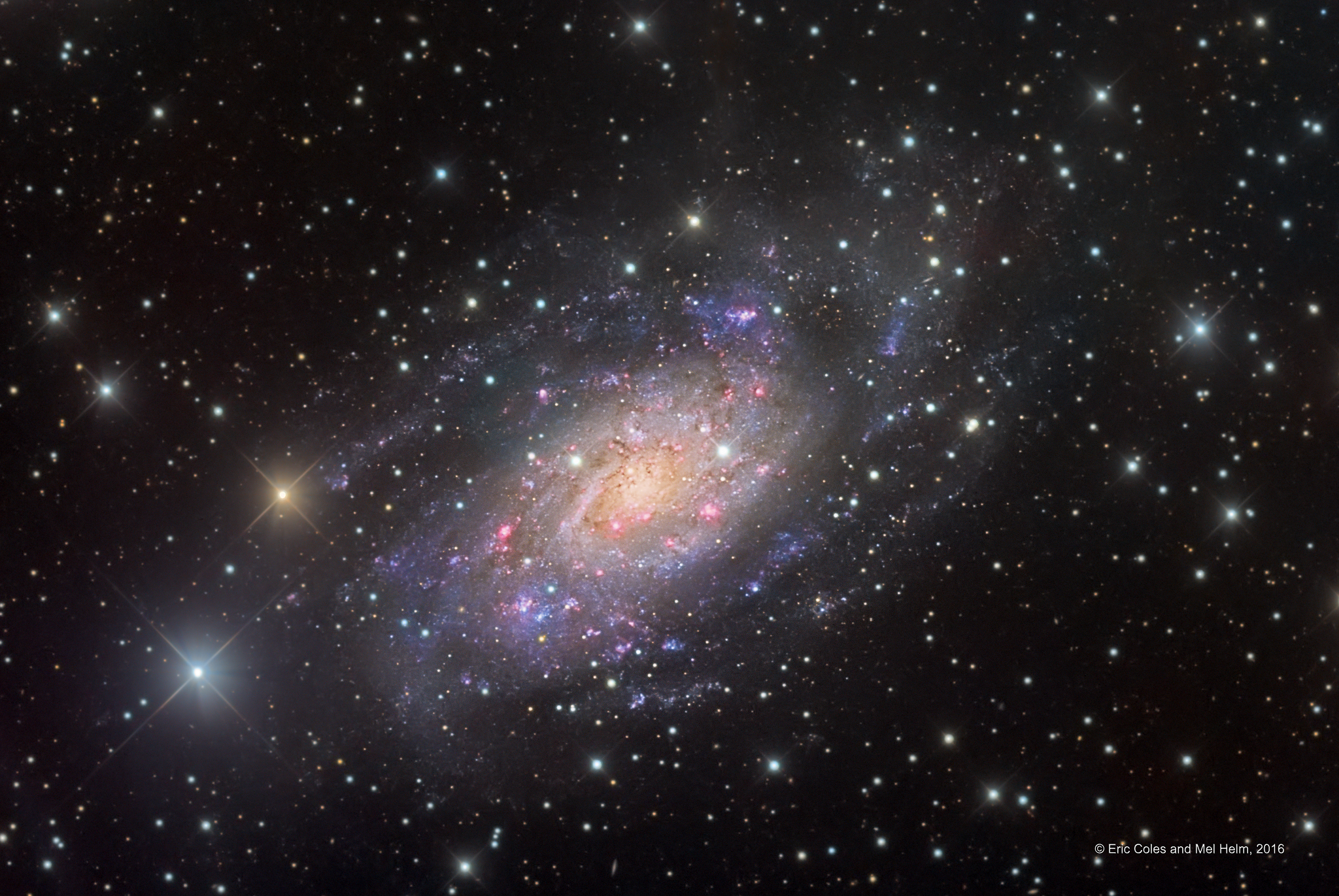
Explanation: Magnificent island universe NGC 2403 stands within the boundaries of the long-necked constellation Camelopardalis. Some 10 million light-years distant and about 50,000 light-years across, the spiral galaxy also seems to have more than its fair share of giant star forming HII regions, marked by the telltale reddish glow of atomic hydrogen gas. The giant HII regions are energized by clusters of hot, massive stars that explode as bright supernovae at the end of their short and furious lives. A member of the M81 group of galaxies, NGC 2403 closely resembles another galaxy with an abundance of star forming regions that lies within our own local galaxy group, M33 the Triangulum Galaxy. Spiky in appearance, bright stars in this colorful galaxy portrait of NGC 2403 are in the foreground, within our own Milky Way.
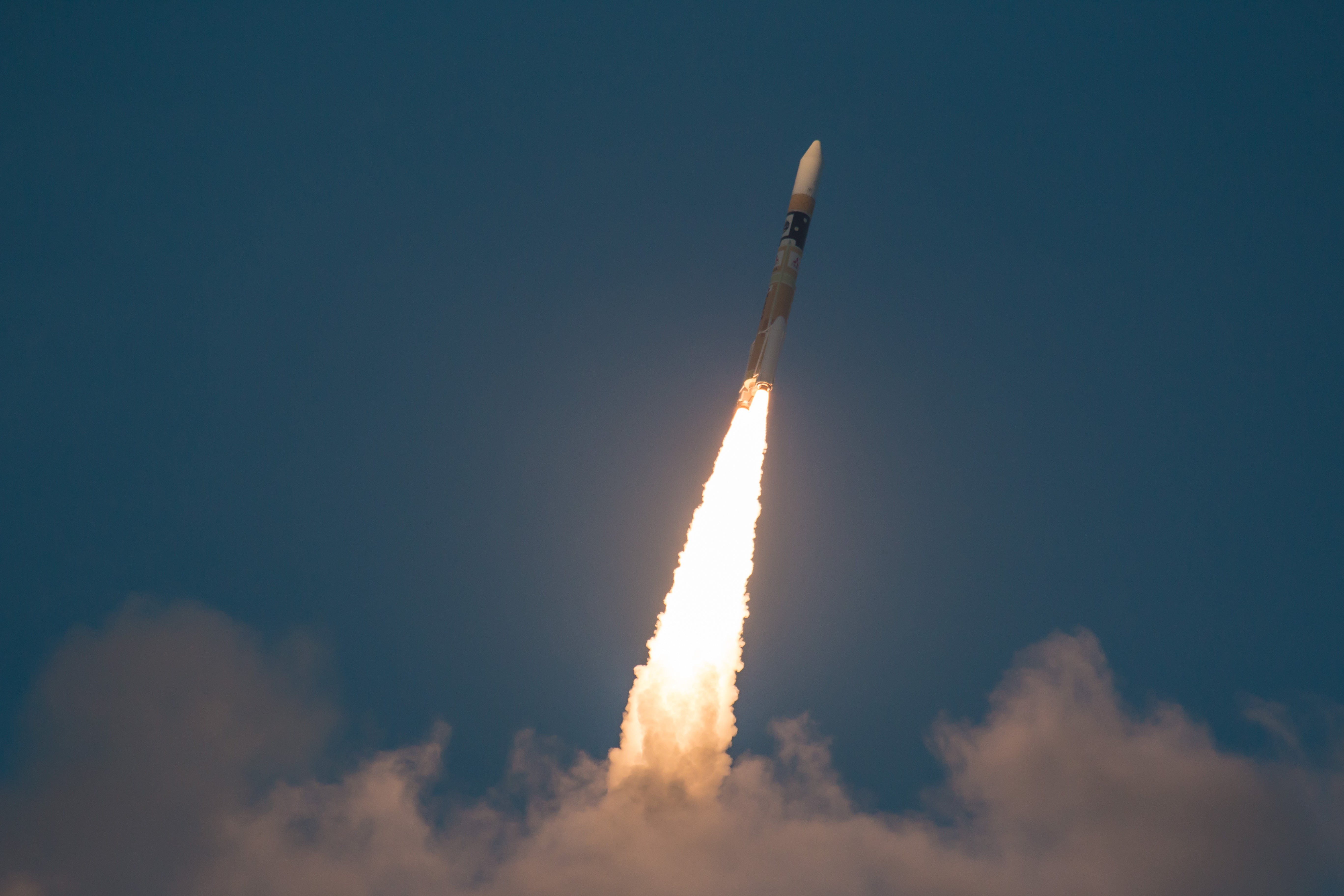
Explanation: On February 17 at 5:45pm JST this H-IIA rocket blasted skyward from JAXA's Tanegashima Space Center located off the southern coast of Japan, planet Earth. Onboard was the ASTRO-H X-ray astronomy satellite, now in orbit. Designed to explore the extreme cosmos from black holes to massive galaxy clusters, the satellite observatory is equipped with four cutting-edge X-ray telescopes and instruments sensitive to photon energies from 300 to 600,000 electron volts. By comparison, visible light photon energies are 2 to 3 electron volts. Following a tradition of renaming satellites after their successful launch, ASTRO-H has been newly dubbed "Hitomi", inspired by an ancientlegend of dragons. Hitomi means "the pupil of the eye".
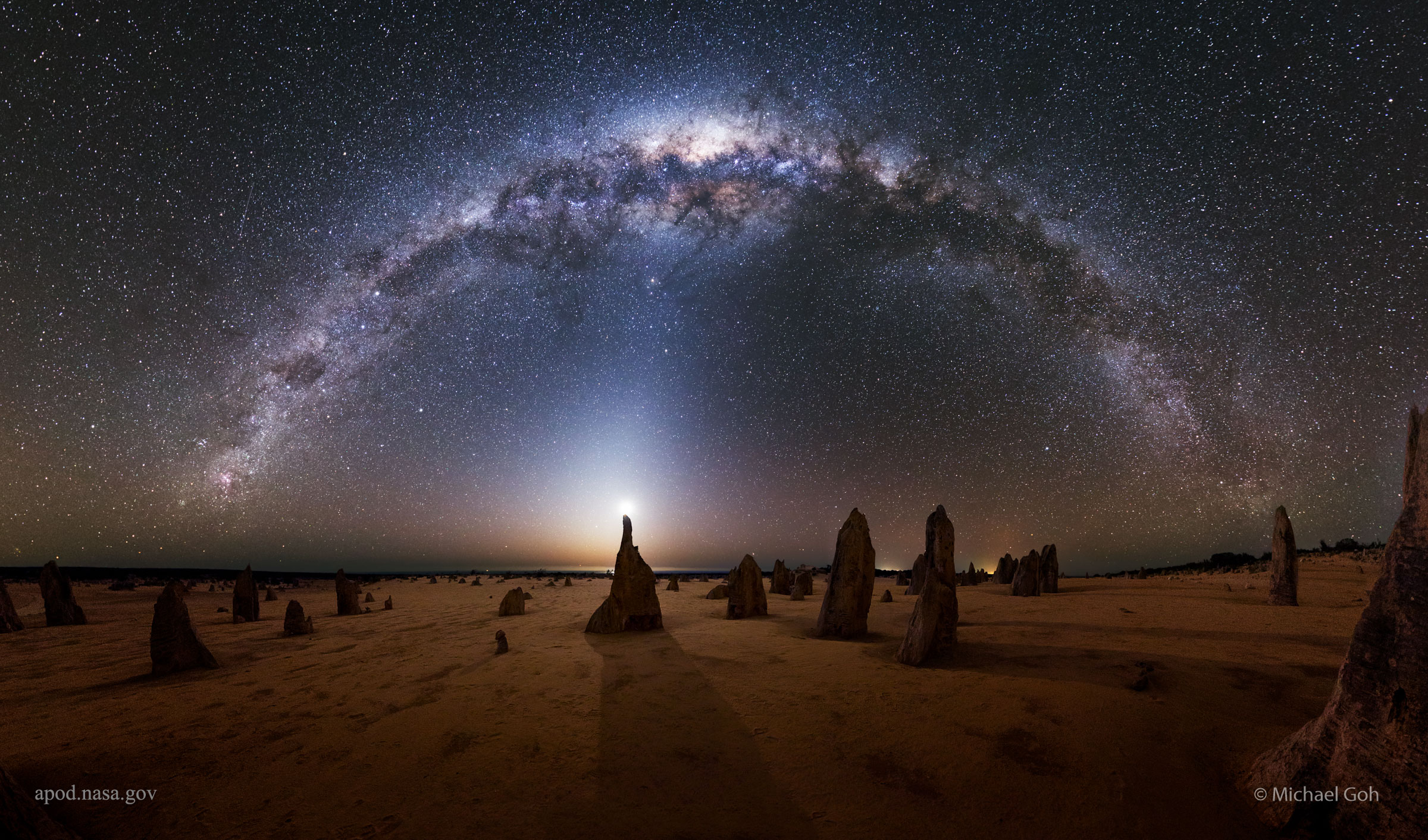
Milky Way over the Pinnacles in Australia Image Credit: Michael Goh
Explanation: What strange world is this? Earth. In the foreground of the featured image are the Pinnacles, unusual rock spires in Nambung National Park in Western Australia. Made of ancient sea shells (limestone), how these human-sized picturesque spires formed remains unknown. In the background, just past the end of the central Pinnacle, is a bright crescent Moon. The eerie glow around the Moon is mostly zodiacal light, sunlight reflected by dust grains orbiting between the planets in the Solar System. Arching across the top is the central band of our Milky Way Galaxy. Many famous stars and nebula are also visible in the background night sky. The featured 29-panel panorama was taken and composed last September after detailed planning that involved the Moon, the rock spires, and their corresponding shadows. Even so, the strong zodiacal light was a pleasant surprise.
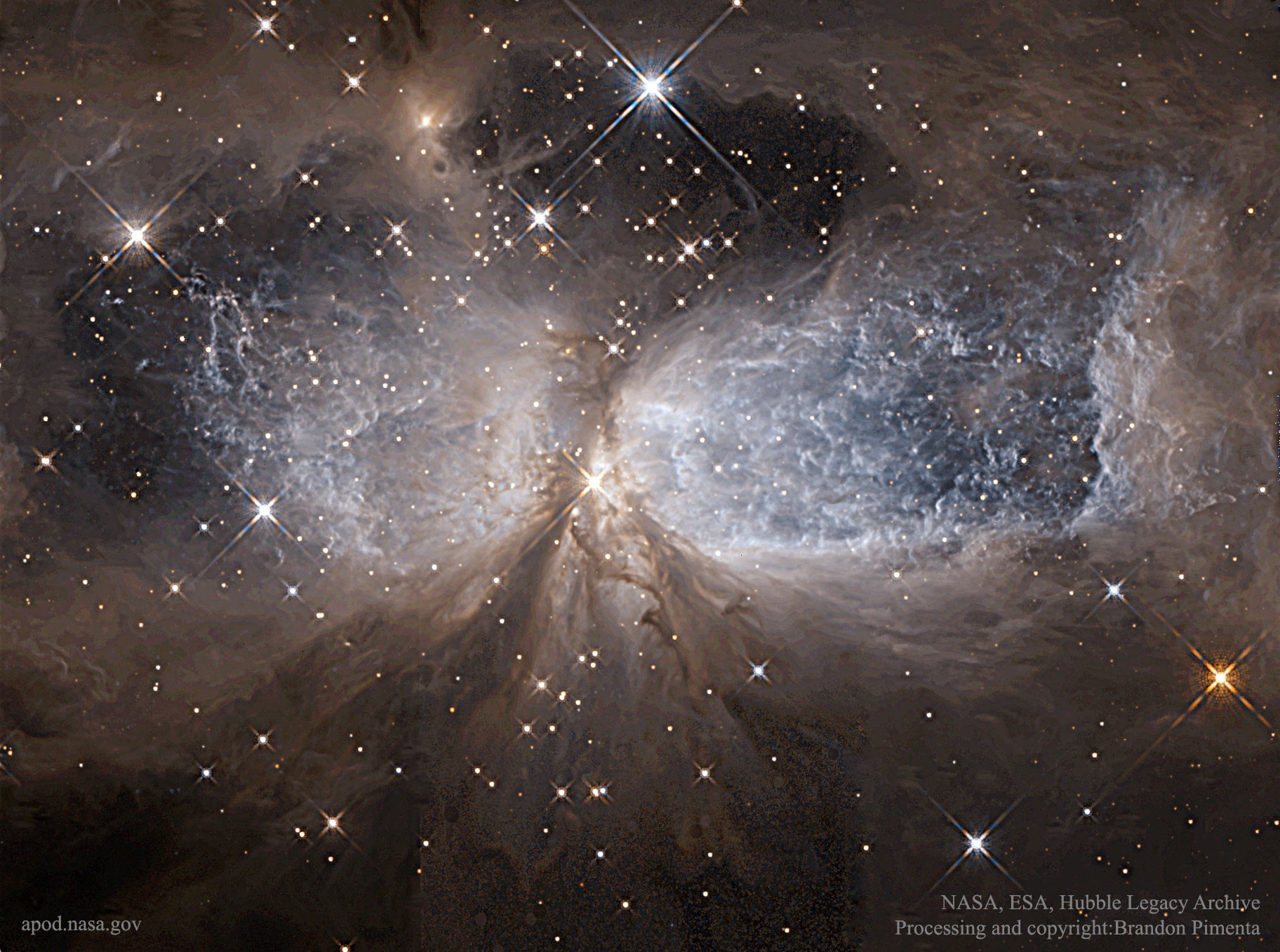
Explanation: Massive star IRS 4 is beginning to spread its wings. Born only about 100,000 years ago, material streaming out from this newborn star has formed the nebula dubbed Sharpless 2-106 Nebula (S106), featured here. A large disk of dust and gas orbiting Infrared Source 4 (IRS 4), visible in brown near the image center, gives the nebula an hourglass or butterfly shape. S106 gas near IRS 4 acts as an emission nebula as it emits light after being ionized, while dust far from IRS 4 reflects light from the central star and so acts as a reflection nebula. Detailed inspection of a recent infrared image of S106 reveal hundreds of low-mass brown dwarf stars lurking in the nebula's gas. S106 spans about 2 light-years and lies about 2000 light-years away toward the constellation of the Swan (Cygnus).
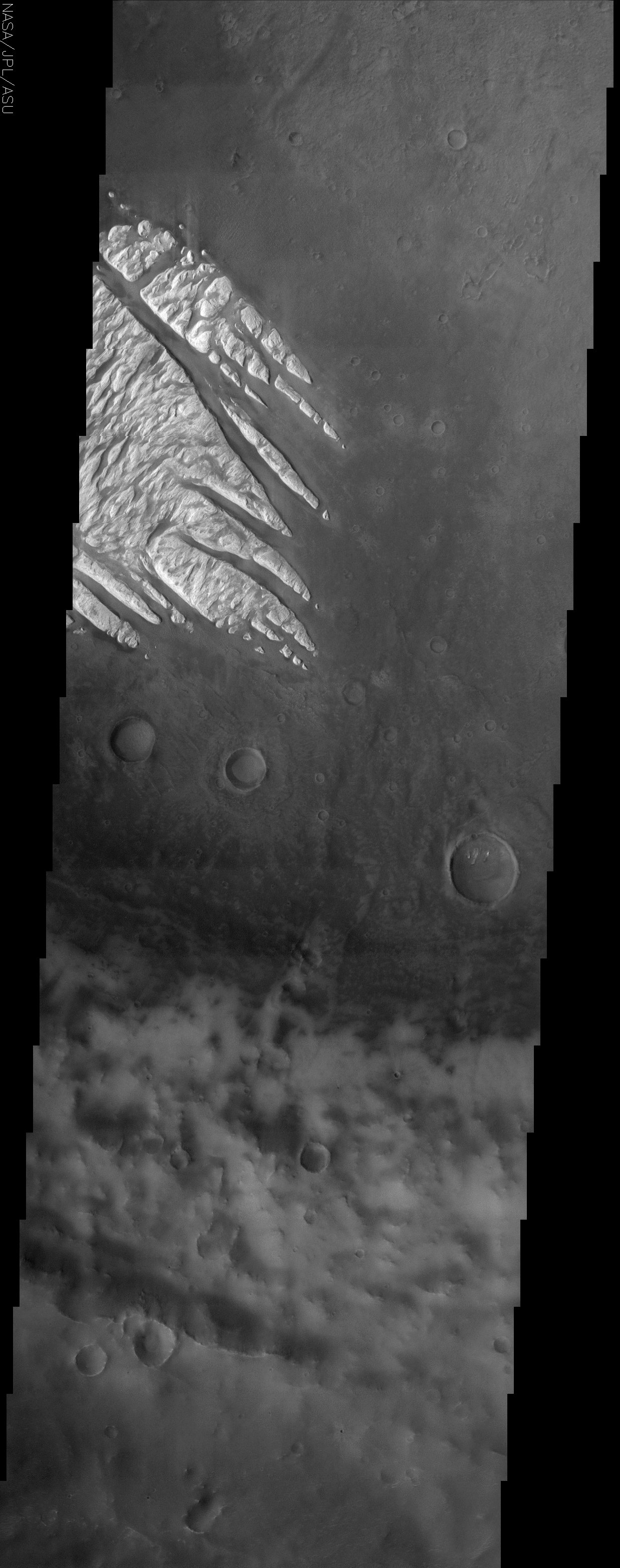
Explanation: What caused this unusual light rock formation on Mars? Intrigued by the possibility that they could be salt deposits left over as an ancient lakebed dried-up, detailed studies of these fingers now indicate a more mundane possibility: volcanic ash. Studying the exact color of the formation indicated the possible volcanic origin. The light material appears to have eroded away from surrounding area, indicating a very low-density substance. The stark contrast between the rocks and the surrounding sand is compounded by the unusual darkness of the sand. The featured picture was taken with the Thermal Emission Imaging System on the Mars Odyssey, the longest serving spacecraft currently orbiting Mars. The image spans about 10 kilometers inside a larger crater.