2016-02-20

Ennya - "Echoes in rain" - Video - Music

Afficher l'image d'origine
"Echoes in rain"

Astronomy picture of the day - 2016 February 20 - Where Your Shadow Has Company

See Explanation.  Clicking on the picture will download
 the highest resolution version available.
Where Your Shadow Has Company 
Poster Illustration Credit: NASAJPLExoplanet Travel Bureau
Explanation: Want to take a relaxing interstellar vacation? Consider visiting Kepler-16b, a world in a binary star system. In fact Kepler-16b is the first discovered circumbinary planet. It was detected in a wide 229 day orbit around a close pair of cool, low-mass stars some 200 light-years away. The parent stars eclipse one another in their orbits, observed as a dimming of starlight. But Kepler-16b itself was discovered by following the additional very slight dimming produced during its transits. Like sci-fi planet Tatooine of Star Wars fame, two suns would set over its horizon. Still, Kepler 16b is probably not a Tatooine-like terrestrial desert world. Instead, Kepler 16b is thought to be a cold, uninhabitable planet with about the mass of Saturn and a gaseous surface ... so plan to dress accordingly. Or, choose another Visions of the Future vacation destination.

2016-02-19

Sp. Braga está a um pequeno passo dos oitavos-de-final. Parabéns "Guerreiros do Minho"!


O Sp. Braga tornou-se esta quinta-feira na única equipa portuguesa a poder reservar (com relativa segurança) um lugar no sorteio dos oitavos-de-final da Liga Europa. Na Suíça, os “guerreiros” do Minho sofreram, mas conseguiram impor uma derrota, por 2-1, ao Sion, prosseguindo a sua boa campanha na segunda prova da UEFA.

Ler mais em:
http://www.publico.pt/desporto/noticia/sp-braga-vence-na-suica-e-esta-a-um-passo-dos-oitavosdefinal-1723790

Publico - Portugal

Pedro Abrunhosa - "Serà" - Video - Musica - Ao vivo

Afficher l'image d'origine
"Serà"

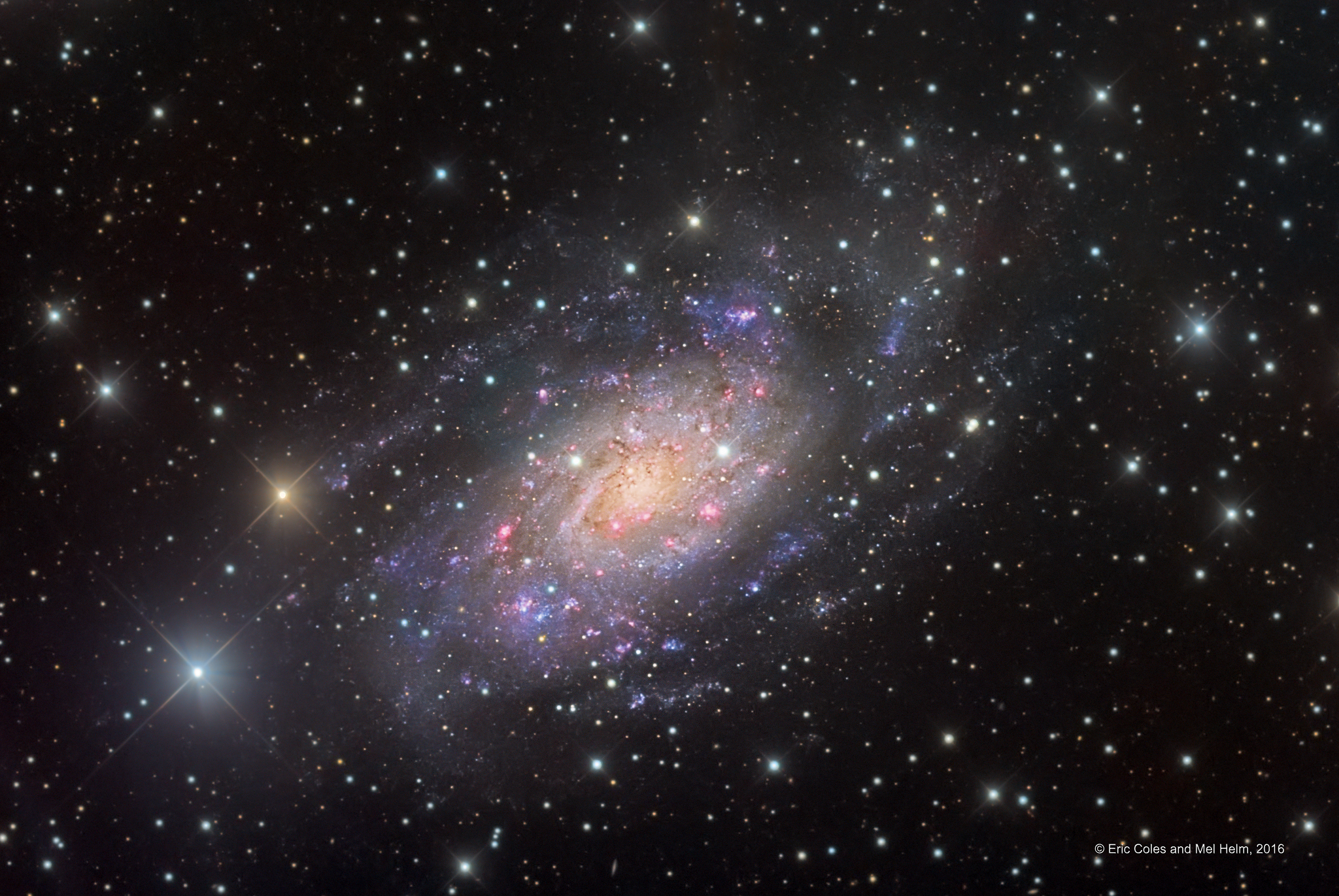
Astronomy picture of the day - 2016 February 19 - NGC 2403 in Camelopardalis

See Explanation.  Clicking on the picture will download
 the highest resolution version available.
NGC 2403 in Camelopardalis 
Image Credit & CopyrightEric Coles and Mel Helm
Explanation: Magnificent island universe NGC 2403 stands within the boundaries of the long-necked constellation Camelopardalis. Some 10 million light-years distant and about 50,000 light-years across, the spiral galaxy also seems to have more than its fair share of giant star forming HII regions, marked by the telltale reddish glow of atomic hydrogen gas. The giant HII regions are energized by clusters of hot, massive stars that explode as bright supernovae at the end of their short and furious lives. A member of the M81 group of galaxies, NGC 2403 closely resembles another galaxy with an abundance of star forming regions that lies within our own local galaxy group, M33 the Triangulum GalaxySpiky in appearance, bright stars in this colorful galaxy portrait of NGC 2403 are in the foreground, within our own Milky Way.

2016-02-18

Astronomy picture of the day - 2016 February 18 - Hitomi Launches

See Explanation.  Clicking on the picture will download
 the highest resolution version available.
Hitomi Launches 
Image Credit & CopyrightF. Scott Porter (NASAGoddard Space Flight Center)
Explanation: On February 17 at 5:45pm JST this H-IIA rocket blasted skyward from JAXA's Tanegashima Space Center located off the southern coast of Japan, planet Earth. Onboard was the ASTRO-H X-ray astronomy satellite, now in orbit. Designed to explore the extreme cosmos from black holes to massive galaxy clusters, the satellite observatory is equipped with four cutting-edge X-ray telescopes and instruments sensitive to photon energies from 300 to 600,000 electron volts. By comparison, visible light photon energies are 2 to 3 electron volts. Following a tradition of renaming satellites after their successful launch, ASTRO-H has been newly dubbed "Hitomi", inspired by an ancientlegend of dragons. Hitomi means "the pupil of the eye".

2016-02-17

Pictures from my mind - "Duas e meio" - 17-02-2016

"Duas e meio"

17-02-2016
JoanMira

Imagens do Mundo - Madrid, Espanha - Dia de chuva


"Dia de chuva em Madrid"

Imagens do Mundo - Singapura com asas


Pilotos dos "Black Eagles" da Coreia do Sul realizam acrobacias com os seus "T-50" durante numa exibição em Singapura.

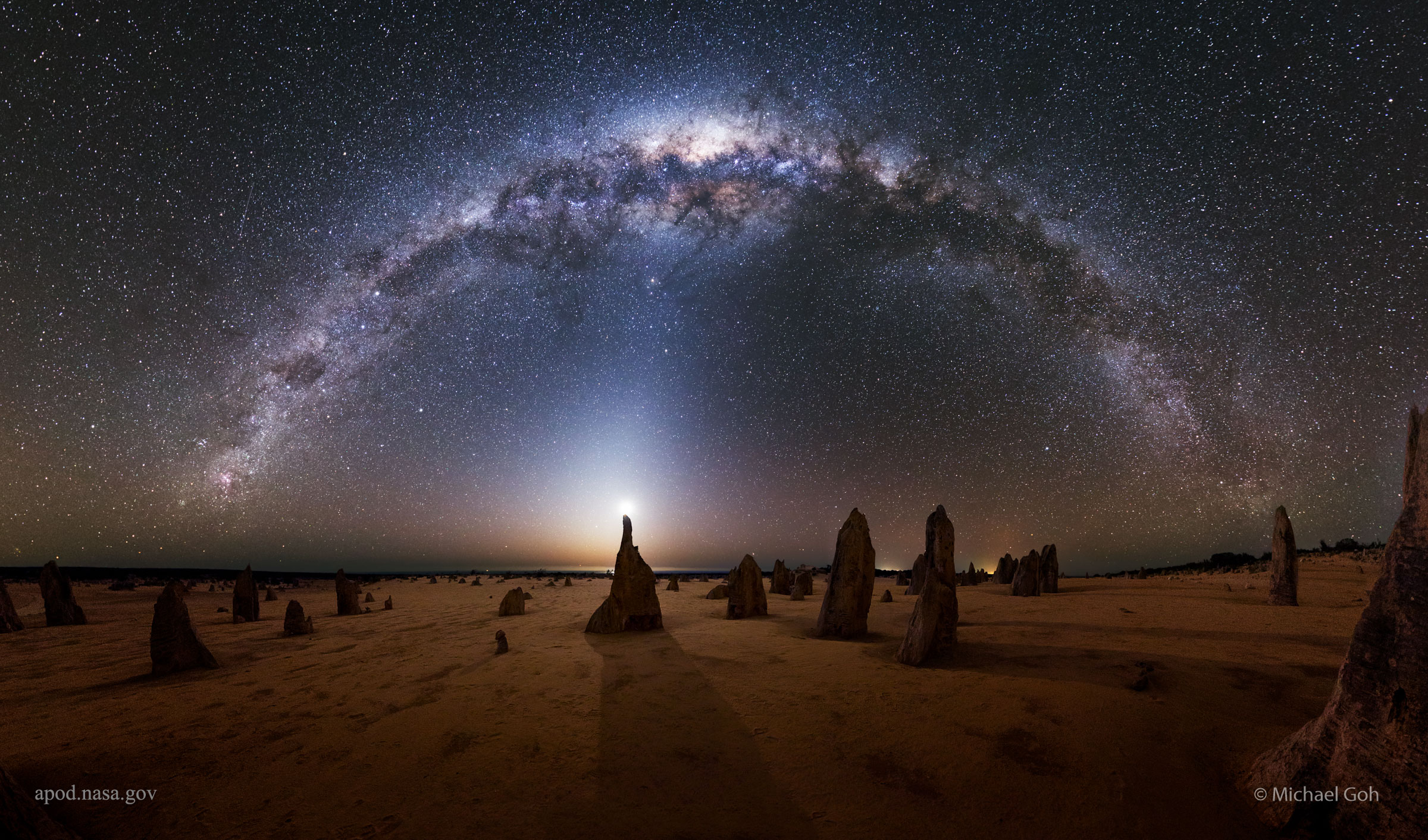
Astronomy picture of the day - 2016 February 17 - Milky Way over the Pinnacles in Australia

See Explanation.  Clicking on the picture will download
 the highest resolution version available.
Milky Way over the Pinnacles in Australia 
Image Credit: Michael Goh
Explanation: What strange world is this? Earth. In the foreground of the featured image are the Pinnacles, unusual rock spires in Nambung National Park in Western Australia. Made of ancient sea shells (limestone), how these human-sized picturesque spires formed remains unknown. In the background, just past the end of the central Pinnacle, is a bright crescent Moon. The eerie glow around the Moon is mostly zodiacal light, sunlight reflected by dust grains orbiting between the planets in the Solar System. Arching across the top is the central band of our Milky Way Galaxy. Many famous stars and nebula are also visible in the background night sky. The featured 29-panel panorama was taken and composed last September after detailed planning that involved the Moon, the rock spires, and their corresponding shadows. Even so, the strong zodiacal light was a pleasant surprise.