2016-03-08

Astronomy pictures of the day - 2016 March 8 - Solar Eclipse Shoes in the Classroom

See Explanation.  Clicking on the picture will download
 the highest resolution version available.
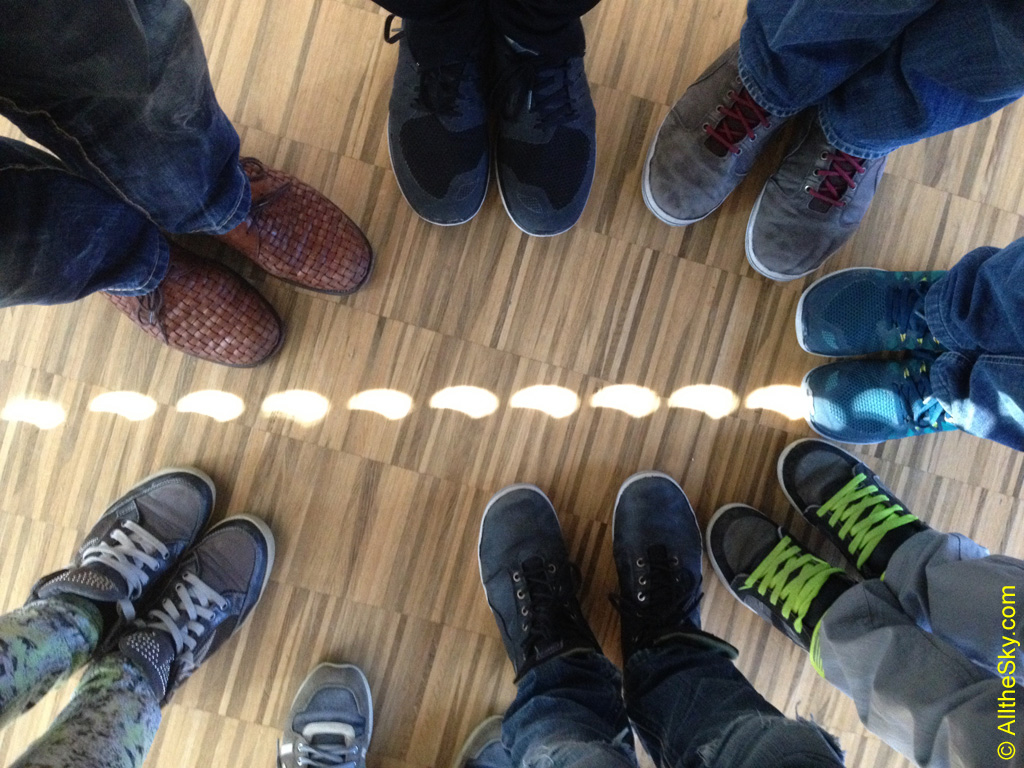
Solar Eclipse Shoes in the Classroom 
Image Credit & Copyright: Astronomie-AG, Progymnasium RosenfeldTill Credner, AlltheSky.com 
Explanation: The total solar eclipse of March 8/9 will be the only total eclipse in 2016. The New Moon's dark shadow traces a limited, narrow path across planet Earth for viewing the total phase, making landfall in Indonesia and mostly tracking across the Pacific Ocean. A much larger region will be witness to a partially eclipsed Sun though, and safely viewing the eclipse can actually be very easy. One technique is demonstrated in this shoe group portrait from a classroom in Rosenfeld, Germany, taken during March 2015's solar eclipse. With blinds closed to darken the room, each threaded hole in the window blind creates a pinhole camera, projecting multiple images of the eclipsed sun that march across the floor. Other viewing alternatives include eclipse glasses and a comfortable chair, but be sure to wear a fashionable eclipse shirt.

2016-03-07

Astronomy picture of the day - 2016 March 7 - Mystery Feature Now Disappears in Titan Lake

See Explanation.  Clicking on the picture will download
 the highest resolution version available.
Mystery Feature Now Disappears in Titan Lake 
Image Credit: Cassini Radar MapperCornellJPLESANASA
Explanation: What is that changing object in a cold hydrocarbon sea of Titan? Radar images from the robotic Cassini spacecraft orbiting Saturn have been recording the surface of the cloud-engulfed moon Titan for years. When imaging the flat -- and hence radar dark -- surface of the methane and ethane lake called Ligeia Mare, an object appeared in 2013 July just was not there in 2007. Subsequent observations in 2014 August found the object remained -- but had changed. In an image released last week, the mystery object seems to have disappeared in 2015 January. The featured false-color image shows how the 20-km long object has come, changed, and gone. Current origin speculative explanations include wavesbubbling foam and floating solids, but still no one is sure. Future observations, in particular Cassini's final close flyby of Titan in 2017 April, may either resolve the enigma or open up more speculation.

2016-03-06

Valorosos Guerreiros do Minho: Braga 3 - Porto 1!


Afficher l'image d'origine
Os Guerreiros derrotaram esta

noite o F. C. do Porto num jogo

de grande intensidade e emoção. 

Vitoria justissima de uma grande equipa de futebol, marcada por um erro crasso de Iker Casillas. 

Estão de parabéns os "Guerreiros do Minho" que praticam o melhor futebol em Portugal.

Astronomy picture of the day - 2016 March 6 - A Solar Prominence Eruption from SDO

Afficher l'image d'origine


A Solar Prominence Eruption from SDO 
Video Credit: NASA/Goddard/SDO AIA Team
Explanation: One of the most spectacular solar sights is an erupting prominence. In 2011, NASA's Sun-orbiting Solar Dynamic Observatory spacecraft imaged an impressively large prominence erupting from the surface. The dramatic explosion was captured in ultraviolet light in the above time lapse video covering 90 minutes, where a new frame was taken every 24 seconds. The scale of the prominence is huge -- the entire Earth would easily fit under the flowingcurtain of hot gas. A solar prominence is channeled and sometimes held above the Sun's surface by the Sun's magnetic field. A quiescent prominence typically lasts about a month, and may erupt in a Coronal Mass Ejection (CME)expelling hot gas into the Solar System. The energy mechanism that creates a solar prominence is still a topic of research. As the Sun passes Solar Maximumsolar activity like eruptive prominences are expected to become less common over the next few years.

Roberto Carlos - "Aguia dourada" - Video - Musica

Afficher l'image d'origine
"Aguia dourada"

Benfica: A aguia não perdoa!

Afficher l'image d'origine


Ah Ah Ah... A AGUIA continua a voar mais alto!!!

2016-03-05

Astronomy picture of the day - 2016 March 5 - Cities at Night

See Explanation.  Clicking on the picture will download
 the highest resolution version available.
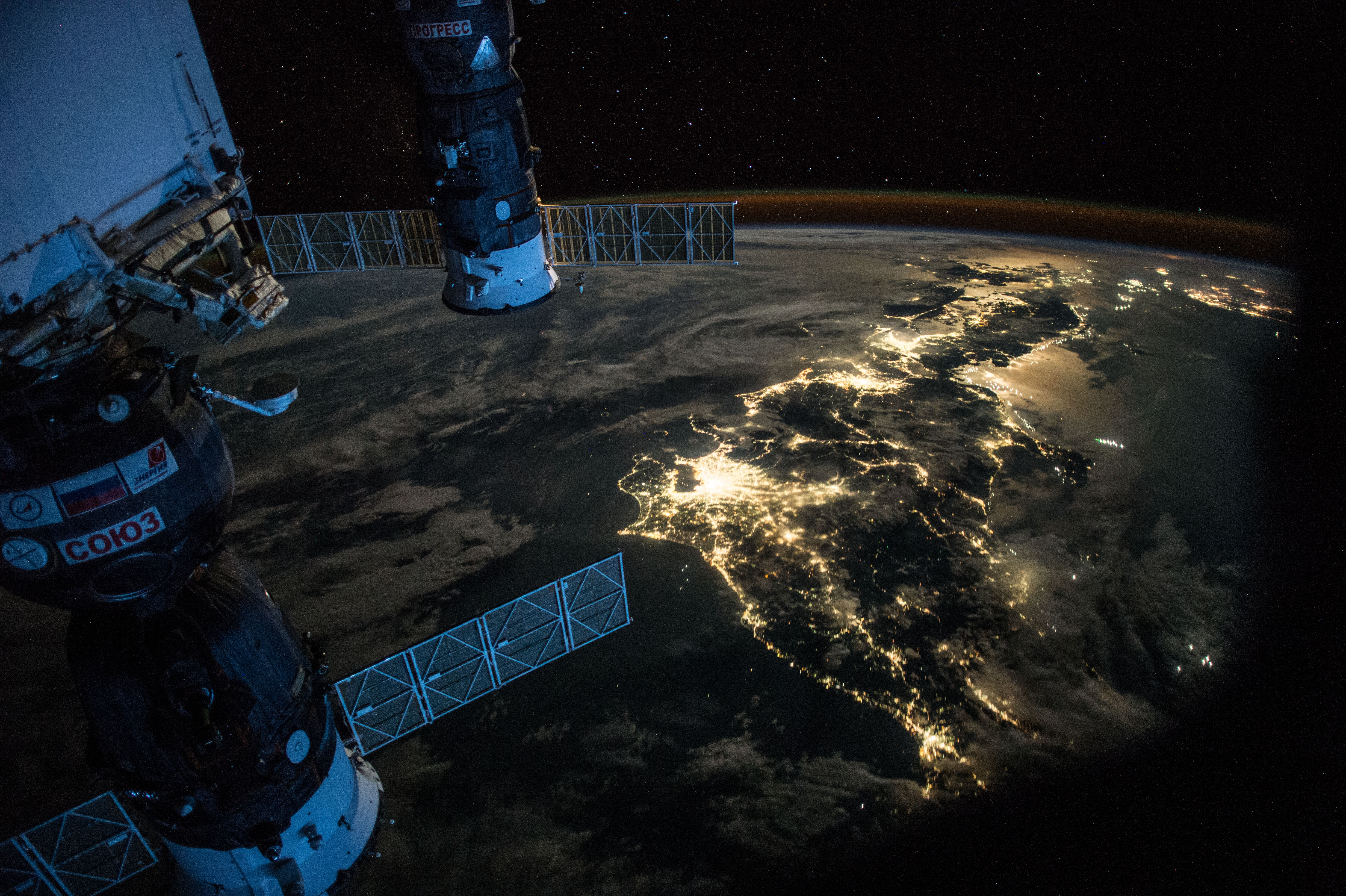
Cities at Night 
Image Credit: NASAScott Kelly 
Explanation: Looking toward the south from an altitude of 400 kilometers, this stunning snapshot from orbit finds bright lights of Tokyo and cities across central and southern Japan, planet Earth shining upward through broken clouds.The spacefaring perspective was captured last July by astronaut Scott Kelly during his stay on board the International Space Station. Thin stripes of airglow follow the curve of the planet's dark limb, while beyond lie stars of the constellation Centaurus and the southern sky. Their solar panels extended, a docked Soyuz (bottom) and Progress spacecraft are posed in the foreground. Kelly returned to planet Earth this week after his one-year mission in space.

2016-03-04

Portugal - Jesus também tinha 2 pais

L’affiche qui représente Jésus sur fond rose avec le titre “Jésus aussi avait deux papas” se voulait avant tout une célébration de l’adoption définitive de la loi autorisant l’adoption pour les couples de même sexe au Parlement portugais, le 10 février dernier. Mais l’humour du parti portugais de gauche radicale Bloco de Esquerda (BE) n’est pas du tout du goût des catholiques locaux.

Détaillée dans un article du 26 février dans le quotidien portugais Público, la polémique a enflé dès la réception par les médias, le 25 au soir, du nouveau kit de communication du Bloco de Esquarda, dans lequel figurait l’afffiche incriminée. Le lendemain matin la Conférence épiscopale portugaise réagissait déjà, en estimant que l’affiche constituait “un affront aux croyants” et introduisait “une analogie sans fondements”. Dans le même temps, le cardinal de Lisbonne Manuel Clemente déclarait que cette affiche “était le pire des mensonges”.

“Jésus a toujours fait référence à Dieu comme étant son père. Il avait une mère, Marie, et un père adoptif, selon la terminologie d’aujourdhui, qui était Joseph.”

La réaction des partis conservateurs ne s’est pas non plus fait attendre. Pedro Mota Soares, membre du CDS, parti le plus à droite de l’échiquier politique à siéger au Parlement, a évoqué “une offense à la sensibilité de beaucoup de Portugais”, tout en mettant en avant que “la liberté d’expression doit rester totale“. Le député PSD (centre droit) a qualifié l’affiche de “lamentable”, car “l’humour en politique[…] ne peut pas manquer de respect aux croyances et aux convictions des Portugais”.

Le parti de gauche radicale a réagi en soulignant que “nous [le BE] respectons toutes les religions mais n’avons aucun tabou. […] L’affiche voulait faire réagir la population et la phrase est d’ailleurs un vieux slogan du mouvement international pour les droits civils.” Selon la même déclaration officielle du BE, l’affiche n’était d’ailleurs pas destinée à être placardée dans les rues, mais visait uniquement les réseaux sociaux. Le Premier ministre portugais António Costa, dont le gouvernement est soutenu par le Bloco de Esquerda, s’est bien gardé de réagir à la polémique.

Courrier International - France

Fotografia - Saul Leiter - "New-York - 1960"

Leiter


"New-York - 1960"
New York que Saul Leiter va peindre, car sa photo est avant tout peinture, les gens qui passent, les rues qui mènent au fond de nous-mêmes.

Astronomy picture of the day - 2016 March 4 - Sculptor Galaxy NGC 134

See Explanation.  Clicking on the picture will download
 the highest resolution version available.
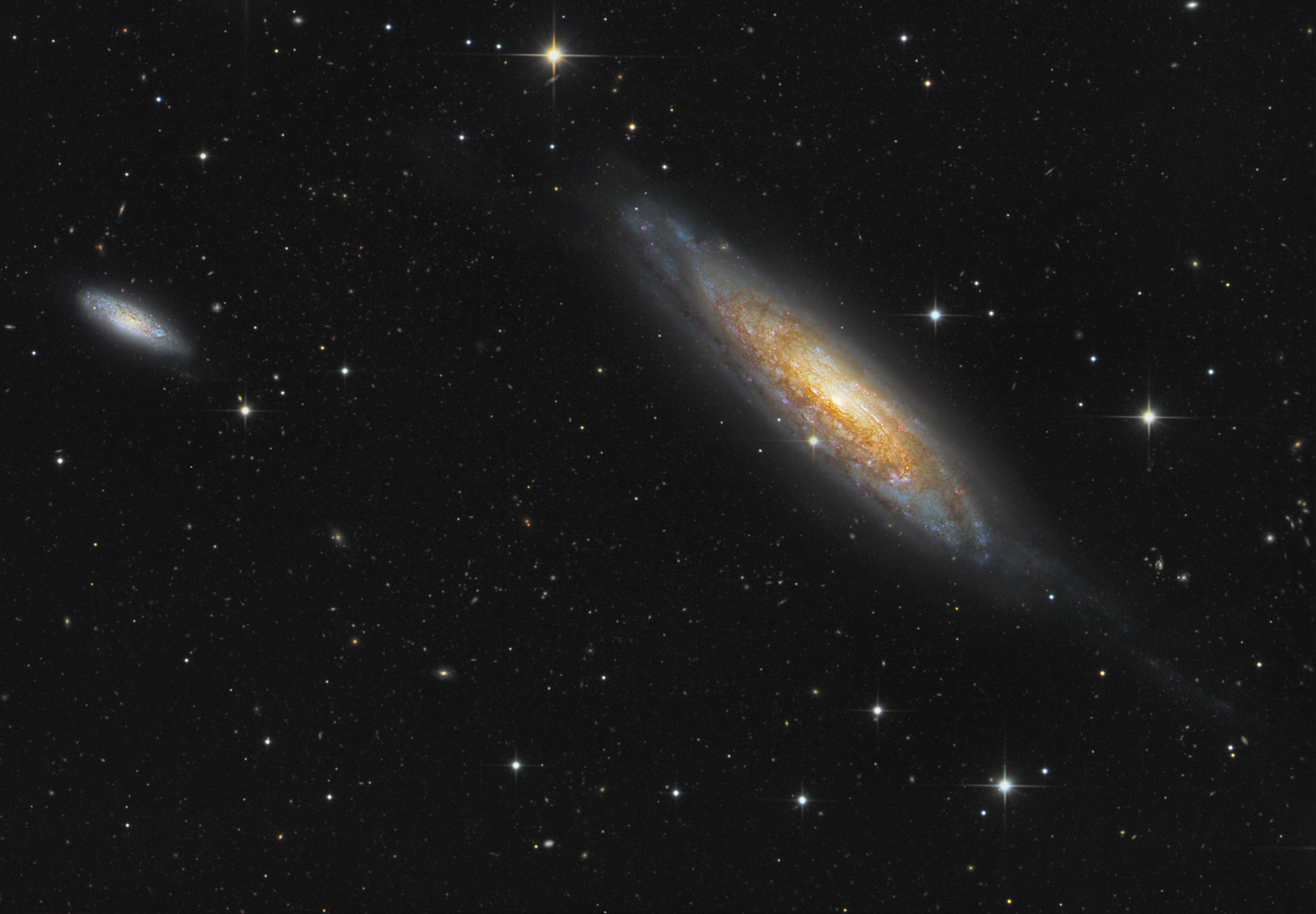
Sculptor Galaxy NGC 134 
Image Credit & CopyrightCHART32 TeamProcessing - Volker Wendel 
Explanation: NGC 134 is probably not the best known spiral galaxy in the constellation Sculptor. Still, the tantalizing island universe is a clearly a telescopic treasure in southern skies. It shares a bright core, clumpy dust lanes, and loosely wrapped spiral arms with spiky foreground stars of the Milky Way and the more diminutive galaxy NGC 131 in this sharp cosmic vista. From a distance of about 60 million light-years, NGC 134 is seen tilted nearly edge-on. It spans some 150,000 light-years, making it even larger than our own Milky Way galaxy. NGC 134's warped disk and faint extensions give the appearance of past gravitational interactions with neighboring galaxies. Like the much closer and brighter Sculptor galaxy NGC 253, tendrils of dust appear to rise from a galactic disk sprinkled with blue star clusters and pinkish star forming regions.