O surfista Daniel Rangel num "tubo" no Rio de Janeiro
2016-04-24
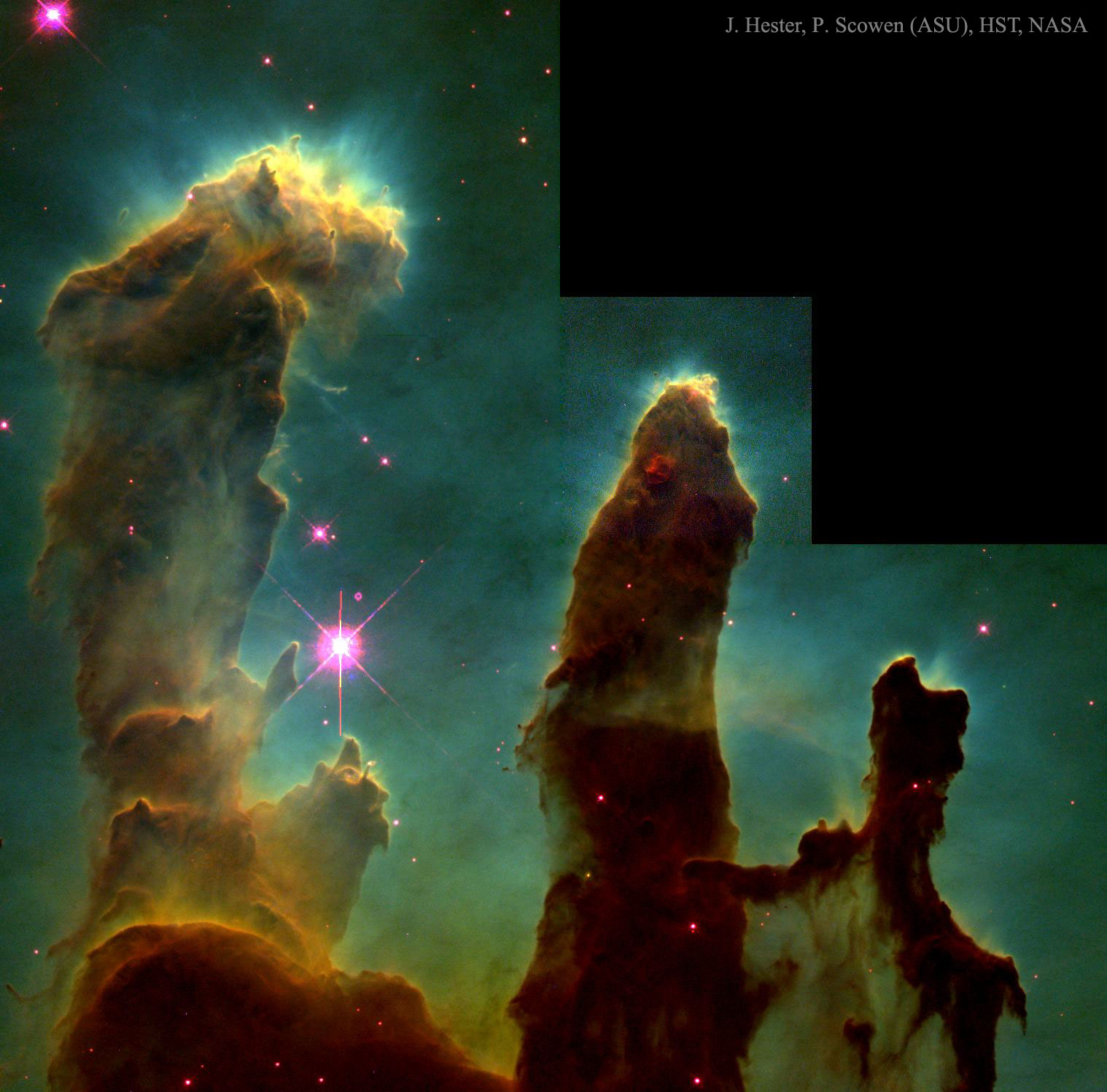
Astronomy picture of the day - 2016 April 24 - M16: Pillars of Star Creation
Image Credit: J. Hester, P. Scowen (ASU), HST, NASA
Explanation: Newborn stars are forming in the Eagle Nebula. This image, taken with the Hubble Space Telescope in 1995, shows evaporating gaseous globules (EGGs) emerging from pillars of molecular hydrogen gas and dust. Thegiant pillars are light years in length and are so dense that interior gas contracts gravitationally to form stars. At each pillars' end, the intense radiation of bright young stars causes low density material to boil away, leaving stellar nurseriesof dense EGGs exposed. The Eagle Nebula, associated with the open star cluster M16, lies about 7000 light years away. The pillars of creation were imaged again in 2007 by the orbiting Spitzer Space Telescope in infrared light, leading to the conjecture that the pillars may already have been destroyed by a local supernova, but light from that event has yet to reach the Earth.
2016-04-23
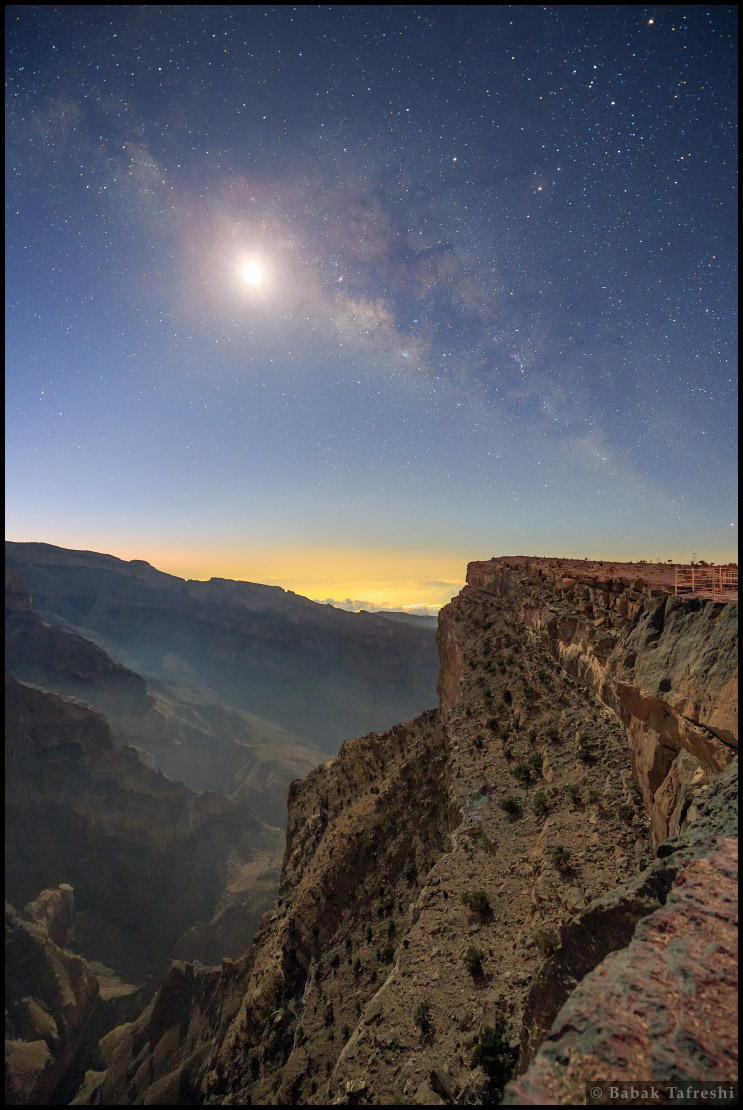
Astronomy picture of the day - 2016 April 23 - Milky Way in Moonlight
Image Credit & Copyright: Babak Tafreshi (TWAN)
Explanation: A waning crescent moon, early morning twilight, and Al Hamra's city lights on the horizon can't hide the central Milky Way in this skyscape from planet Earth. Captured in a single exposure, the dreamlike scene looks southward across the region's grand canyon from Jabal Shams (Sun Mountain), near the highest peak in Oman, on the Arabian Peninsula. Mist, moonlight, and shadows still play along the steep canyon walls. Dark rifts along the luminous band of the Milky Way are the galaxy's cosmic dust clouds. Typically hundreds of light-years distant, they obscure starlight along the galactic plane, viewed edge-on from the Solar System's perspective.
2016-04-22
Pintores - Claude Monet
Claude Monet, né le 14 novembre 1840 à Paris et mort le 5 décembre 1926 à Giverny, est un peintre français, l’un des fondateurs de l'impressionnisme, peintre de paysages et de portraits.
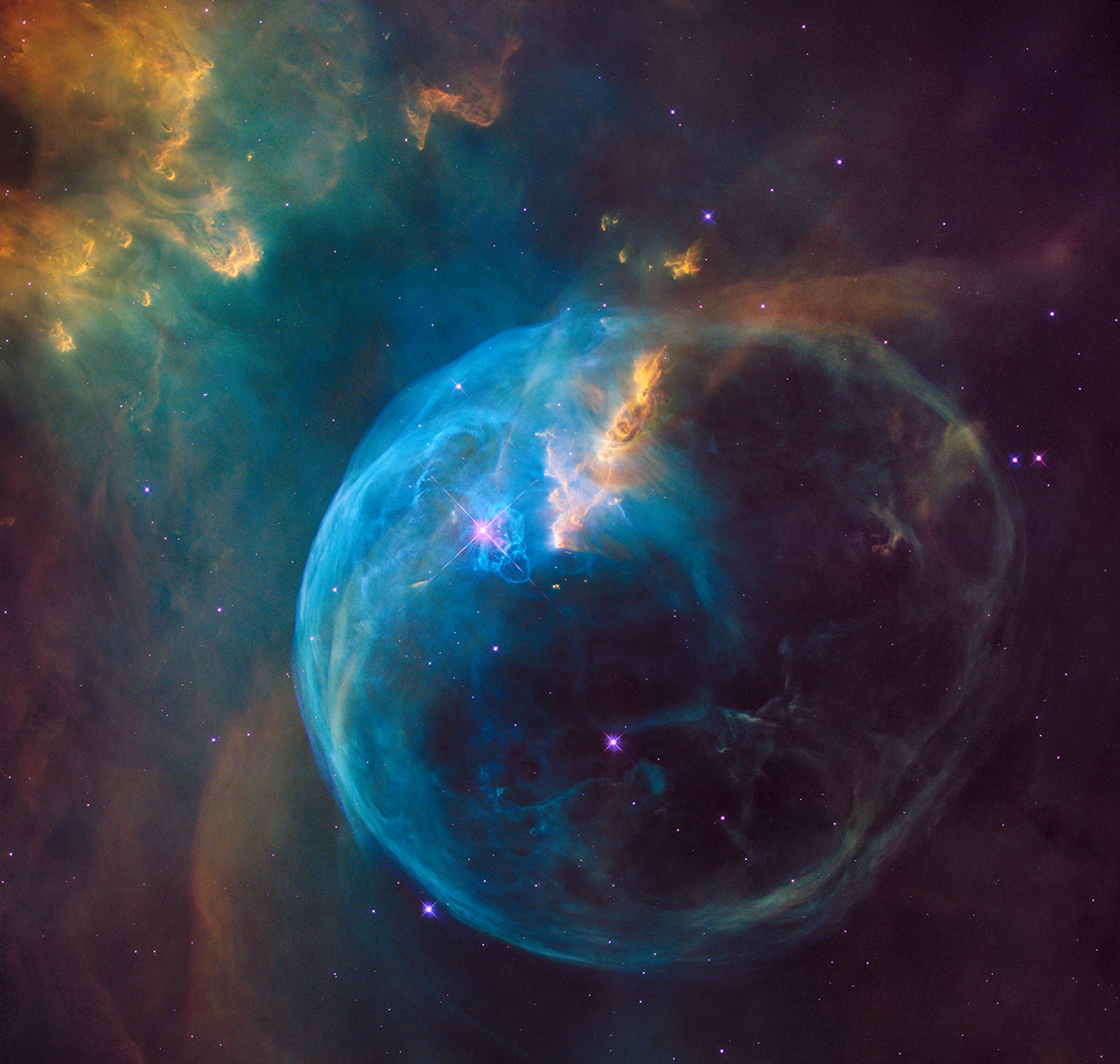
Astronomy picture of the day - 2016 April 22 - NGC 7635: The Bubble Nebula
Image Credit: NASA, ESA, Hubble Heritage Team (STScI / AURA)
Explanation: Blown by the wind from a massive star, this interstellar apparition has a surprisingly familiar shape. Cataloged as NGC 7635, it is also known simply as The Bubble Nebula. Although it looks delicate, the 7 light-year diameter bubble offers evidence of violent processes at work. Above and left of the Bubble's center is a hot, O-type star, several hundred thousand times more luminous and around 45 times more massive than the Sun. A fierce stellar wind and intense radiation from that star has blasted out the structure of glowing gas against denser material in a surrounding molecular cloud. The intriguing Bubble Nebula and associated cloud complex lie a mere 7,100 light-years away toward the boastful constellation Cassiopeia. This sharp, tantalizing view of the cosmic bubble is a composite of Hubble Space Telescope image data from 2016, released to celebrate the 26th anniversary of Hubble's launch.
2016-04-21
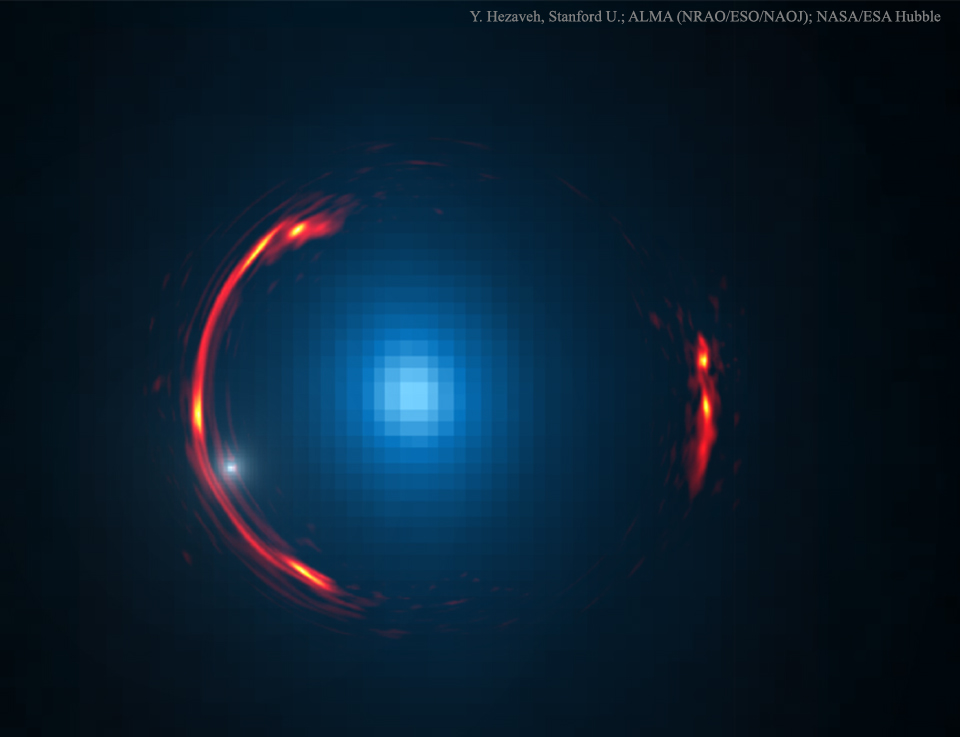
Astronomy picture of the day - 2016 April 20 - Galaxy Einstein Ring
Image Credit: Y. Hezaveh (Stanford) et al., ALMA (NRAO/ESO/NAOJ),NASA/ESAHubble Space Telescope
Explanation: Can one galaxy hide behind another? Not in the case of SDP.81. Here the foreground galaxy, shown in blue in an image taken by the Hubble Space Telescope, acts like a huge gravitational lens, pulling light from a background galaxy, shown in red in an image taken in radio waves by the Atacama Large Millimeter Array (ALMA), around it, keeping it visible. The alignment is so precise that the distant galaxy is distorted into part of a ring around the foreground galaxy, a formation known as an Einstein ring. Detailed analysis of the gravitational lens distortions indicate that a small dark satellite galaxy participates in the deflections, bolstering indication that many satellite galaxies are quite dim and dominated by dark matter. That small galaxy is depicted by a small white dot on the left. Although spanning only a few arcseconds, the featured Einstein ring is really tens of thousands of light years across.
2016-04-19
Angola: 12 mortos e 4 desaparecidos em Luanda devido ao mau tempo
Pelo menos 12 pessoas morreram e quatro em estão desaparecidas Luanda, Angola, devido ao desabamento de casas e aluimento de terras após as chuvas intensas. O balanço provisório é dos serviços de Proteção Civil e Bombeiros, avança aRádio Nacional de Angola.
A chuva continua a cair com grande intensidade, sobretudo no norte do país.
Ainda segundo a rádio, os municípios de Viana, Cacuaco, Ingombotas e Sambizanga foram os mais afectados na capital angolana.
Só em Cacuaco registaram-se nove mortos e pelo menos três pessoas estão desaparecidas.
As autoridades dão conta de um cenário de caos nas últimas 24 horas, com muitas inundações e centenas de casas alagadas em Angola e reforçam o apelo para que os habitantes das zonas de risco peçam acomodação em zonas de maior segurança.
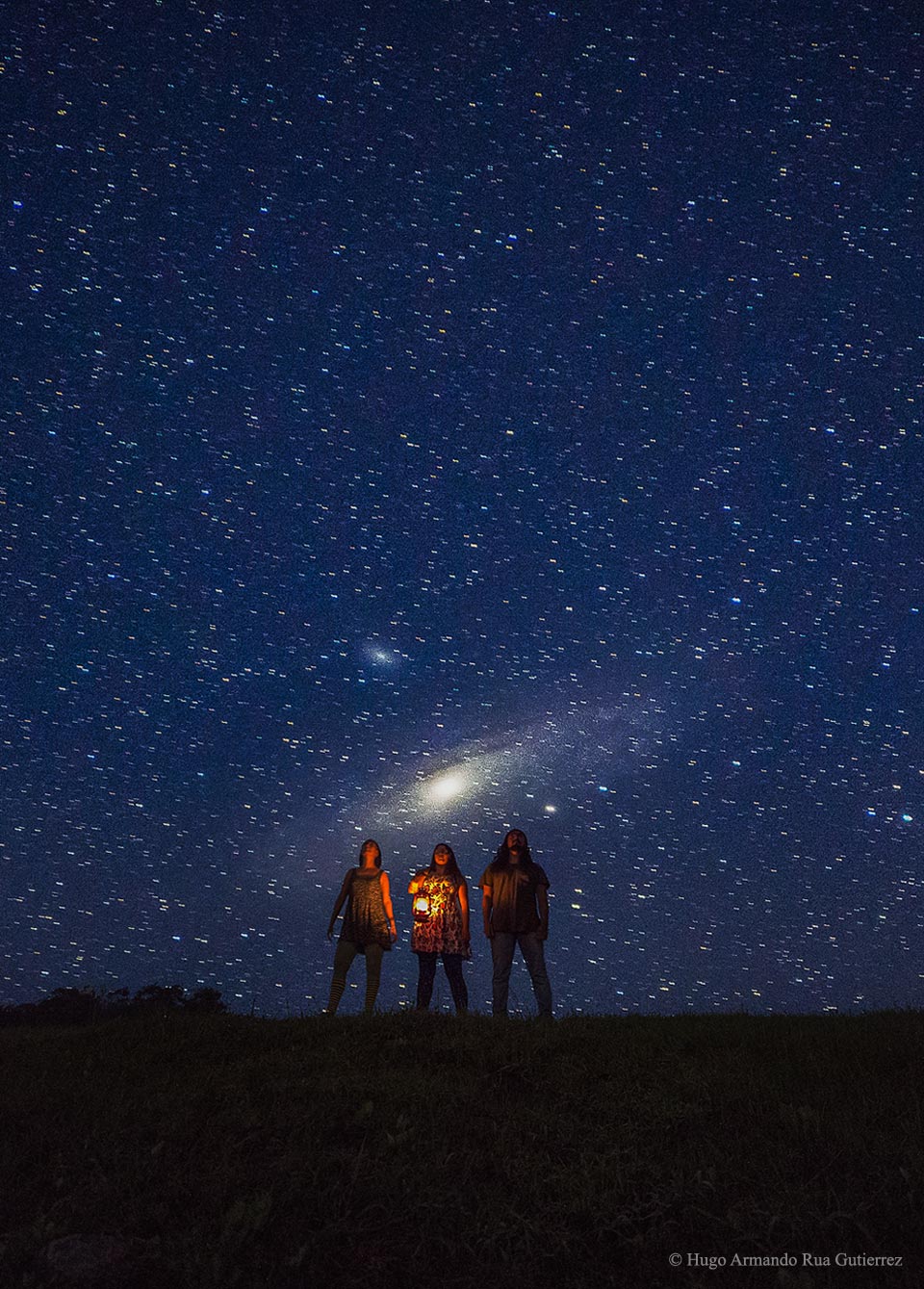
Astronomy picture of the day - 2016 April 19 - Andromeda Rising over Colombia
Image Credit & Copyright: Hugo Armando Rua Gutierrez
Explanation: What’s that rising over the hill? A galaxy. Never having seen a galaxy themselves, three friends of an industrious astrophotographer experienced an exhilarating night sky firsthand that featured not only the band of our Milky Way galaxy but also Milky Way's neighbor -- the Andromeda galaxy. Capturing the scene required careful pre-shot planning including finding a good site, waiting for good weather, balancing relative angular sizes with a zoom lens, managing ground lighting, and minimizing atmospheric light absorption. The calculated shot therefore placed the friends on a hill about 250 meters away and about 50 meters up. The featured single-exposure image was taken last July 26 at about 11:30 pm in Guatape, Colombia, about two hours from Medellin. The surrounding stars visible are all nearby in our own galaxy, while the small galaxy just above M31 is Andromeda's satellite M110.
Texto - Insonia
Vamos là saber porquê ; As quatro da manhã
acordei com no espírito a insidiosa, teimosa musica de uma velha cantiga que se chamava e, decerto ainda se continua a
chamar: “A tia Amança”
Estava a sonhar com ladrões com certeza; os
sonhos são tão esquisitos quando nos fazem tele-transportar naquele belo e tão
cósmico e comico sitio…
Meu tio Armentier jogava às cartas com meu
pai; ao lado deles o fiel garrafão de cinco litros, companheiro fiel de muitas jornadas; a
tia Margarida vinha episodicamente mandar a sua boca de protesto e em vão.
Tinha
chegado o Zé Luiz, o Manuel Raimundo… O Tino só cheirava: Antes do Marcelo
Rebelo;de Sousa era ele chamado “Copinho de Leite”; e continuou a sê-lo...
Dirigia a Nação Sua Majestade D. Manuela Mira, amiga intima da Rainha d'Inglaterra; muito apreciada pelo povo; a D.
Manuela rainha do condado portucalense, sempre apoiada pelo Visconde de Montanelas
(Titulo atribuído no Principado de Andorra), convencia-se da maravilhosa peculiaridade do mundo.
O tio Zé Gandum, entre muitissimas discussões
com a ti' Leonor, desfilava, martirizava, violentava soprando forte no instrumento; era tuba se bem me
lembro; vinha sempre no fim do cortejo; era respeitado pelo seu fisico e pelas
notas graves e pesadas que lograva extrair do instrumento …
E o Zé Luís trabalhava com grude acompanhado
de um macaco espectacular;
No momento estava-se a “fazer” à Catarina de
Alcantarilha… Entretanto tinha ido a Silves onde me deixou em pranto quando
chegou a hora da partida.
Tenho tanto a dizer sobre o Barreiro terra
onde nasci...
Bordeaux, le 19-04-2016
JoanMira
Inscription à :
Commentaires (Atom)