2016-05-11

Astronomy picture of the day - 2016 May 11 - A Mercury Transit Music Video from SDO


A Mercury Transit Music Video from SDO 
Video Credit: NASA's Goddard Space Flight CenterGenna DubersteinMusic: Encompass by Mark Petrie
Explanation: What's that small black dot moving across the Sun? Mercury. Possibly the clearest view of Mercury crossing in front of the Sun earlier this week was from Earth orbit. The Solar Dynamics Observatory obtained an uninterrupted vista recording it not only in optical light but also in bands of ultraviolet light. Featured here is a composite movie of the crossing set to music. Although the event might prove successful scientifically for better determining components of Mercury' ultra-thin atmosphere, the event surely proved successful culturally by involving people throughout the world in observing a rare astronomical phenomenon. Many spectacular images of this Mercury transit from around (and above) the globe are being proudly displayed.

2016-05-10

Simulação excepcional - Veja o Titanic a afundar em tempo real - Video


Résultat de recherche d'images pour "image le titanic"

Tem duas horas e quarenta minutos para preencher? Então pode assistir ao naufrágio do Titanic... em tempo real. Sim, é possível acompanhar ao minuto o que aconteceu após o trágico embate do famoso barco com um icebergue, através de uma simulação que tenta representar todos os momentos do acidente. E, ao contrário do que acontece na versão cinematográfica do evento, tudo se processou de forma bem mais lenta... No primeiro minuto, vemos o fatídico embate e, nos longos minutos que se seguem, a simulação dá-nos um olhar privilegiado do interior e exterior do barco enquanto este vai (lentamente) afundando. O resto é história. 


Correio da Manhã - Portugal

Imagens do Mundo - Praia do Arpoador - Rio de Janeiro

Após a ressaca, águas transparentes tomam a orla da Zona Sul Márcia Foletto / Agência O Globo
Apos a ressaca, aguas transparentes tomam a orla da Zona Sul
O Globo - Brasil

Fot'arte - "Na Primavera" - 10-05-2016

"Na Primavera"

10-05-2016
JoanMira

Arte - Fu Site - "Politicians" -

"Politicians"


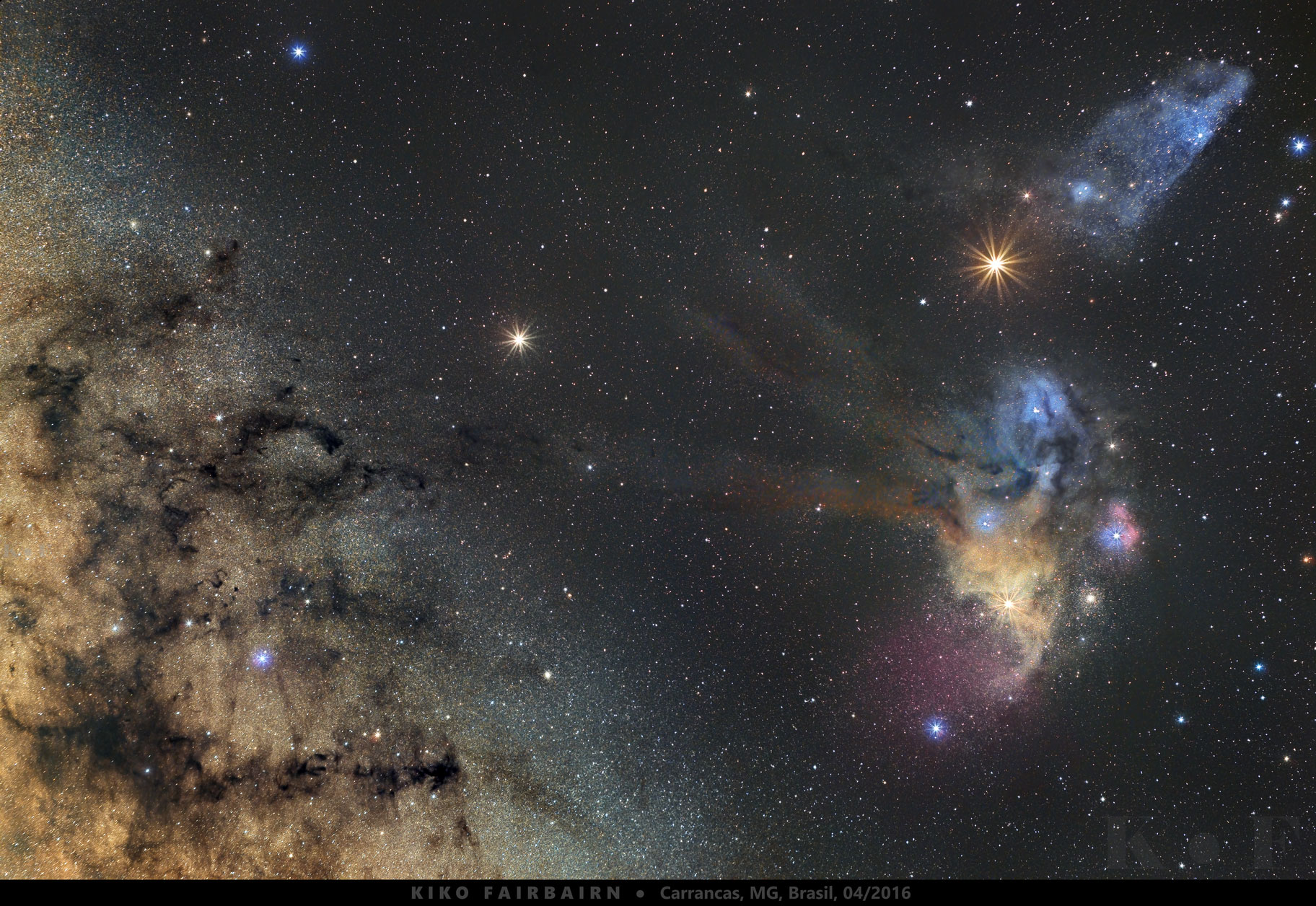
Astronomy picture of the day - 2016 May 10 - Saturn and Mars visit Milky Way Star Clouds

See Explanation.
Moving the cursor over the image will bring up an annotated version.
Clicking on the image will bring up the highest resolution version
available.
Saturn and Mars visit Milky Way Star Clouds 
Image Credit & Copyright: Carlos Eduardo Fairbairn ; Rollover Annotation: Judy Schmidt
Explanation: Planets, stars, nebulas and a galaxy -- this impressive image has them all. Closest to home are the two planets Mars (right) and Saturn (center), visible as the two bright orange spots in the upper half of the featured image. On the central right are the colorful Rho Ophiuchus star clouds featuring the bright orange star Antares lined up below Mars. These interstellar clouds contain both red emission nebulas and blue reflection nebulas. At the top right of the image is the Blue Horsehead reflection nebula. On the lower left are many dark absorption nebulas that extend from the central band of our Milky Way Galaxy. The featured deep composite was composed of multiple deep exposures taken last month from Brazil. Although you need a telescope to see the nebulosities, Saturn and Mars will remain visible to the unaided eye this month toward the east, just after sunset.

2016-05-09

Mercúrio passa hoje diante do Sol, o que só volta a acontecer em 2019.


Planeta Mercúrio [Foto: NASA]

Mercúrio vai passar hoje diante do Sol, um fenómeno raro que só volta a acontecer em 2019, e que, esta tarde, pode ser observado em Portugal, através de telescópios com filtros solares, se o estado do tempo ajudar.

O trânsito de Mercúrio, o planeta do Sistema Solar mais próximo do 'astro-rei', durará mais de sete horas: começa pelas 12:12 (hora de Lisboa), atinge o ponto máximo às 15:56 e termina pelas 19:41, de acordo com o Observatório Astronómico de Lisboa.

O planeta, que, aos olhos de quem o observa, surgirá como um pequeno círculo escuro, move-se lentamente ao atravessar o disco solar. À deslocação dá-se o nome de 'trânsito', porque Mercúrio passa entre o Sol e a Terra.

O fenómeno ocorre, na sua plenitude, na Europa Ocidental, no leste da América do Norte, no norte da América do Sul, no Ártico, na Gronelândia, no extremo noroeste de África e no Oceano Atlântico.

TVI 24 - Portugal

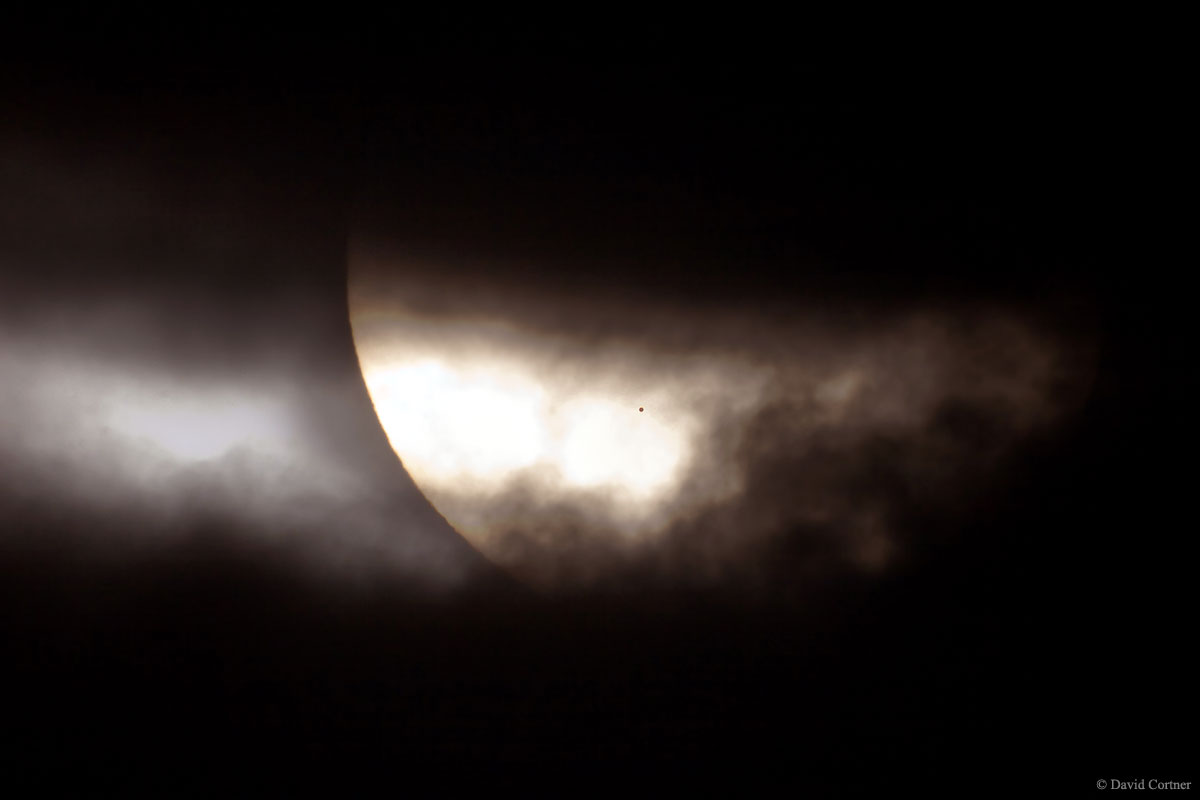
Astronomy picture of the day - 2016 May 9 - Mercury's Transit: An Unusual Spot on the Sun

See Explanation.  Clicking on the picture will download
 the highest resolution version available.
Mercury's Transit: An Unusual Spot on the Sun 
Image Credit & Copyright: David Cortner
Explanation: What's that dot on the Sun? If you look closely, it is almost perfectly round. The dot is the result of an unusual type of solar eclipse that occurred in 2006. Usually it is the Earth's Moon that eclipses the Sun. This time, the planet Mercury took a turn. Like the approach to New Moon before a solar eclipse, the phase of Mercury became a continually thinner crescent as the planet progressed toward an alignment with the Sun. Eventually the phase ofMercury dropped to zero and the dark spot of Mercury crossed our parent star. The situation could technically be labeled a Mercurian annular eclipse with an extraordinarily large ring of fire. From above the cratered planes of the night side of Mercury, the Earth appeared in its fullest phase. Hours later, as Mercury continued in its orbit, a slight crescent phase appeared again. This was ten years ago -- the next Mercurian solar eclipse will occur tomorrow.

2016-05-07

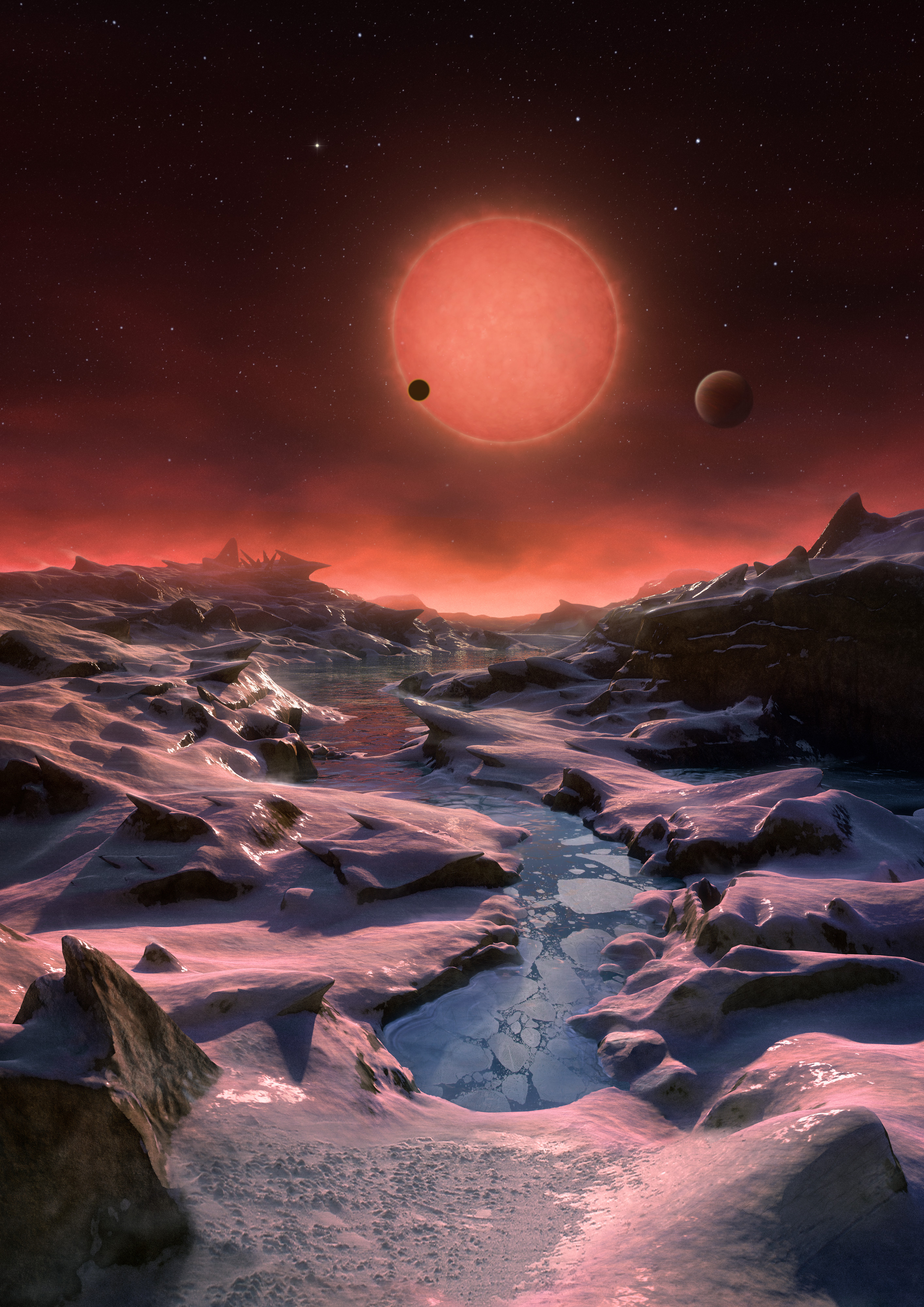
Astronomy picture of the day - 2016 May 7 - Three Worlds for TRAPPIST-1

2016 May 7
See Explanation.  Clicking on the picture will download
 the highest resolution version available.
Three Worlds for TRAPPIST-1 
Illustration Credit: ESO / M. Kornmesser
Explanation: Three new found worlds orbit the ultracool dwarf star TRAPPIST-1, a mere 40 light-years away. Their transits were first detected by the Belgian robotic TRAnsiting Planets and Planetesimals Small Telescope,TRAPPIST, at ESO's La Silla Observatory in Chile. The newly discovered exoplanets are all similar in size to Earth. Because they orbit very close to their faint, tiny star they could also have regions where surface temperatures allow for the presence of liquid water, a key ingredient for life. Their tantalizing proximity to Earth makes them prime candidates for future telescopic explorations of the atmospheres of these potentially habitable planets. All three worlds appear in this artist's vision, an imagined scene near the horizon of the system's outermost planet. Of course, the inner planet is transiting the dim, red, nearly Jupiter-sized parent star.

2016-05-05

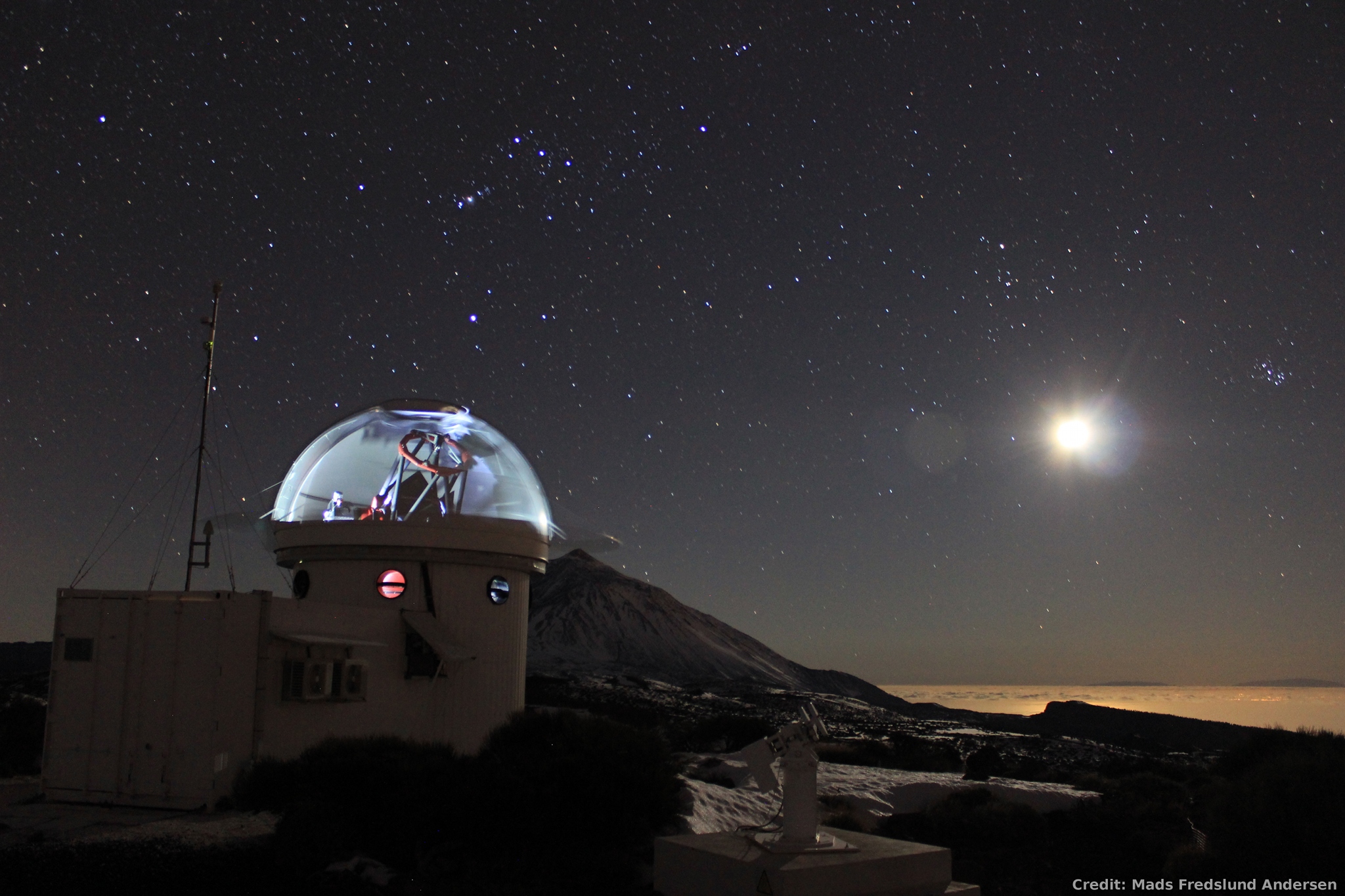
Astronomy picture of the day - 2016 May 5 - The SONG and the Hunter

See Explanation.  Clicking on the picture will download
 the highest resolution version available.
The SONG and the Hunter 
Image Credit & Copyright: Mads Fredslund AndersenStellar Astrophysics Centre, Aarhus Univ., Denmark
Explanation: Near first quarter, the Moon in March lights this snowy, rugged landscape, a view across the top of Tenerife toward La Palma in the Canary Islands Spanish archipelago. The large Teide volcano, the highest point in Spain, looms over the horizon. Shining above are familiar bright stars of Orion, the Hunter. Adding to the dreamlike scene is the 1 meter diameter prototype telescope of the global network project called the Stellar Observations Network Group or SONG. The SONG's fully robotic observatory was captured during the 30 second exposure while the observatory dome, with slit open, was rotated across the field of view.