2016-05-28

Terra a Terra - ""O rapaz do casaquito" - Video - Musica - Ao vivo

"O rapaz do casaquito"

Carta aberta ao Secretario de Estado das Comunidades Portuguesas (3)

Hello boss!

Como não sou da raça dos rafeiros que ladram quando o cortejo chega ao fim, como nunca me acobardei perante todas e quaisquer (ir)responsabilidades, porque, como dizem os nossos vizinhos espanhóis “los tengo (los cojones) en su sitio”, porque sempre cumpri na vida, inclusive profissional, porque estou farto de políticos nossos empregados, que entendem que o Povo não merece resposta dos seus representantes que como tal se não comportam… Porque entendo que se V. Exa. se encontra no cargo que ocupa a mim o deve também… Porque estou cansado, como muitos Portugueses, de não obter respostas concretas às questões concretas que se colocam neste semblante de democracia…

Por tudo isto e mais alguma coisa, rogo a V. Exa. dê resposta à pergunta de um cidadão honesto, servidor do Estado.

Por favor, Senhor Secretario de Estado…

Caso o não faça, não duvide que todos os dias lhe repetirei a pergunta à exaustão.

Com os meus perfeitos cumprimentos.

28-05-2016

JoanMira
Coordenador-Técnico

ex-Vice-Cônsul de Portugal       

Fotos - "Mr. Mira and his daughter "

"Mr. Mira and his daughter "

Fotos - Quando eu era Vice-Cônsul a preto e branco


Quando eu era Vice-Cônsul a preto e branco

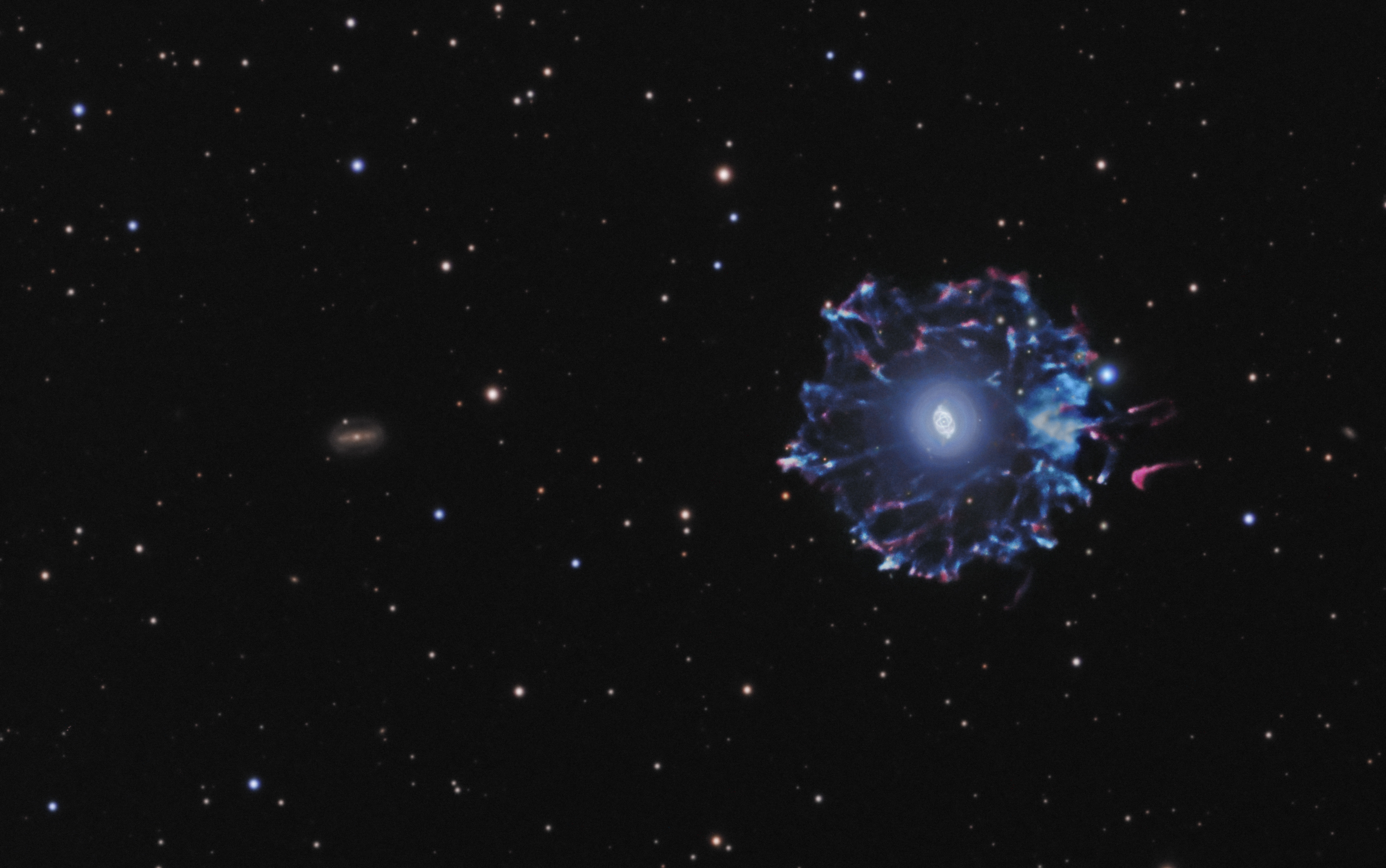
Astronomy picture of the day - 2016 May 28 - Cat's Eye Wide and Deep

See Explanation.  Clicking on the picture will download
 the highest resolution version available.
Cat's Eye Wide and Deep 
Image Credit & Copyright: Josh Smith
Explanation: The Cat's Eye Nebula (NGC 6543) is one of the best known planetary nebulae in the sky. Its more familiar outlines are seen in the brighter central region of the nebula in this impressive wide-angle view. But the composite image combines many short and long exposures to also reveal an extremely faint outer halo. At an estimated distance of 3,000 light-years, the faint outer halo is over 5 light-years across. Planetary nebulae have long been appreciated as a final phase in the life of a sun-like star. More recently, some planetary nebulae are found to have halos like this one, likely formed of material shrugged off during earlier episodes in the star's evolution. While theplanetary nebula phase is thought to last for around 10,000 years, astronomers estimate the age of the outer filamentary portions of this halo to be 50,000 to 90,000 years. Visible on the left, some 50 million light-years beyond the watchful planetary nebula, lies spiral galaxy NGC 6552.

2016-05-27

Rui Veloso - "O negro do radio de pilhas" - Video - Musica

"O negro do radio de pilhas"

Rui Veloso - "Bairro do oriente" - Video - Musica - Ao vivo

Afficher l'image d'origine
"Bairro do oriente"

Fotografia - "Barreiro - Portugal" - Augusto Cabrita


CM do Barreiro apresenta Estratégia de Desenvolvimento Local

"Barreiro - Portugal"
Augusto Cabrita

Imagens - Animais incriveis - 'Homo naledi'


Septiembre de 2015 llegó con una sorpresa: el hallazgo en África de una gran sima de huesos con una nueva especie humana. El 'Homo naledi', desenterrado en la cueva Rising Star, a unos 50 kilómetros de Johannesburgo (Sudáfrica), podría ser responsable de uno de los primeros rituales funerarios que se conocen, según sus descubridores, capitaneados por Lee Berger, paleoantropólogo de la Universidad de Witwatersrand. Por su morfología, el equipo de científicos sitúa al 'Homo naledi' en el origen del género Homo, hace unos dos millones de años.
JOHN HAWKS, UNIVERSIDAD WITS

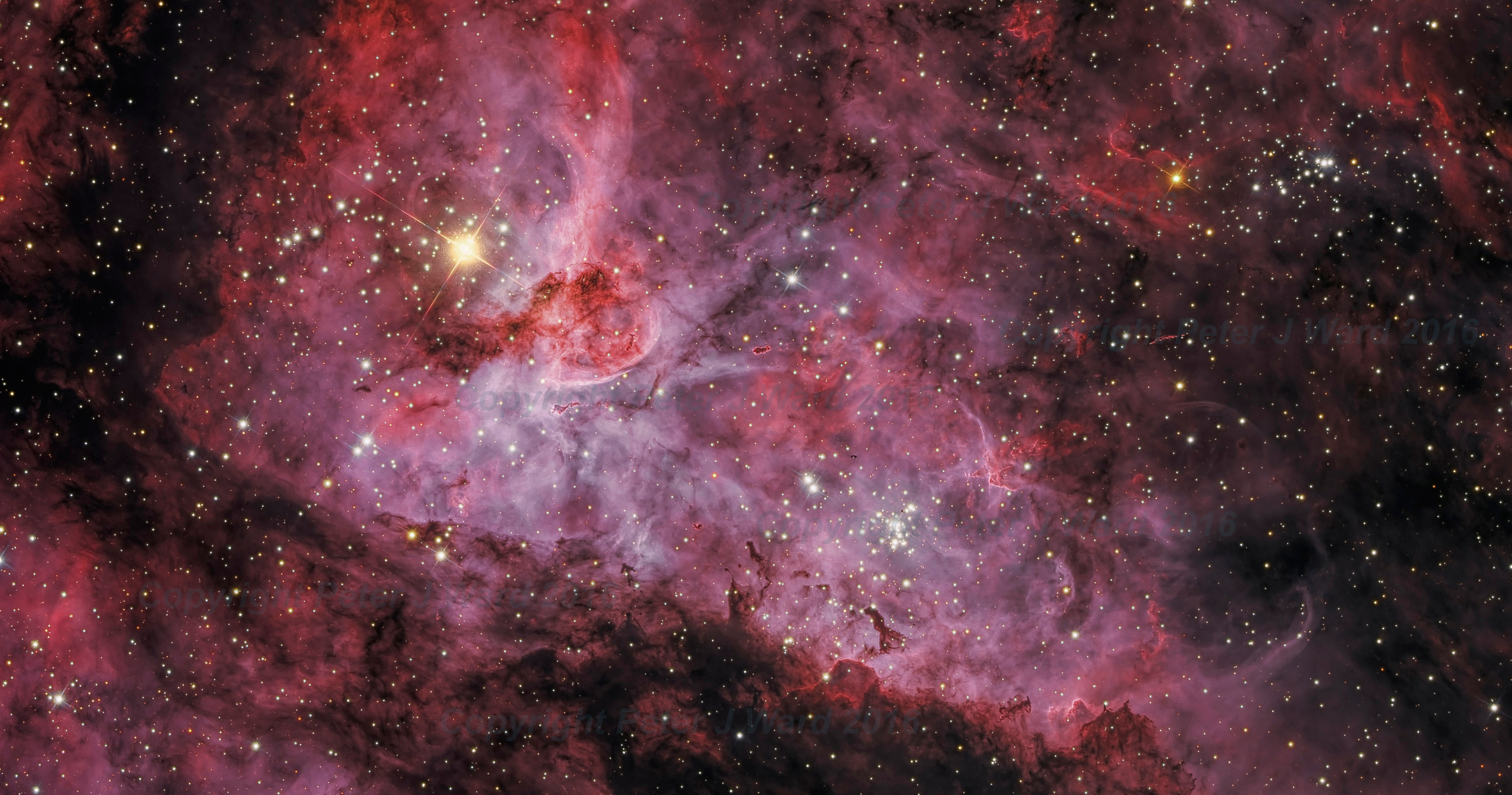
Astronomy picture of the day - 2016 May 27 - The Great Carina Nebula

See Explanation.  Clicking on the picture will download
 the highest resolution version available.
The Great Carina Nebula 
Image Credit & Copyright: Peter Ward (Barden Ridge Observatory)
Explanation: A jewel of the southern sky, the Great Carina Nebula, also known as NGC 3372, spans over 300 light-years, one of our galaxy's largest star forming regions. Like the smaller, more northerly Great Orion Nebula, the Carina Nebula is easily visible to the unaided eye, though at a distance of 7,500 light-years it is some 5 times farther away. This gorgeous telescopic close-up reveals remarkable details of the region's central glowing filaments ofinterstellar gas and obscuring cosmic dust clouds. The field of view is over 50 light-years across. The Carina Nebula is home to young, extremely massive stars, including the stars of open cluster Trumpler 14 (below and right of center) and the still enigmatic variable Eta Carinae, a star with well over 100 times the mass of the Sun. Eta Carinae is the brightest star, seen here just above the dusty Keyhole Nebula (NGC 3324). While Eta Carinae itself maybe on the verge of a supernova explosion, X-ray images indicate that the Great Carina Nebula has been a veritable supernova factory.