2016-05-28
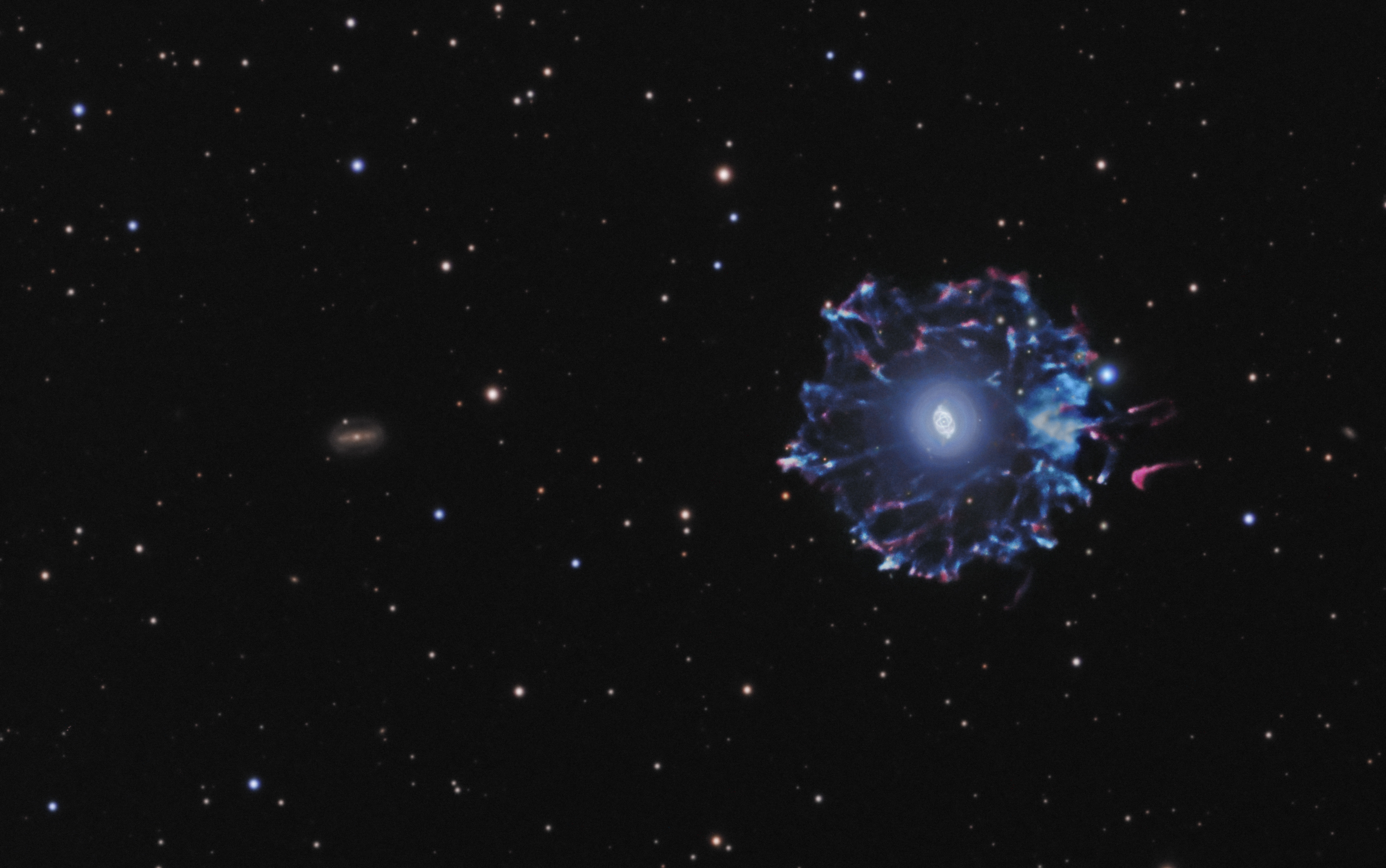
Astronomy picture of the day - 2016 May 28 - Cat's Eye Wide and Deep
Image Credit & Copyright: Josh Smith
Explanation: The Cat's Eye Nebula (NGC 6543) is one of the best known planetary nebulae in the sky. Its more familiar outlines are seen in the brighter central region of the nebula in this impressive wide-angle view. But the composite image combines many short and long exposures to also reveal an extremely faint outer halo. At an estimated distance of 3,000 light-years, the faint outer halo is over 5 light-years across. Planetary nebulae have long been appreciated as a final phase in the life of a sun-like star. More recently, some planetary nebulae are found to have halos like this one, likely formed of material shrugged off during earlier episodes in the star's evolution. While theplanetary nebula phase is thought to last for around 10,000 years, astronomers estimate the age of the outer filamentary portions of this halo to be 50,000 to 90,000 years. Visible on the left, some 50 million light-years beyond the watchful planetary nebula, lies spiral galaxy NGC 6552.
2016-05-27
Imagens - Animais incriveis - 'Homo naledi'
Septiembre de 2015 llegó con una sorpresa: el hallazgo en África de una gran sima de huesos con una nueva especie humana. El 'Homo naledi', desenterrado en la cueva Rising Star, a unos 50 kilómetros de Johannesburgo (Sudáfrica), podría ser responsable de uno de los primeros rituales funerarios que se conocen, según sus descubridores, capitaneados por Lee Berger, paleoantropólogo de la Universidad de Witwatersrand. Por su morfología, el equipo de científicos sitúa al 'Homo naledi' en el origen del género Homo, hace unos dos millones de años.
JOHN HAWKS, UNIVERSIDAD WITS
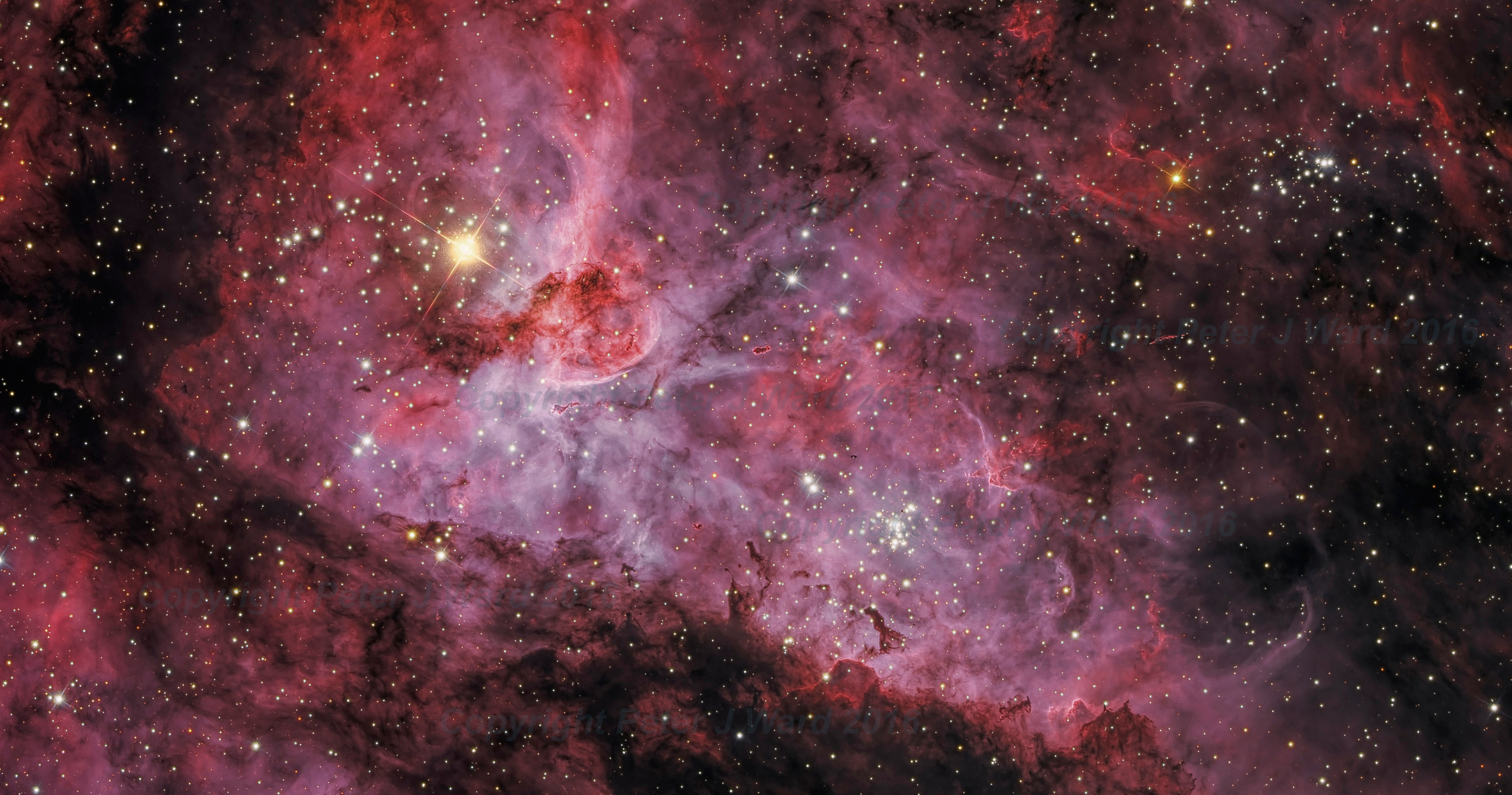
Astronomy picture of the day - 2016 May 27 - The Great Carina Nebula
Image Credit & Copyright: Peter Ward (Barden Ridge Observatory)
Explanation: A jewel of the southern sky, the Great Carina Nebula, also known as NGC 3372, spans over 300 light-years, one of our galaxy's largest star forming regions. Like the smaller, more northerly Great Orion Nebula, the Carina Nebula is easily visible to the unaided eye, though at a distance of 7,500 light-years it is some 5 times farther away. This gorgeous telescopic close-up reveals remarkable details of the region's central glowing filaments ofinterstellar gas and obscuring cosmic dust clouds. The field of view is over 50 light-years across. The Carina Nebula is home to young, extremely massive stars, including the stars of open cluster Trumpler 14 (below and right of center) and the still enigmatic variable Eta Carinae, a star with well over 100 times the mass of the Sun. Eta Carinae is the brightest star, seen here just above the dusty Keyhole Nebula (NGC 3324). While Eta Carinae itself maybe on the verge of a supernova explosion, X-ray images indicate that the Great Carina Nebula has been a veritable supernova factory.
2016-05-26
Imagens do Mundo - Animais - Laia - Barcelona
Esta es la recreación artística de Laia, una simia de entre cuatro y cinco kilos que trepó por los tupidos bosques que alfombraban lo que hoy es Cataluña hace 11,6 millones de años. Sus restos fósiles fueron encontrados en un vertedero de Els Hostalets de Pierola (Barcelona) por investigadores del Instituto Catalán de Paleontología Miquel Crusafont. El nombre científico de la nueva especie es 'Pliobates catalonia'.
INSTITUTO CATALÁN DE PALEONTOLOGÍA MIQUEL CRUSAFONT
Imagens do Mundo - Sidney - Australia
Un hombre toma una foto dentro de la 'catedral de la luz' en el Real Jardín Botánico en Sídney, Australia. BRENDON THORNE GETTY
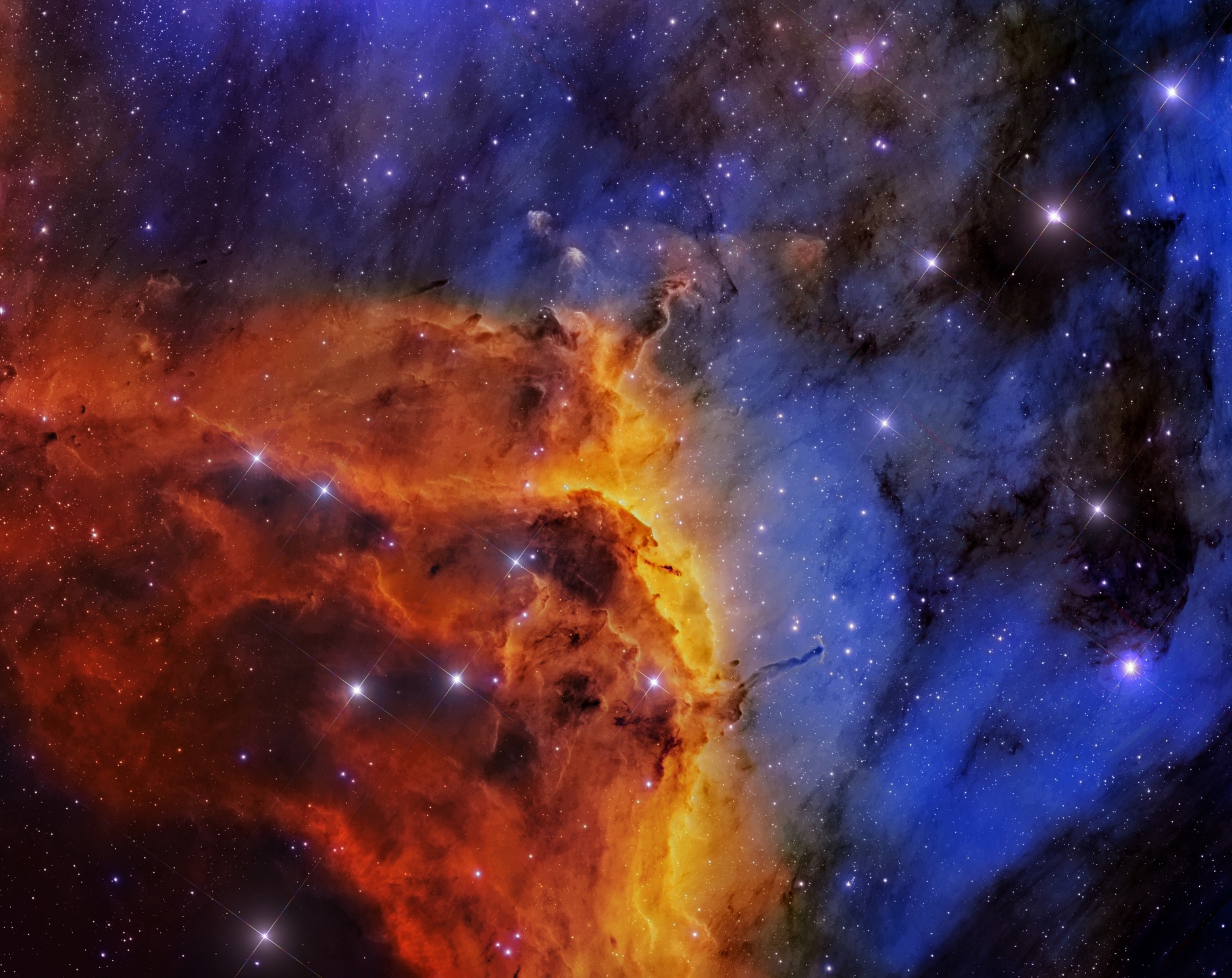
Astronomy picture of the day - 2016 May 26 - IC 5067 in the Pelican Nebula
Image Credit & Copyright: Data - Subaru Telescope (NAOJ), R. Colombari, Processing - Roberto Colombari
Explanation: The prominent ridge of emission featured in this sharp, colorful skyscape is cataloged as IC 5067. Part of a larger emission nebula with a distinctive shape, popularly called The Pelican Nebula, the ridge spans about 10 light-years following the curve of the cosmic pelican's head and neck. This false-color view also translates the pervasive glow of narrow emission lines from atoms in the nebula to a color palette made popular in Hubble Space Telescope images of star forming regions. Fantastic, dark shapes inhabiting the 1/2 degree wide field are clouds of cool gas and dust sculpted by the winds and radiation from hot, massive stars. Close-ups of some of the sculpted clouds show clear signs of newly forming stars. The Pelican Nebula, itself cataloged as IC 5070, is about 2,000 light-years away. To find it, look northeast of bright star Deneb in the high flying constellation Cygnus.
Inscription à :
Commentaires (Atom)