di Matteo Cruccu, Guido De Carolis, Marco Letizia, Paolo Ligammari, Tommaso Pellizzari, Maria Strada
2016-06-27
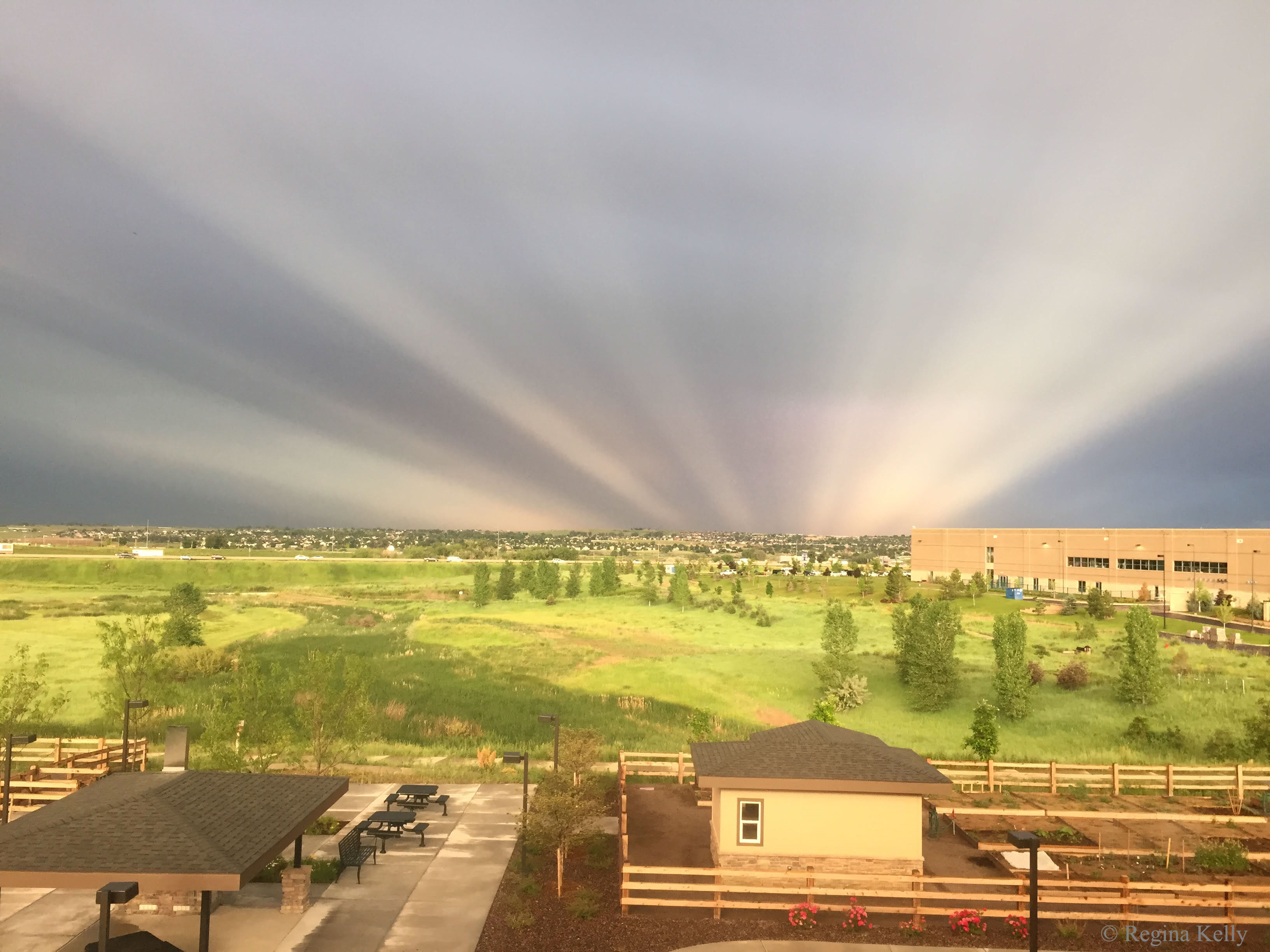
Astronomy picture of the day - 2016 June 27 - Anticrepuscular Rays over Colorado (II)
Image Credit & Copyright: Regina Kelly
Explanation: What's happening over the horizon? Although the scene may appear somehow supernatural, nothing more unusual is occurring than a setting Sun and some well placed clouds. Pictured above are anticrepuscular rays. To understand them, start by picturing common crepuscular rays that are seen any time that sunlight pours though scattered clouds. Now although sunlight indeed travels along straight lines, the projections of these lines onto the spherical sky are great circles. Therefore, the crepuscular rays from a setting (or rising) sun will appear to re-converge on the other side of the sky. At the anti-solar point 180 degrees around from the Sun, they are referred to as anticrepuscular rays. Featured here is a particularly striking display of anticrepuscular rays photographed earlier this month in Westminster, Colorado, USA.
2016-06-26
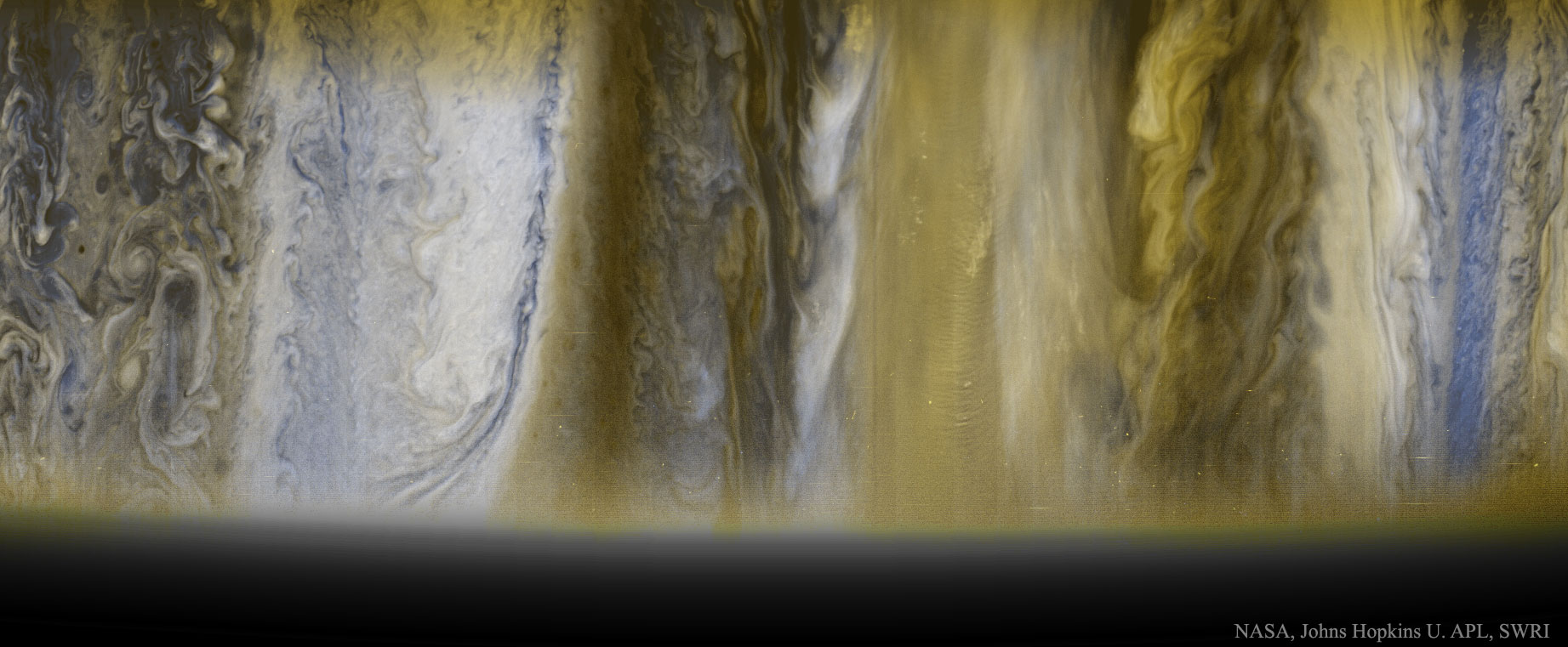
Astronomy picture of the day - 2016 June 26 - Jupiter's Clouds from New Horizons
Image Credit: NASA, Johns Hopkins U. APL, SWRI
Explanation: The New Horizons spacecraft took some stunning images of Jupiter on its way out to Pluto. Famous for its Great Red Spot, Jupiter is also known for its regular, equatorial cloud bands, visible through even modest sized telescopes. The featured image, horizontally compressed, was taken in 2007 near Jupiter's terminator and shows the Jovian giant's wide diversity of cloud patterns. On the far left are clouds closest to Jupiter's South Pole. Here turbulentwhirlpools and swirls are seen in a dark region, dubbed a belt, that rings the planet. Even light colored regions, called zones, show tremendous structure, complete with complex wave patterns. The energy that drives these waves surely comes from below. New Horizons is the fastest space probe ever launched, has successfully complete its main flyby of Pluto in 2015, and is now heading further out and on track to flyby Kuiper belt object 2014 MU69 in 2019. In the near term, many space enthusiasts excitedly await Juno's arrival at Jupiter next Monday.
2016-06-25
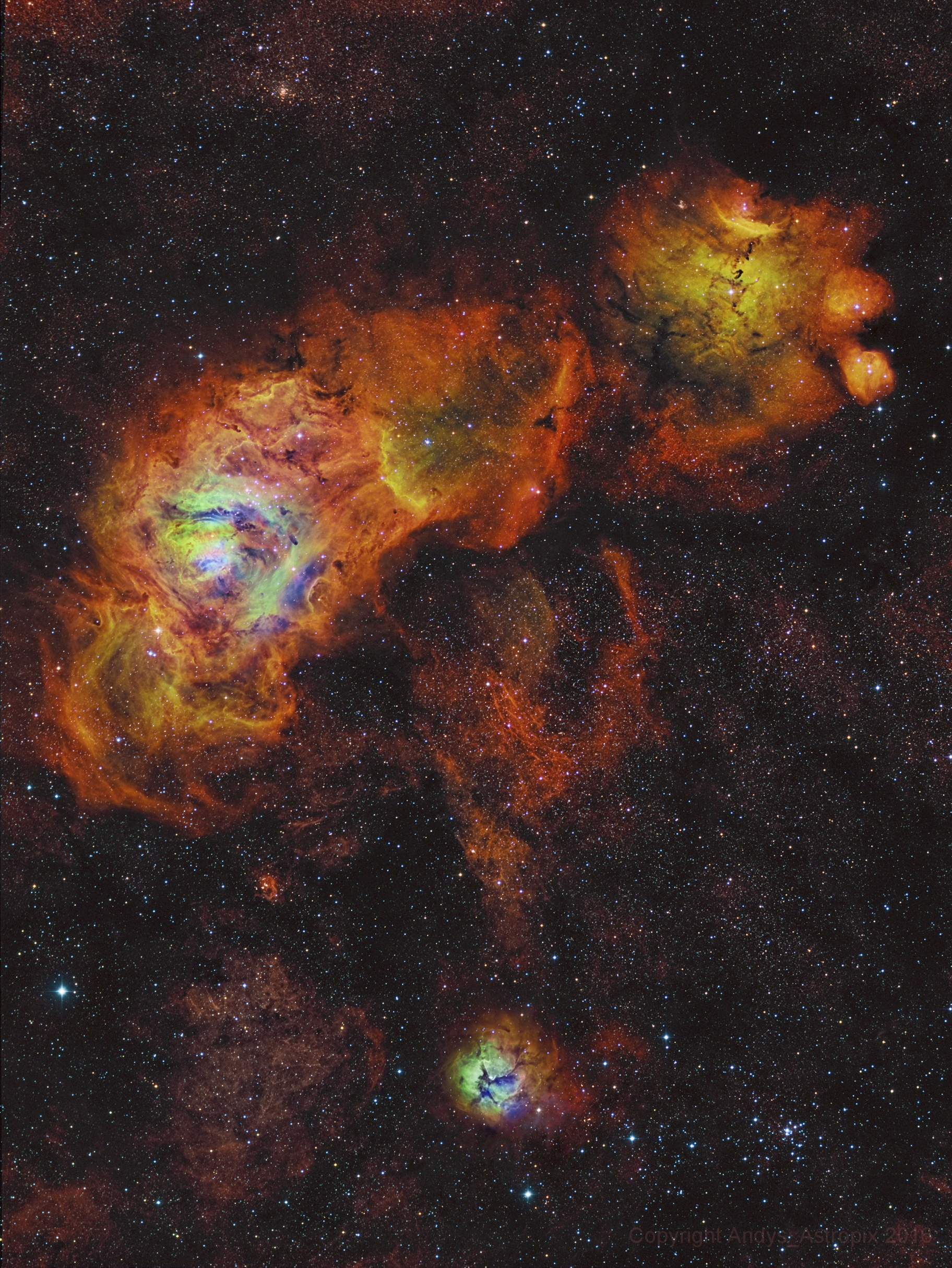
Astronomy picture of the day - 2016 June 24 - Sagittarius Sunflowers
Image Credit & Copyright: Andrew Campbell
Explanation: These three bright nebulae are often featured in telescopic tours of the constellation Sagittarius and the crowded starfields of the central Milky Way. In fact, 18th century cosmic tourist Charles Messier cataloged two of them; M8, the large nebula left of center, and colorful M20 near the bottom of the frame The third, NGC 6559, is right of M8, separated from the larger nebula by dark dust lanes. All three are stellar nurseries about five thousand light-years or so distant. The expansive M8, over a hundred light-years across, is also known as the Lagoon Nebula. M20's popular moniker is the Trifid. In the composite image, narrowband data records ionized hydrogen, oxygen, and sulfur atoms radiating at visible wavelengths. The mapping of colors and range of brightness used to compose this cosmic still life were inspired by Van Gogh's famous Sunflowers. Just right of the Trifid one of Messier's open star clusters, M21, is also included on the telescopic canvas.
2016-06-24
Astronomy picture of the day - 2016 June 24 - Sagittarius Sunflowers
Image Credit & Copyright: Andrew Campbell
Explanation: These three bright nebulae are often featured in telescopic tours of the constellation Sagittarius and the crowded starfields of the central Milky Way. In fact, 18th century cosmic tourist Charles Messier cataloged two of them; M8, the large nebula left of center, and colorful M20 near the bottom of the frame The third, NGC 6559, is right of M8, separated from the larger nebula by dark dust lanes. All three are stellar nurseries about five thousand light-years or so distant. The expansive M8, over a hundred light-years across, is also known as the Lagoon Nebula. M20's popular moniker is the Trifid. In the composite image, narrowband data records ionized hydrogen, oxygen, and sulfur atoms radiating at visible wavelengths. The mapping of colors and range of brightness used to compose this cosmic still life were inspired by Van Gogh's famous Sunflowers. Just right of the Trifid one of Messier's open star clusters, M21, is also included on the telescopic canvas.
2016-06-23
"Cristiano Ronaldo cometeu um crime"

O presidente da Comissão da Carteira Profissional de Jornalista, Henrique Pires Teixeira, afirmou que Cristiano Ronaldo cometeu um crime à liberdade de informação quando atirou, esta quarta-feira, um microfone da CMTV para um lago de Lyon. "Está em causa um crime de atentado à liberdade de informação. O jornalista da CMTV estava a trabalhar e a cumprir a sua função. Só resta saber se Ronaldo agiu com intenção de o impedir de informar ou se havia alguma picardia anterior entre ambos. Trata-se de um crime público e o Ministério Público terá de investigar", afirmou, em declarações ao Expresso. Luís Filipe Simões, jornalista do diário A Bola e que faz parte da direção do Sindicato de Jornalistas, condenou a atitude do capitão da seleção das quinas. "É um comportamento não adequado, muito menos por parte do capitão da seleção nacional. O que torna ainda mais grave é ter sido um ato agressivo levado a cabo pelo capitão. Mesmo que não se pudessem colocar questões, não devia responder com agressividade. A atitude não constitui uma violação, mas sim um atropelo à liberdade de imprensa e um crime de dano, caso o microfone tenha ficado danificado", salientou.
Correio da Manhã - Portugal
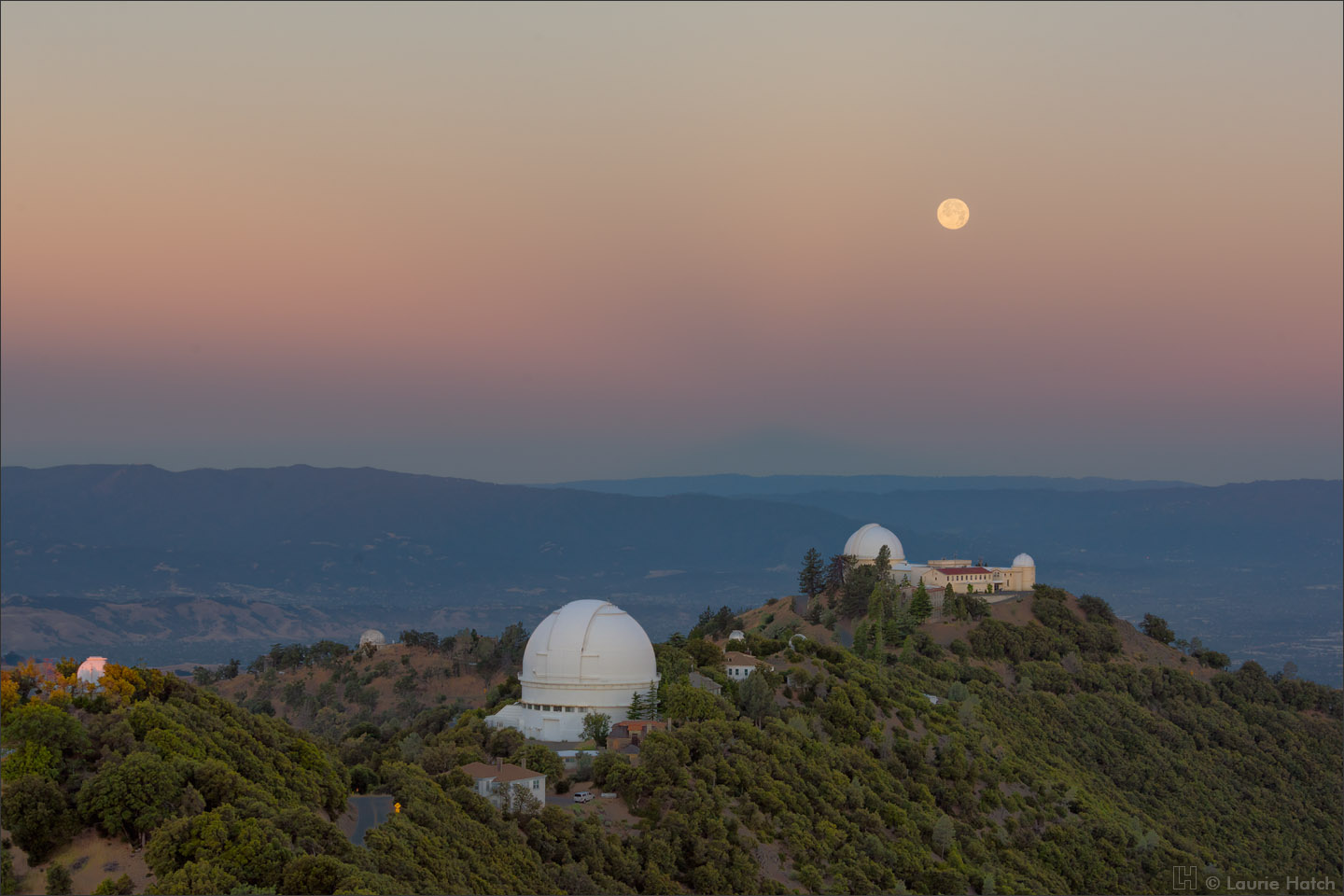
Astronomy picture of the day - 2016 June 23 - Solstice Dawn and Full Moonset
Image Credit & Copyright: Laurie Hatch
Explanation: A Full Moon sets as the Solstice Sun rises in this June 20 dawn skyscape. Captured from a nearby peak in central California, planet Earth, the scene looks across the summit of Mount Hamilton and Lick Observatorydomes on a calendar date that marks an astronomical change of seasons and hemispherical extremes of daylight hours. Earth's shadow stretches toward the Santa Cruz Mountains on the western horizon. Just above the atmospheric grey shadowband is a more colorful anti-twilight arch, a band of reddened, backscattered sunlight also known as the Belt of Venus. The interplay of solstice dates and lunar months does make this solstice and Full Moon a rare match-up. The next June solstice and Full Moon will fall on the same calendar date on June 21, 2062.
2016-06-22
Texto - Euro 2016 - Portugal qualificado para os oitavos.
Assistimos ao jogo Hungria-Portugal, com um
resultado de 3-3.
Sou Português há 65 anos mas, sinceramente, vi
um Portugal feito de individualidades medíocres a jogar contra uma equipa de
Hungria sem génio mas que respeita o jogo e que, acima de tudo, joga de forma
colectiva.
Do lado da equipa portuguesa a que assistimos?
Um “patchwork” de jogadores medianos: Pepe (O caceteiro), R. Carvalho (O
velho), Eliseu (invisível), João Mário (existe?), Moutinho (Um anão aldabrão), Nani
(a dever dinheiro à reforma), Vieirinha
(inexperiente), André Gomes (quem é?)…e aos costumes mais não digo.
A não ser um seleccionador teimoso e burro que, com a sua idade, já devia ter direito à reforma minima!
Deixo para o fim o “famoso” CR7…Ninguém duvida
que, tecnicamente, é um excelente jogador (melhor do mundo, dizem…).
Mas como “capitão” e jogador da Selecção é um
elemento de menor-valia. Ele canibaliza todo o jogo colectivo; e o seu egocentrismo
obriga os companheiros a jogarem “só” para ele, fazendo de Portugal uma equipa
que não consegue bater islandeses, austríacos, nem húngaros…
Nos valha a Nossa Senhora de Fátima e o Fado,
porque no Futebol temos muito que aprender!
Se não chegar, apelemos também à N. Senhora de São Cricalho como dizia uma amiga minha.
Quanto a mim, terminarei este breve comentario com um f#d@-sse bem sentido!
22-06-2016
JoanMira
Imagens do Mundo - Sitios lindos de Portugal - Lajes do Pico (Açores)
Na Ilha dos Açores, Lages do Pico é uma pequena povoação que sempre viveu da caça à a baleia. Hoje em dia, o Pico mantem a tradição maritima dos seus habitantes-pescadores mas deixou de capturar os magnificos animais. Os barcos foram adaptados porque a sanguinaria necessidade foi transformada em safari fotografico de contemplação dos majestosos e belos cetaceos.
Fotografia: JUAN CARLOS MUÑOZ/AGE
Inscription à :
Commentaires (Atom)