2016-07-09


Astronomy picture of the day - 2016 July 9 - Noctilucent Clouds Tour France
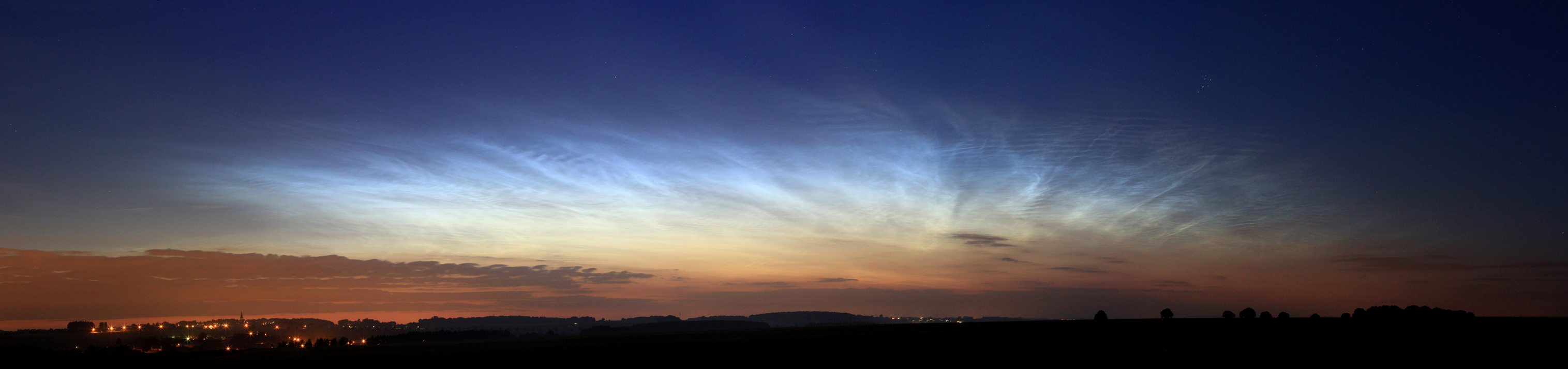
Image Credit & Copyright: Simon Lericque (GAAC)
Explanation: Bright noctilucent or night shining clouds are not familiar sights from northern France. But these electric-blue waves coursed through skies over the small town of Wancourt in Pas-de-Calais on July 6, just before the dawn. From the edge of space, about 80 kilometers above Earth's surface, the icy clouds still reflect sunlight even though the Sun itself is below the horizon as seen from the ground. Usually spotted at high latitudes in summer months the diaphanous apparitions are also known as polar mesospheric clouds. The seasonal clouds are understood to form as water vapor driven into the cold upper atmosphere condenses on the fine dust particles supplied by disintegrating meteors or volcanic ash. NASA's AIM mission provides projections of the noctilucent clouds as seen from space.
Portugal! - "Vamos la cambada" - Slides - Musica

"Vamos la cambada"
Contrariamente ao que tem sido nos ultimos anos, queremos uma vitoria limpa.
VIVAPORTUGAL!!!
2016-07-08
Astronomy picture of the day - 2016 July 8 - The Swirling Core of the Crab Nebula
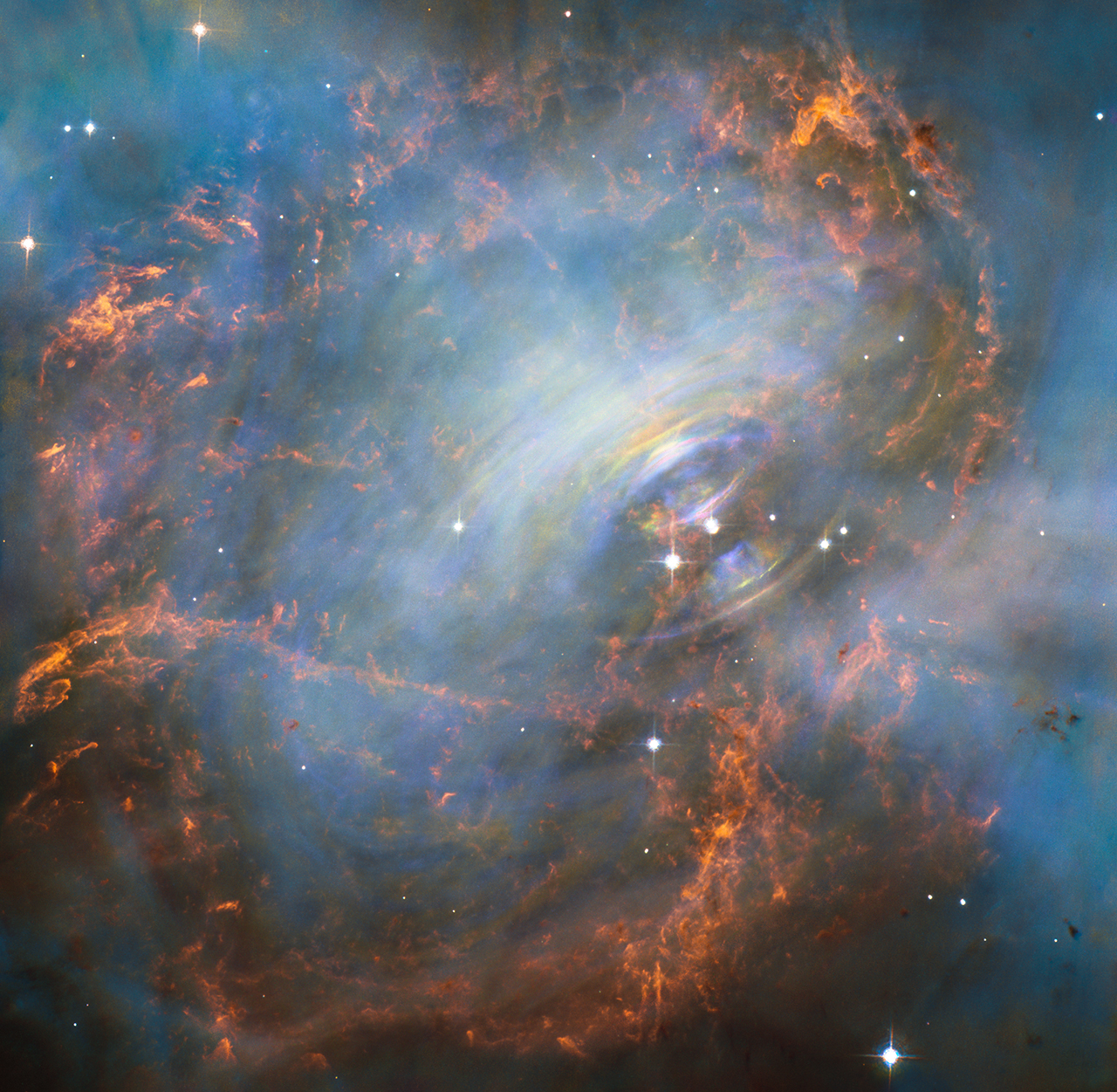
Image Credit: NASA, ESA - Acknowledgment: J. Hester (ASU), M. Weisskopf (NASA / GSFC)
Explanation: At the core of the Crab Nebula lies a city-sized, magnetized neutron star spinning 30 times a second. Known as the Crab Pulsar, it's actually the rightmost of two bright stars, just below a central swirl in this stunning Hubble snapshot of the nebula's core. Some three light-years across, the spectacular picture frames the glowing gas, cavities and swirling filaments bathed in an eerie blue light. The blue glow is visible radiation given off by electrons spiraling in a strong magnetic field at nearly the speed of light. Like a cosmic dynamo the pulsar powers the emission from the nebula, driving a shock wave through surrounding material and accelerating the spiraling electrons. With more mass than the Sun and the density of an atomic nucleus, the spinning pulsar is the collapsed core of a massive star that exploded. The Crab Nebula is the expanding remnant of the star's outer layers. The supernova explosion was witnessed on planet Earth in the year 1054.
Texte - Euro 2016 - On est en finale, on est en finale... "On va se faire baiser par le Portugal"!

"Ils" sont en finale...Avec un "arbitre" corrompu, "ils" ont subi le foot de l'Allemagne jusqu'à ce que l'arbitre aie décidé de leur octroyer la victoire "chez eux"...
Normal dans le monde corrompu du sport à tous niveaux et dans tous les Pays.
Le niveau de corruption se définit, la plupart du temps, par comparaison des PIB's .
Simplifiant, plus vous êtes riches, plus vous pourrez corrompre des pauvres mecs qui, arbitrant ou pas, se laissent aller à la recherche du fric!
Etonnant? Non pas!
Logique, même, dans une Société pourrie où l'argent règne en maître.
Revenons au sport. Dimanche prochain l'équipe de France va trouver devant elle le Portugal.
Si tout se passe normalement, le Portugal sera champion!
Bordeaux, 08-07-2016
JoanMira
2016-07-07
Euro 2016 - França/Alemanha - Vergonhoso!!!

Vergonhoso !
« Shame, verguenza, honte,
vergonha… »
Tinha dito que gostaria de uma final do Euro
2016 entre a França e Portugal.
E assim vai ser, só que Portugal vencendo com um
jogo sério e limpo vai enfrentar uma França apurada graças, como quase sempre, ao
apoio do arbitro!!!
Pôrra, já chega! Quanto ganhou aquele corrupto
malabarista ao entregar o jogo à França?!
Chegaram à final com Portugal.
Mas será que vale a pena disputar esse jogo? …
Penso, Amigos, que a taça esta entregue a quem foi destinada.
Mas continuemos, contra tudo e todos, a esperar
não ter um arbitro francês ou corrupto que nos permita vencer o campeonato que merecemos.
Bordeaux, 07-07-2016
JoanMira
Astronomy picture of the day - 2016 July 7 - The Altiplano Night
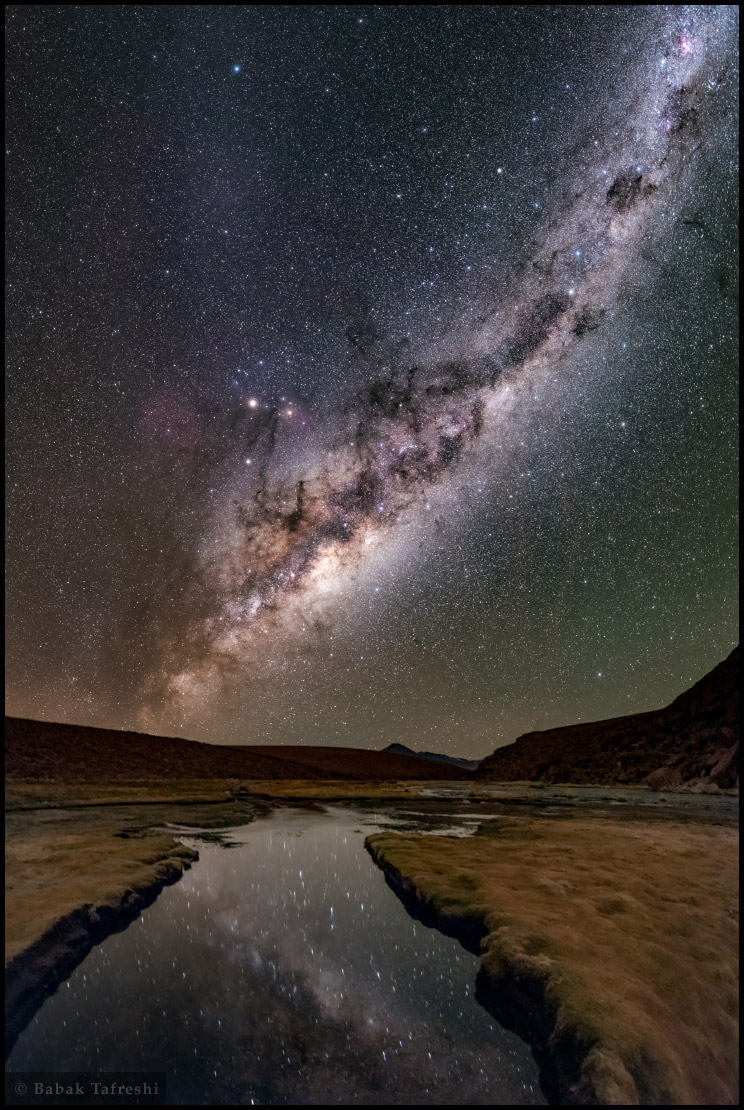
Image Credit & Copyright: Babak Tafreshi (TWAN)
Explanation: The Milky Way is massively bright on this cold, clear, altiplano night. At 4,500 meters its reflection in a river, a volcanic peak on the distant horizon, is captured in this stitched panorama under naturally dark skies of the northern Chilean highlands near San Pedro de Atacama. Along the Solar System's ecliptic plane, the band of Zodiacal light also stands out, extending above the Milky Way toward the upper left. In the scene from late April, brilliant Mars, Saturn, and Antares form a bright celestial triangle where ecliptic meets the center of the Milky Way. Left of the triangle, the large purple-red emission nebula Sharpless 2-27, more than twenty Moon diameters wide is centered around star Zeta Ophiuchi.
2016-07-06
Texto - Viva Portugal!

Bem sei que o futebol pouco representa na vida
de um Povo.
Sei, também, que o Povo Português tem preocupações
muito além dessas.
Estou ciente que esse desporto praticado por mercenários
multi-milionarios esta longe, muito longe de representar a vida miserável de
grande parte dos Portugueses…
Há muito integrei isso tudo.
Mas, hoje joga Portugal; durante 90 ou 120
minutos e grandes penalidades incluídas (talvez), vou esquecer os “males”, o
facto que estejamos empenhados numa competição em que, normalmente e em
principio, patrícios e eu poderiam fazer-nos desviar da nossa Pátria!
Hoje, através de um simples jogo de futebol, vou
celebrar, com todos os Portugueses, os nossos egrégios avos: no que me diz
respeito: Zé Mira, Hilda, Mariana, António Luiz…
Viva Portugal!
2016-07-05
Imagens do Mundo - Sitios lindos de Portugal - Provesende


Casas de granito com grandes brazões do século XVIII. Provesende é uma localidade esquecida do Douro. O seu passado glorioso estende-se ao século XIX quando a aldeia salvou as videiras da região, posto que foi aqui que se começou a lutar e encontrou o remédio contra o mal da filoxera que se espalhou na Europa.
Astronomy picture of the day - 2016 July 5 - The Colorful Clouds of Rho Ophiuchi
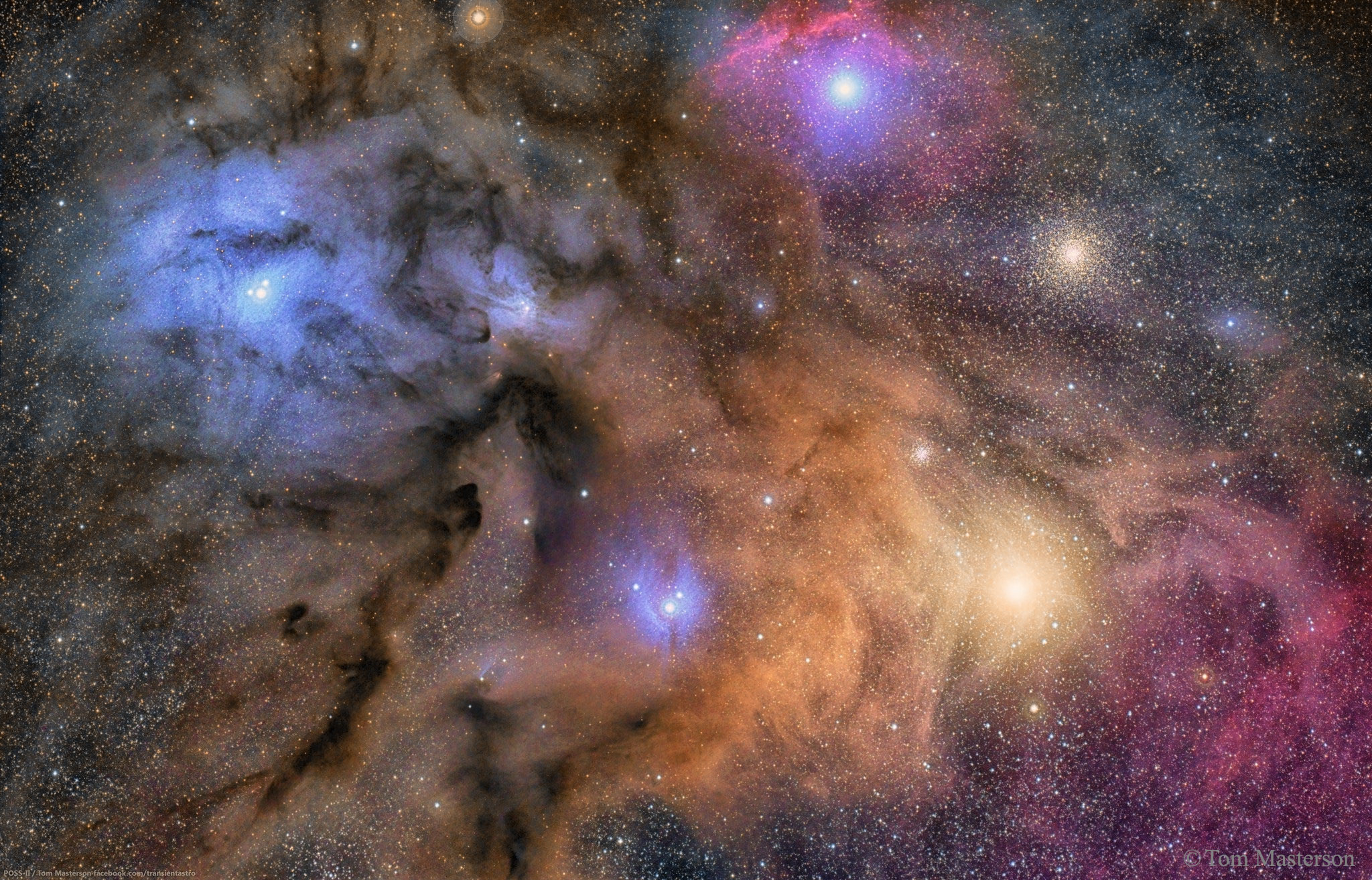
Image Credit & Copyright: Tom Masterson
Explanation: The many spectacular colors of the Rho Ophiuchi (oh'-fee-yu-kee) clouds highlight the many processes that occur there. The blue regions shine primarily by reflected light. Blue light from the star Rho Ophiuchi and nearby stars reflects more efficiently off this portion of the nebula than red light. The Earth's daytime sky appears blue for the same reason. The red and yellow regions shine primarily because of emission from the nebula's atomic and molecular gas. Light from nearby blue stars - more energetic than the bright star Antares - knocks electrons away from the gas, which then shines when the electrons recombine with the gas. The dark brown regions are caused by dust grains - born in young stellar atmospheres - which effectively block light emitted behind them. The Rho Ophiuchi star clouds, well in front of the globular cluster M4 visible here on the upper right, are even more colorful than humans can see - the clouds emits light in every wavelength band from the radio to the gamma-ray.
Inscription à :
Articles (Atom)