2016-08-26

Astronomy pictures of the day - 2016 August 26 - The Milky Way Sets

See Explanation.  Clicking on the picture will download
 the highest resolution version available.
The Milky Way Sets 
Image Credit & CopyrightJuan Carlos Casado (TWANEarth and Stars)
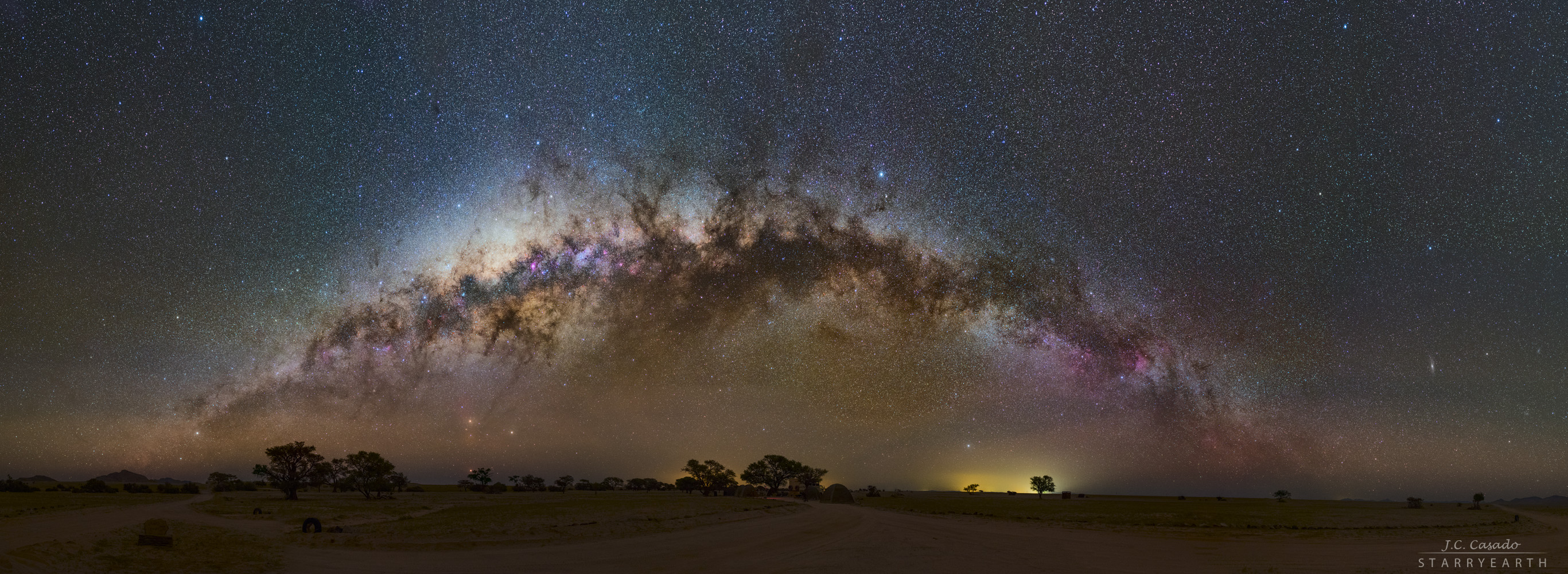
Explanation: Under dark skies the setting of the Milky Way can be a dramatic sight. Stretching nearly parallel to the horizon, this rich, edge-on vista of our galaxy above the dusty Namibian desert stretches from bright, southernCentaurus (left) to Cepheus in the north (right). From early August, the digitally stitched, panoramic night skyscape captures the Milky Way's congeries of stars and rivers of cosmic dust, along with colors of nebulae not readily seen with the eye. Mars, Saturn, and Antares, visible even in more luminous night skies, form the the bright celestial triangle just touching the trees below the galaxy's central bulge. Of course, our own galaxy is not the only galaxy in the scene.Two other major members of our local group, the Andromeda Galaxy and the Triangulum Galaxy, lie near the right edge of the frame, beyond the arc of the setting Milky Way.

2016-08-25

Imagenes del mundo - Rayos en Galicia, España

Rayos en Galicia en una de las jornadas con mayor actividad eléctrica del año.
SXENICK EFE

Anedota "alantjana" - Plantar


Afficher l'image d'origine

Uma técnica do IFADAP bate a uma porta num montezinho perdido no interior do Alentejo e pergunta ao agricultor... 

- Esta terra dá trigo? 

- Nassenhora - responde o alentejano. 

- Dá batata? 

- Tamem não!

- Dá feijão?

- Nunca deu um!

- Arroz?

- De manera nenhuma!

- Milho?

- Tá a gozar comigo?!

- Quer dizer que por aqui não adianta plantar nada? 

- Ah! Se plantar já é diferente...

Madredeus - "A sombra" - Video - Musica - Ao vivo

Afficher l'image d'origine
"A sombra"

Astronomy picture of the day - 2016 August 25 - Closest Star has Potentially Habitable Planet

2016 August 25
See Explanation.  Clicking on the picture will download
 the highest resolution version available.
Closest Star has Potentially Habitable Planet 
Image Credit & LicenseY. Beletsky (LCO), ESOPale Red Dot Team
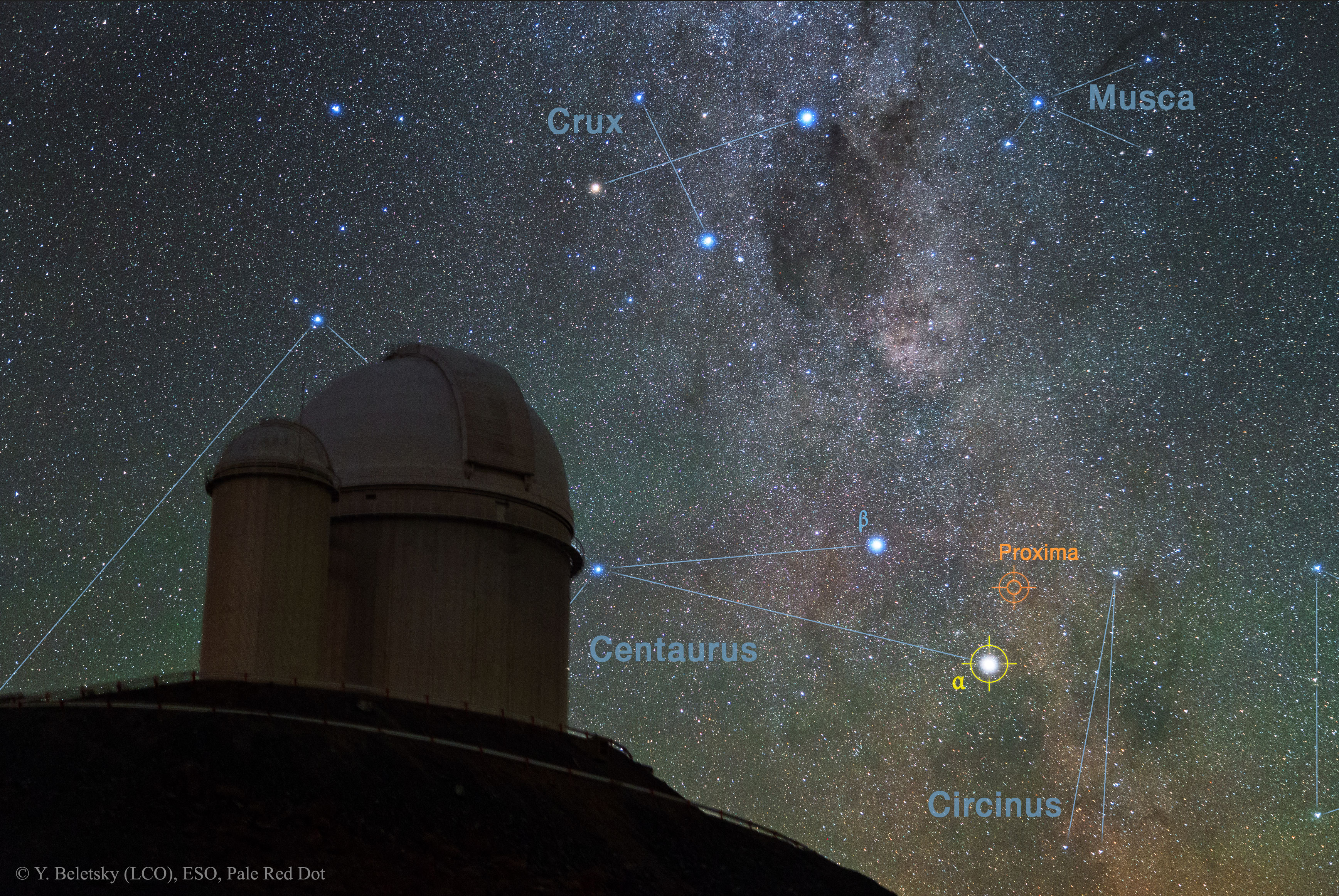
Explanation: The star closest to the Sun has a planet similar to the Earth. As announced yesterday, recent observations confirmed that this planet not only exists but inhabits a zone where its surface temperature could allow liquidwater, a key ingredient for life on Earth. It is not yet known if this planet, Proxima b, has any life. Even if not, its potential ability to sustain liquid water might make it a good first hop for humanity's future trips out into the Milky Way Galaxy. Although the planet's parent star, Proxima Centauri, is cooler and redder than our Sun, one of the other two stars in the Alpha Centauri star system is very similar to our Sun. The featured image shows the sky location of Proxima Centauri in southern skies behind the telescope that made many of the discovery observations: ESO's 3.6-meter telescope in La Silla, Chile. The discovered planet orbits close in -- so close one year there takes only 11 days on Earth. The planet was discovered by the ESO's Pale Red Dot collaboration. Although seemingly unlikely, if Proxima b does have intelligent life, at 4.25 light years distance it is close enough to Earth for two-way communication.

2016-08-24

Imagenes del mundo - Nubes de tormenta - Petersdorf (Alemania)

Nubes de tormenta al atardecer en un campo de maíz en Petersdorf (Alemania).
PATRICK PLEUL EFE

Sismo em Itália faz dezenas de mortos


Quatro mil portugueses nas zonas afetadas pelo sismo

Pelo menos 38 pessoas morreram na sequência de um forte sismo de 6.0 na escala de Richter, em Itália, segundo o último balanço da Proteção Civil italiana. O número de vítimas pode vir a aumentar, visto que há indicação de vários feridos e de famílias inteiras soterradas.

"Neste momento, há 38 vítimas confirmadas", afirmou o porta-voz do escritório de emergência da Proteção Civil, Immacolata Postiglione, em conferência de imprensa em Roma. Sobre o número de desaparecidos, Postiglione recusou precisar um número.

Astronomy picture of the day - 2016 August 24 - Curiosity at Murray Buttes on Mars

See Explanation.  Clicking on the picture will download
 the highest resolution version available.
Curiosity at Murray Buttes on Mars 
Image Credit: NASAJPL-CaltechMSSS
Explanation: What are these unusual lumps on Mars? As NASA's robotic Curiosity rover continues rolling across Mars, it is now approaching Murray Buttes. Several of the 15-meter high buttes are visible ahead in this horizontally compressed 360-degree across image taken inside Gale Crater earlier this month. The buttes are thought similar to Earth buttes in that they are capped with dense rock that is relatively resistant to erosion. In the image center isCuriosity's "arm" and "hand" used to examine rocks up close, drill into rocks, and collect samples. Curiosity has reached its four year anniversary on Mars and has been cleared to spend the next two years further exploring the slopes ofMount Sharp, the peak of which is the distant light-colored structure visible on the far left.

2016-08-23

Astronomy picture of the day - 2016 August 23 - Gigantic Jet Lightning over China

See Explanation.  Clicking on the picture will download
 the highest resolution version available.
Gigantic Jet Lightning over China 
Image Credit & Copyright: Phebe Pan
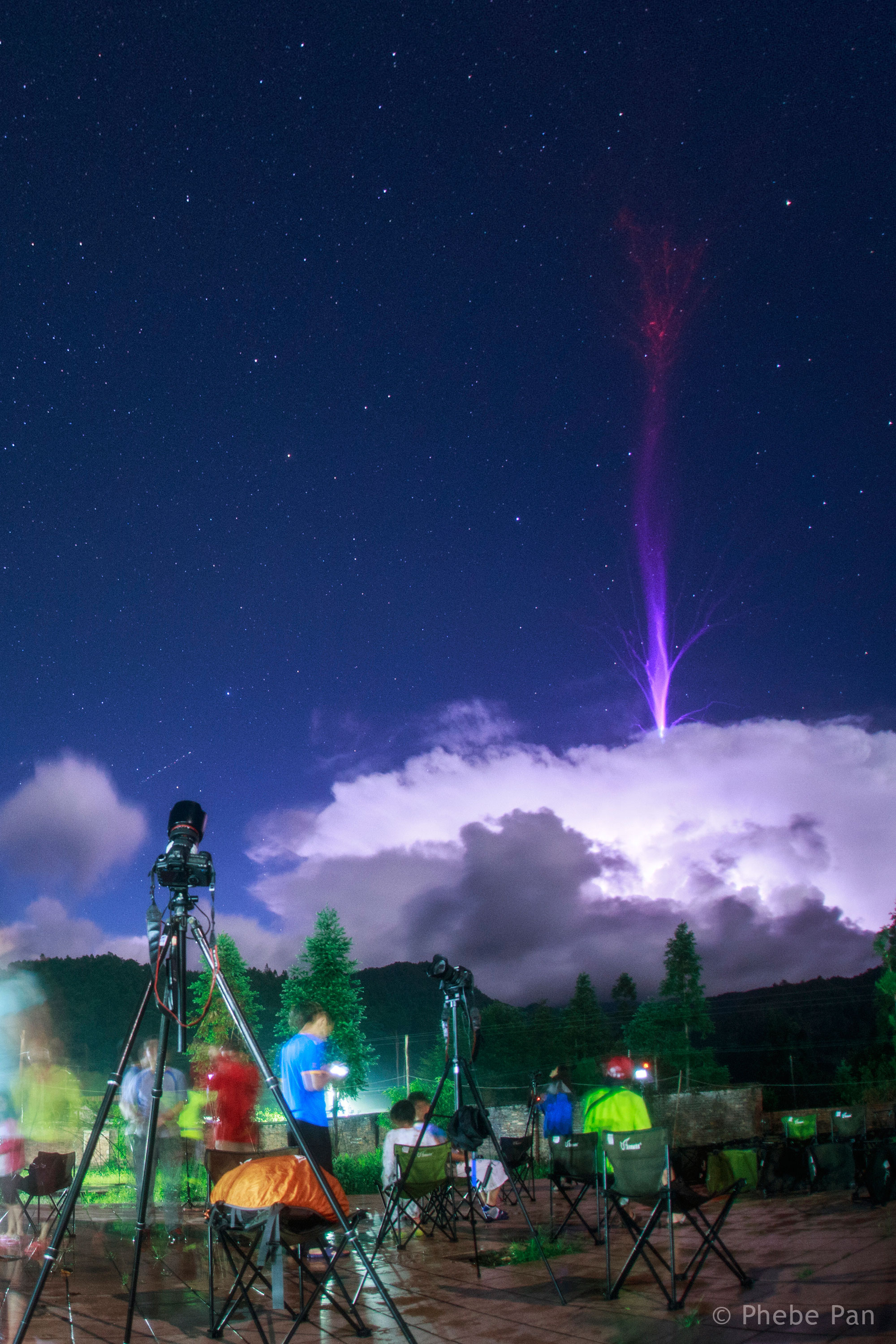
Explanation: That's no meteor. While watching and photographing this year's Perseid Meteor Shower, something unexpected happened: a gigantic jet erupted from a nearby cloud. The whole thing was over in a flash -- it lasted less than a second -- but was fortunately captured by an already-recording digital camera. Gigantic jets are a rare form of lightning recognized formally only a few years ago. The featured high resolution color image, taken near the peak ofShikengkong mountain in China, may be the best image yet of this unusual phenomena. The same event appears to have been captured simultaneously by another photographer, further away. The gigantic jet appears to start somewhere in a nearby thundercloud and extend upwards towards Earth's ionosphere. The nature of gigantic jets and their possible association with other types of Transient Luminous Events (TLEs) such as blue jets and red sprites remains an active topic of research.