2016-09-29

Rui Veloso - "Anel de rubi" - Video - Musica - Ao vivo

Afficher l'image d'origine
"Anel de rubi"

Astronomy picture of the day - 2016 September 29 - Five Hundred Meter Aperture Spherical Telescope

See Explanation.  Clicking on the picture will download
 the highest resolution version available.
Five Hundred Meter Aperture Spherical Telescope 
Image Credit & CopyrightJeff Dai (TWAN)
Explanation: The Five-hundred-meter Aperture Spherical Telescope (FAST) is nestled within a natural basin in China's remote and mountainous southwestern Guizhou province. Nicknamed Tianyan, or the Eye of Heaven, the new radio telescope is seen in this photograph taken near the start of its testing phase of operations on September 25. Designed with an active surface for pointing and focusing, its enormous dish antenna is constructed with 4,450 individual triangular-shaped panels. The 500 meter physical diameter of the dish makes FAST the largest filled, single dish radio telescope on planet Earth. FAST will explore the Universe at radio frequencies, detecting emission from hydrogen gas in the Milky Way and distant galaxies, finding faint galactic and extragalactic pulsars, and searching for potential radio signals from extraterrestrials.

Roberto Carlos - "A guerra dos meninos" - Video - Musica

Afficher l'image d'origine
"A guerra dos meninos"

2016-09-28

Fotos - "Marianne" - 04-12-2005

"Marianne"
04-12-2005
JoanMira

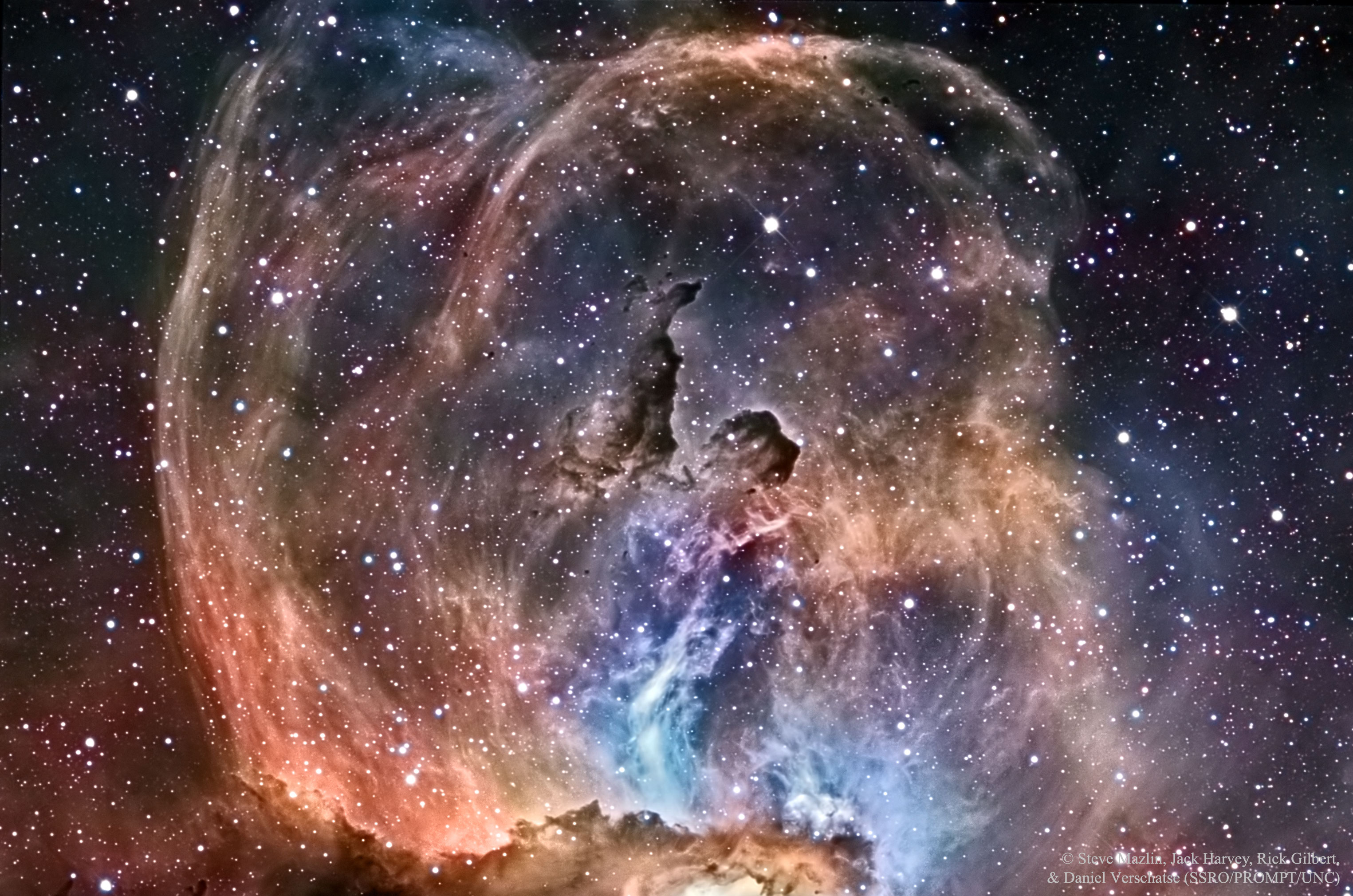
Astronomy picture of the day - 2016 September 28 - NGC 3576: The Statue of Liberty Nebula

See Explanation.  Clicking on the picture will download
 the highest resolution version available.
NGC 3576: The Statue of Liberty Nebula 
Image Credit & Copyright: S. MazlinJ. HarveyR. Gilbert, & D. Verschatse (SSRO/PROMPT/UNC)
Explanation: What's happening in the Statue of Liberty nebula? Bright stars and interesting molecules are forming and being liberated. The complex nebula resides in the star forming region called RCW 57. This image showcases dense knots of dark interstellar dust, bright stars that have formed in the past few million years, fields of glowing hydrogen gas ionized by these stars, and great loops of gas expelled by dying stars. A detailed study of NGC 3576, also known as NGC 3582 and NGC 3584, uncovered at least 33 massive stars in the end stages of formation, and the clear presence of the complex carbon molecules known as polycyclic aromatic hydrocarbons (PAHs). PAHs are thought to be created in the cooling gas of star forming regions, and their development in the Sun's formation nebula five billion years ago may have been an important step in the development of life on Earth. The featured image was taken at theCerro Tololo Inter-American Observatory in Chile.

2016-09-27

And now, it's time to say goodbye...

Trick or Strip Halloween pinup by Elias-Chatzoudis on deviantART:
CIAO, CIAO, CIAO...

Imagens do mundo - Avulsas - Zena Ali


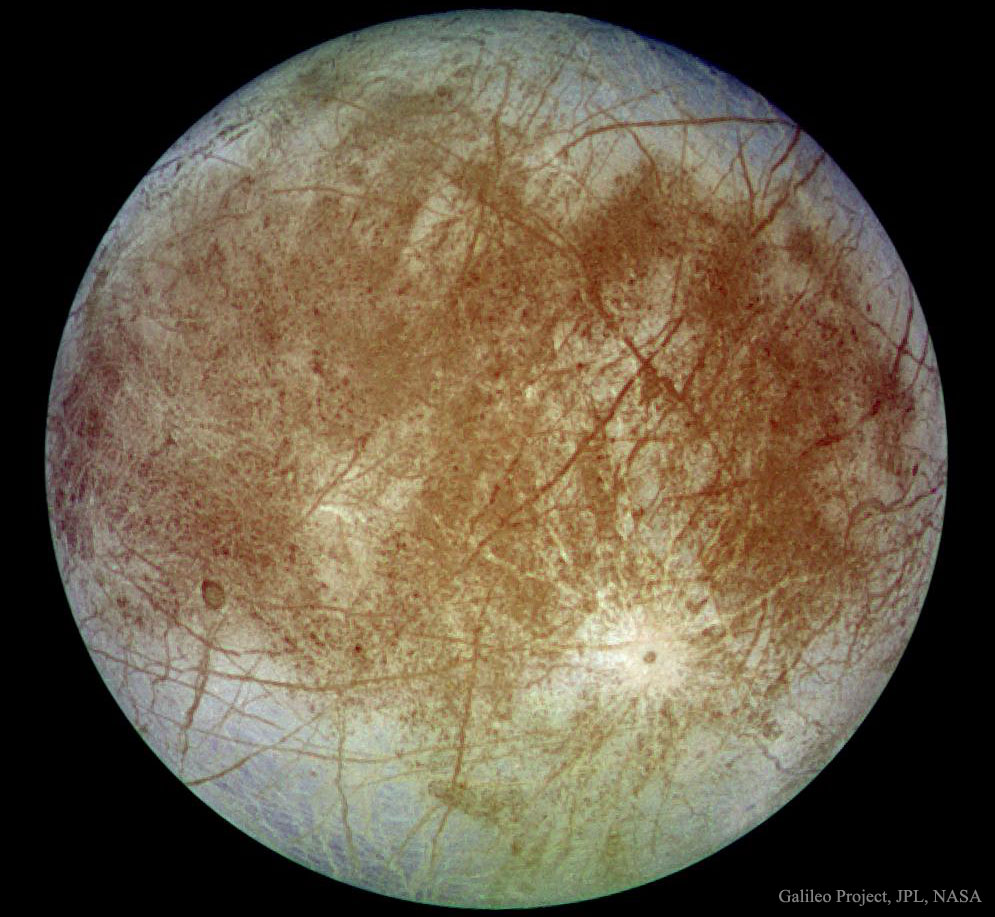
Astronomy picture of the day - 2016 September 27 - Jupiter's Europa from Spacecraft Galileo

See Explanation.  Clicking on the picture will download
 the highest resolution version available.
Jupiter's Europa from Spacecraft Galileo 
Image Credit: Galileo ProjectJPLNASA
Explanation: What mysteries might be solved by peering into this crystal ball? In this case, the ball is actually a moon of Jupiter, the crystals are ice, and the moon is not only dirty but cracked beyond repair. Nevertheless, speculation is rampant that oceans exist under Europa's fractured ice-plains that could support life. This speculation was bolstered again this week by released images from the Hubble Space Telescope indicating that plumes of water vapor sometimes emanate from the ice-crusted moon -- plumes that might bring microscopic sea life to the surface. Europa, roughly the size of Earth's Moon, is pictured here in natural color as photographed in 1996 by the now-defunct Jupiter-orbiting Galileo spacecraft. Future observations by Hubble and planned missions such as the James Webb Space Telescope later this decade and a Europa flyby mission in the 2020s may further humanity's understanding not only of Europa and the early Solar System but also of the possibility that life exists elsewhere in the universe.

Imagens de Lisboa - Interiores secretos - Capela de Santo Amaro

This chapel was founded in 1549 in dedication to St. Maurus. It’s one of the greatest artistic curiosities in the city, but seems to have become completely forgotten. It’s almost always closed, opening only for Mass once a month (on the first Sunday). It was believed that St. Maurus healed broken legs and arms, so many of the magnificent 17th-century polychrome tiles that decorate the entrance walls illustrate those limbs. Inside, a panel depicts the legend of a boat about to sink that was saved by St. Maurus, allowing the crew to dock on this site. From outside there’s a nice view of 25 de Abril Bridge.
Capela de Santo Amaro, Lisboa
Esta capela fundada em 1549, dedicada a Santo Amaro, é uma das maiores curiosidades artísticas da cidade mas muito poucos a conhecem. Encontra-se quase sempre fechada, abrindo apenas para missa uma vez ao mês (no primeiro domingo). Acreditava-se que Santo Amaro curava as pernas e braços partidos, por isso muitos dos magníficos azulejos policromos do século XVII, que decoram as paredes da entrada, ilustram esses membros. No interior, um painel representa a lenda de um barco prestes a afundar-se, mas que é salvo por Santo Amaro, podendo assim a tripulação desembarcar neste local. Do exterior há uma bela vista para a Ponte 25 de Abril.