2016-10-27

Imagenes del Mundo - Rio Arga - Pamplona, España

Varias personas pasean por un antiguo puente que cruza el río Arga, en Pamplona.
ALVARO BARRIENTOS AP

Astronomy picture of the day - 2016 October 27 - A Giant Squid in the Flying Bat

See Explanation.  Clicking on the picture will download
 the highest resolution version available.
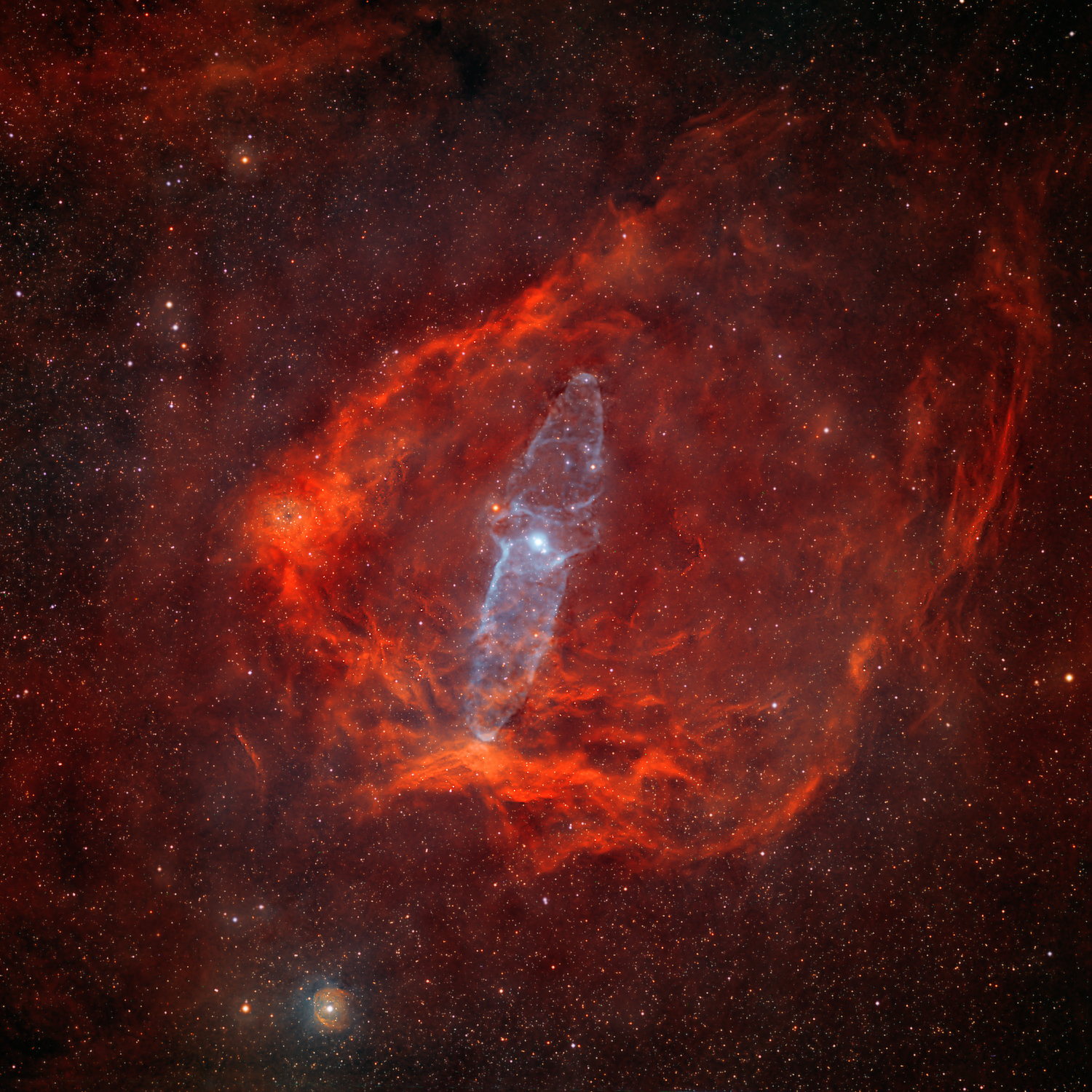
A Giant Squid in the Flying Bat 
Image Credit & Copyright: Rolf Geissinger
Explanation: Very faint but also very large on planet Earth's sky, a giant Squid Nebula cataloged as Ou4, and Sh2-129 also known as the Flying Bat Nebula, are both caught in this cosmic scene toward the royal constellation Cepheus. Composed with almost 17 hours of narrowband image data, the telescopic field of view is 4 degrees or 8 Full Moons across. Discovered in 2011 by French astro-imager Nicolas Outters, the Squid Nebula's alluring bipolar shape is distinguished here by the telltale blue-green emission from doubly ionized oxygen atoms. Though apparently completely surrounded by the reddish hydrogen emission region Sh2-129, the true distance and nature of the Squid Nebula have been difficult to determine. Still, a recent investigation suggests Ou4 really does lie within Sh2-129 some 2,300 light-years away. Consistent with that scenario, Ou4 would represent a spectacular outflow driven by HR8119, a triple system of hot, massive stars seen near the center of the nebula. The truly giant Squid Nebula would physically be nearly 50 light-years across.

2016-10-26

Imagens do Mundo - Surf em Portugal

Una persona surfea una ola en Praia do Norte (Portugal).
Surf em Portugal.
FRANCISCO LEONG AFP

Astronomy picture of the day - 2016 October 26 - Propeller Shadows on Saturn's Rings

See Explanation.  Clicking on the picture will download
 the highest resolution version available.
Propeller Shadows on Saturn's Rings 
Image Credit: NASAJPL-CaltechSpace Science Institute
Explanation: What created these unusually long shadows on Saturn's rings? The dark shadows -- visible near the middle of the image -- extend opposite the Sun and, given their length, stem from objects having heights up to a few kilometers. The long shadows were unexpected given that the usual thickness of Saturn's A and B rings is only about 10 meters. After considering the choppy but elongated shapes apparent near the B-ring edge, however, a leading theory has emerged that some kilometer-sized moonlets exist there that have enough gravity to create even larger vertical deflections of nearby small ring particles. The resulting ring waves are called propellers, named for how they appear individually. It is these coherent groups of smaller ring particles that are hypothesized to be casting the long shadows. The featured image was taken by the robotic Cassini spacecraft currently orbiting Saturn. The image was captured in 2009, near Saturn's equinox, when sunlight streamed directly over the ring plane and caused the longest shadows to be cast.

2016-10-25

Astronomy picture of the day - 2016 October 25 - Clouds Near Jupiter's South Pole from Juno

See Explanation.  Clicking on the picture will download
 the highest resolution version available.
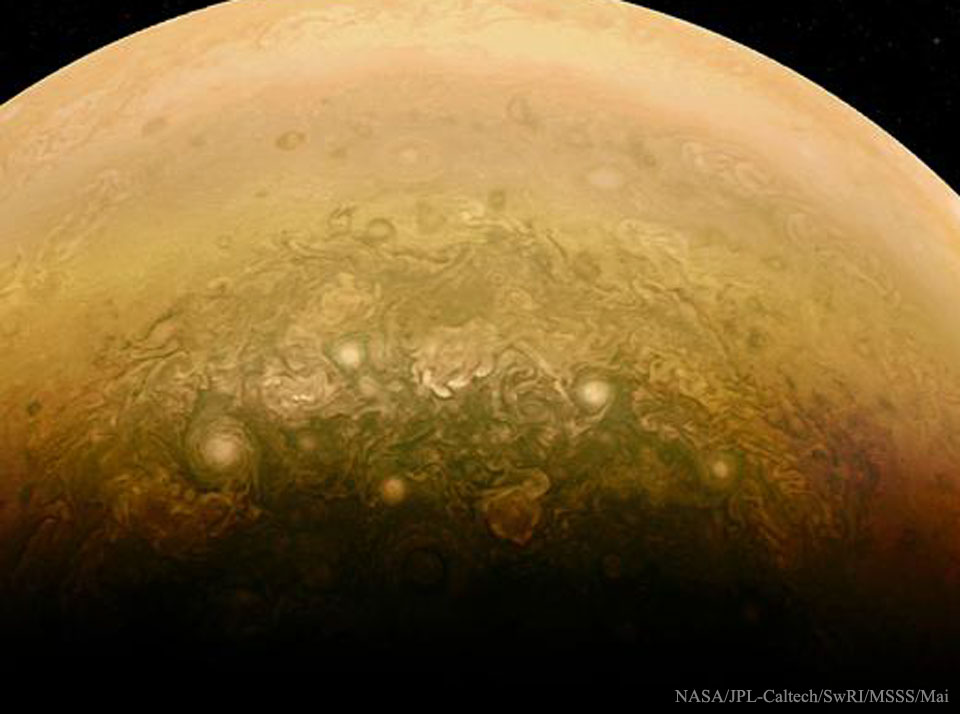
Clouds Near Jupiter's South Pole from Juno 
Image Credit: NASAJPL-CaltechSwRIMSSSProcessing & CC-BYAlex Mai
Explanation: What's happening near the south pole of Jupiter? Recent images sent back by NASA's robotic Juno spacecraft are showing an interesting conglomeration of swirling clouds and what appear to be white ovals. Juno arrived at Jupiter in July and is being placed into a wide, looping orbit that will bring it near the gas giant -- and over its poles -- about twice a month. The featured image is a composite taken by JunoCam and post-processed by a digitally savvy citizen scientist. White ovals have been observed elsewhere on Jupiter and are thought to be giant storm systems. They have been observed to last for years, while typically showing Category 5 wind speeds of around 350 kilometers per hour. Unlike Earthly cyclones and hurricanes where high winds circle regions of low pressure, white ovals on Jupiter show rotational directions indicating that they are anticylones -- vortices centered on high pressure regions. Juno will continue to orbit Jupiter over thirty more times while recording optical, spectral, and gravitational data meant to help determine Jupiter's structure and evolution.

Texto - I’m the fathers son


Vejo pas e picaretas nos buracos da avenida; vejo a rua d’algumas pretas cada vez mais encardida. Vejo o Povo triste a chorar porque o Benfica perdeu… (acontece);  vejo também  putas a trabalhar no lindo dia que Deus deu!

Burgueses levam algumas de abraço, pensando ter negociata feito; parolos, cretinos, avessos; dali não levam nada e, elas rindo, desdobram-se, sem convicção, em inúteis e habituais manobras; esconder? Para quê! Elas são putas, e depois? A sinceridade nunca podera estar do lado dos palermas que se colocam ao  seu lado.

O sol ja vai bem alto quando uma das Senhoras  decide, com o obediente caniche à beira.

"E se  tomassemos um refresco para desanuviar a poeira”? 

Boa, o aplauso é geral!

Oh Fonseca vai la buscar o champanhe!

Bebem, ao fim da tarde, como se habituadas estivessem; a tão refinado "pirolito" cheio de bolinhas frescas…

Então não é tão bom!

25-10-2016

JoanMira 


2016-10-24

And now, it's time to say goodbye. Ciao, ciao, ciao...

Walt Otto:
Ciao, ciao, ciao...

Astronomy picture of the day - 2016 October 24 - HI4PI: The Hydrogen Sky

See Explanation.  Clicking on the picture will download
 the highest resolution version available.
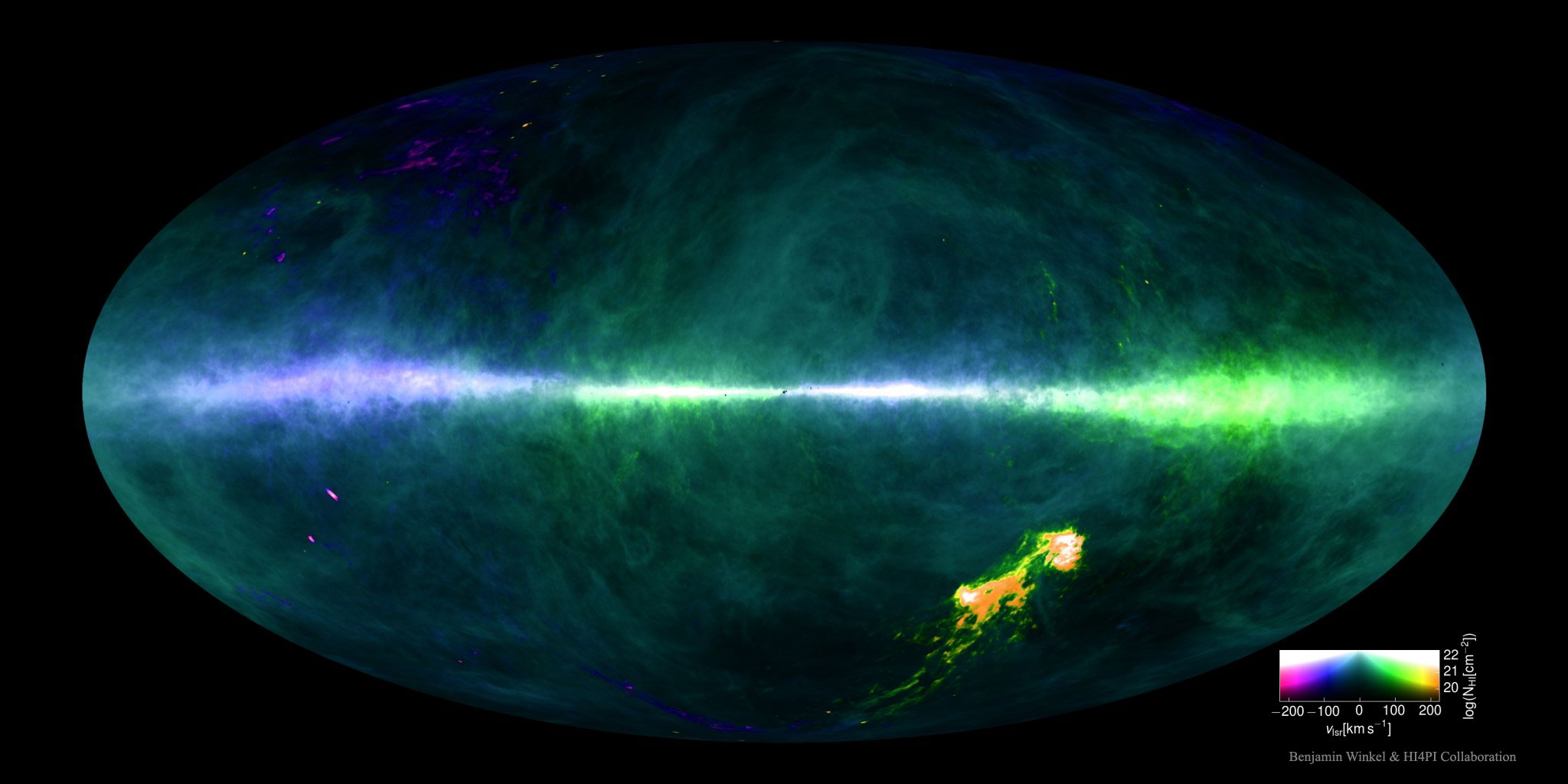
HI4PI: The Hydrogen Sky 
Image Credit: Benjamin Winkel & the HI4PI Collaboration
Explanation: Where are the Milky Way's gas clouds and where are they going? To help answer this question, a new highest-resolution map of the sky in the universe's most abundant gas -- hydrogen -- has been completed andrecently released, along with its underlying data. Featured above, the all-sky map of hydrogen's 21-cm emission shows abundance with brightness and speed with color. Low radial speeds toward us artificially colored blue and low radial speeds away colored green. The band across the middle is the plane of our Milky Way Galaxy, while the bright spots on the lower right are the neighboring Magellanic Clouds. The HI4PI map collects data from over one million observations with the northern Eiffelsberg 100-Meter Radio Telescope in Germany and the southern Parkes 64-Meter Radio Telescope in Australia, also known as "The Dish". The details of the map not only better inform humanity about star formation and interstellar gas in our Milky Way galaxy, but also how much light this local gas is likely to absorb when observing the outside universe. Many details on the map are not yet well understood.

2016-10-23

Photos - Toulouse - Rue Bahour-Lormian


Rue Bahour-Lormian
08-03-2015
JoanMira

Astronomy picture of the day - 2016 October 23 - Eagle Aurora over Norway

See Explanation.  Clicking on the picture will download
 the highest resolution version available.
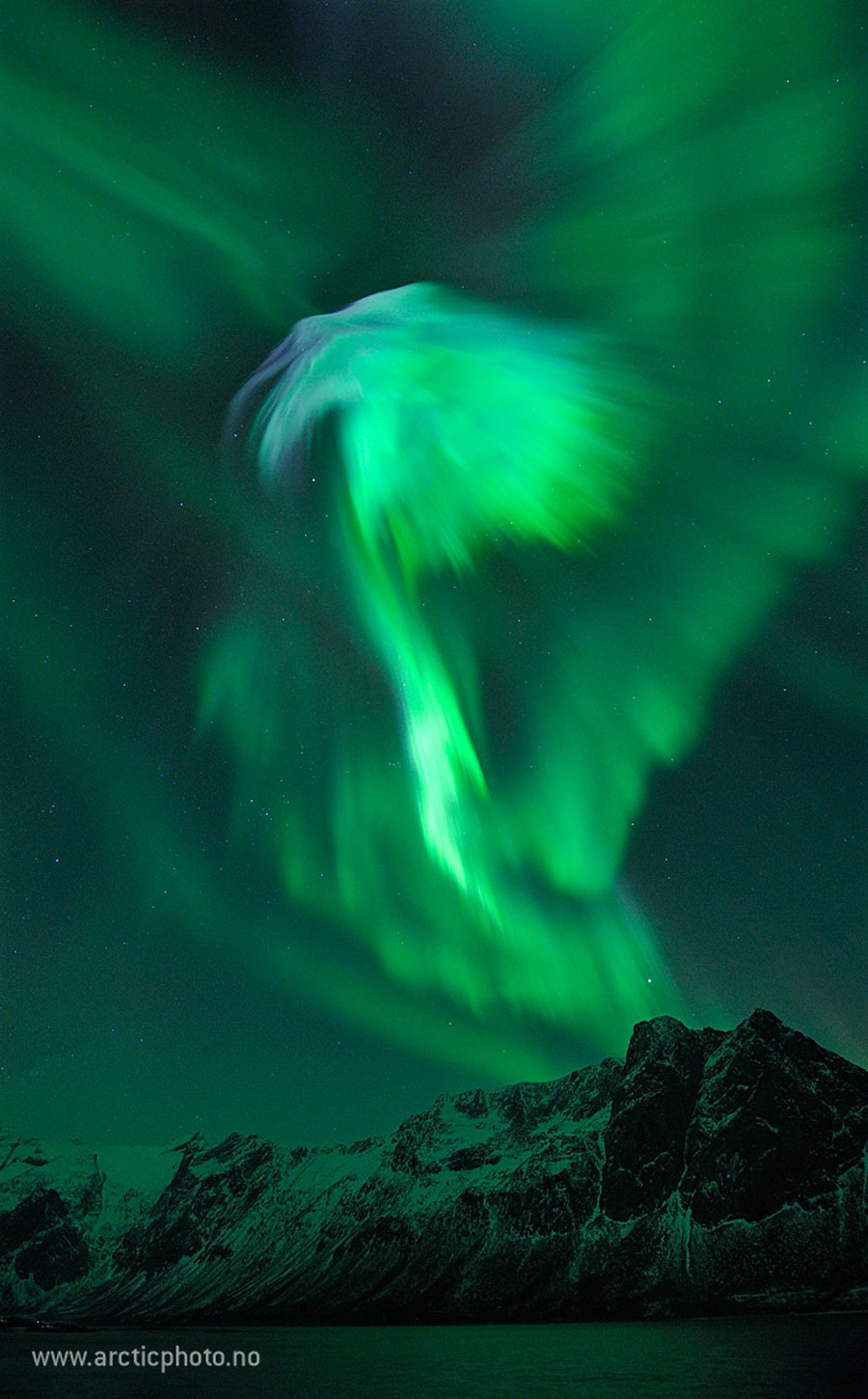
Eagle Aurora over Norway 
Image Credit & Copyright: Bjørn Jørgensen
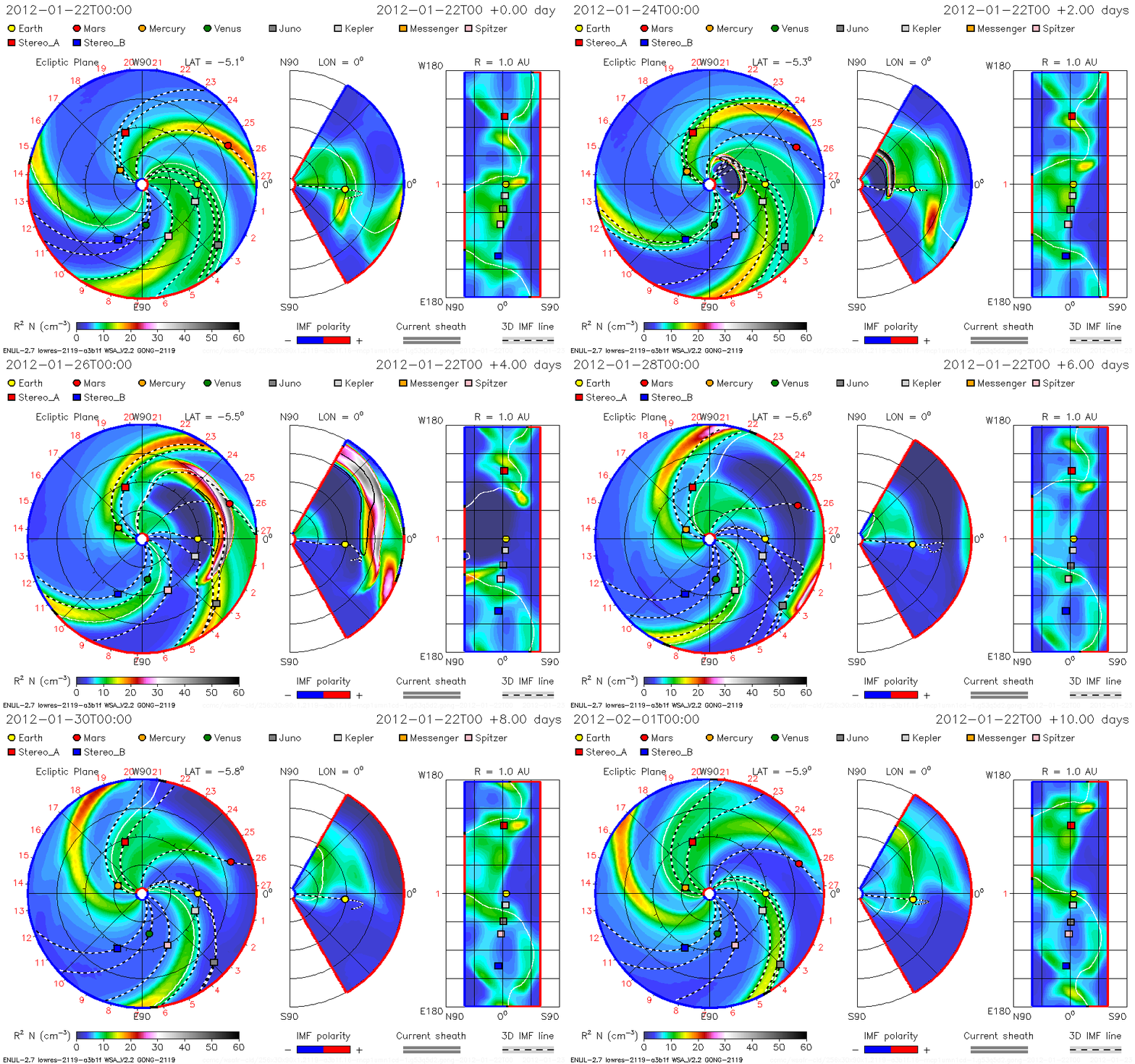
Explanation: What's that in the sky? An aurora. A large coronal mass ejection occurred on our Sun five days before this 2012 image was taken, throwing a cloud of fast moving electrons, protons, and ions toward the Earth. Although most of this cloud passed above the Earth, some of it impacted our Earth's magnetosphere and resulted in spectacular auroras being seen at high northern latitudes. Featured here is a particularly photogenic auroral corona captured above GrotfjordNorway. To some, this shimmering green glow of recombining atmospheric oxygen might appear as a large eagle, but feel free to share what it looks like to you. Although now past Solar Maximum, our Sun continues to show occasional activity creating impressive auroras on Earth visible only last week.