Uma réplica de onze metros de altura do Cristo Redentor do Corcovado a ser transportada por um helicóptero num monte da localidade de Pfaefers (Suiça) por motivo de uma celebração de arte na região.
El relojero Istvan Hanga ajusta la hora de un reloj enorme en la catedral de Kecskemét en la Casa Bozso de Colecciones de Relojes en Kecskemét (Hungría).
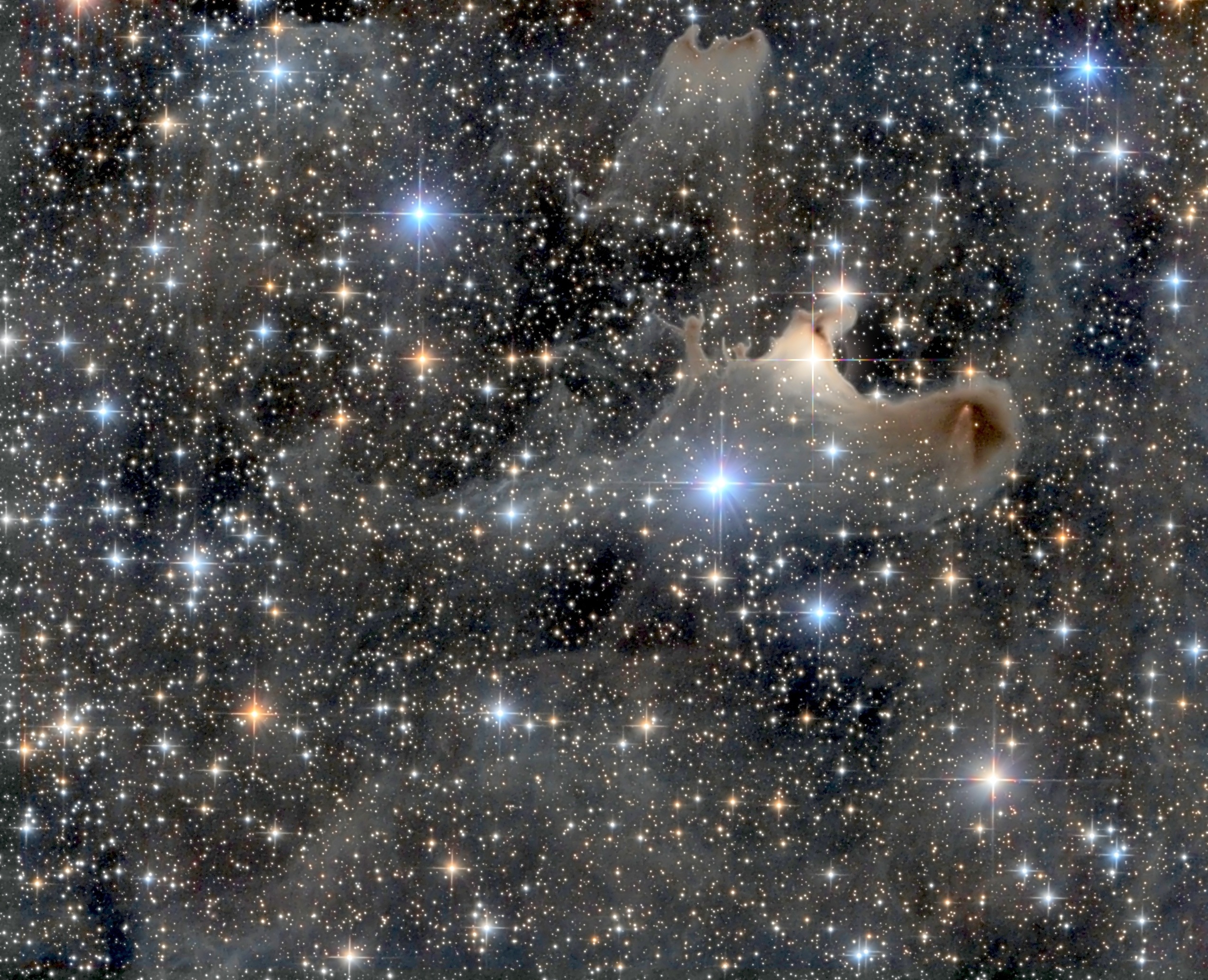
Explanation: Spooky shapes seem to haunt this jeweled expanse, drifting through the night in the royal constellation Cepheus. Of course, the shapes are cosmic dust clouds faintly visible in dimly reflected starlight. Far from your own neighborhood on planet Earth, they lurk along the plane of the Milky Way at the edge of the Cepheus Flare molecular cloud complex some 1,200 light-years away. Over 2 light-years across and brighter than the other ghostly apparitions, vdB 141 or Sh2-136 is also known as the Ghost Nebula, seen at the right of the starry field of view. Within the nebula are the telltale signs of dense cores collapsing in the early stages of star formation.
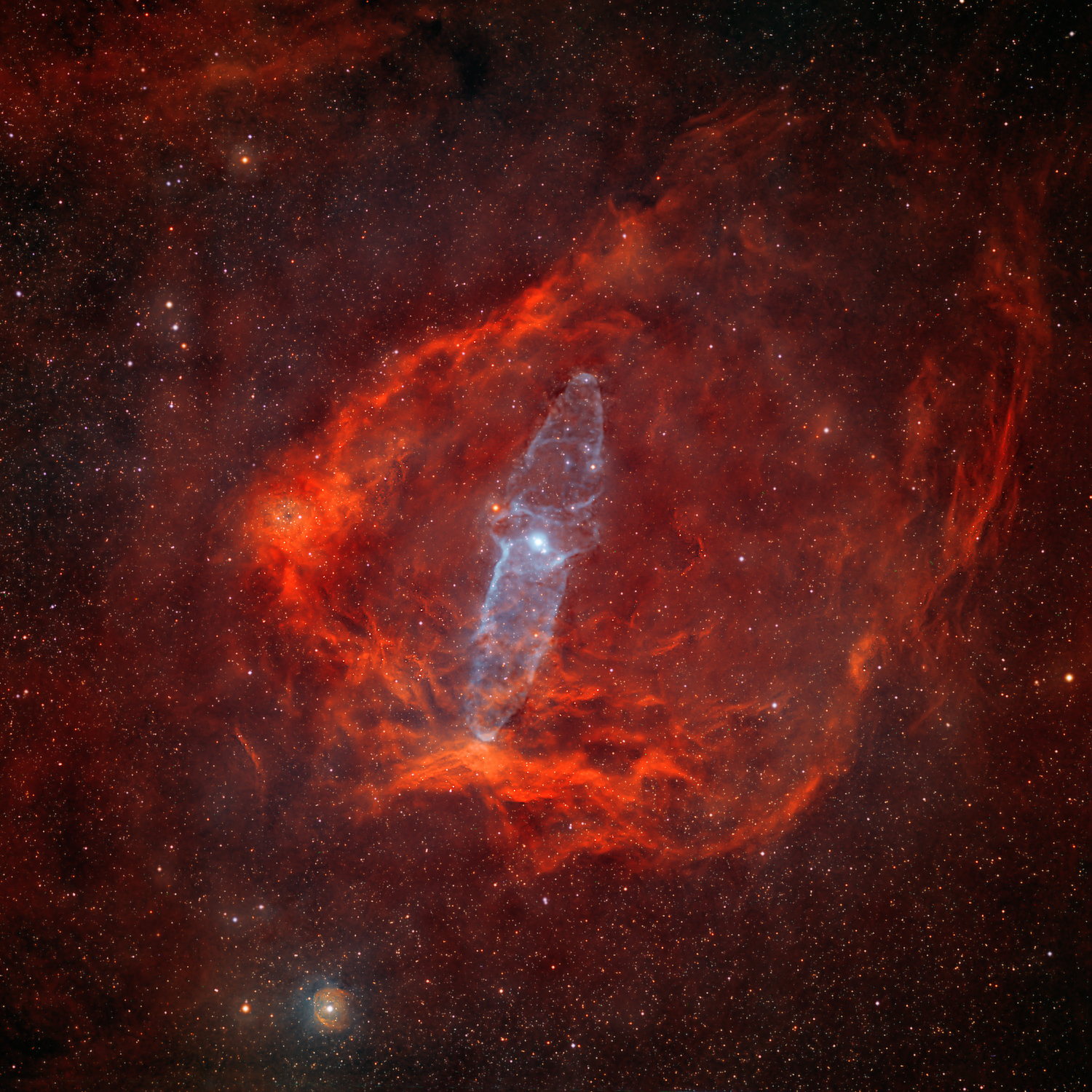
Explanation: Very faint but also very large on planet Earth's sky, a giant Squid Nebula cataloged as Ou4, and Sh2-129 also known as the Flying Bat Nebula, are both caught in this cosmic scene toward the royal constellation Cepheus. Composed with almost 17 hours of narrowband image data, the telescopic field of view is 4 degrees or 8 Full Moons across. Discovered in 2011 by French astro-imager Nicolas Outters, the Squid Nebula's alluring bipolar shape is distinguished here by the telltale blue-green emission from doubly ionized oxygen atoms. Though apparently completely surrounded by the reddish hydrogen emission region Sh2-129, the true distance and nature of the Squid Nebula have been difficult to determine. Still, a recent investigation suggests Ou4 really does lie within Sh2-129 some 2,300 light-years away. Consistent with that scenario, Ou4 would represent a spectacular outflow driven by HR8119, a triple system of hot, massive stars seen near the center of the nebula. The truly giant Squid Nebula would physically be nearly 50 light-years across.