2016-11-19

Expressões populares portuguesas - Que massada!


Afficher l'image d'origine


Significado: Exclamação usada para referir uma tragédia ou contra-tempo. 

Origem: É uma alusão à fortaleza de Massada na região do Mar Morto, Israel, reduto de Zelotes, onde permaneceram anos resistindo às forças romanas após a destruição do Templo em 70 d.C., culminando com um suicídio colectivo para não se renderem, de acordo com relato do historiador Flávio Josefo. 

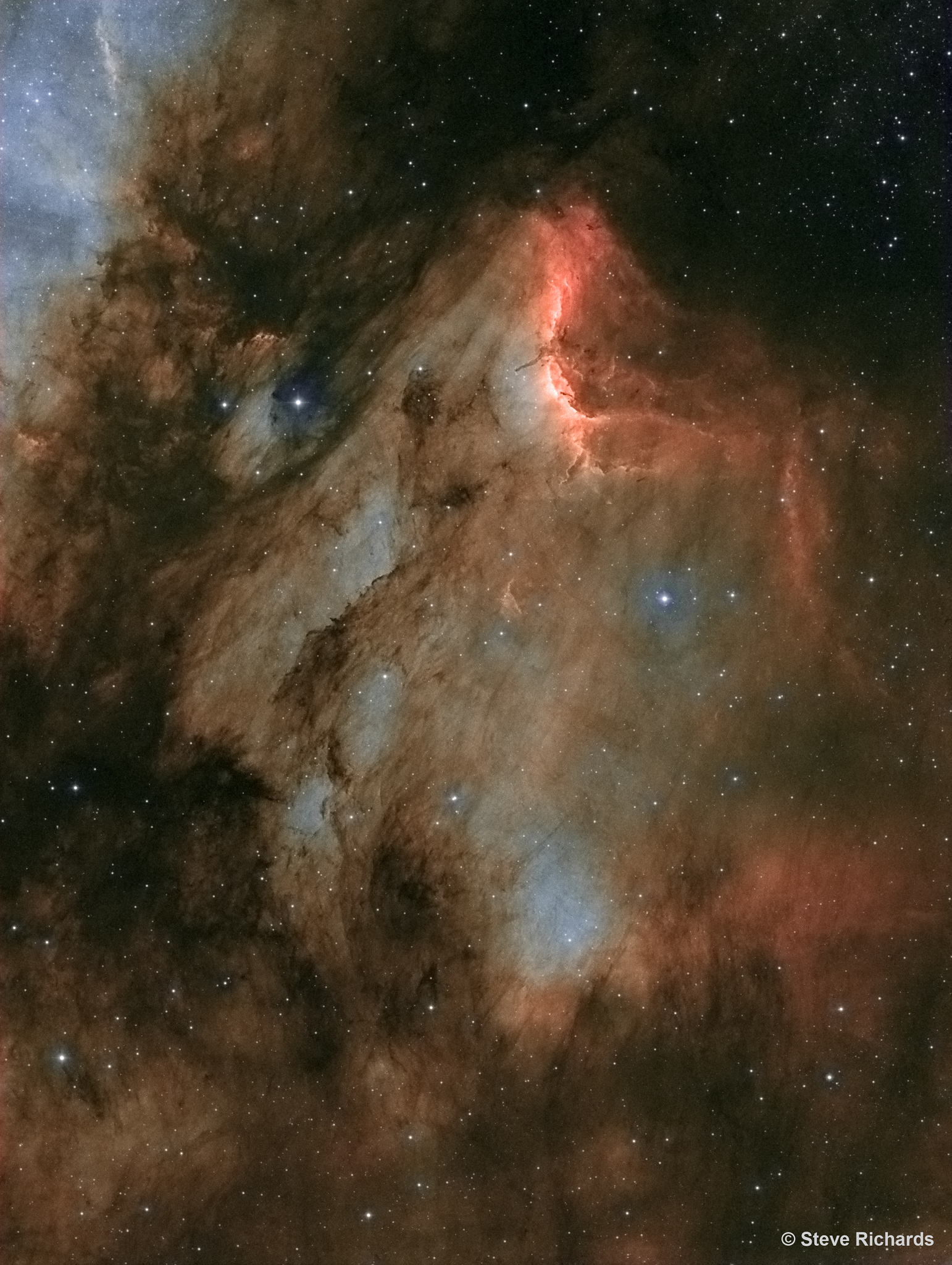
Astronomy picture of the day - 2016 November 19 - IC 5070: A Dusty Pelican in the Swan

See Explanation.  Clicking on the picture will download
 the highest resolution version available.
IC 5070: A Dusty Pelican in the Swan 
Image Credit & CopyrightSteve Richards (Chanctonbury Observatory)
Explanation: The recognizable profile of the Pelican Nebula soars nearly 2,000 light-years away in the high flying constellation Cygnus, the Swan. Also known as IC 5070, this interstellar cloud of gas and dust is appropriately found just off the "east coast" of the North America Nebula (NGC 7000), another surprisingly familiar looking emission nebula in Cygnus. Both Pelican and North America nebulae are part of the same large and complex star forming region, almost as nearby as the better-known Orion Nebula. From our vantage point, dark dust clouds (upper left) help define the Pelican's eye and long bill, while a bright front of ionized gas suggests the curved shape of the head and neck. This striking synthesized color view utilizes narrowband image data recording the emission of hydrogen and oxygen atoms in the cosmic cloud. The scene spans some 30 light-years at the estimated distance of the Pelican Nebula.

2016-11-18

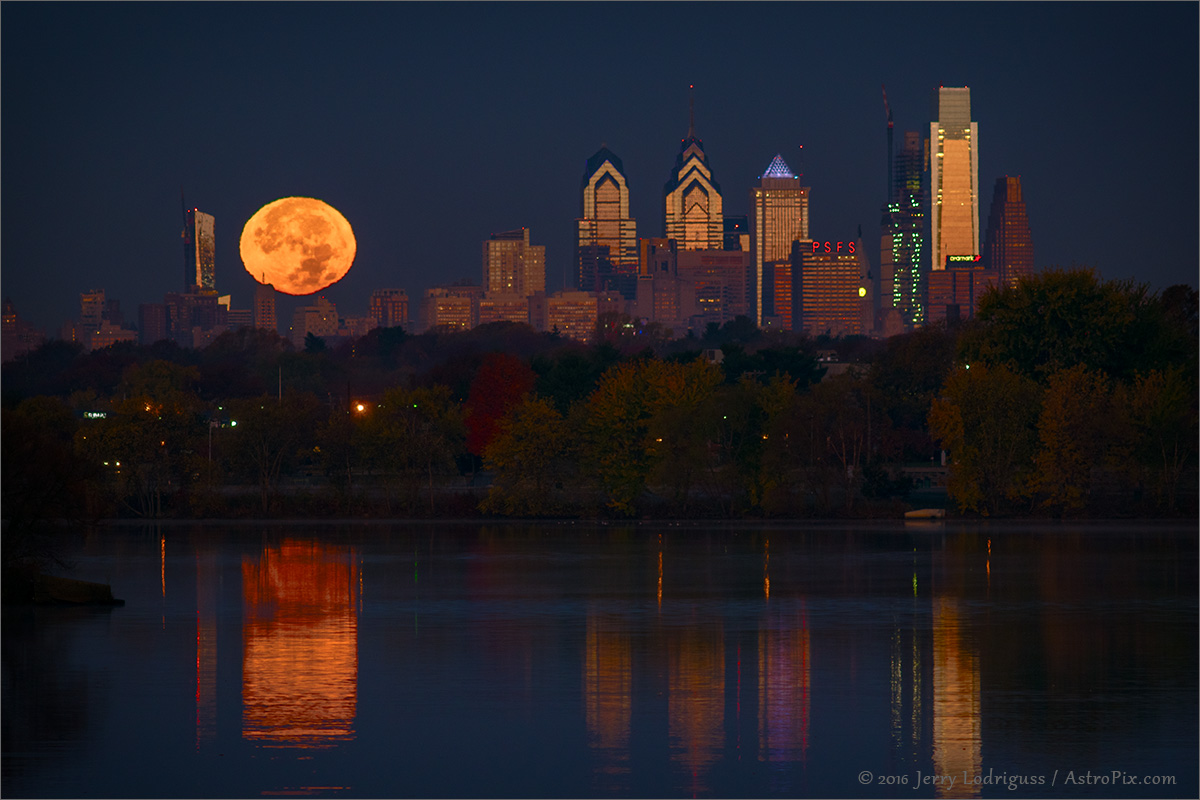
Astronomy picture of the day - 2016 November 18 - Philadelphia Perigee Full Moon

See Explanation.  Clicking on the picture will download
 the highest resolution version available.
Philadelphia Perigee Full Moon 
Image Credit & CopyrightJerry Lodriguss (Catching the Light)
Explanation: A supermoon sets over the metropolis of Philadelphia in this twilight snapshot captured on November 14 at 6:21am Eastern Standard Time. Within hours of the Moon's exact full phase, that time does correspond to a lunar perigee or the closest point in the Moon's elliptical orbit around our fair planet. Slightly bigger and brighter at perigee, this Full Moon is still flattened and distorted in appearance by refraction in atmospheric layers along the sight-line near the horizon. Also like more ordinary Full Moons, it shines with the warm color of sunlight. Joined by buildings along the Philadelphia skyline, the perigee full moonlight is reflected in the waters of the mighty Schuylkill River.

2016-11-17

Pedro Abrunhosa - "Eu não sei quem te perdeu" - Video - Musica - Ao vivo

Afficher l'image d'origine
"Eu não sei quem te perdeu"

Fotografias do passado - Lisboa - Avenida Almirante Reis

19_Estudio_mario_Novais_avenida_almirante_reis_2_sem_data_19.jpg
Estúdio Mário Novais, Avenida Almirante Reis, Lisboa, sem data Colecções da Fundação Calouste Gulbenkian, Lisboa, Portugal (Flickr Commons)

Expressões populares portuguesas - Passar a mão pela cabeça


Significado: perdoar ou acobertar erro cometido por algum protegido. 

Origem: Costume judaico de abençoar cristãos-novos, passando a mão pela cabeça e descendo pela face, enquanto se pronunciava a bênção. 

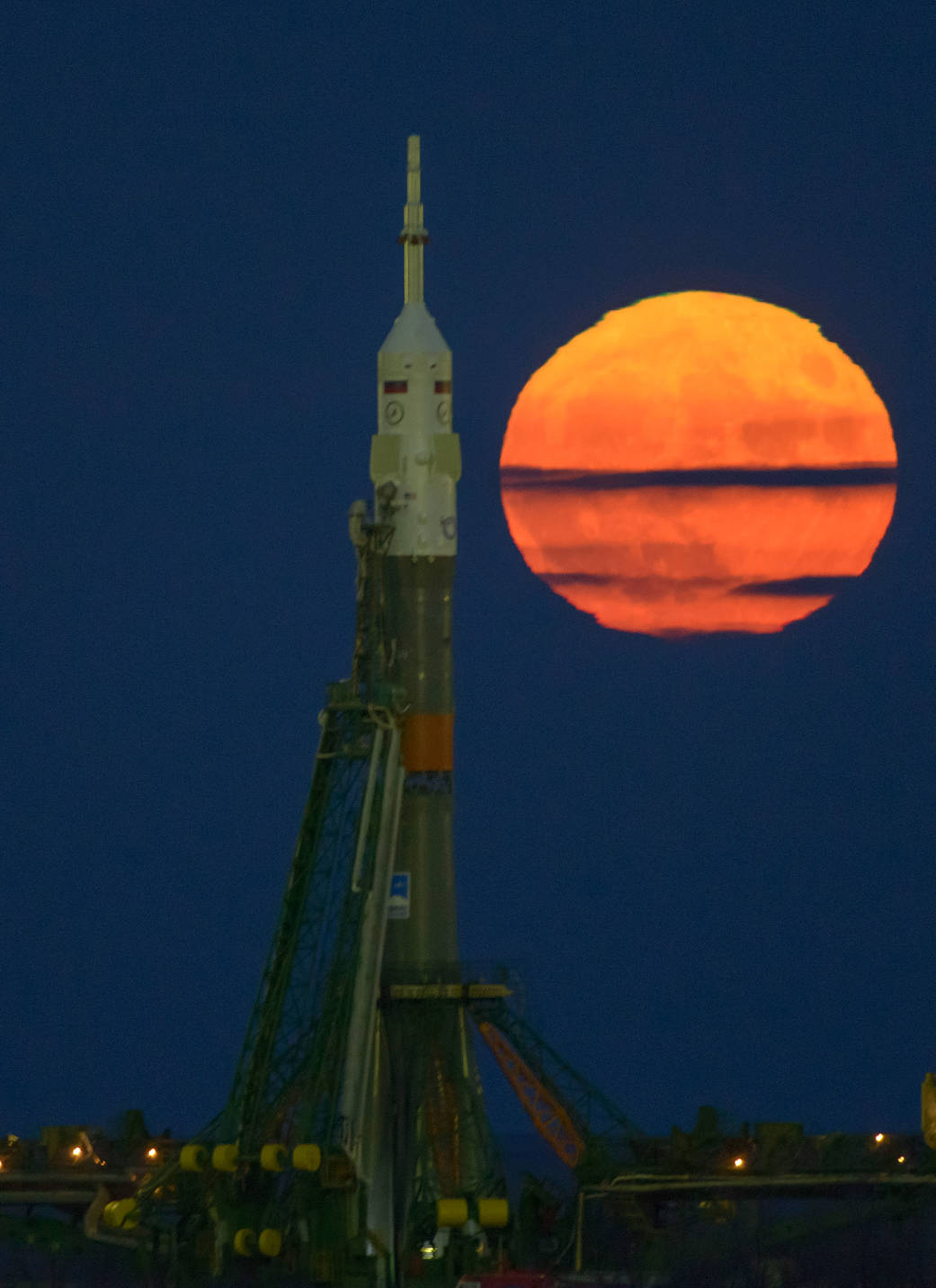
Astronomy picture of the day - 2016 November 17 - Soyuz vs Supermoon

See Explanation.  Clicking on the picture will download
 the highest resolution version available.
Soyuz vs Supermoon 
Image Credit: NASA, Bill Ingalls
Explanation: Faster than a speeding bullet, more powerful than a locomotive, and able to leap tall buildings in a single bound, this Soyuz rocket stands on the launch pad at Baikonur Cosmodrome in Kazakhstan on November 14.Beyond it rises a supermoon, but fame for exceptional feats of speed, strength, and agility is not the reason November's Full Moon was given this popular name. Instead, whenever a Full Moon shines near perigee, the closest point in itselliptical orbit around Earth, it appears larger and brighter than other more distant Full Moons, and so a supermoon is born. In fact, November's supermoon was the second of three consecutive supermoons in 2016. It was also the closest and most superest Full Moon since 1948. Meanwhile, the mild mannered Soyuz rocket is scheduled to launch its Expedition 50/51 crew to the International Space Station today, November 17.