2016-11-27

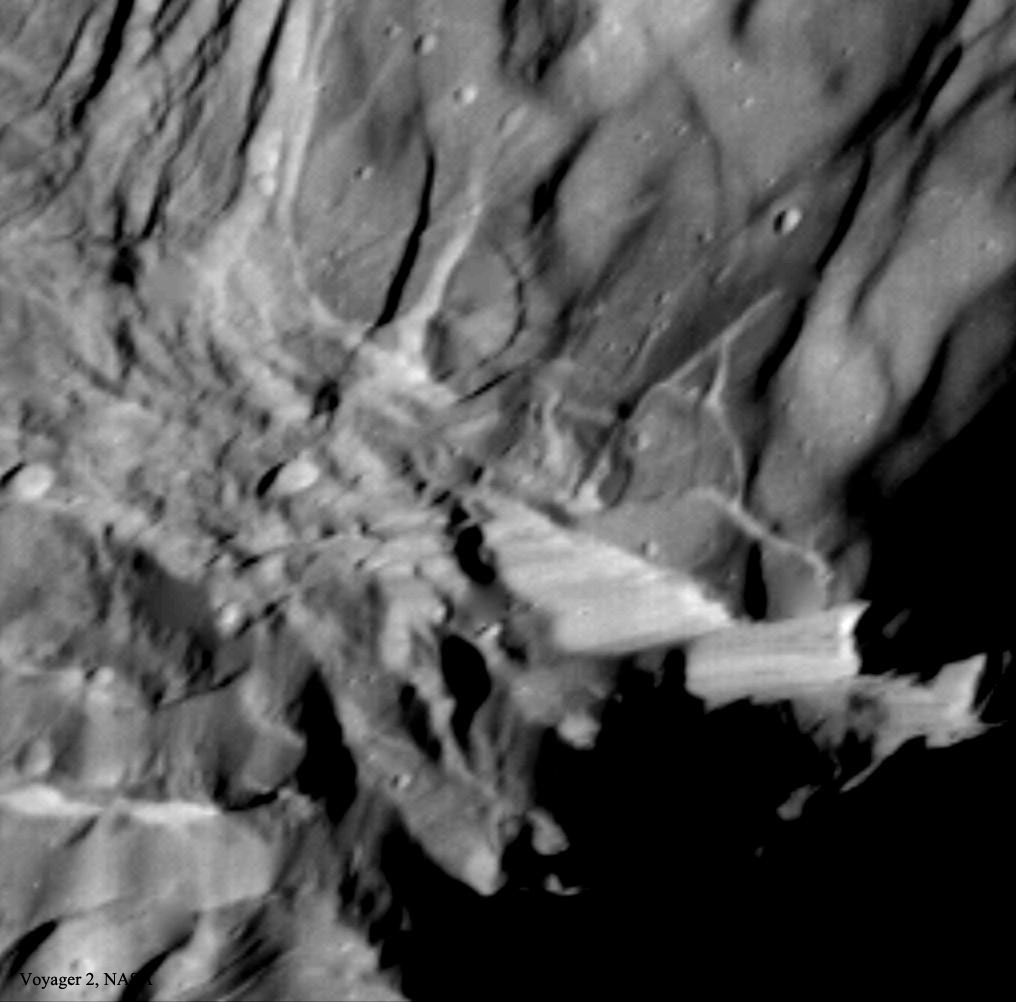
Astronomy picture of the day - 2016 November 27 - Verona Rupes: Tallest Known Cliff in the Solar System

See Explanation.  Clicking on the picture will download
 the highest resolution version available.
Verona Rupes: Tallest Known Cliff in the Solar System 
Image Credit: Voyager 2, NASA
Explanation: Could you survive a jump off the tallest cliff in the Solar System? Quite possibly. Verona Rupes on Uranus' moon Miranda is estimated to be 20 kilometers deep -- ten times the depth of the Earth's Grand Canyon. GivenMiranda's low gravity, it would take about 12 minutes for a thrill-seeking adventurer to fall from the top, reaching the bottom at the speed of a racecar -- about 200 kilometers per hour. Even so, the fall might be survivable given properairbag protection. The featured image of Verona Rupes was captured by the passing Voyager 2 robotic spacecraft in 1986. How the giant cliff was created remains unknown, but is possibly related to a large impact or tectonic surface motion.


2016-11-26

Peter Gabriel - "Solsbury hill" - Video - Music - Live

Afficher l'image d'origine
"Solsbury hill"

Fotos - "Bayonne en couleurs" - France - 10-12-2015

"Bayonne en couleurs"

Bayonne, 10-12-2015
JoanMira

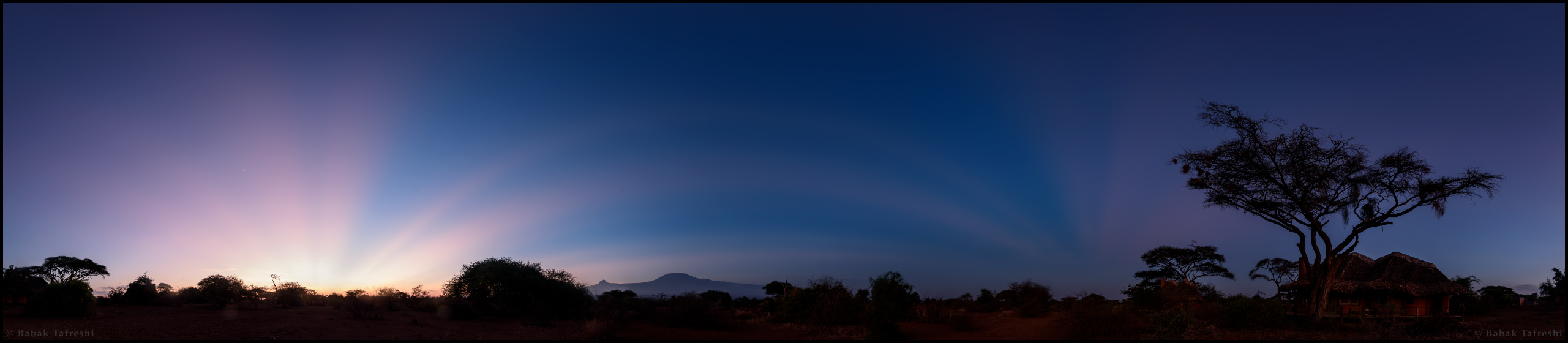
Astronomy picture of the day - 2016 November 26 - East to West, Light and Shadow

See Explanation.  Clicking on the picture will download
 the highest resolution version available.
East to West, Light and Shadow 
Image Credit & Copyright: Babak Tafreshi (TWAN)
Explanation: On this November morning an old crescent Moon and morning star rise just before the Sun in a wide panoramic skyscape from Kenya's Amboseli National Park. Still below the limbs of an acacia tree and the eastern horizon, the Sun's position is easy to find though. It's marked at the left by the subtle convergence of light and shadow in the dawn sky. Known as crepuscular rays, the warm-colored rays of sunlight are outlined by shadows cast by unseen clouds near the horizon. Arcing above the profile of Mount Kilimanjaro, toward the right the rays of light and shadow converge at the western horizon. There known as anti-crepuscular rays, they indicate the point opposite the rising sun. The cloud shadows are very nearly parallel, but converge toward the distant horizons because of perspective.

Artigo - Morreu Fidel Castro

Afficher l'image d'origine
Morreu Fidel Castro

2016-11-25

Expressões populares portuguesas - Comer muito queijo


Afficher l'image d'origine

Significado: Ser esquecido; ter má memória. 

Origem: A origem desta expressão portuguesa pode explicar-se pela relação de causalidade que, em séculos anteriores, era estabelecida entre a ingestão de lacticínios e a diminuição de certas faculdades intelectuais, especificamente a memória. A comprovar a existência desta crença existe o excerto da obra do padre Manuel Bernardes "Nova Floresta", relativo aos procedimentos a observar para manter e exercitar a memória: «Há também memória artificial da qual uma parte consiste na abstinência de comeres nocivos a esta faculdade, como são lacticínios, carnes salgadas, frutas verdes, e vinho sem muita moderação: e também o demasiado uso do tabaco». Sabe-se hoje, através dos conhecimentos provenientes dos estudos sobre memória e nutrição, que o leite e o queijo são fornecedores privilegiados de cálcio e de fósforo, elementos importantes para o trabalho cerebral. Apesar do contributo da ciência para desmistificar uma antiga crença popular, a ideia do queijo como alimento nocivo à memória ficou cristalizada na expressão fixa «comer (muito) queijo».

Astronomy picture of the day - 2016 November 25 - Apollo 17 VIP Site Anaglyph

See Explanation.  Clicking on the picture will download
 the highest resolution version available.
Apollo 17 VIP Site Anaglyph 
Image Credit: Gene CernanApollo 17NASA; Anaglyph by Erik van Meijgaarden
Explanation: Get out your red/blue glasses and check out this stereo scene from Taurus-Littrow valley on the Moon! The color anaglyph features a detailed 3D view of Apollo 17's Lunar Rover in the foreground -- behind it lies the Lunar Module and distant lunar hills. Because the world was going to be able to watch the Lunar Module's ascent stage liftoff via the rover's TV camera, this parking place was also known as the VIP Site. In December of 1972, Apollo 17 astronauts Eugene Cernan and Harrison Schmitt spent about 75 hours on the Moon, while colleague Ronald Evans orbited overhead. The crew returned with 110 kilograms of rock and soil samples, more than from any of the other lunar landing sites. Cernan and Schmitt are still the last to walk (or drive) on the Moon.

2016-11-24

Expressões populares portuguesas - Acordo leonino

Lion, Statue, Zoo

Significado: Um «acordo leonino» é aquele em que um dos contratantes aceita condições desvantajosas em relação a outro contratante que fica em grande vantagem. 

Origem: «Acordo leonino» é, pois, uma expressão retórica sugerida nomeadamente pelas fábulas em que o leão se revela como todo-poderoso.  

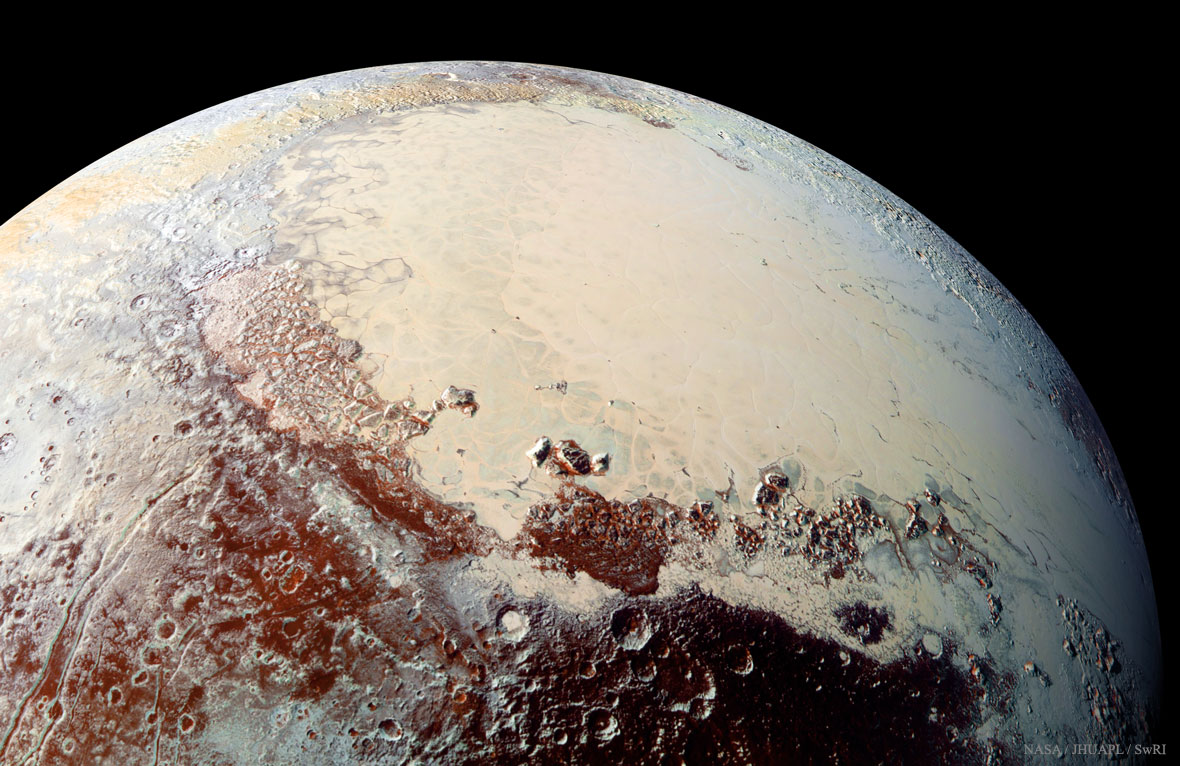
Astronomy pictures of the day - 2016 November 24 - Pluto's Sputnik Planum

See Explanation.  Clicking on the picture will download
 the highest resolution version available.
Pluto's Sputnik Planum 
Image Credit: NASAJohns Hopkins U./APLSouthwest Research Inst.
Explanation: Is there an ocean below Sputnik Planum on Pluto? The unusually smooth 1000-km wide golden expanse, visible in the featured image from New Horizons, appears segmented into convection cells. But how was this region created? One hypothesis now holds the answer to be a great impact that stirred up an underground ocean of salt water roughly 100-kilometers thick. The featured image of Sputnik Planum, part of the larger heart-shapedTombaugh Regio, was taken last July and shows true details in exaggerated colors. Although the robotic New Horizons spacecraft is off on a new adventure, continued computer-modeling of this surprising surface feature on Pluto is likely to lead to more refined speculations about what lies beneath.

2016-11-23

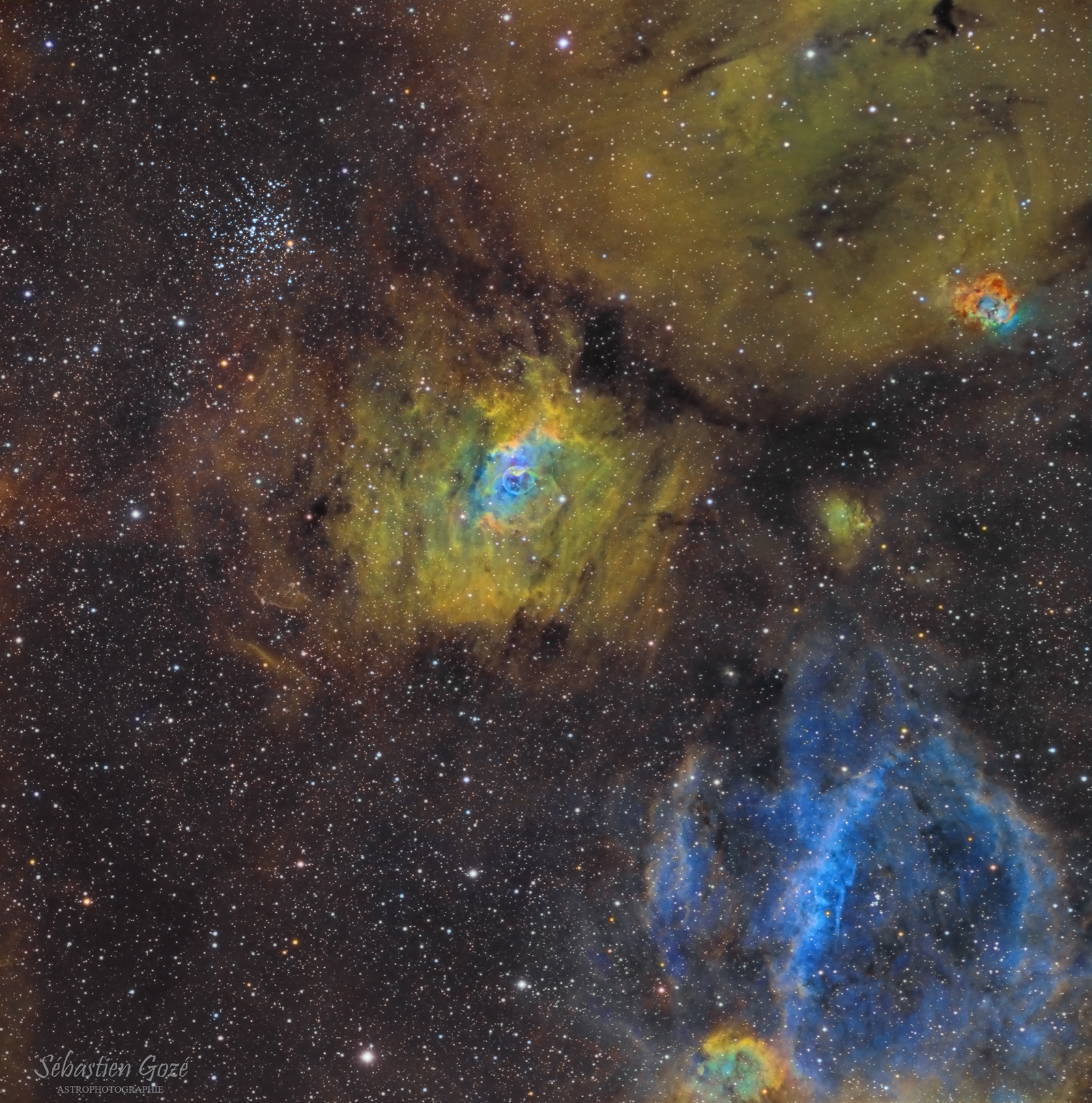
Astronomy picture of the day - 2016 November 23 - NGC 7635: Bubble in a Cosmic Sea

See Explanation.  Clicking on the picture will download
 the highest resolution version available.
NGC 7635: Bubble in a Cosmic Sea 
Image Credit & Copyright: Sébastien Gozé
Explanation: Do you see the bubble in the center? Seemingly adrift in a cosmic sea of stars and glowing gas, the delicate, floating apparition in this widefield view is cataloged as NGC 7635 - The Bubble Nebula. A mere 10 light-yearswide, the tiny Bubble Nebula and the larger complex of interstellar gas and dust clouds are found about 11,000 light-years distant, straddling the boundary between the parental constellations Cepheus and Cassiopeia. Also included in the breathtaking vista is open star cluster M52 (upper left), some 5,000 light-years away. The featured image spans about two degrees on the sky corresponding to a width of about 375 light-years at the estimated distance of theBubble Nebula.