2016-11-28

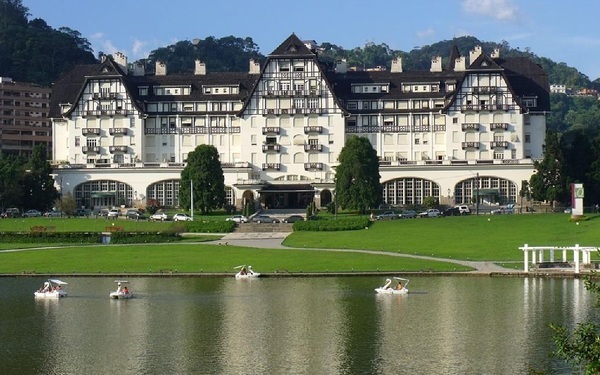
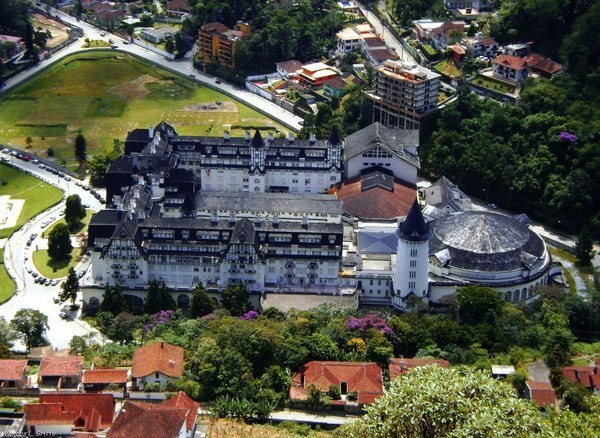
Palacios cariocas - Palácio Quitandinha

Este palácio em estilo normando foi construído em 1944, na cidade de Petrópolis, para ser o maior cassino hotel da América do Sul.
Sua grandiosidade impressiona, são 50 mil metros quadrados, divididos em seis andares, que dão lugar a 440 apartamentos e muitos salões.
Até a década de 60, quando encerrou as suas atividades como hotel (já com a atividade de cassino proibida), hospedou diversos políticos e artistas internacionais.
Hoje em dia, os apartamentos são propriedades particulares e as áreas de lazer são administradas pelo SESC Rio, que passou a promover atrações culturais no local.
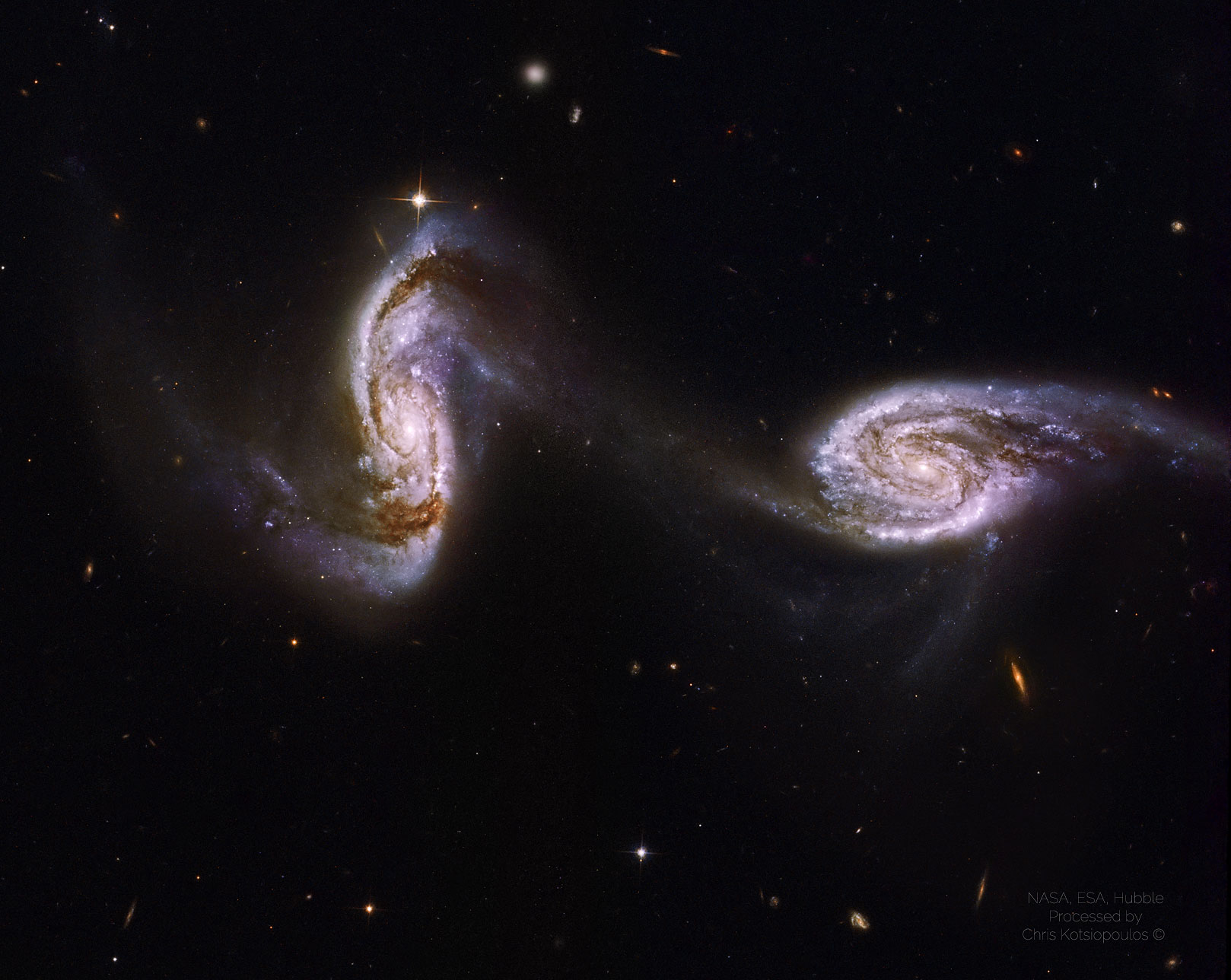
Astronomy picture of the day - 2016 November 28 - Arp 240: A Bridge between Spiral Galaxies from Hubble

See Explanation.  Clicking on the picture will download
 the highest resolution version available.
Arp 240: A Bridge between Spiral Galaxies from Hubble 
Image Credit: NASAESAHubble Space TelescopeProcessing & Copyright: Chris Kotsiopoulos
Explanation: Why is there a bridge between these two spiral galaxies? Made of gas and stars, the bridge provides strong evidence that these two immense star systems have passed close to each other and experienced violent tides induced by mutual gravity. Known together as Arp 240 but individually as NGC 5257 and NGC 5258, computer modelling and the ages of star clusters indicate that the two galaxies completed a first passage near each other only about 250 million years ago. Gravitational tides not only pulled away matter, they compress gas and so caused star formation in both galaxies and the unusual bridge. Galactic mergers are thought to be common, with Arp 240 representing a snapshot of a brief stage in this inevitable process. The Arp 240 pair are about 300 million light-years distant and can be seen with a small telescope toward the constellation of Virgo. Repeated close passages should ultimately result in a merger and with the emergence of a single combined galaxy.

2016-11-27

Imagens do Rio de Janeiro - Palacios cariocas - Palácio de Cristal


O Palácio de Cristal, localizado na cidade de Petrópolis, inaugurado no ano de 1884, foi um presente do Conde d'Eu para sua esposa, a Princesa Isabel, para que ela pudesse cultivar hortaliças.
Em 1957 o palácio foi tombado pelo Instituto do Patrimônio Histórico e Artístico Nacional e, atualmente, é utilizado para festas, exposições e eventos.

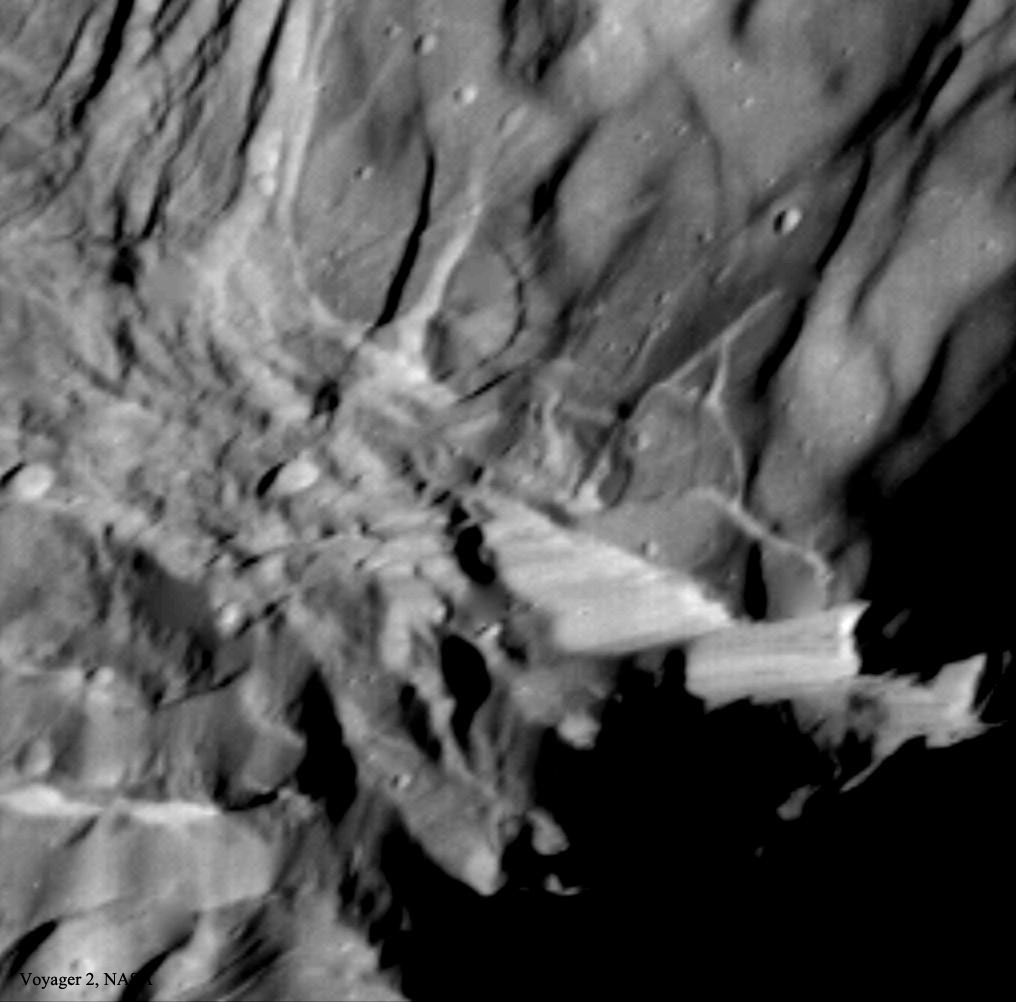
Astronomy picture of the day - 2016 November 27 - Verona Rupes: Tallest Known Cliff in the Solar System

See Explanation.  Clicking on the picture will download
 the highest resolution version available.
Verona Rupes: Tallest Known Cliff in the Solar System 
Image Credit: Voyager 2, NASA
Explanation: Could you survive a jump off the tallest cliff in the Solar System? Quite possibly. Verona Rupes on Uranus' moon Miranda is estimated to be 20 kilometers deep -- ten times the depth of the Earth's Grand Canyon. GivenMiranda's low gravity, it would take about 12 minutes for a thrill-seeking adventurer to fall from the top, reaching the bottom at the speed of a racecar -- about 200 kilometers per hour. Even so, the fall might be survivable given properairbag protection. The featured image of Verona Rupes was captured by the passing Voyager 2 robotic spacecraft in 1986. How the giant cliff was created remains unknown, but is possibly related to a large impact or tectonic surface motion.


2016-11-26

Peter Gabriel - "Solsbury hill" - Video - Music - Live

Afficher l'image d'origine
"Solsbury hill"

Fotos - "Bayonne en couleurs" - France - 10-12-2015

"Bayonne en couleurs"

Bayonne, 10-12-2015
JoanMira

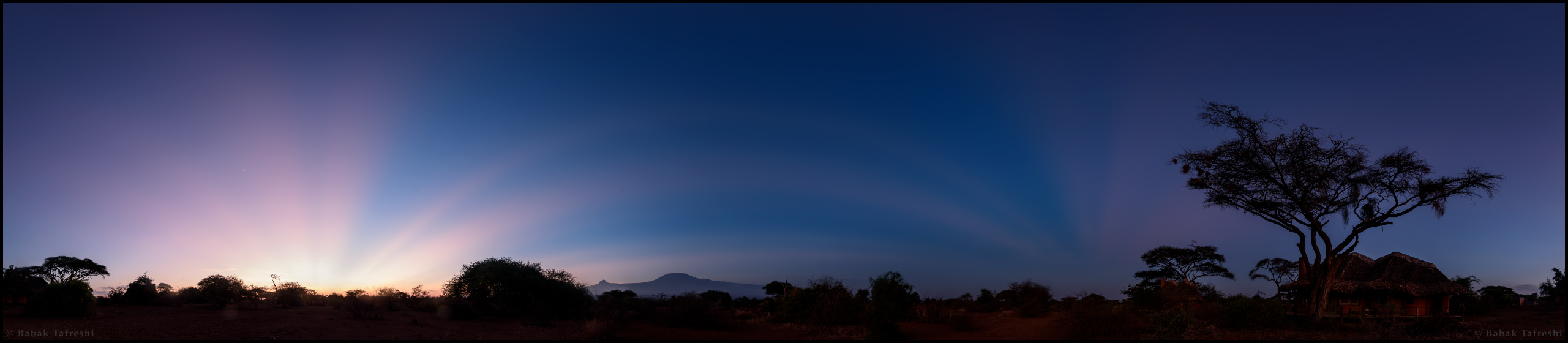
Astronomy picture of the day - 2016 November 26 - East to West, Light and Shadow

See Explanation.  Clicking on the picture will download
 the highest resolution version available.
East to West, Light and Shadow 
Image Credit & Copyright: Babak Tafreshi (TWAN)
Explanation: On this November morning an old crescent Moon and morning star rise just before the Sun in a wide panoramic skyscape from Kenya's Amboseli National Park. Still below the limbs of an acacia tree and the eastern horizon, the Sun's position is easy to find though. It's marked at the left by the subtle convergence of light and shadow in the dawn sky. Known as crepuscular rays, the warm-colored rays of sunlight are outlined by shadows cast by unseen clouds near the horizon. Arcing above the profile of Mount Kilimanjaro, toward the right the rays of light and shadow converge at the western horizon. There known as anti-crepuscular rays, they indicate the point opposite the rising sun. The cloud shadows are very nearly parallel, but converge toward the distant horizons because of perspective.

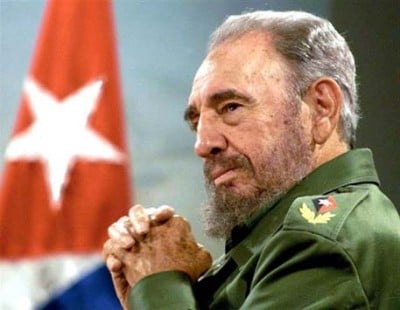
Artigo - Morreu Fidel Castro

Afficher l'image d'origine
Morreu Fidel Castro

2016-11-25

Expressões populares portuguesas - Comer muito queijo


Afficher l'image d'origine

Significado: Ser esquecido; ter má memória. 

Origem: A origem desta expressão portuguesa pode explicar-se pela relação de causalidade que, em séculos anteriores, era estabelecida entre a ingestão de lacticínios e a diminuição de certas faculdades intelectuais, especificamente a memória. A comprovar a existência desta crença existe o excerto da obra do padre Manuel Bernardes "Nova Floresta", relativo aos procedimentos a observar para manter e exercitar a memória: «Há também memória artificial da qual uma parte consiste na abstinência de comeres nocivos a esta faculdade, como são lacticínios, carnes salgadas, frutas verdes, e vinho sem muita moderação: e também o demasiado uso do tabaco». Sabe-se hoje, através dos conhecimentos provenientes dos estudos sobre memória e nutrição, que o leite e o queijo são fornecedores privilegiados de cálcio e de fósforo, elementos importantes para o trabalho cerebral. Apesar do contributo da ciência para desmistificar uma antiga crença popular, a ideia do queijo como alimento nocivo à memória ficou cristalizada na expressão fixa «comer (muito) queijo».

Astronomy picture of the day - 2016 November 25 - Apollo 17 VIP Site Anaglyph

See Explanation.  Clicking on the picture will download
 the highest resolution version available.
Apollo 17 VIP Site Anaglyph 
Image Credit: Gene CernanApollo 17NASA; Anaglyph by Erik van Meijgaarden
Explanation: Get out your red/blue glasses and check out this stereo scene from Taurus-Littrow valley on the Moon! The color anaglyph features a detailed 3D view of Apollo 17's Lunar Rover in the foreground -- behind it lies the Lunar Module and distant lunar hills. Because the world was going to be able to watch the Lunar Module's ascent stage liftoff via the rover's TV camera, this parking place was also known as the VIP Site. In December of 1972, Apollo 17 astronauts Eugene Cernan and Harrison Schmitt spent about 75 hours on the Moon, while colleague Ronald Evans orbited overhead. The crew returned with 110 kilograms of rock and soil samples, more than from any of the other lunar landing sites. Cernan and Schmitt are still the last to walk (or drive) on the Moon.