2016-12-13

Astronomy pictures of the day - 2016 December 13 - 2016 December 13

See Explanation.  Clicking on the picture will download
 the highest resolution version available.
Meteors over Four Girls Mountain 
Image Credit & Copyright: Alvin Wu
Explanation: On some nights it rains meteors. Peaking over the next two nights, asteroid dust is expected to rain down on Earth during the annual Geminids meteor shower. This year, unfortunately, fainter Geminids will be harder to see because of the brightness of the Long Nights Full Moon, which occurs Wednesday. Pictured, an image from this year's Perseids meteor shower in August captured multiple streaks over Four Girls Mountain in central China. The bright Pleaides open star cluster appears toward the upper right, while numerous emission nebulas are visible in red, many superposed on the diagonal band of the Milky Way.

Now, its time to say goodbye - Pin'ups - 12-12 - 2016


Gil Elvgren:
"Pin 'ups"

"Ciao, ciao ciao..."

2016-12-12

Artigo - Cristiano Ronaldo: o melhor do Mundo!


Cristiano Ronaldo, Balón de Oro 2016

El portugués conquista su cuarto premio


Cristiano celebra una victoria con Portugal. FRANCISCO LEONG (AFP)
Cristiano Ronaldo ganó. El portugués, de 31 años, se impuso finalmente en la votación organizada por la revista France Football y se adjudicó su cuarto trofeo, después de los que logró en 2008, 2013 y 2014. En 2016, el delantero del Real Madrid conquistó los dos campeonatos más importantes en liza: la Liga de Campeones con el equipo blanco y la Eurocopa con Portugal. Es el cuarto esférico dorado del delantero luso, por lo que ya está a solo uno de Leo Messi, a quien sucede en el palmarés. Este año, Cristiano Ronaldo ha firmado 38 goles con la camiseta del Madrid y 13 con su selección.
El Pais - España

Artigo - E vão quatro Bolas de Ouro para Cristiano Ronaldo

Cristiano Ronaldo com o troféu que Portugal conquistou no Euro 2016
Cristiano Ronaldo conquistou, pela quarta vez, a Bola de Ouro, troféu atribuído pela revista francesa France Football, e que serve para distinguir o melhor futebolista de um ano. Depois de, entre 2010 e 2015, ter sido entregue associado ao prémio FIFA, a Bola de Ouro volta a ser uma distinção da exclusiva responsabilidade daquela publicação especializada.i

Vencedor em 2008, 2013 e 2014, o jogador português ganha o troféu relativo a 2016 e fica a apenas uma Bola de Ouro do futebolista com mais distinções – o argentino Lionel Messi. Por outro lado, Ronaldo afasta-se de três nomes históricos do futebol internacional, todos eles premiados em três ocasiões: o francês Michel Platini, e os holandeses Johan Cruyff e Marco Van Basten.

O internacional português confirma assim um ano excepcional, tanto a nível de clubes como a nível de selecção. No Real Madrid, CR7 conquistou a Liga dos Campeões. Na selecção portuguesa sagrou-se campeão europeu.

Pelo sexto ano seguido, o madeirense ultrapassou a barreira dos 50 golos em todas as competições em que participou e pode terminar 2016 com mais um título, já que está no Japão, onde vai disputar com os “merengues” o Mundial de clubes.

"É uma grande honra receber este troféu", começou por afirmar Ronaldo, numa declaração previamente gravada. "A emoção de receber este prémio pela quarta vez é como se fosse a primeira. É um sonho que se realiza. Nunca pensei em vencer quatro bolas de ouro. Agradeço aos meus colegas de equipa, a todos os que contribuíram para ganhar este troféu individual", acrescentou.

Publico - Portugal

Imagens - Palacios cariocas - Biblioteca Nacional


O prédio da Biblioteca, localizado no centro do Rio de Janeiro, foi inaugurado em 1910, durante o governo Nilo Peçanha.
O edifício da Biblioteca Nacional tem estilo eclético, com elementos neoclássicos e art nouveau, e abriga uma coleção com mais de oito milhões de itens, desde a chegada da Real Biblioteca de Portugal ao Brasil, crescendo constantemente com novas aquisições.
A Biblioteca Nacional é considerada pela UNESCO a sétima maior biblioteca nacional do mundo.

Article - Portugal - Le chêne-liège aide la planète à respirer


Important pour l’économie du Portugal, le chêne-liège est aussi un moyen fantastique de piéger le CO2. 

La prochaine fois que vous déboucherez une bouteille de vin, ayez une pensée reconnaissante pour le bouchon : ce morceau de liège a capté dans l’atmosphère 250 grammes de dioxyde de carbone (CO2), ce gaz à effet de serre rejeté par l’activité humaine.

Telle est la conclusion d’un groupe de chercheurs du Centre d’études forestières de l’Institut supérieur d’agronomie (ISA) de Lisbonne, qui depuis sept ans mesure, sur une grande propriété rurale du centre du Portugal, les échanges d’eau et de CO2 entre l’écosystème terrestre et l’atmosphère. Leurs résultats montrent que le montado [pâturage en sous-bois typique de la péninsule Ibérique] de chênes-lièges est un formidable puits de carbone.

Courrier International - France

Astronomy picture of the day - 2016 December 12 - Over Saturn's Turbulent North Pole

See Explanation.  Clicking on the picture will download
 the highest resolution version available.
Over Saturn's Turbulent North Pole 
Image Credit: Cassini Imaging TeamSSIJPLESANASA
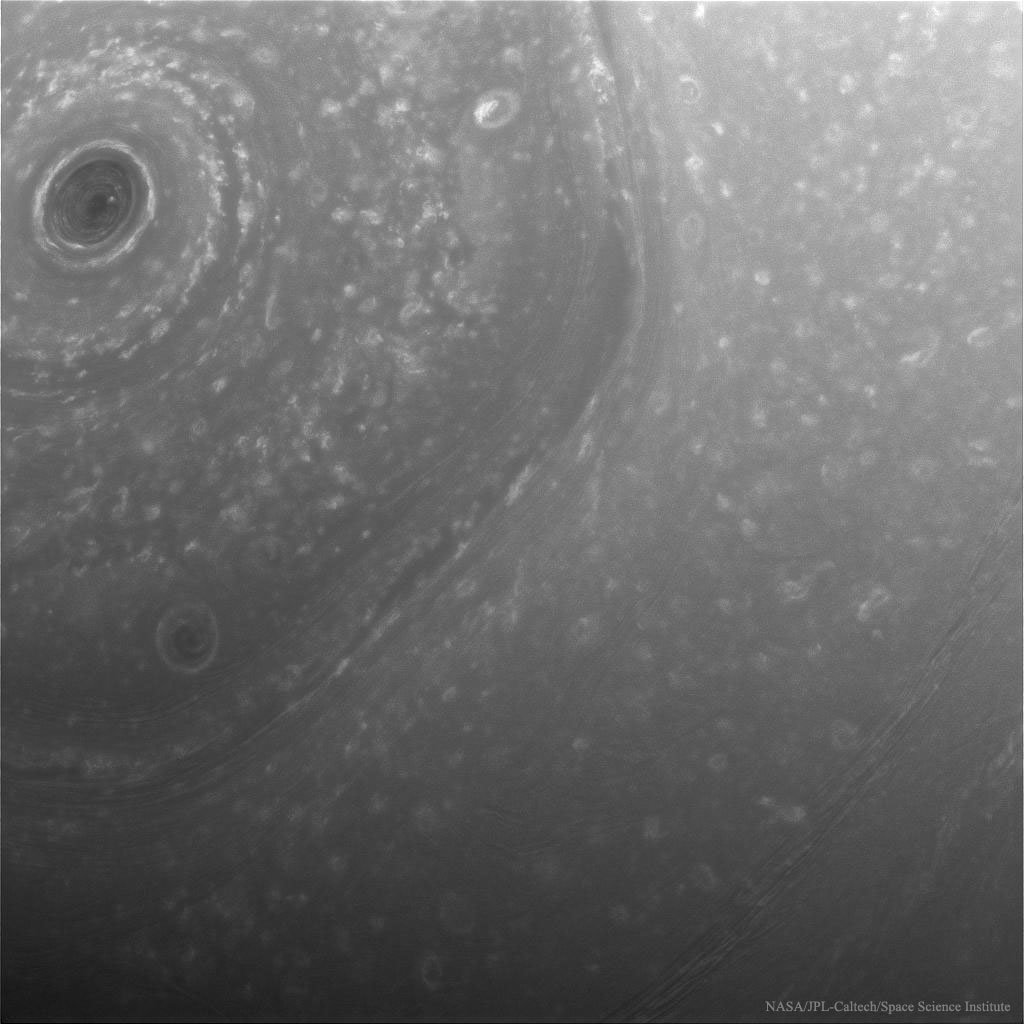
Explanation: The Cassini spacecraft's Grand Finale at Saturn has begun. The Grand Finale will allow Cassini to explore Saturn and some of Saturn's moons and rings in unprecedented detail. The first phase started two weeks ago when a close flyby of Titan changed Cassini's orbit into one that passes near Saturn's poles and just outside of Saturn's outermost F-ringFeatured here is an image taken during the first of Cassini's 20 week-long F-ring orbits around Saturn. Visible are the central polar vortex on the upper left, a hexagonal cloud boundary through the image center, and numerous light-colored turbulent storm systems. In 2017 April, Cassini will again use the gravity of Titan to begin a new series of 22 Proximal orbits -- trajectories that will take Cassini inside of Saturn's rings for the first time. Cassini's new science adventure is scheduled to end on 2017 September 17, though, when the robotic spacecraft will be directed into a dramatic mission-ending dive into Saturn's atmosphere.

2016-12-11

Palacios cariocas - Parque Lage

Construído pelo empresário e amante das artes Henrique Lage, em 1920, o palacete com inspiração romana já foi um dos locais de maior concentração cultural e social do Rio de Janeiro na época da sua inauguração, o casal Lage realizava algumas das festas e saraus mais animados da cidade.
Já no final da década de 1950, o proprietário encontrava-se endividado e o local acabou se tornando patrimônio do estado.
Desde 1975, funciona no local a Instituição de Ensino EAV, voltada ao ensino de artes.

Astronomy picture of the day - 2016 December 11 - The Extraordinary Spiral in LL Pegasi

See Explanation.  Clicking on the picture will download
 the highest resolution version available.
The Extraordinary Spiral in LL Pegasi 
Image Credit: ESAHubbleR. Sahai (JPL), NASA
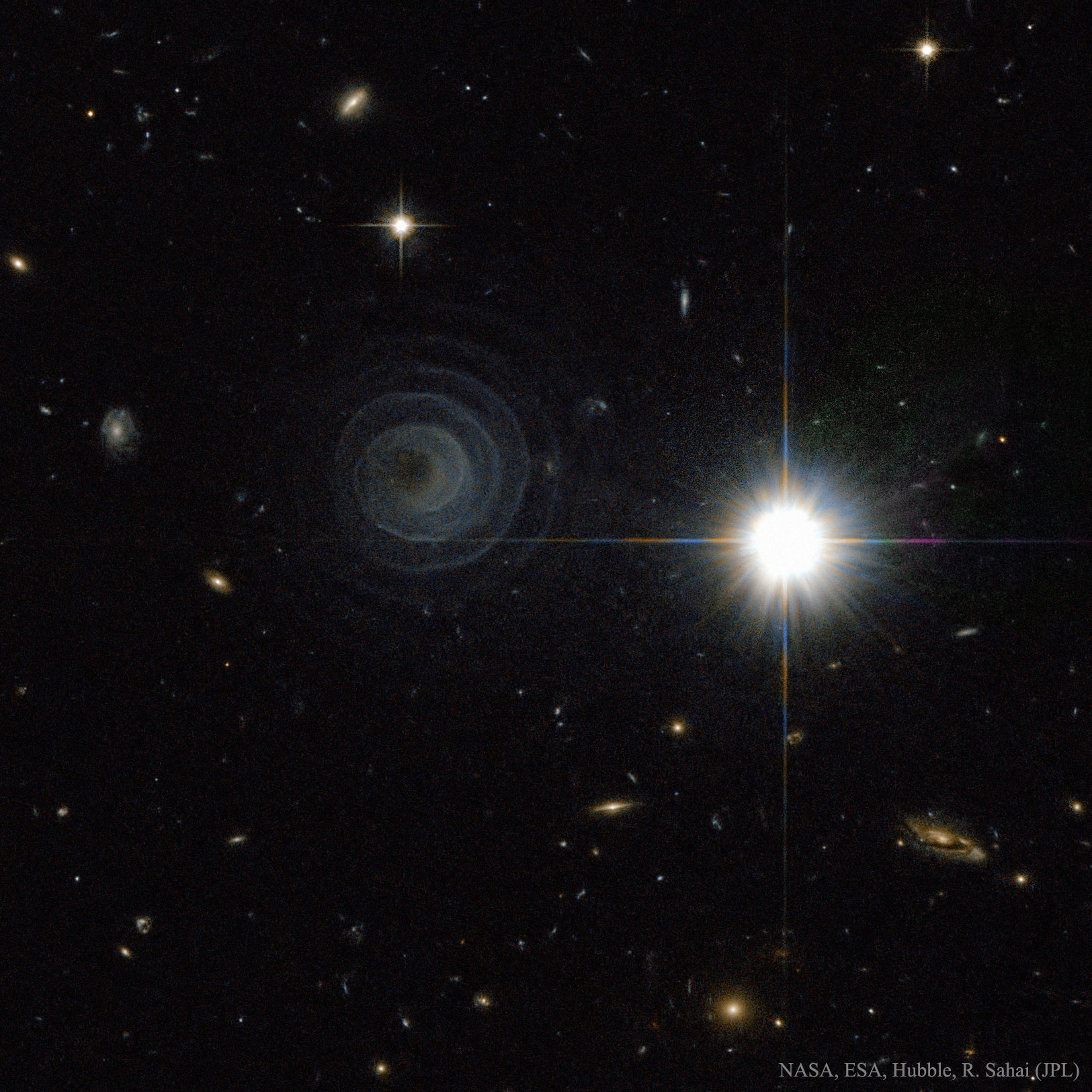
Explanation: What created the strange spiral structure on the left? No one is sure, although it is likely related to a star in a binary star system entering the planetary nebula phase, when its outer atmosphere is ejected. The huge spiralspans about a third of a light year across and, winding four or five complete turns, has a regularity that is without precedent. Given the expansion rate of the spiral gas, a new layer must appear about every 800 years, a close match to the time it takes for the two stars to orbit each other. The star system that created it is most commonly known as LL Pegasi, but also AFGL 3068. The unusual structure itself has been cataloged as IRAS 23166+1655. The featured image was taken in near-infrared light by the Hubble Space Telescope. Why the spiral glows is itself a mystery, with a leading hypothesis being illumination by light reflected from nearby stars.

Astronomy picture of the day - 2016 December 10 - The Lunar X -

See Explanation.  Clicking on the picture will download
 the highest resolution version available.
The Lunar X 
Image Credit & Copyright: Alessandro Marchini (Astronomical ObservatoryDSFTA - Univ. of Siena),
Liceo "Alessandro Volta" Student Astronomers
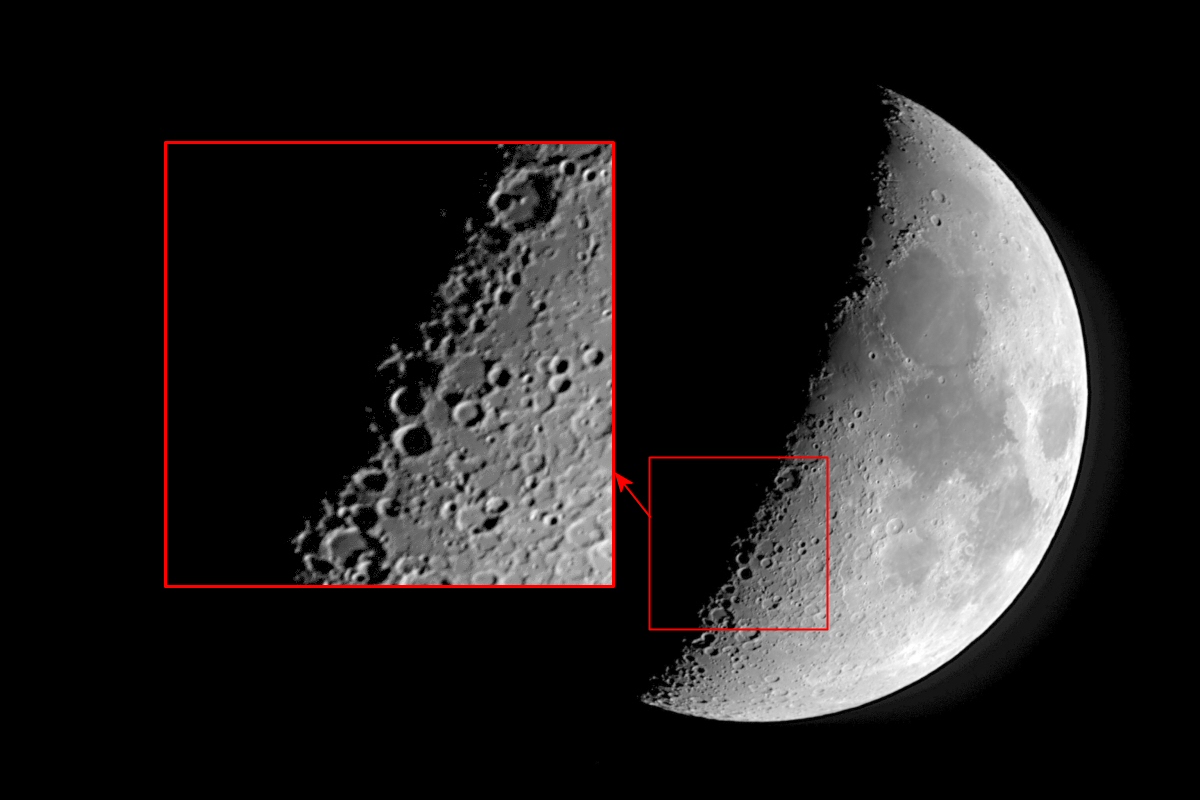
Explanation: The striking X appearing in this lunarscape is easily visible in binoculars or a small telescope. Yet, not too many have seen it. The catch is this lunar X is fleeting, only apparent in the hours before the Moon's first quarter phase. At the terminator, or shadow line between lunar day and night, the X illusion is produced by a configuration of the craters Blanchinus, La Caille and Purbach. Near the Moon's first quarter phase, an astronaut standing close to the craters' position would see the slowly rising Sun very near the horizon. Temporarily, the crater walls would be in sunlight while the crater floors were still in darkness. Seen from planet Earth, contrasting sections of bright walls against the dark floors by chance look remarkably like an X. This sharp image of the Lunar X was captured at approximately 16:45 UT on December 6, 2016. For extra credit, sweep your gaze along the lunar terminator and you can also spot the Lunar V.