"Vamos la saindo"
2016-12-26
Palacios cariocas - Palácio de São Cristóvão
Localizado no Parque da Quinta da Boa Vista, no Rio de Janeiro, este palácio tem bastante história para contar, foi a residência da família real portuguesa entre os anos de 1808 e 1821, passou a pertencer à família imperial brasileira de 1822 a 1889, foi a sede da primeira Assembleia Constituinte Republicana de 1889 a 1891 e, em 1892, se tornou a sede do Museu Nacional, função que exerce até hoje.
O Museu Nacional tem parceria com a Universidade Federal do Rio de Janeiro e é um dos mais importantes museus do país, sendo também o maior museu de história natural e antropológica da América Latina.
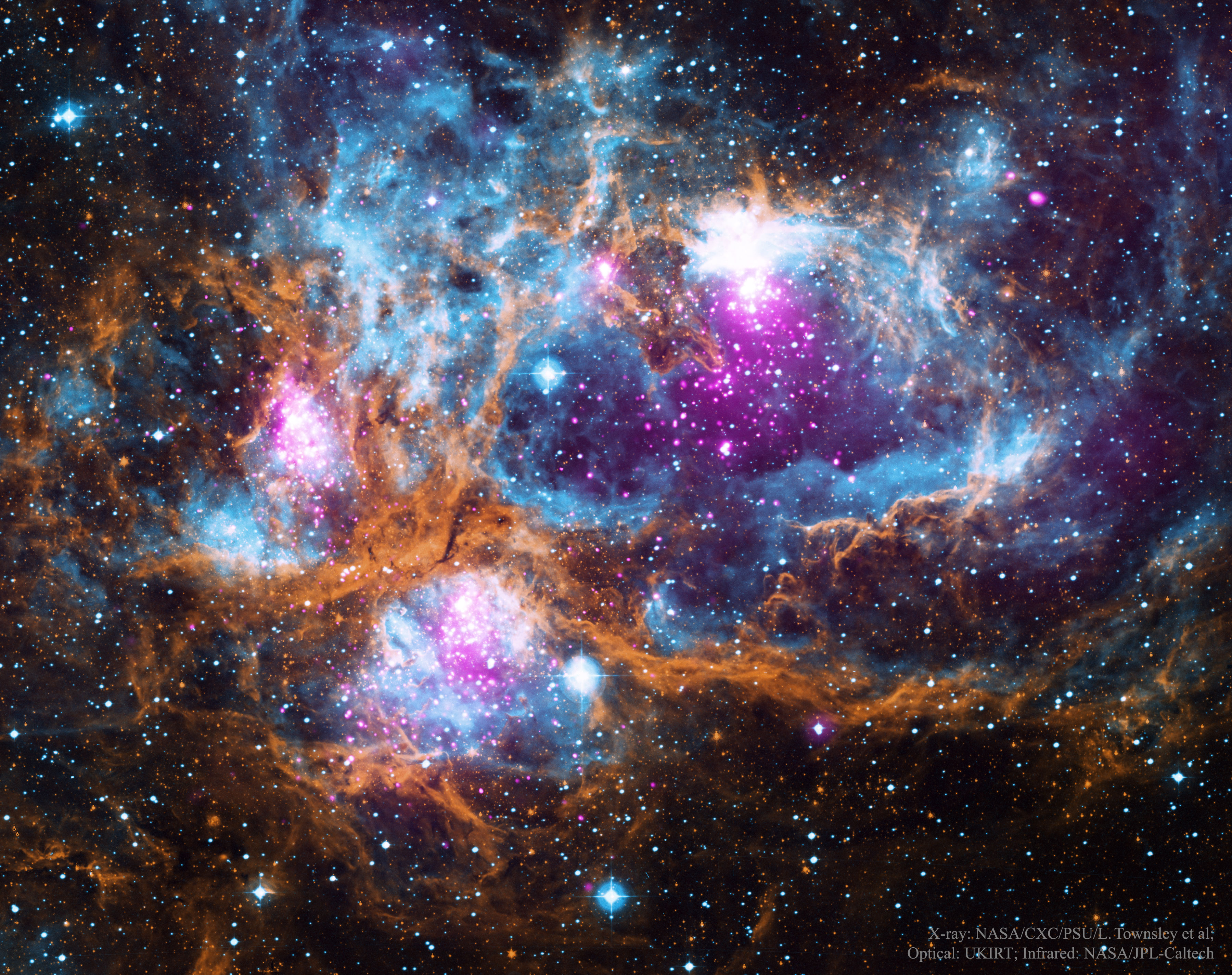
Astronomy picture of the day - 2016 December 26 - NGC 6357: Stellar Wonderland

Image Credit: X-ray: NASA/CXC/PSU/L. Townsley et al; Optical: UKIRT; Infrared: NASA/JPL-Caltech
Explanation: For reasons unknown, NGC 6357 is forming some of the most massive stars ever discovered. This complex wonderland of star formation consists of numerous filaments of dust and gas surrounding huge cavities ofmassive star clusters. The intricate patterns are caused by complex interactions between interstellar winds, radiation pressures, magnetic fields, and gravity. The featured image includes not only visible light taken by the UKIRT Telescope in Hawaii (blue) as part of the SuperCosmos Sky Surveys, but infrared light from NASA's orbiting Spitzer Space Telescope (orange) and X-ray light from NASA's orbiting Chandra X-ray Observatory (pink). NGC 6357spans about 100 light years and lies about 5,500 light years away toward the constellation of the Scorpion. Within 10 million years, the most massive stars currently seen in NGC 6357 will have exploded.
2016-12-25
Artigo - Avião militar russo despenha-se no mar Negro com 92 pessoas a bordo
Um avião militar russo que transportava 92 pessoas, incluindo o famoso coro militar Alexandrov, despenhou-se durante a madrugada pouco depois de descolar na zona do mar Negro, avança a imprensa russa, citando o Ministério da Defesa da Rússia. Os destroços do avião terão sido encontrados no mar Negro.
No avião seguiam 84 passageiros e oito tripulantes. O aparelho partiu às 05:40 (02:40 em Lisboa) de Adler, na zona balnear de Sochi, na costa do Mar Negro, e realizava um voo de rotina para a base russa Hmeimim, na costa da cidade síria de Latakia, quando desapareceu dos radares. Entre os passageiros estariam ainda vários jornalistas russos.
Segundo a televisão Al Jazeera, o avião estaria em Socchi a reabastecer e as condições meterológicas eram praticamente ideais quando descolou. Dois minutos depois de o fazer terá desaparecido dos radares, sem enviar qualquer pedido de ajuda ou alerta. Os destroços terão sido encontrados a cerca de seis quilómetros da costa.
O avião militar voava para a Síria, onde o coro da Exército russo tinha agendado um concerto de ano novo para os militares russos no terreno.
“Fragmentos do avião Tu-154 do Ministério da Defesa russa foram encontrados a 1,5 quilómetros da costa da cidade de Sochi, no Mar Negro, a uma profundidade entre 50 e 70 metros”, indicou o ministério.
Observador - Portugal
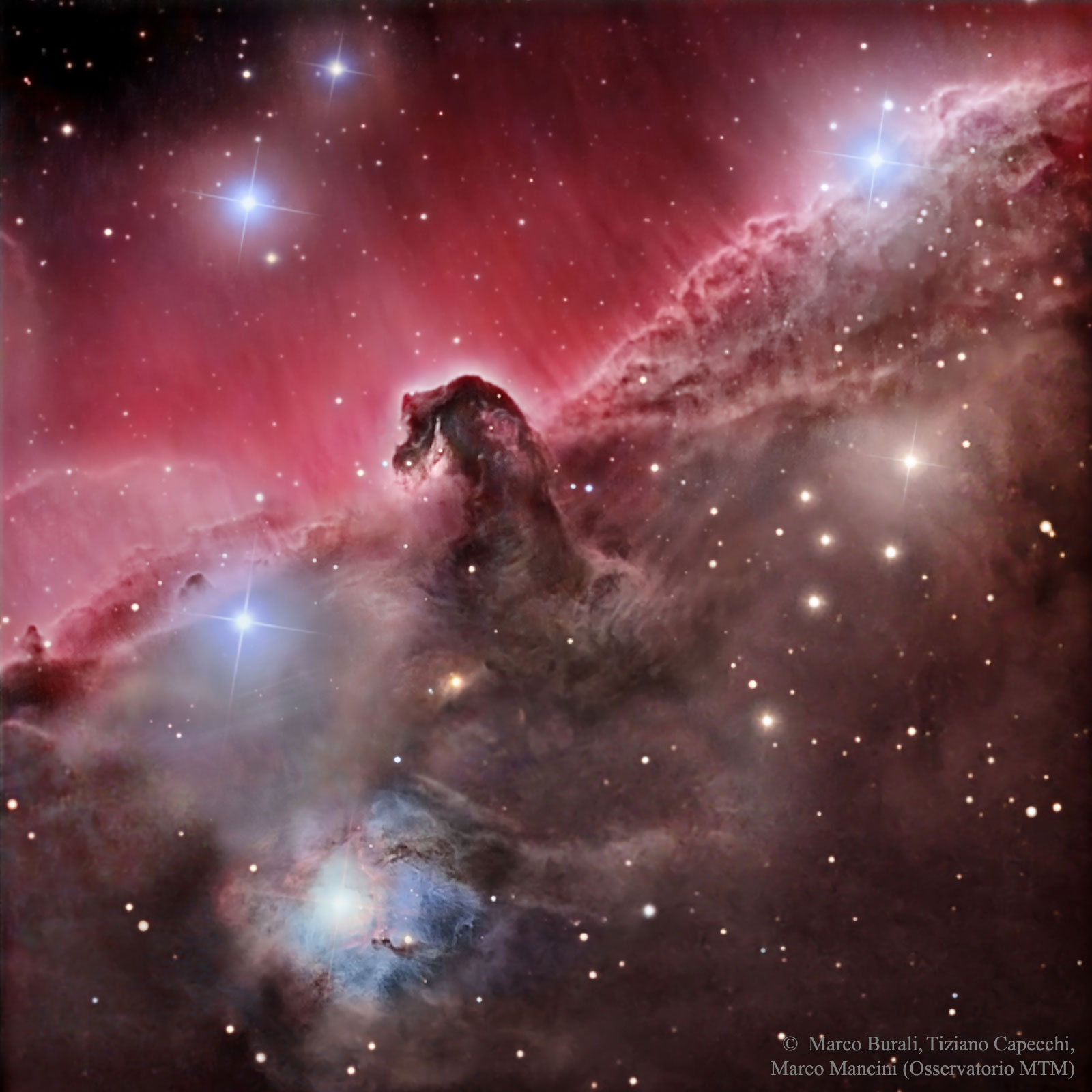
Astronomy picture of the day - 2016 December 25 - The Magnificent Horsehead Nebula

Image Credit & Copyright: Marco Burali, Tiziano Capecchi, Marco Mancini (Osservatorio MTM)
Explanation: Sculpted by stellar winds and radiation, a magnificent interstellar dust cloud by chance has assumed this recognizable shape. Fittingly named the Horsehead Nebula, it is some 1,500 light-years distant, embedded in the vast Orion cloud complex. About five light-years "tall", the dark cloud is cataloged as Barnard 33 and is visible only because its obscuring dust is silhouetted against the glowing red emission nebula IC 434. Stars are forming within the dark cloud. Contrasting blue reflection nebula NGC 2023, surrounding a hot, young star, is at the lower left. The gorgeous color image combines both narrowband and broadband images recorded using three different telescopes.
Texto - Um Natal feliz e sereno
Não havia escuridão porque a serena lua nova tinha invadido os espaços contigüos ao que se chama solidão. Brilhava a lua e não só; estavam radiantes Nana, Meyya, Petite Minie e Haïzé.
Tempo explêndido que convidou à festa.
A felicidade espelhava-se, também no rosto dos menos juvenis como o meu, Julia, mas também nos da Sofia e Mariana.
Todos tivemos presente os Amigos que já não estão. Rendemo-lhes homenagem pelo pensamento. E não esquecemos os familiares cuja alma estará sempre presente no nosso coração.
Claro que não esquecemos os seres amados que connosco continuam felizmente presentes.
25-12-2016
JoanMira
2016-12-24
Jacques Offenbach - "Ouverture La Belle Hélène" - Video - Musique - Live
"Ouverture La Belle Hélène"
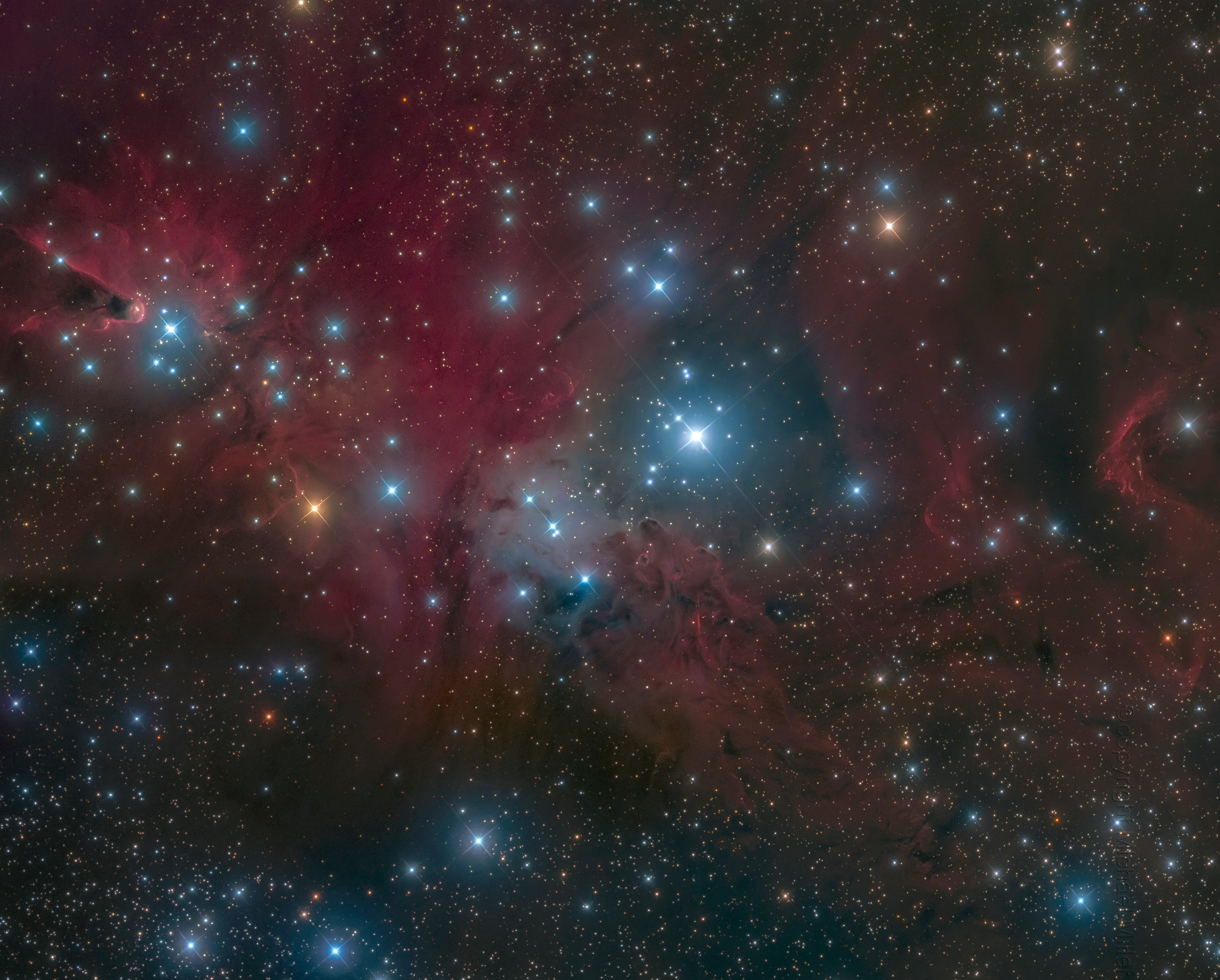
Astronomy picture of the day - 2016 December 24 - Fox Fur, Unicorn, and Christmas Tree

Image Credit & Copyright: Michael Miller, Jimmy Walker
Explanation: Clouds of glowing hydrogen gas fill this colorful skyscape in the faint but fanciful constellation Monoceros, the Unicorn. A star forming region cataloged as NGC 2264, the complex jumble of cosmic gas and dust is about 2,700 light-years distant and mixes reddish emission nebulae excited by energetic light from newborn stars with dark interstellar dust clouds. Where the otherwise obscuring dust clouds lie close to the hot, young stars they also reflect starlight, forming blue reflection nebulae. The tall, telescopic mosaic image stands up about 3/4 degree or nearly 1.5 full moons, covering 40 light-years at the distance of NGC 2264. Its cast of cosmic characters includes the the Fox Fur Nebula, whose dusty, convoluted pelt lies just left of center, bright variable star S Monocerotis immersed in the blue-tinted haze right of the Fox Fur, and the Cone Nebula pointing down from the top of the frame. Of course, the stars of NGC 2264 are also known as the Christmas Tree star cluster. The triangular tree shape traced by the stars has its apex at the Cone Nebula. The tree's broader base is centered near S Monocerotis.
2016-12-23
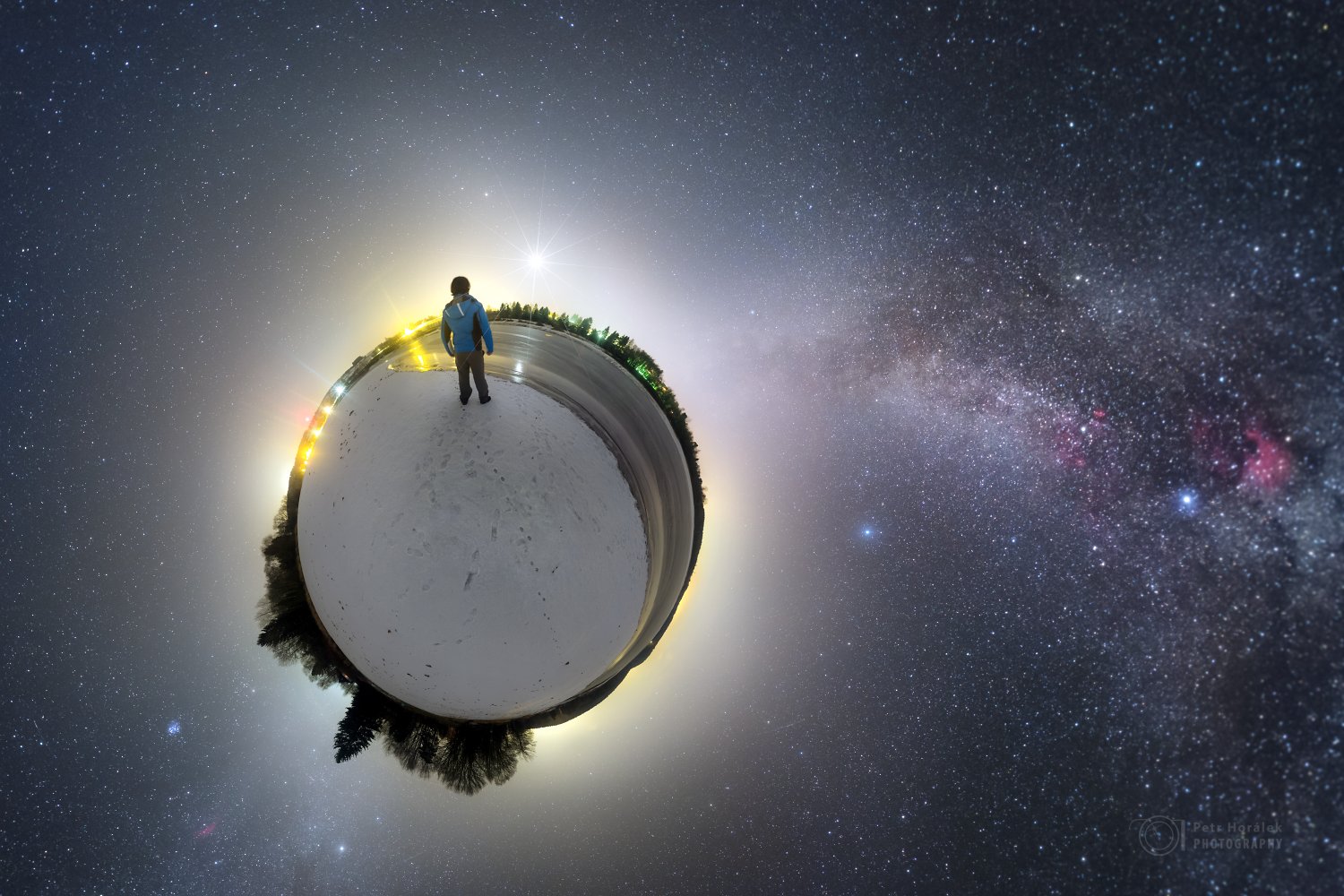
Astronomy picture of the day - 2016 December 23 - Once Upon a Solstice Eve

Image Credit & Copyright: Petr Horálek
Explanation: Once upon a solstice eve a little prince gazed across a frozen little planet at the edge of a large galaxy. The little planet was planet Earth of course, seen in this horizon to horizon, nadir to zenith projection, a digitally stitched mosaic from the shores of the Sec reservoir in the Czech Republic. So the large galaxy must be the Milky Way, and the brightest beacon on the planet's horizon Venus, visible around the globe as this season's brilliant evening star. Celestial treasures in surrounding dark skies include the Pleiades star cluster, and the North America nebula found along a dusty galactic rift. Embracing Venus, Zodiacal light traces a faint band across the night, but the more colorful pillars of light shine above streets a little closer to home.
Inscription à :
Commentaires (Atom)