2017-02-15

Adriano Correia de Oliveira - "Rosinha" - Slides - Musica

Résultat de recherche d'images pour "image Adriano Correia de Oliveira"
"Rosinha"

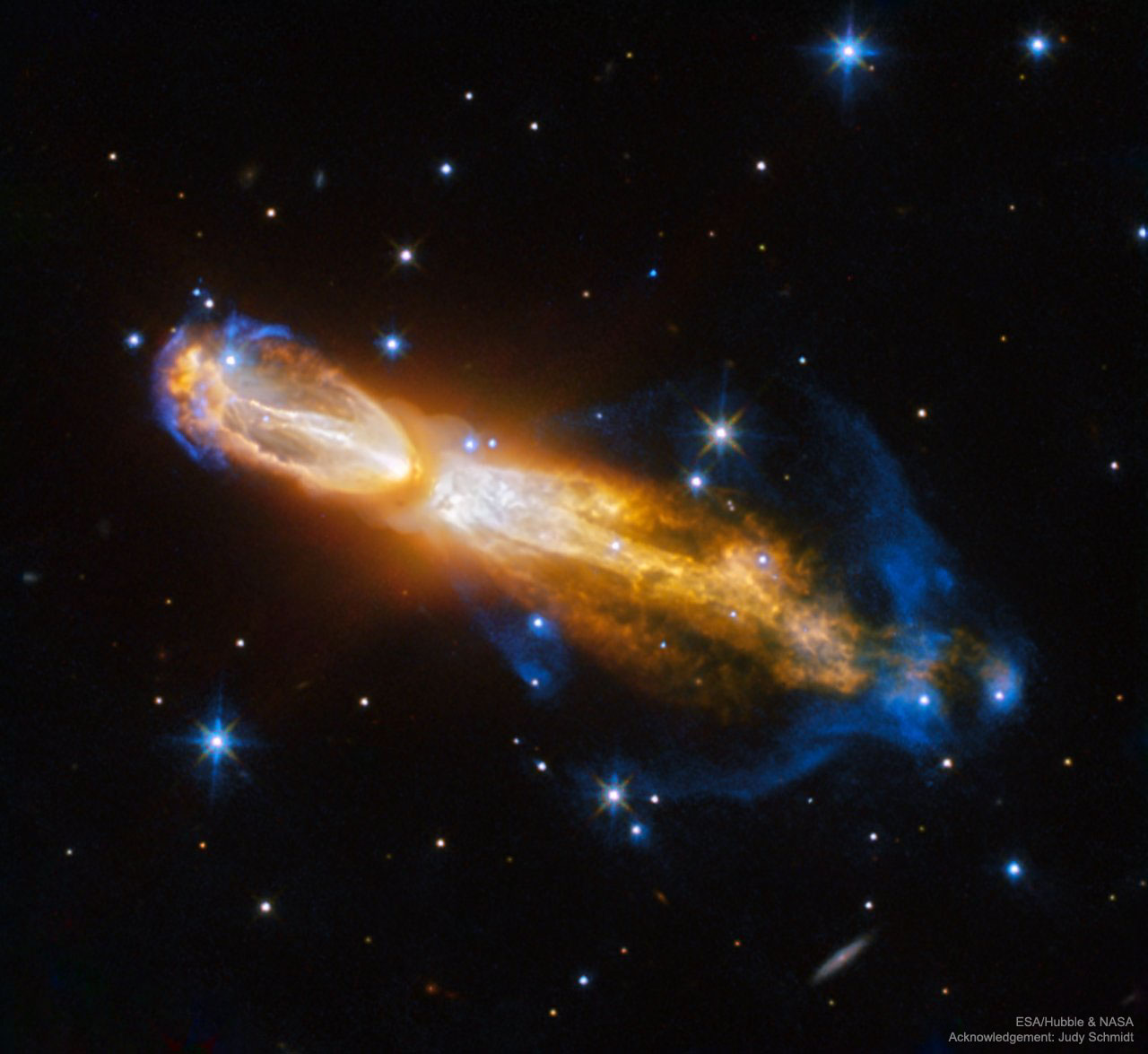
Astronomy picture of the day - 2017 February 15 - The Calabash Nebula from Hubble

See Explanation.  Clicking on the picture will download
 the highest resolution version available.
The Calabash Nebula from Hubble 
Image Credit: NASAESAHubbleMASTAcknowledgement: Judy Schmidt
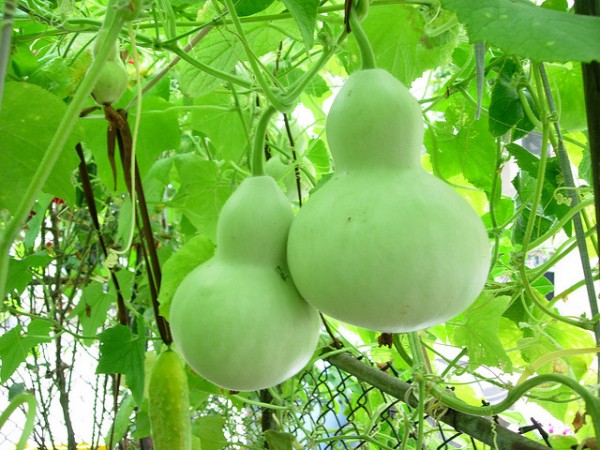
Explanation: Fast expanding gas clouds mark the end for a central star in the Calabash Nebula. The once-normal star has run out of nuclear fuel, causing the central regions to contract into a white dwarf. Some of the liberated energy causes the outer envelope of the star to expand. In this case, the result is a photogenic proto-planetary nebula. As the million-kilometer per hour gas rams into the surrounding interstellar gas, a supersonic shock front forms whereionized hydrogen and nitrogen glow blue. Thick gas and dust hide the dying central star. The Calabash Nebula, also known as the Rotten Egg Nebula and OH231.8+4.2, will likely develop into a full bipolar planetary nebula over the next 1000 years. The nebula, featured here, is about 1.4 light-years in extent and located about 5000 light-years away toward the constellation of Puppis.

2017-02-14

Fotografia - Lisboa Nocturna - Praça do Rossio

09_Estudio_Horacio_Novais_Praca_do_Rossio_4_Lisboa_sem_data_09.jpg
Estúdio Horácio Novais, Praça do Rossio, Lisboa, sem data Colecções da Fundação Calouste Gulbenkian, Lisboa, Portugal (Flickr Commons)

Expressões populares portuguesas - Coisas do Arco-da-Velha


Résultat de recherche d'images pour "image - Arco-da-Velha"

Significado: Coisas inacreditáveis, absurdas, espantosas, inverosímeis. 

Origem: A expressão tem origem no Antigo Testamento; arco-da-velha é o arco-íris, ou arco-celeste, e foi sinal do pacto que Deus fez com Noé: "Estando o arco nas nuvens, Eu ao vê-lo recordar-Me-ei da aliança eterna concluída entre Deus e todos os seres vivos de toda a espécie que há na terra." (Génesis 9:16) Arco-da-velha é uma simplificação de Arco da Lei Velha, uma referência à Lei Divina. Há também diversas histórias populares que defendem outra origem da expressão, como a da existência de uma velha no arco-íris, sendo a curvatura do arco a curvatura das costas provocada pela velhice, ou devido a uma das propriedades mágicas do arco-íris - beber a água num lugar e enviá-la para outro, pelo que velha poderá ter vindo do italiano bere (beber).

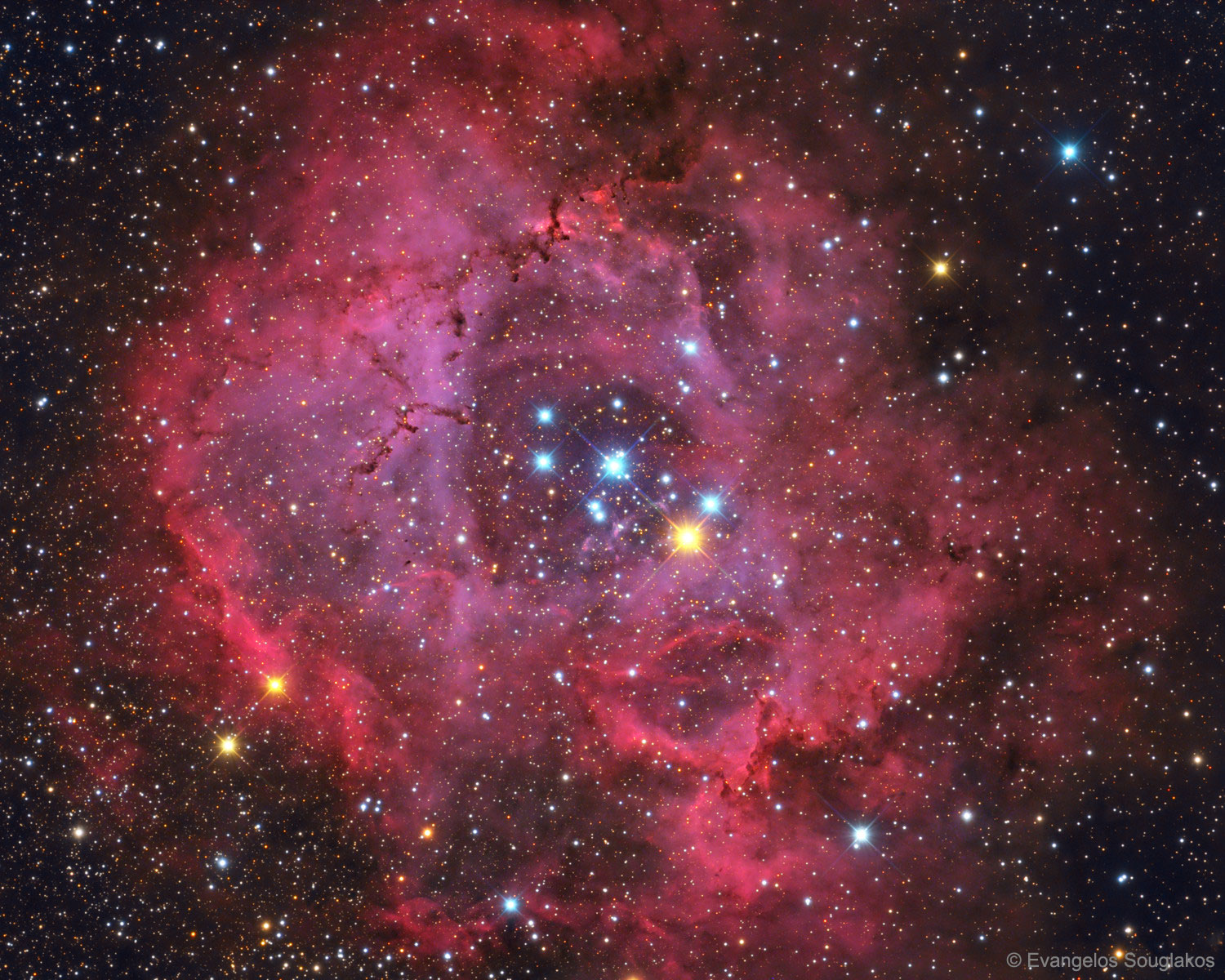
Astronomy picture of the day - 2017 February 14 - The Rosette Nebula

See Explanation.  Clicking on the picture will download
 the highest resolution version available.
The Rosette Nebula 
Image Credit & Copyright: Evangelos Souglakos
Explanation: Would the Rosette Nebula by any other name look as sweet? The bland New General Catalog designation of NGC 2237 doesn't appear to diminish the appearance of this flowery emission nebula. Inside the nebula lies an open cluster of bright young stars designated NGC 2244. These stars formed about four million years ago from the nebular material and their stellar winds are clearing a hole in the nebula's center, insulated by a layer of dust and hot gas. Ultraviolet light from the hot cluster stars causes the surrounding nebula to glow. The Rosette Nebula spans about 100 light-years across, lies about 5000 light-years away, and can be seen with a small telescope towards theconstellation of the Unicorn (Monoceros).

Rui Veloso & Luz Casal - "Inesperadamente" - Video - Musica - En vivo

Résultat de recherche d'images pour "image - Rui Veloso & Luz Casal"
"Inesperadamente"

2017-02-13

Fotografia - Lisboa nocturna - Estação do Rossio

10_Estudio_Horacio_Novais_Estacao_do_Rossio_sem_data_10.jpg
Estúdio Horácio Novais, Estação do rossio, Lisboa, sem data Colecções daFundação Calouste Gulbenkian, Lisboa, Portugal (Flickr Commons)

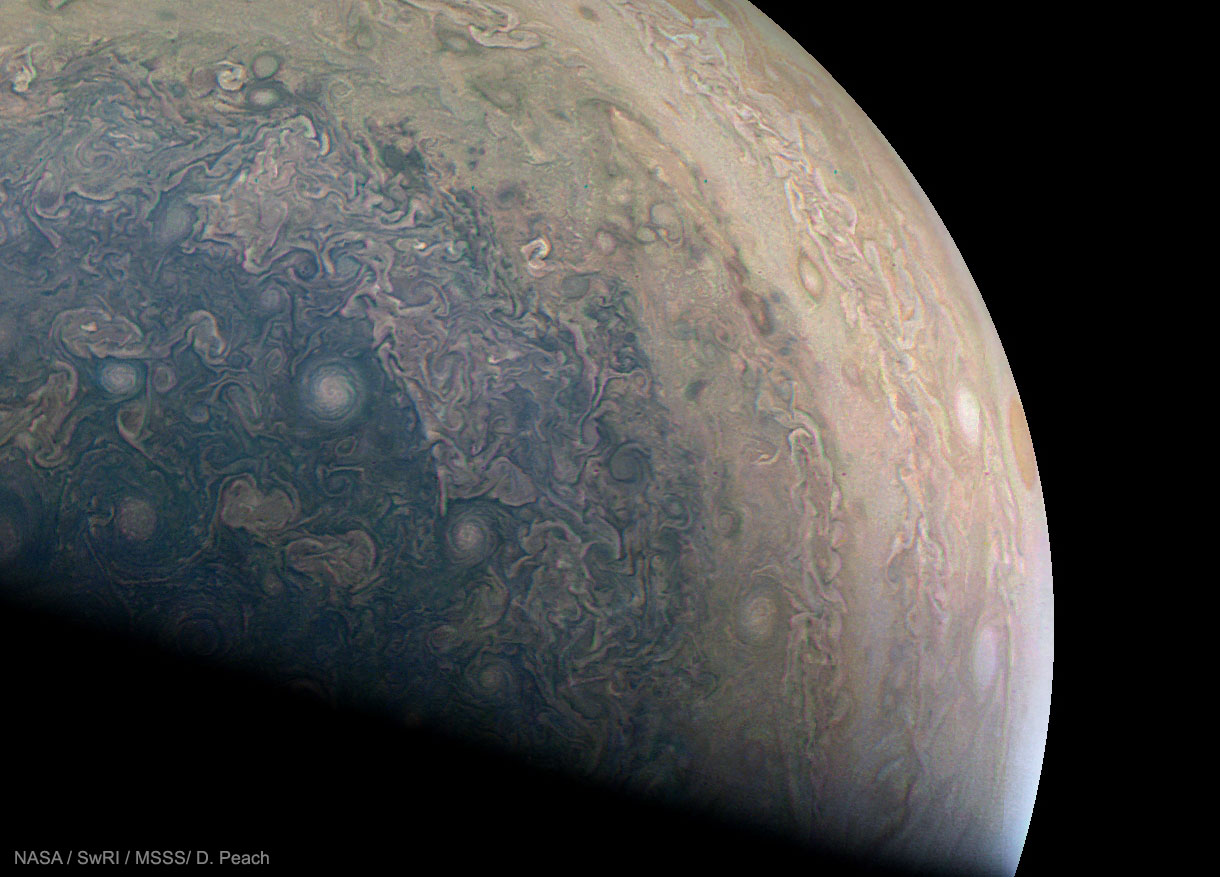
Astronomy picture of the day - 2017 February 13 - Cloud Swirls around Southern Jupiter from Juno

See Explanation.  Clicking on the picture will download
 the highest resolution version available.
Cloud Swirls around Southern Jupiter from Juno 
Image Credit: NASAJPL-CaltechSwRIMSSSProcessing: Damian Peach
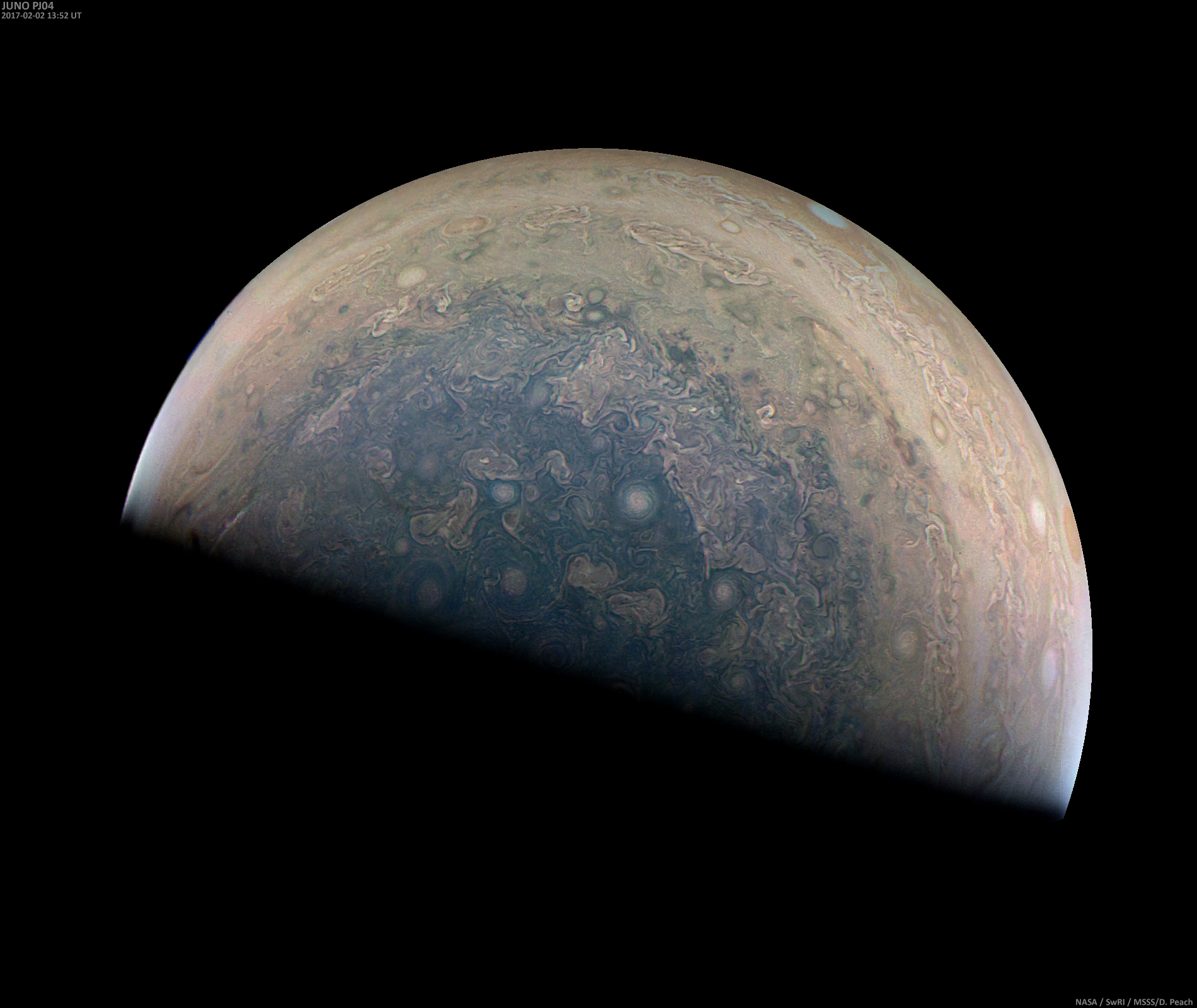
Explanation: Juno just completed its fourth pass near Jupiter. Launched from Earth in 2011 and arriving at Jupiter just last July, robotic Juno concluded its latest elliptical orbit around our Solar System's largest planet 11 days ago.Pictured here from that pass is a new high-resolution image of the southern hemisphere of Jupiter featuring a mesmerizing tapestry of swirling cloud systems. The terminator between day and night cuts diagonally across the bottom, meaning that the Sun is positioned off the top right. Large Oval BA is visible in orange on the far right. Reasons for the details and colors of Jupiter's cloud swirls are currently unknown. Juno planned six year mission will study Jovian giant in new ways, including trying to determine if beneath its thick clouds, Jupiter has a solid core.

2017-02-12

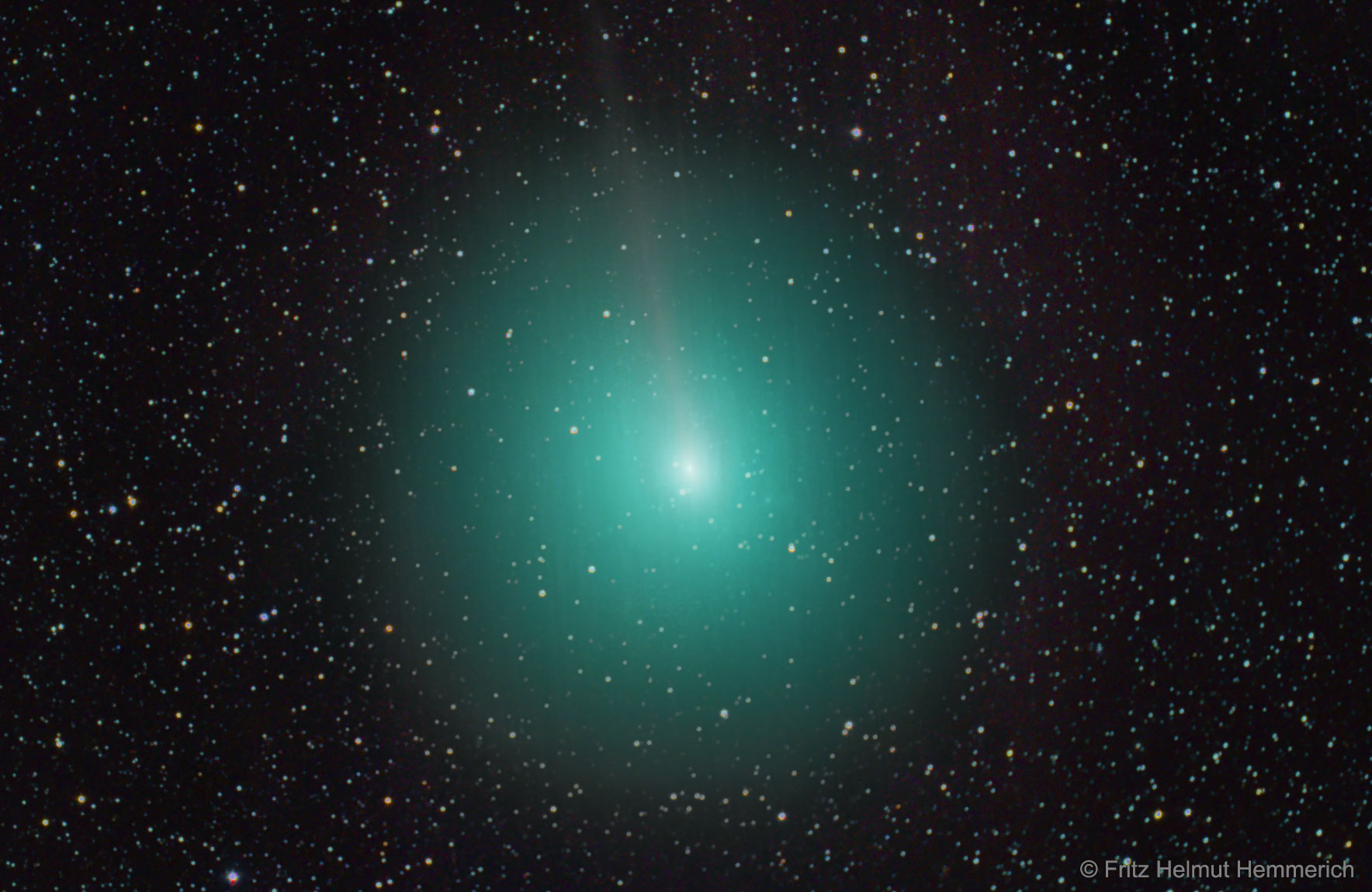
Astronomy picture of the day - 2017 February 12 - Comet 45P Passes Near the Earth

See Explanation.  Clicking on the picture will download
 the highest resolution version available.
Comet 45P Passes Near the Earth 
Image Credit & Copyright: Fritz Helmut Hemmerich
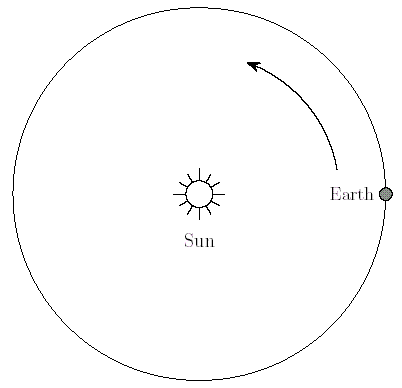
Explanation: A large snowball has just passed the Earth. Known as Comet 45P/Honda–Mrkos–Pajdušáková", or 45P for short, the comet came 10 times closer to Earth yesterday than the Earth ever gets to the Sun. During this passage, the comet was photographed sporting a thin ion tail and a faint but expansive green coma. The green color is caused mostly by energized molecules of carbon. Comet 45P became just bright enough to see with the unaided eyewhen it came closest to the Sun in December. Now, however, the comet is fading as it heads back out to near the orbit of Jupiter, where it spends most of its time. The kilometer-sized nucleus of ice and dirt will return to the inner Solar System in 2022.

2017-02-11

Astronomy picture of the day - 2017 February 11 - Solar System Portrait

See Explanation.  Clicking on the picture will download
 the highest resolution version available.
Solar System Portrait 
Image Credit: Voyager ProjectNASA


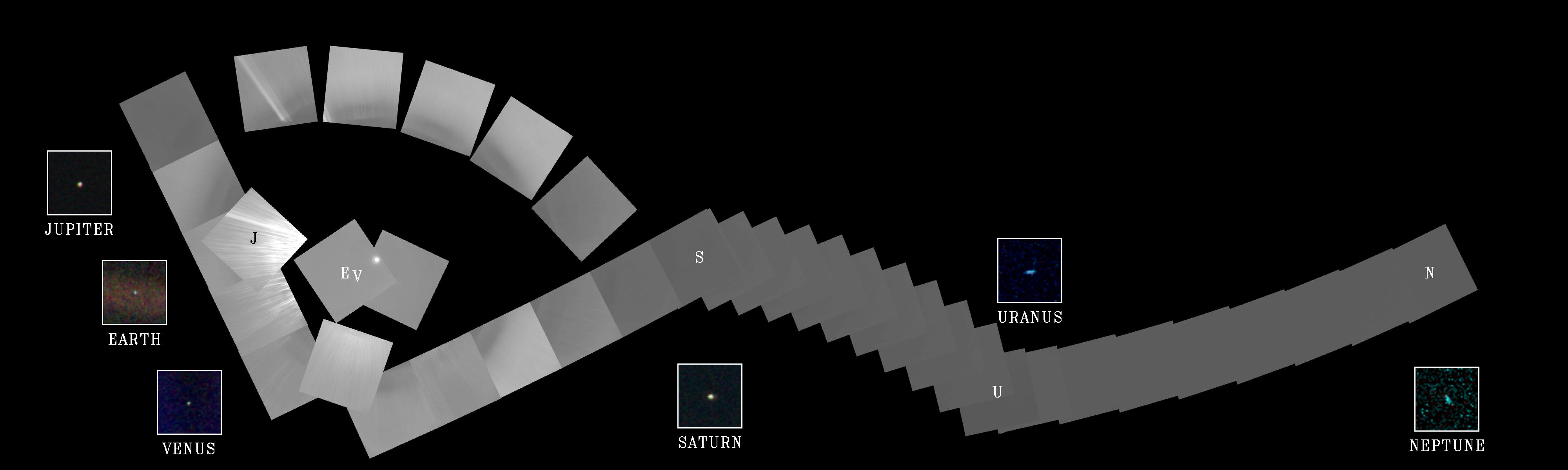
Explanation: On Valentine's Day in 1990, cruising four billion miles from the Sun, the Voyager 1 spacecraft looked back one last time to make this first ever Solar System family portrait. The complete portrait is a 60 frame mosaicmade from a vantage point 32 degrees above the ecliptic plane. In it, Voyager's wide angle camera frames sweep through the inner Solar System at the left, linking up with gas giant Neptune, the Solar System's outermost planet, at the far right. Positions for Venus, Earth, Jupiter, Saturn, Uranus, and Neptune are indicated by letters, while the Sun is the bright spot near the center of the circle of frames. The inset frames for each of the planets are from Voyager's narrow field camera. Unseen in the portrait are Mercury, too close to the Sun to be detected, and Mars, unfortunately hidden by sunlight scattered in the camera's optical system. Closer to the Sun than Neptune at the time, small, faint Pluto's position was not covered.