2017-04-09

Astronomy picture of the day - 2017 April 9 - Comet Hale-Bopp Over Val Parola Pass

See Explanation.  Clicking on the picture will download
 the highest resolution version available.
Comet Hale-Bopp Over Val Parola Pass 
Image Credit & Copyright: A. Dimai, (Col Druscie Obs.), AAC
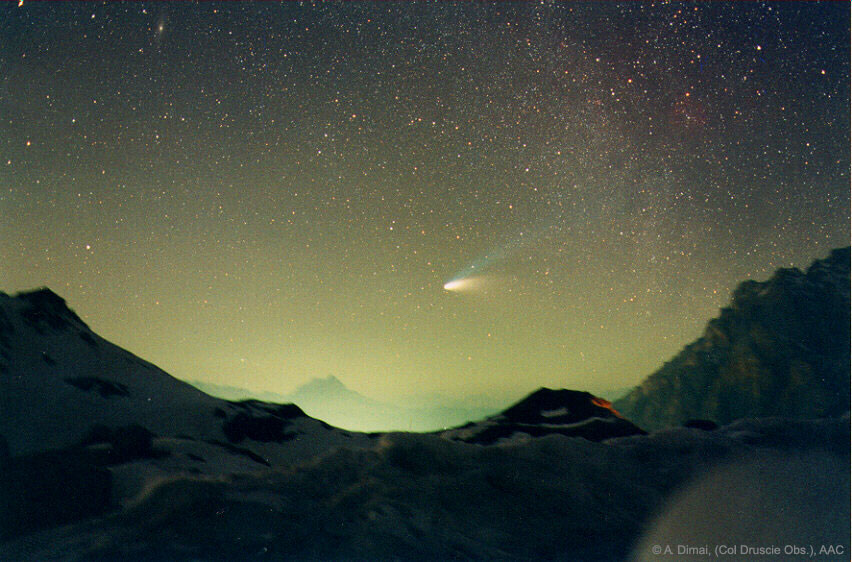
Explanation: Comet Hale-Bopp, the Great Comet of 1997, became much brighter than any surrounding stars. It was seen even over bright city lights. Away from city lights, however, it put on quite a spectacular show. Here Comet Hale-Bopp was photographed above Val Parola Pass in the Dolomite mountains surrounding Cortina d'AmpezzoItalyComet Hale-Bopp's blue ion tail, consisting of ions from the comet's nucleus, is pushed out by the solar wind. The white dust tail is composed of larger particles of dust from the nucleus driven by the pressure of sunlight, that orbit behind the comet. Comet Hale-Bopp (C/1995 O1) remained visible to the unaided eye for 18 months -- longer than any other comet in recorded history. This year marks the 20th anniversary of Comet Hale-Bopp's last trip to the inner Solar System. The large comet is next expected to return around the year 4385.

2017-04-08

Astronomy picture of the day - 2017 April 8 - Zeta Oph: Runaway Star

See Explanation.  Clicking on the picture will download
 the highest resolution version available.
Zeta Oph: Runaway Star 
NASAJPL-CaltechSpitzer Space Telescope


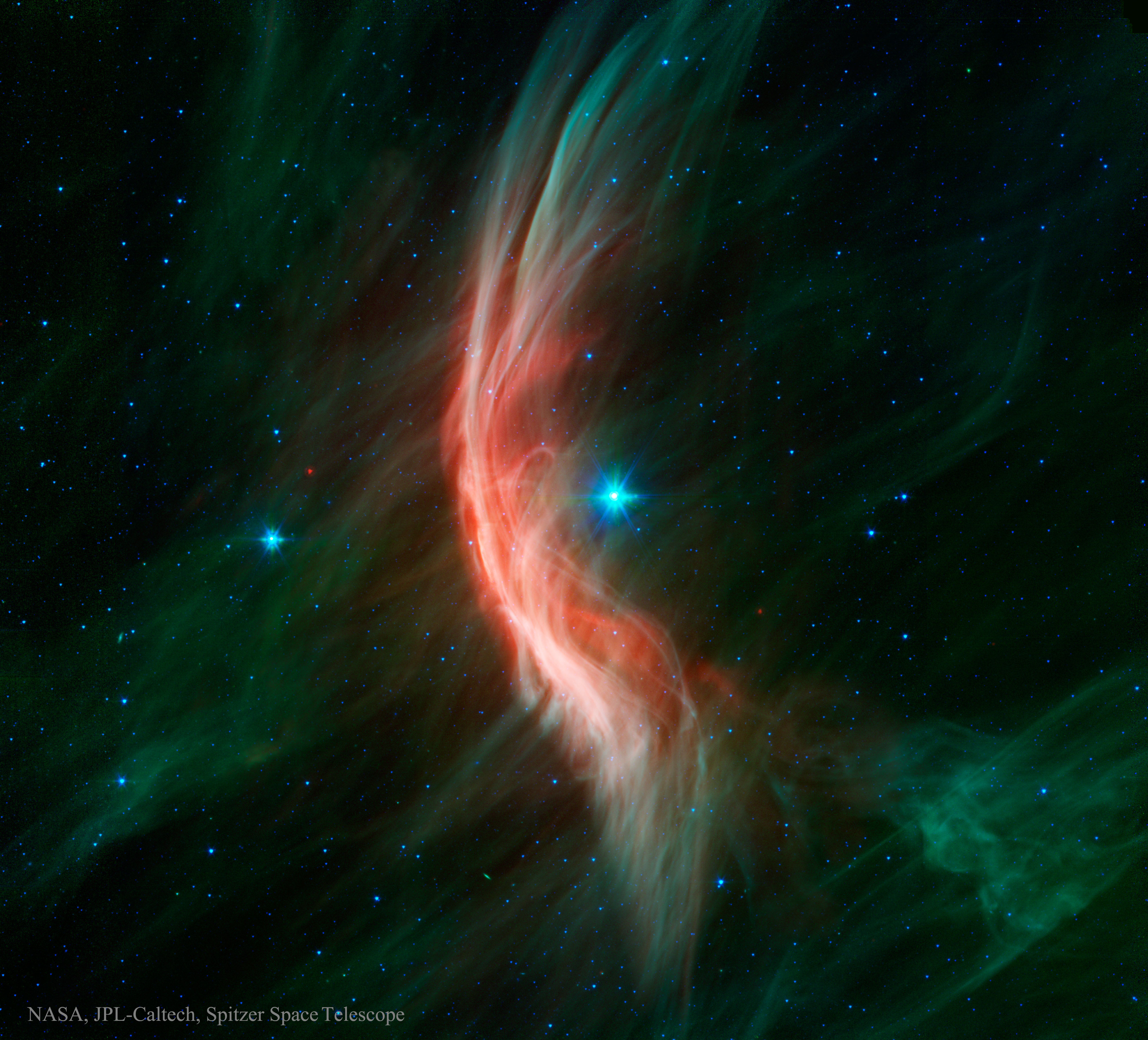
Explanation: Like a ship plowing through cosmic seas, runaway star Zeta Ophiuchi produces the arcing interstellar bow wave or bow shock seen in this stunning infrared portrait. In the false-color view, bluish Zeta Oph, a star about 20 times more massive than the Sun, lies near the center of the frame, moving toward the left at 24 kilometers per second. Its strong stellar wind precedes it, compressing and heating the dusty interstellar material and shaping the curved shock front. What set this star in motion? Zeta Oph was likely once a member of a binary star system, its companion star was more massive and hence shorter lived. When the companion exploded as a supernova catastrophically losing mass, Zeta Oph was flung out of the system. About 460 light-years away, Zeta Oph is 65,000 times more luminous than the Sun and would be one of the brighter stars in the sky if it weren't surrounded by obscuring dust. The image spans about 1.5 degrees or 12 light-years at the estimated distance of Zeta Ophiuchi.

2017-04-07

Astronomy picture of the day - 2017 April 7 - Castle Eye View

See Explanation.
Moving the cursor over the image will bring up an annotated version.
Clicking on the image will bring up the highest resolution version
available.
Castle Eye View 
Image Credit & CopyrightStephane Vetter (Nuits sacrees, TWAN)
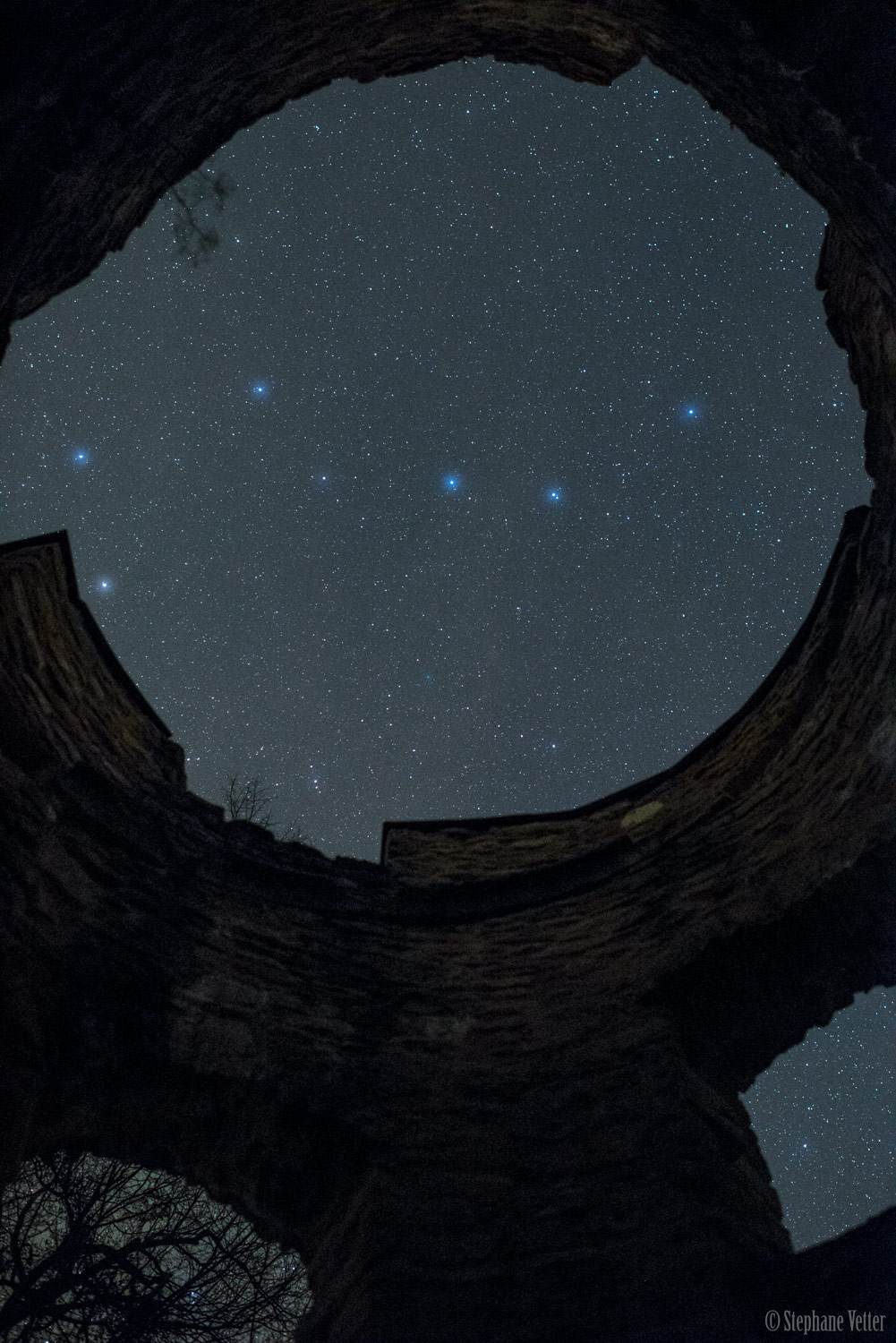
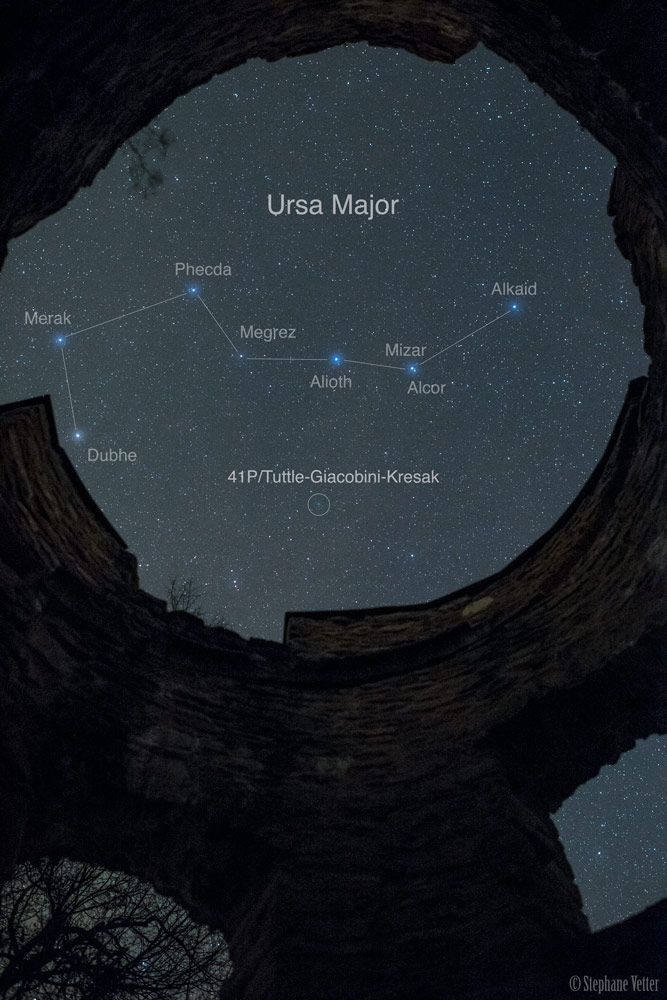
Explanation: The best known asterism in northern skies, The Big Dipper is easy to recognize, even when viewed upside down, though some might see a plough or wagon. The star names and the familiar outlines appear framed in the ruined tower walls of the French Chateau du Morimont if you just slide your cursor over the image or follow this linkDubhe, alpha star of the dipper's parent constellation Ursa Major is at the lower left. Together with beta star Merakthe two form a line pointing the way to Polaris and the North Celestial Pole, hidden from view by the stones. Since the image was captured on March 30, you can follow a line from dipper stars Phecda and Megrez to spot the faint greenish glow of Comet 41P/Tuttle-Giacobini-Kresak below center, still within the castle eye view. The periodic comet made a remarkable close approach to planet Earth on April 1.

Pedro Abrunhosa - "Se eu fosse um dia o teu olhar" - Video - Musica - Ao vivo

Résultat de recherche d'images pour "imagens pedro abrunhosa"
"Se eu fosse um dia o teu olhar"

2017-04-06

Astronomy picture of the day - 2017 April 6 - Filaments of Active Galaxy NGC 1275

See Explanation.  Clicking on the picture will download
 the highest resolution version available.
Filaments of Active Galaxy NGC 1275 
Image Credit: Hubble Legacy ArchiveESANASAProcessing & Copyright: Domingo Pestana
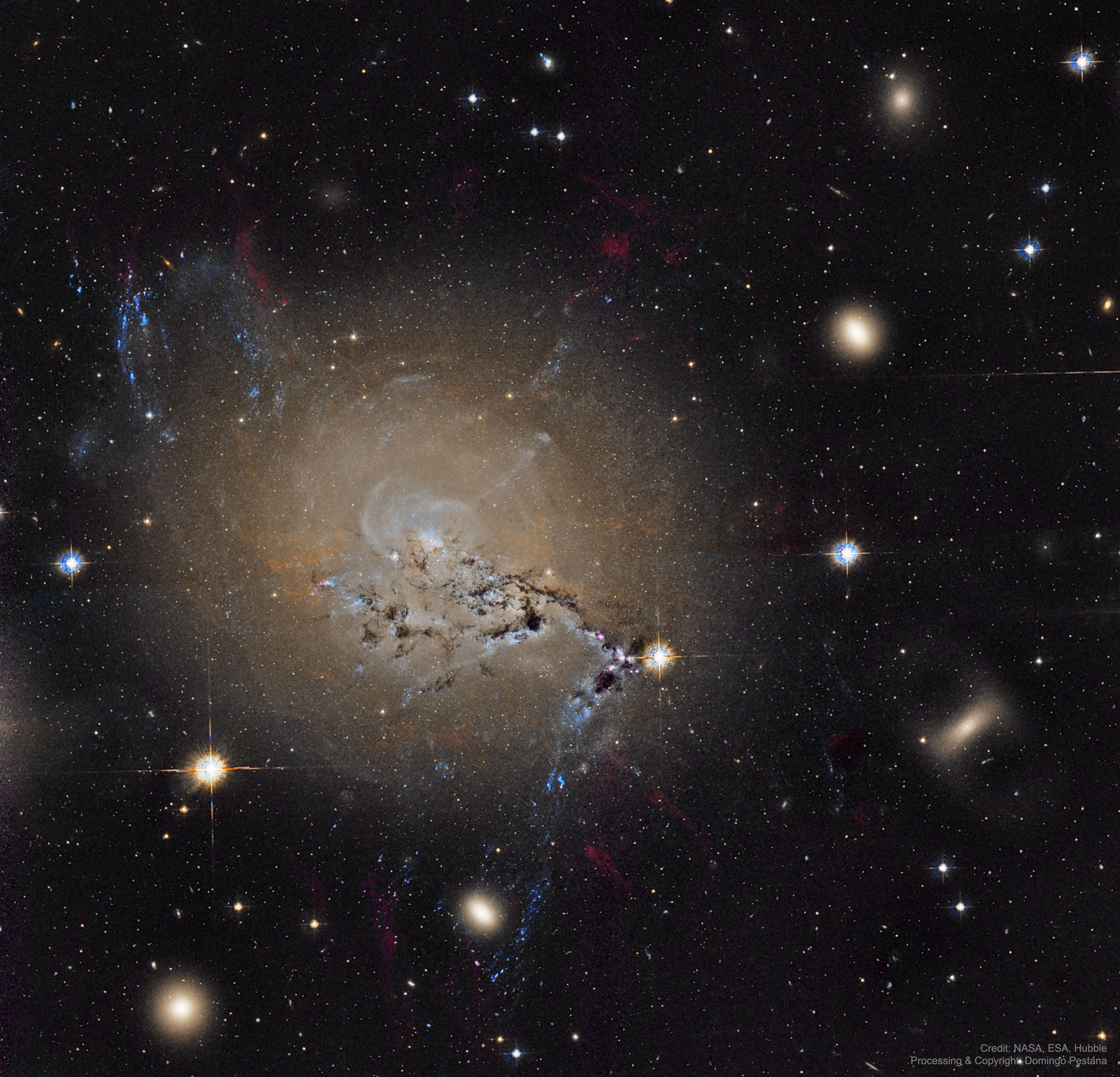
Explanation: What keeps these filaments attached to this galaxy? The filaments persist in NGC 1275 even though the turmoil of galactic collisions should destroy them. First, active galaxy NGC 1275 is the central, dominant member of the large and relatively nearby Perseus Cluster of Galaxies. Wild-looking at visible wavelengths, the active galaxy is also a prodigious source of x-rays and radio emission. NGC 1275 accretes matter as entire galaxies fall into it, ultimately feeding a supermassive black hole at the galaxy's core. This composite image, recreated from archival Hubble Space Telescope data, highlights the resulting galactic debris and filaments of glowing gas, some up to 20,000 light-years long. Observations indicate that the structures, pushed out from the galaxy's center by the black hole's activity, are held together by magnetic fields. Also known as Perseus A, NGC 1275 spans over 100,000 light years and lies about 230 million light years away.

2017-04-05

Astronomy picture of the day - 2017 April 5 - Plane Contrail and Sun Halo

See Explanation.  Clicking on the picture will download
 the highest resolution version available.
Plane Contrail and Sun Halo 
Image Credit & Copyright: Alexandros Maragos
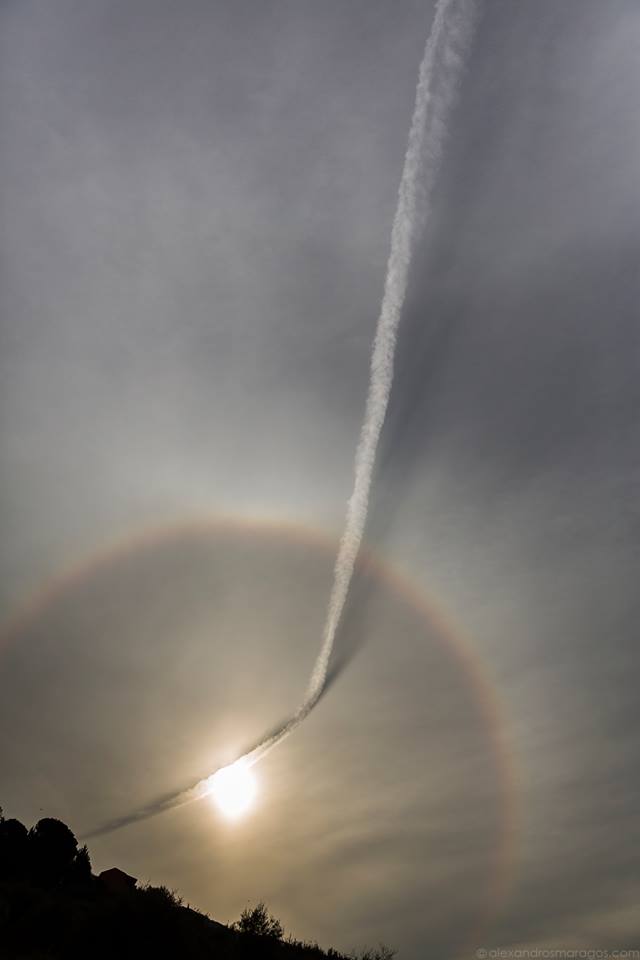
Explanation: What's happened to the sky? Several common features of the daytime sky are interacting in uncommon ways. First, well behind the silhouetted hills, is the typically bright Sun. In front of the Sun are thin clouds, possibly the home to a layer of hexagonal ice crystals that together are creating the 22 degree halo of light surrounding the Sun. The unusual bent line that crosses the image is a contrail -- a type of cloud created by a passing airplane. Much of the contrail must actually be further away than the thin cloud because it casts a shadow onto the cloud, giving an unusual three-dimensional quality to the featured image. The featured image was taken in late January in the city of Patrasin West Greece.

2017-04-03

Astronomy picture of the day - 2017 April 3 - Saturn in Infrared from Cassini

2017 April 3
See Explanation.  Clicking on the picture will download
 the highest resolution version available.
Saturn in Infrared from Cassini 
Image Credit: NASAJPL-CaltechSSIProcessing: Maksim Kakitsev
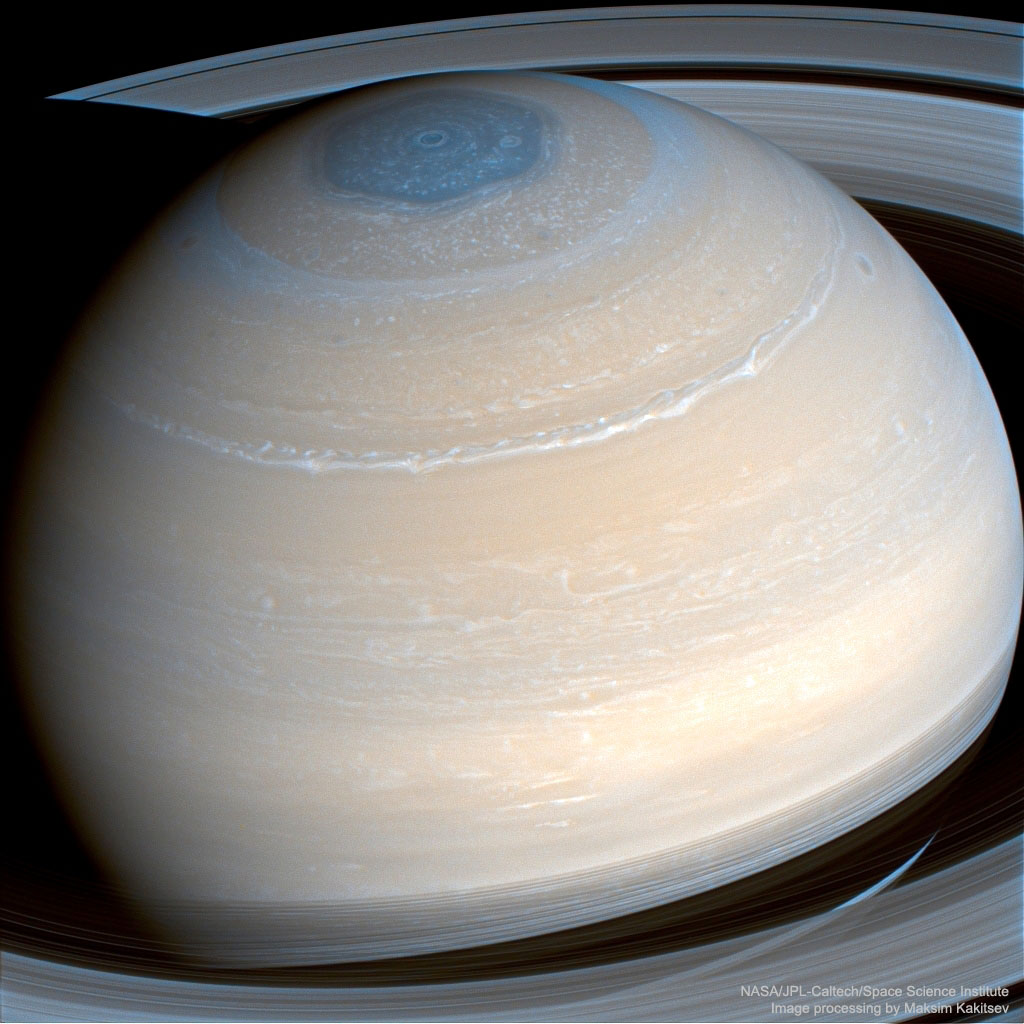
Explanation: Many details of Saturn appear clearly in infrared light. Bands of clouds show great structure, including long stretching storms. Also quite striking in infrared is the unusual hexagonal cloud pattern surrounding Saturn's North Pole. Each side of the dark hexagon spans roughly the width of our Earth. The hexagon's existence was not predicted, and its origin and likely stability remains a topic of research. Saturn's famous rings circle the planet and cast shadowsbelow the equator. The featured image was taken by the robotic Cassini spacecraft in 2014 in several infrared colors -- but only processed recently. In September, Cassini's mission will be brought to a dramatic conclusion as the spacecraft will be directed to dive into ringed giant.

Foto - Barreiro antigo - 02-04-2017

"Barreiro (Portugal) antigo"

02-04-2017
JoanMira

2017-04-02

Astronomy picture of the day - 2017 April 2 - NGC 602 and Beyond

See Explanation.  Clicking on the picture will download
 the highest resolution version available.
NGC 602 and Beyond 
Image Credit: X-ray: Chandra: NASA/CXC/Univ.Potsdam/L.Oskinova et al;
Optical: Hubble: NASA/STScI; Infrared: Spitzer: NASA/JPL-Caltech
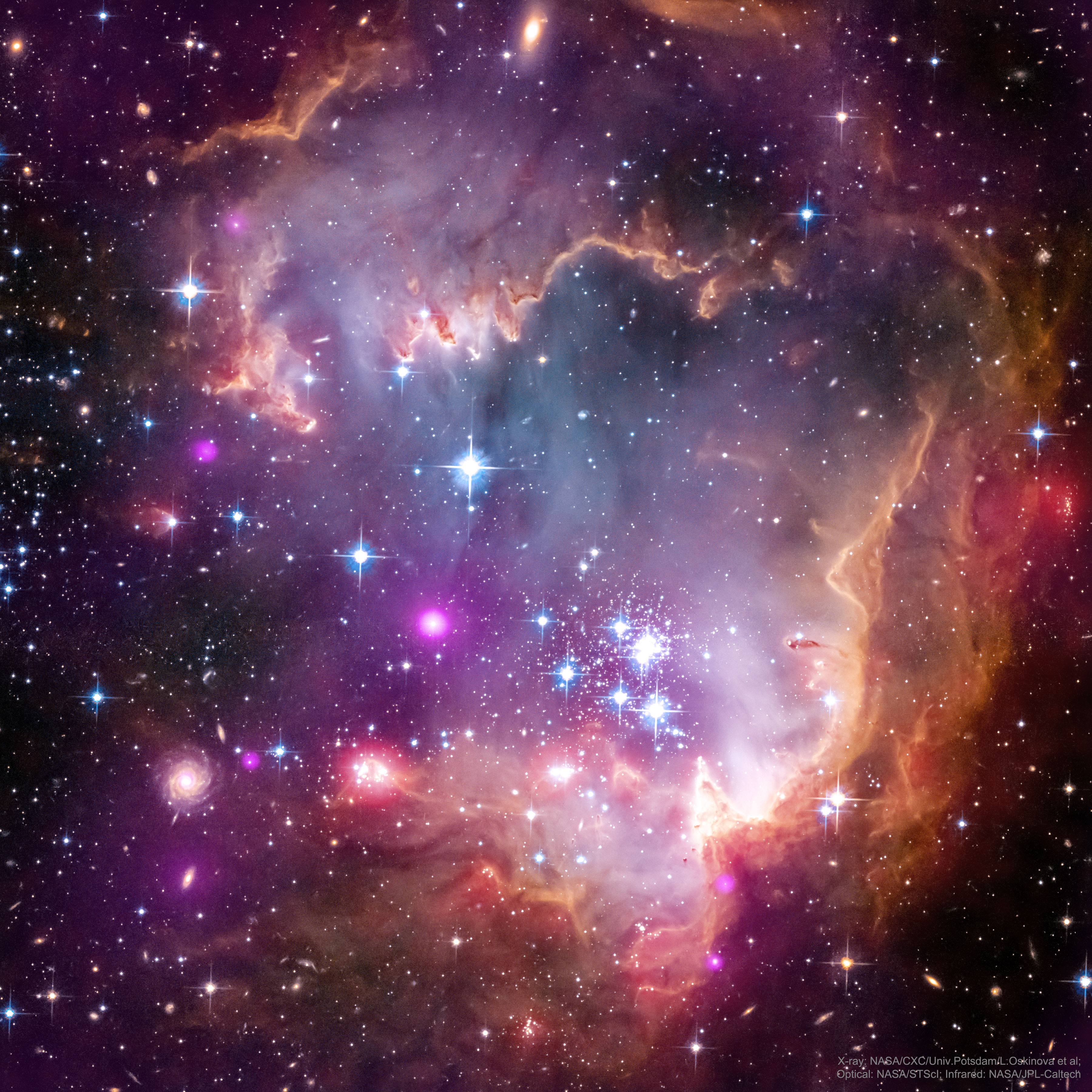
Explanation: Near the outskirts of the Small Magellanic Cloud, a satellite galaxy some 200 thousand light-years distant, lies 5 million year young star cluster NGC 602. Surrounded by natal gas and dust, NGC 602 is featured in thisstunning Hubble image of the region, augmented by images in the X-ray by Chandra, and in the infrared by SpitzerFantastic ridges and swept back shapes strongly suggest that energetic radiation and shock waves from NGC 602's massive young stars have eroded the dusty material and triggered a progression of star formation moving away from the cluster's center. At the estimated distance of the Small Magellanic Cloud, the Picture spans about 200 light-years, but a tantalizing assortment of background galaxies are also visible in this sharp multi-colored view. The background galaxies are hundreds of millions of light-years or more beyond NGC 602.