A ponte sobre o Rio Tejo que inicialmente tinha o nome de Ponte Salazar, e que depois do 25 de Abril teve o seu nome alterado para Ponte 25 de Abril, foi uma das maiores obras de sempre no nosso Portugal. Miguel Pais foi quem lançou a ideia em 1876, mas só quase um século depois é que a mesma viria a ficar finalizada.
Tendo começado a ser construída em 1962 e terminada em 1966, mais precisamente no dia 6 de Agosto de 1966 quando foi inaugurada, foi uma das poucas obras no nosso país desde então que foi projectada e construída, sem que houvessem derrapagens no orçamento. Foi uma obra feita há quase meio século, mas feita com pés e cabeça, note-se por exemplo que só várias décadas após a construção é que foi implementada a circulação de comboios, mas a ponte já estava preparada para isso. Se fosse actualmente mandava-se abaixo e construía-se outra…
Explanation: On April 10, a Full Moon and Jupiter shared this telephoto field of view. Both were near opposition, opposite the Sun in Earth's night sky. Captured when a passing cloud bank dimmmed the bright moonlight slightly, the single exposure reveals the familiar face of our fair planet's own large natural satellite, along with a line up of the ruling gas giant's four Galilean moons. Labeled top to bottom, the tiny pinpricks of light above bright Jupiter are Callisto,Europa, Ganymede, and Io. Closer and brighter, our own natural satellite appears to loom large. But Callisto, Ganymede, and Io are physically larger than Earth's Moon, while water world Europa is only slightly smaller. In fact, of the Solar System's six largest planetary satellites, only Saturn's moon Titan is missing from the scene.
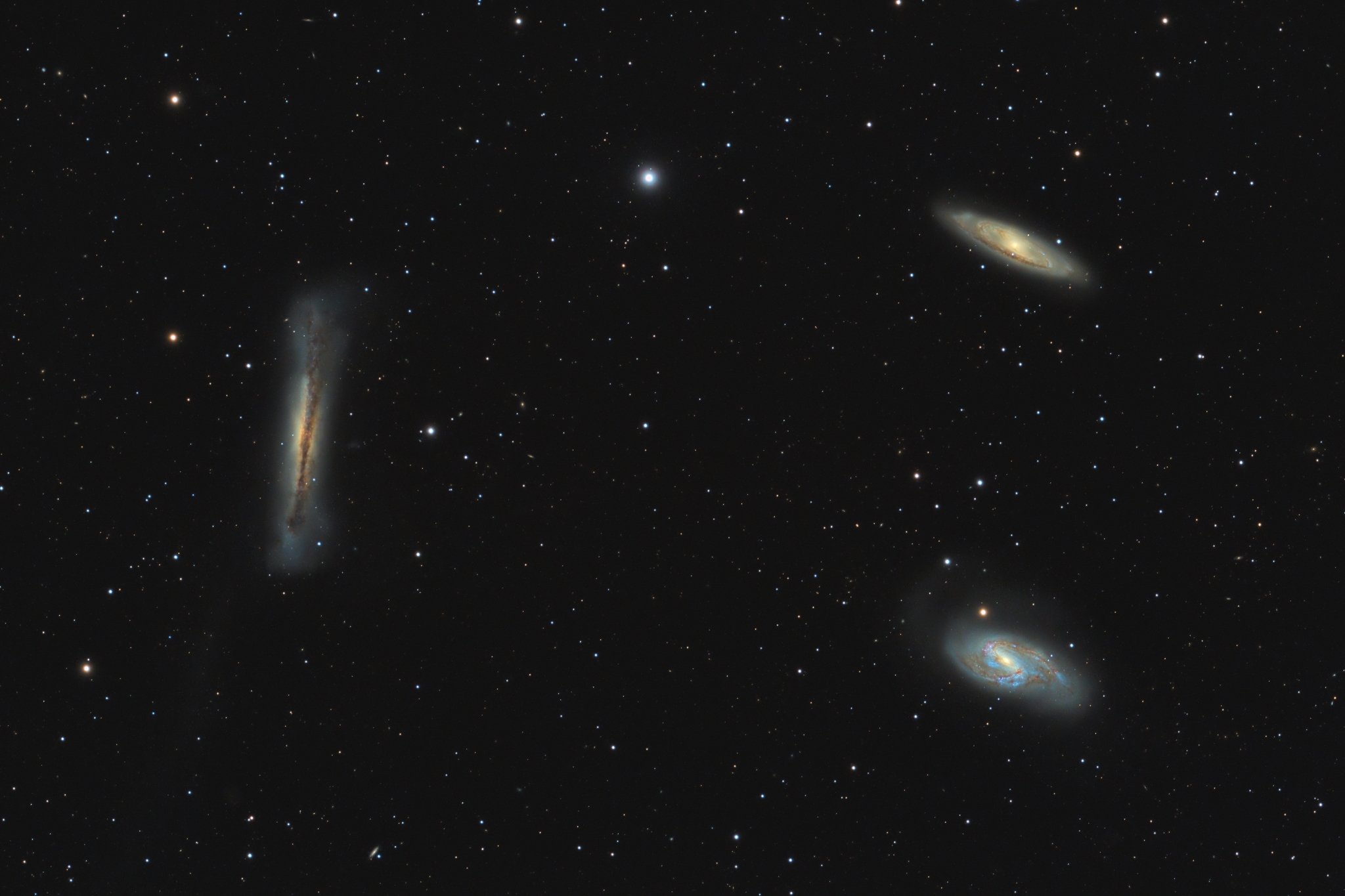
Explanation: This group is popular in the northern spring. Famous as the Leo Triplet, the three magnificent galaxies gather in one field of view. Crowd pleasers when imaged with even modest telescopes, they can be introduced individually as NGC 3628 (left), M66 (bottom right), and M65 (top). All three are large spiral galaxies but they tend to look dissimilar because their galactic disks are tilted at different angles to our line of sight. NGC 3628 is seen edge-on, with obscuring dust lanes cutting across the plane of the galaxy, while the disks of M66 and M65 are both inclined enough to show off their spiral structure. Gravitational interactions between galaxies in the group have also left telltale signs, including the warped and inflated disk of NGC 3628 and the drawn out spiral arms of M66. This gorgeous view of the region spans about one degree (two full moons) on the sky. The field covers over 500 thousand light-years at the trio's estimated distance of 30 million light-years.
Un jeune entrepreneur portugais a mis au point un gant destiné à aider les blessés à la main.
Une blessure à la main, même légère, peut gravement limiter son usage. Filipe Quinaz en a fait l’amère expérience après une fracture, lorsqu’il était étudiant en biomédecine à l’université de Beira Interior (centre du Portugal). Le jeune homme a alors commencé à réfléchir à des solutions pour aider les personnes dans son cas.
Suivi en temps réel
Quelques années plus tard, le résultat est un gant qui permet de soulever jusqu’à 40 kg sans effort. Composé de textiles intelligents truffés de capteurs électroniques, il permet également aux soignants de suivre en temps réel l’évolution de l’état de la main de leurs patients. Le produit s’adresse en priorité “aux accidentés, aux personnes atteintes d’arthrite ou ayant souffert d’un AVC”, détaille le Diário de Notícias.
Nuada, la start-up fondée par Filipe Quinaz, a intégré début 2017 l’accélérateur Uten (University Technology Enterprise Network), fruit d’un partenariat entre le gouvernement portugais et l’université du Texas à Austin. L’entreprise espère pouvoir réaliser les premières préventes de son gant à l’été.
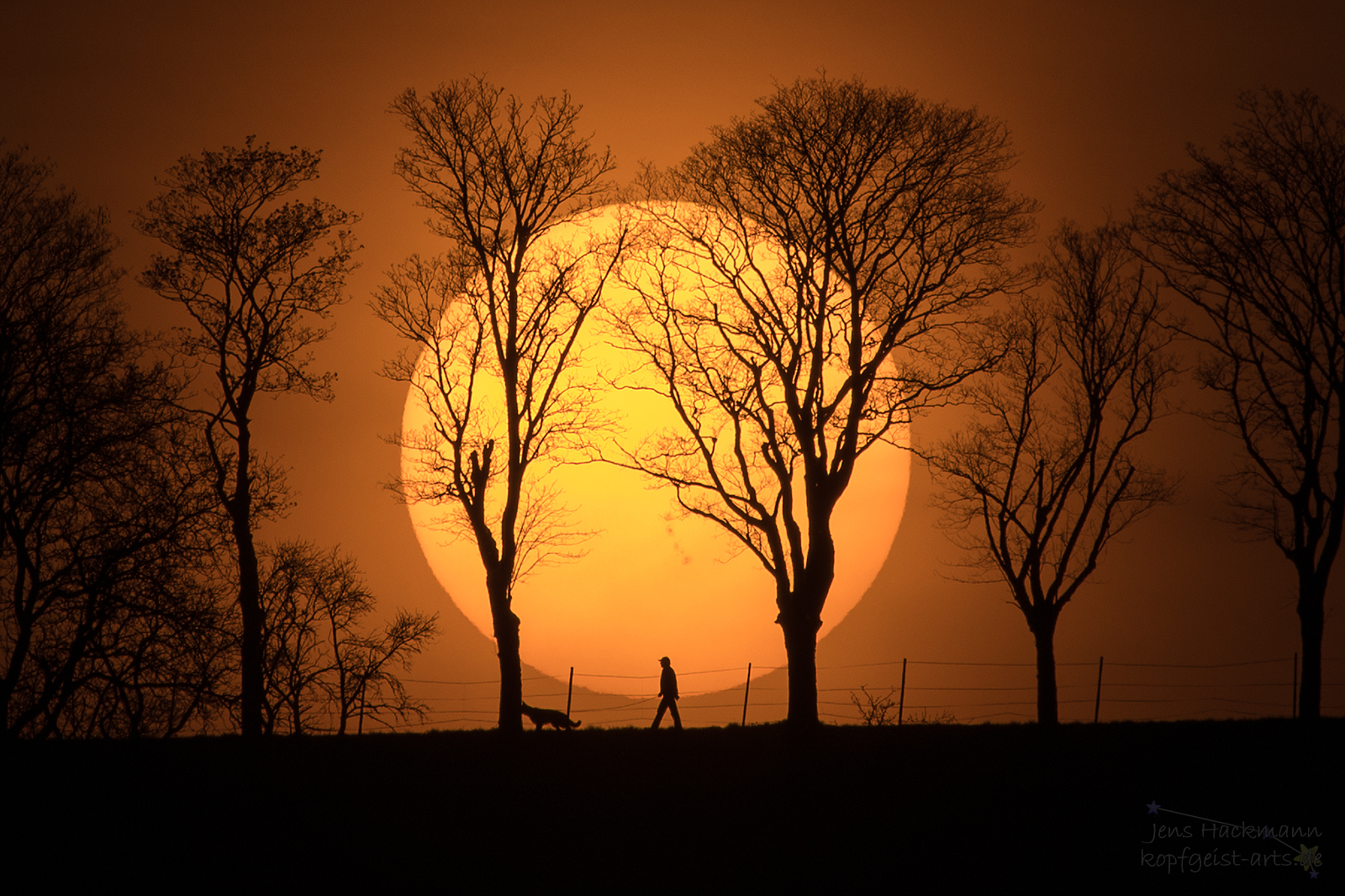
Man, Dog, Sun Image Credit & Copyright: Jens Hackmann
Explanation: This was supposed to be a shot of trees in front of a setting Sun. Sometimes, though, the unexpected can be photogenic. During some planning shots, a man walking his dog unexpected crossed the ridge. The result was so striking that, after cropping, it became the main shot. The reason the Sun appears so large is that the image was taken from about a kilometer away through a telephoto lens. Scattering of blue light by the Earth's atmospheremakes the bottom of the Sun appear slightly more red that the top. Also, if you look closely at the Sun, just above the man's head, a large group of sunspots is visible. The image was taken just last week in BadMergentheim,Germany.
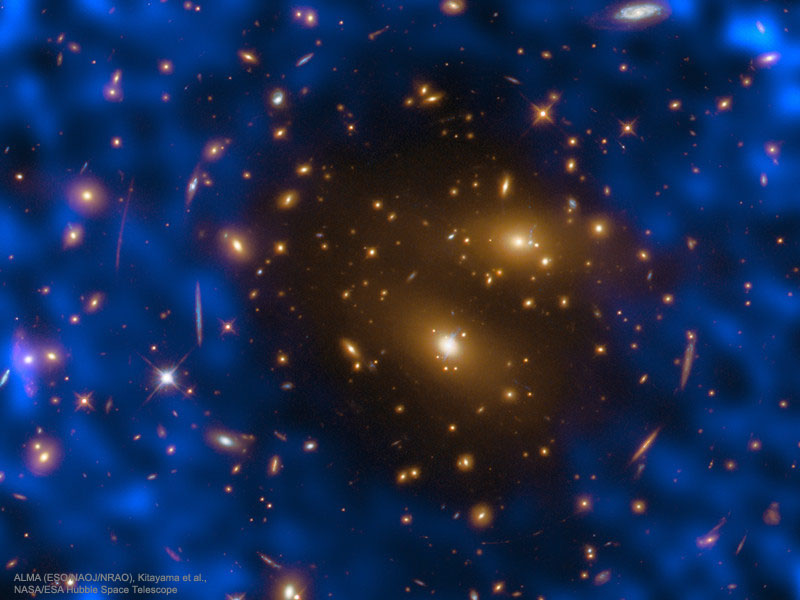
Explanation: Why would this cluster of galaxy punch a hole in the cosmic microwave background (CMB)? First, the famous CMB was created by cooling gas in the early universe and flies right through most gas and dust in the universe. It is all around us. Large clusters of galaxies have enough gravity to contain very hot gas -- gas hot enough to up-scatter microwave photons into light of significantly higher energy, thereby creating a hole in CMB maps. ThisSunyaev–Zel'dovich (SZ) effect has been used for decades to reveal new information about hot gas in clusters and even to help discover galaxy clusters in a simple yet uniform way. Pictured is the most detailed image yet obtained of the SZ effect, now using both ALMA to measure the CMB and the Hubble Space Telescope to measure the galaxies in the massive galaxy cluster RX J1347.5-1145. False-color blue depicts light from the CMB, while almost every yellow object is a galaxy. The shape of the SZ hole indicates not only that hot gas is present in this galaxy cluster, but also that it is distributed in a surprisingly uneven manner.