Image Credit: NOAA, NASA, Lockheed Martin, GOES-16, GLM
2017-05-15
Astronomy picture of the day - 2017 May 15 - Lightning Storm Moves Across the USA
Image Credit: NOAA, NASA, Lockheed Martin, GOES-16, GLM

2017-05-14
Astronomy picture of the day - 2017 May 14 - Ganymede: The Largest Moon
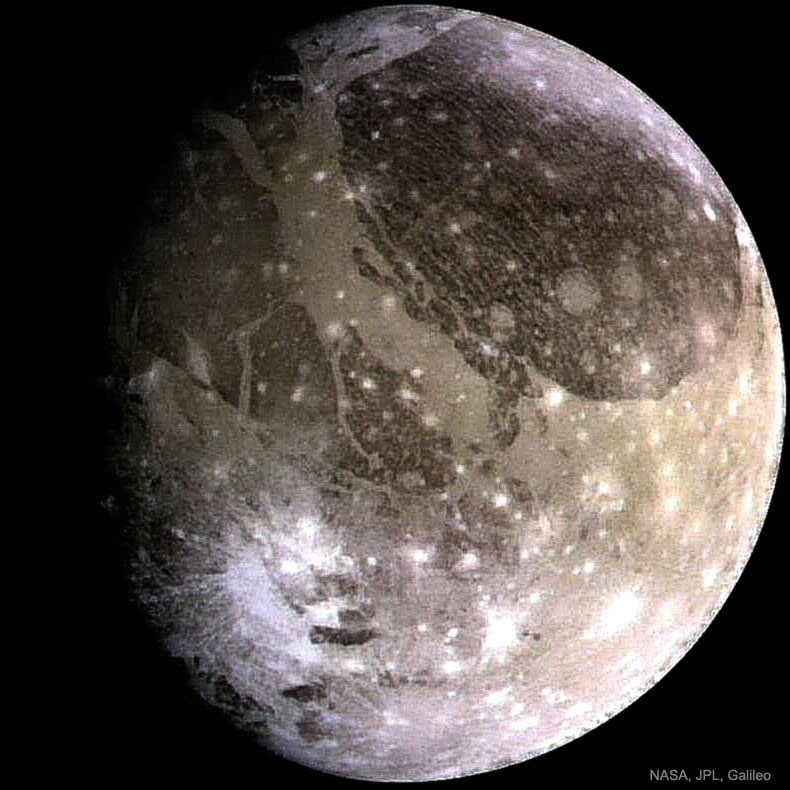
Image Credit: NASA, JPL, Galileo Probe
Explanation: What does the largest moon in the Solar System look like? Jupiter's moon Ganymede, larger than even Mercury and Pluto, has an icy surface speckled with bright young craters overlying a mixture of older, darker, more cratered terrain laced with grooves and ridges. The large circular feature on the upper right, called Galileo Regio, is an ancient region of unknown origin. Ganymede is thought to have an ocean layer that contains more water than Earthand might contain life. Like Earth's Moon, Ganymede keeps the same face towards its central planet, in this case Jupiter. The featured image was taken about 20 years ago by NASA's Galileo probe, which ended its mission by diving into Jupiter's atmosphere in 2003. Currently, NASA's Juno spacecraft orbits Jupiter and is studying the giant planet's internal structure, among many other attributes.
Artigo - Benfica conquista campeonato de Portugal. A aguia voou bem alto!
 «Nunca nos vamos esquecer deste momento» - Rui Vitória
01:09 - 14-05-2017.Em discurso aos milhares de adeptos presentes no Marquês de Pombal, palco dos festejos encarnados, o treinador do Benfica fez questão de destacar a inédita proeza pela conquista do tetracampeonato.
«Estamos a viver um momento único, foram 10 meses de trabalho árduo, com estes grandes jogadores. Estivemos 9 meses em primeiro lugar, foi uma luta constante para termos este tetra. Hoje posso dizer que estou orgulhoso, satisfeito e realizado. Esta é uma vitória que jamais esqueceremos. Sintam o privilégio de viver esta história. Relembro outras gerações, grandes jogadores que passaram pelo Benfica, que ficaram pelo tri. O tetra fica com esta equipa, nunca nos vamos esquecer deste momento!», disse Rui Vitória, que terminou lançando para a multidão: «Viva o Benfica!»

A Bola - Portugal
Portugal vence o concurso da Eurovisão! Salvador Sobral - "Amar pelos dois" - Video - Musica - Ao vivo

Diziam que era impossível. Que uma balada nunca iria vencer a Eurovisão. Que a música não era festivaleira e que Salvador Sobral iria ter de mudar tudo o que é para vencer o concurso. O músico de 27 anos dispensou um espectáculo de luzes impressionante e subiu ao palco com uma indumentária tão simples quanto a eficácia da sua música. Sem bailarinos ou um coro, Salvador Sobral colocou um país inteiro a olhar para a Eurovisão novamente. E, em português, conseguiu conquistar também a atenção além-fronteiras. A canção do músico de 27 anos tornou-se um fenómeno global e durante semanas surgiam dos quatro cantos do mundo vídeos de fãs a interpretar as suas versões. Na imprensa internacional multiplicaram-se títulos a elogiar a “voz de anjo” e a “actuação perfeita”. A esperança foi crescendo entre as vozes mais cépticas. Este sábado, os resultados do festival não deixaram margem para dúvidas: a Europa rendeu-se a Salvador Sobral
2017-05-13

Astronomy picture of the day - 2017 May 13 -
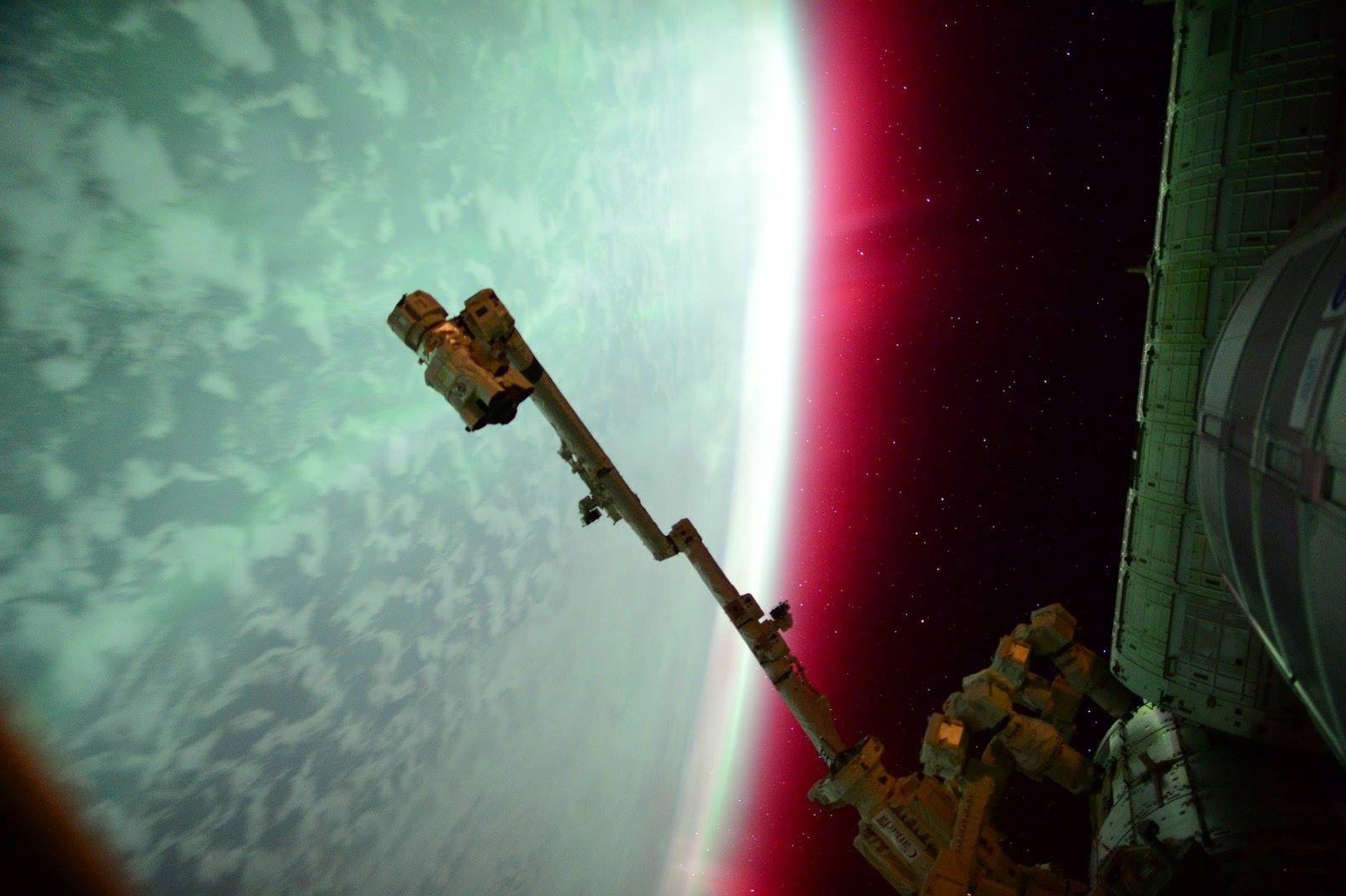
Image Credit: Scott Kelly, Expedition 44, NASA
Explanation: What bizarre alien planet is this? It's planet Earth of course, seen from the International Space Station through the shimmering glow of aurorae. About 400 kilometers (250 miles) above Earth, the orbiting station is itself within the upper realm of the auroral displays. Aurorae have the signature colors of excited molecules and atoms at the low densities found at extreme altitudes. Emission from atomic oxygen dominates this view. The eerie glow is green at lower altitudes, but a rarer reddish band extends above the space station's horizon. Also visible from the planet's surface, this auroral display began during a geomagnetic storm. The storm was triggered after a coronal mass ejection impacted Earth's magnetosphere in June of 2015.
2017-05-12
Astronomy picture of the day - 2017 May 12 - M13: The Great Globular Cluster in Hercules
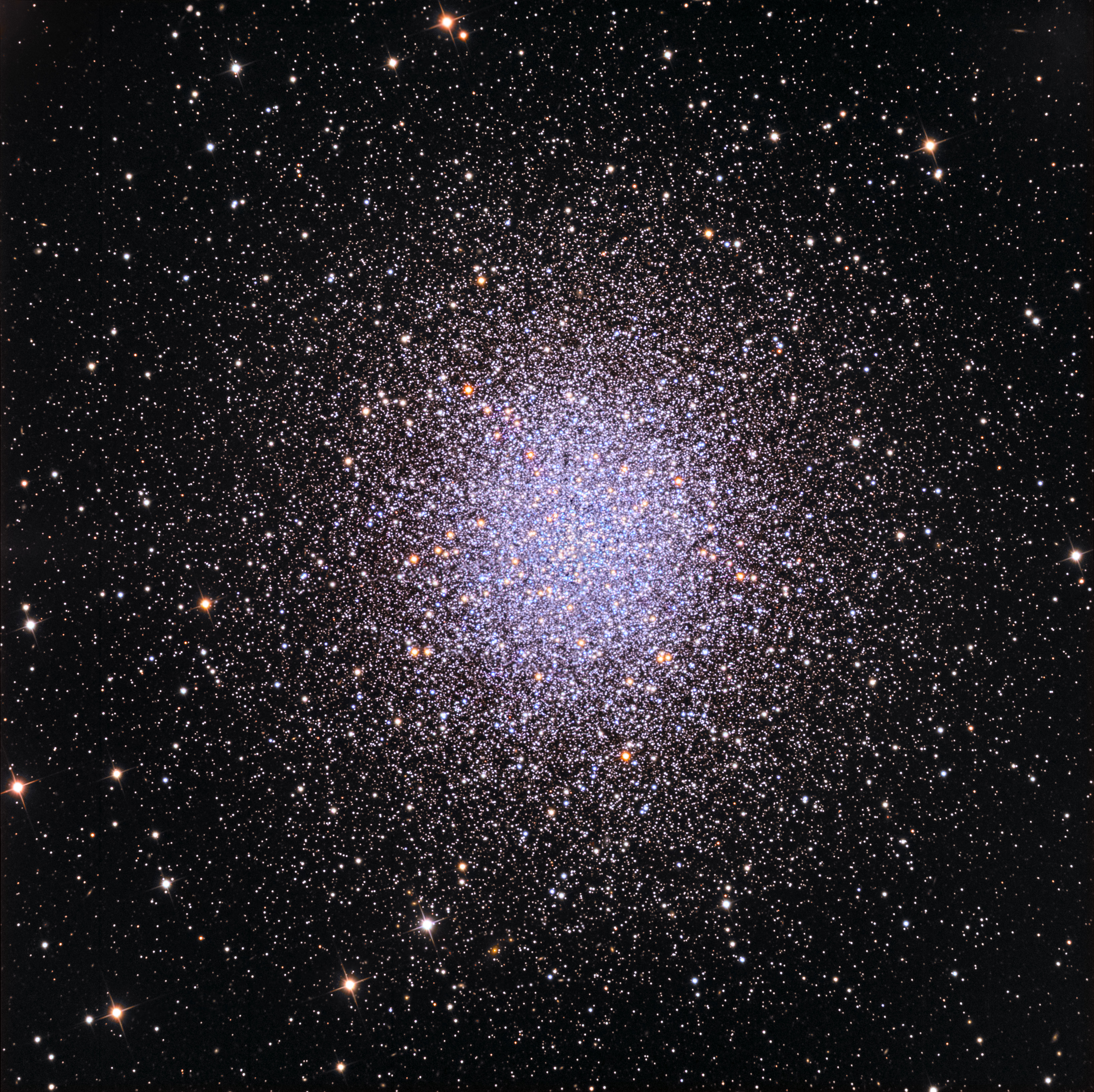
Image Credit & Copyright: Adam Block, Mt. Lemmon SkyCenter, U. Arizona
Explanation: In 1716, English astronomer Edmond Halley noted, "This is but a little Patch, but it shews itself to the naked Eye, when the Sky is serene and the Moon absent." Of course, M13 is now less modestly recognized as the Great Globular Cluster in Hercules, one of the brightest globular star clusters in the northern sky. Telescopic views reveal the spectacular cluster's hundreds of thousands of stars. At a distance of 25,000 light-years, the cluster stars crowd into a region 150 light-years in diameter. Approaching the cluster core upwards of 100 stars could be contained in a cube just 3 light-years on a side. For comparison, the closest star to the Sun is over 4 light-years away. Along with the cluster's dense core, the outer reaches of M13 are highlighted in this sharp color image. The cluster's evolved red and blue giant stars show up in yellowish and blue tints.
2017-05-11
Images - La Terre vue de l'Espace - Delhi

Première photo prise de nuit par Thomas Pesquet, le 25 novembre 2016. Selon plusieurs internautes, la ville scintillant de mille feux serait Delhi.


#/media/File:Ganymede_diagram.svg)

Inscription à :
Articles (Atom)