
2017-06-18

Artigo - TRAGEDIA em Portugal
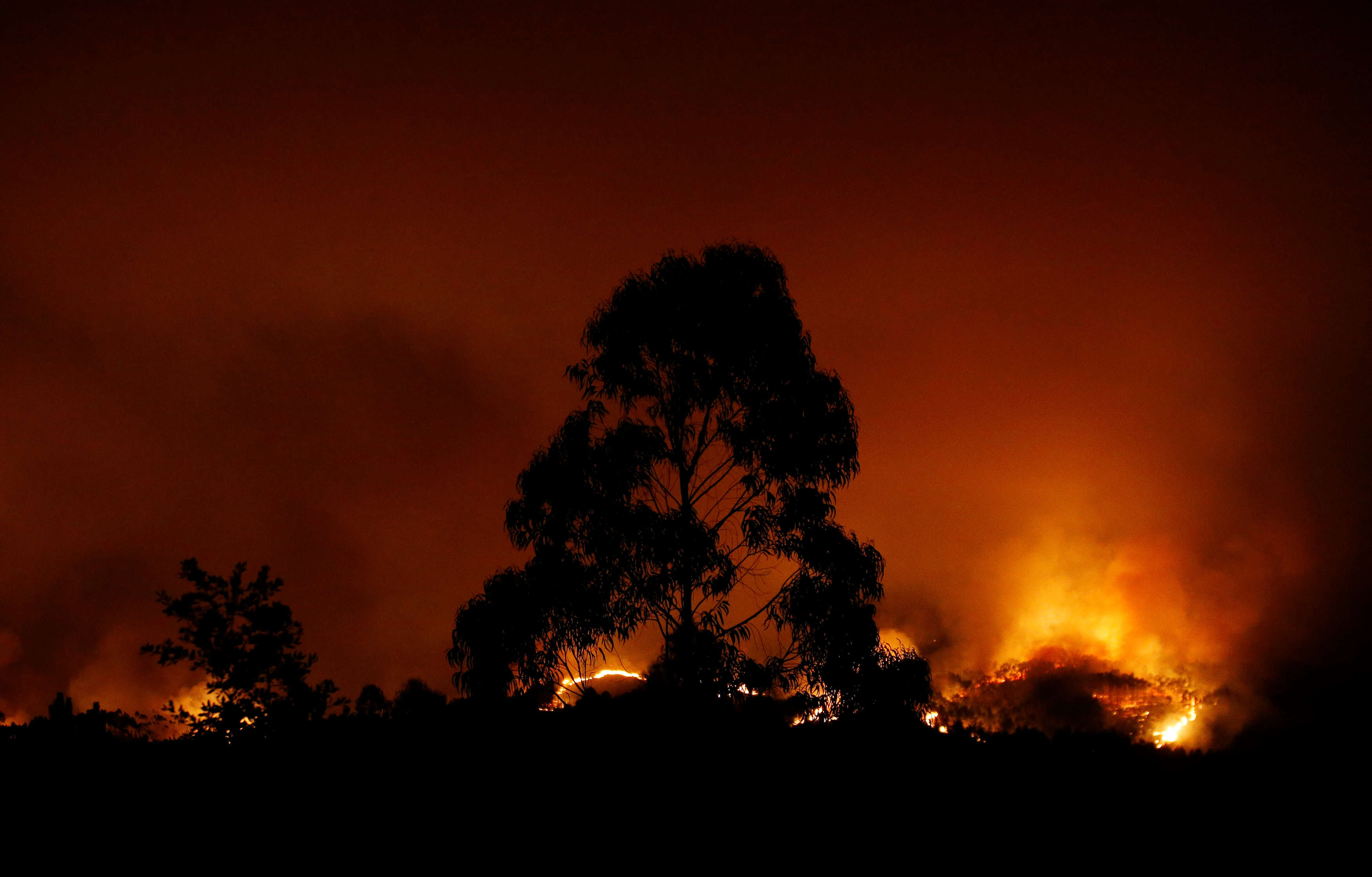
Fogo em Góis continua ativo e com muita intensidade
O incêndio que deflagrou no sábado, no concelho de Góis, distrito de Coimbra, “permance ativo” e a área “continua a arder com muita intensidade”, disse à agência Lusa a Autoridade Nacional de Proteção Civil.
Paulo Santos, oficial de Operações e Emergência, da Autoridade Nacional de Proteção Civil, acrescentou que o incêndio está em curso “há 23 horas e 20 minutos” e mobiliza “387 operacionais, 112 veículos e seis meios aéreos”.
Depois do fogo florestal que deflagrou em Pedrógão Grande, no distrito de Leiria – e que provocou pelo menos 62 mortes, segundo as últimas atualizações -, “este é o incêndio que mais meios mobiliza”, referiu.
“O incêndio continua a arder com muita intensidade”, numa “área florestal com proximidade com habitações”, referiu ainda.
Observador - Portugal
2017-06-17
Astronomy picture of the day - 2017 June 17 - Saturn near Opposition

Image Credit & Copyright: D. Peach, E. Kraaikamp, F. Colas, M. Delcroix, R. Hueso, G. Therin, C. Sprianu, S2P, IMCCE, OMP
Explanation: Saturn reached its 2017 opposition on June 16. Of course, opposition means opposite the Sun in Earth's sky and near opposition Saturn is up all night, at its closest and brightest for the year. This remarkably sharp imageof the ringed planet was taken only days before, on June 11, with a 1-meter telescope from the mountain top Pic du Midi observatory. North is at the top with the giant planet's north polar storm and curious hexagon clearly seen bathed in sunlight. But Saturn's spectacular ring system is also shown in stunning detail. The narrow Encke division is visible around the entire outer A ring, small ringlets can be traced within the fainter inner C ring, and Saturn's southern hemisphere can be glimpsed through the wider Cassini division. Near opposition Saturn's rings also appear exceptionally bright, known as the opposition surge or Seeliger Effect. Directly illuminated from Earth's perspective, the ring's icy particles cast no shadows and strongly backscatter sunlight creating the dramatic increase in brightness. Still, the best views of the ringed planet are currently from the Saturn-orbiting Cassini spacecraft. Diving close, Cassini's Grand Finale orbit number 9 is in progress.
2017-06-16

Astronomy picture of the day - 2017 June 16 - Manhattan Moonrise
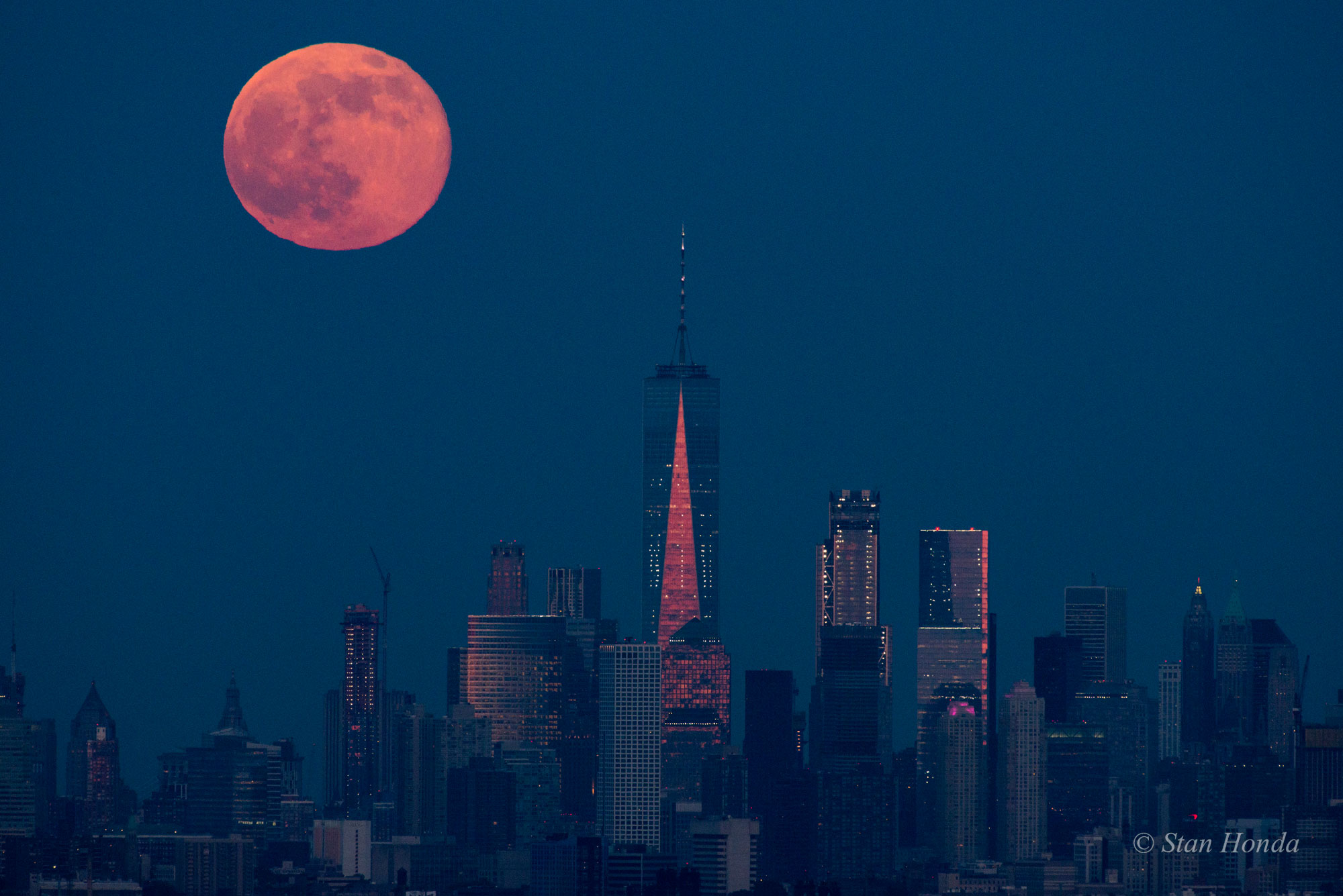
Image Credit & Copyright: Stan Honda
Explanation: A Full Moon rose as the Sun set on June 9, known to some as a Strawberry Moon. Close to the horizon and taking on the warm color of reflected sunlight filtered through a dense and dusty atmosphere, the fully illuminated lunar disk poses with the skyscrapers along the southern Manhattan skyline in this telephoto snapshot. The picture was taken from Eagle Rock Reservation, a park in West Orange, New Jersey, planet Earth. That's about 13 miles from southern Manhattan and some 240,000 miles from the Moon. Foreground faces of the modern towers of steel and glass share the Moon's warm color by reflecting the last rays of the setting Sun. The tallest, with the shining triangular facet, is New York City's One World Trade center.
2017-06-15

Astronomy picture of the day - 2017 June 15 - Red Sprites over the Channel
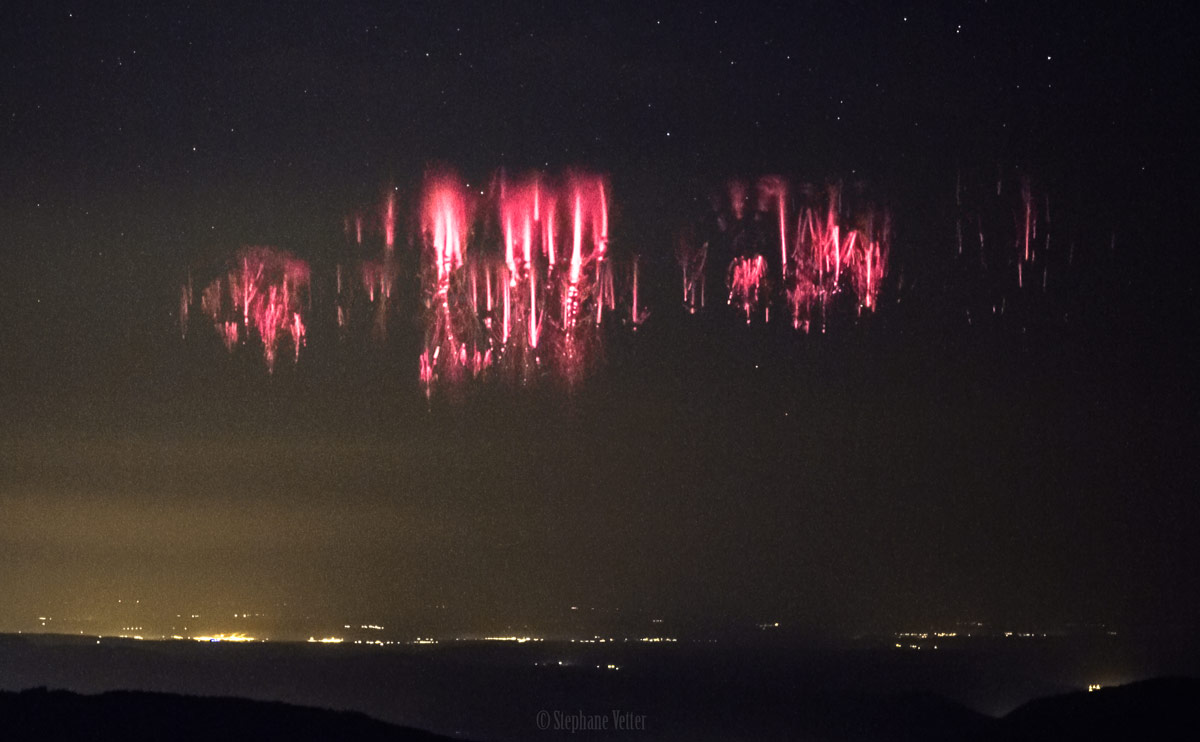
Image Credit & Copyright: Stephane Vetter (Nuits sacrees, TWAN)
Explanation: Mysterious and incredibly brief, red sprites are seen to occur high above large thunderstorms on planet Earth. While they have been recorded from low Earth orbit or high flying airplanes, these dancing, lightning-like events were captured in video frames from a mountain top perch in northern France. Taken during the night of May 28, the remarkably clear, unobstructed view looks toward a multicell storm system raging over the English Channel about 600 kilometers away. Lasting only a few milliseconds, the red sprite association with thunderstorms is known. Still, much remains a mystery about the fleeting apparitions including the nature of their relation to other upper atmospheric lightning phenomena such as blue jets or satellite detected terrestrial gamma flashes.
2017-06-14
Astronomy picture of the day - 2017 June 14M89: Elliptical Galaxy with Outer Shells and Plumes
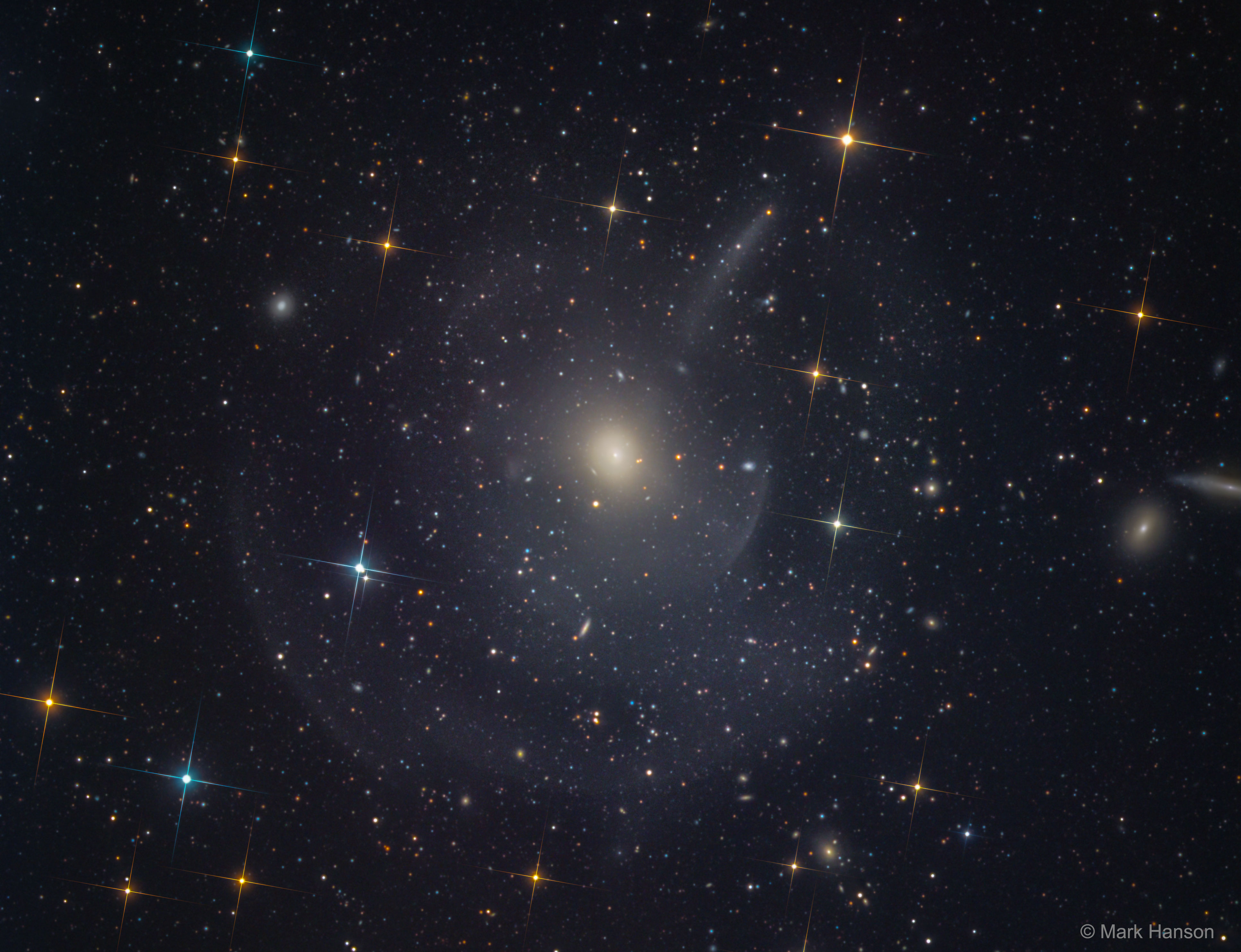
Image Credit & Copyright: Mark Hanson
Explanation: Can you see them? This famous Messier object M89, a seemingly simple elliptical galaxy, is surrounded by faint shells and plumes. The cause of the shells is currently unknown, but possibly tidal tails related to debris left over from absorbing numerous small galaxies in the past billion years. Alternatively the shells may be like ripples in a pond, where a recent collision with another large galaxy created density waves that ripple through this galactic giant. Regardless of the actual cause, the featured image highlights the increasing consensus that at least some elliptical galaxies have formed in the recent past, and that the outer halos of most large galaxies are not really smooth but havecomplexities induced by frequent interactions with -- and accretions of -- smaller nearby galaxies. The halo of our own Milky Way Galaxy is one example of such unexpected complexity. M89 is a member of the nearby Virgo cluster ofgalaxies which lies about 50 million light years distant.
2017-06-13

Astronomy picture of the day - 2017 June 13 - The Great Nebula in Carina
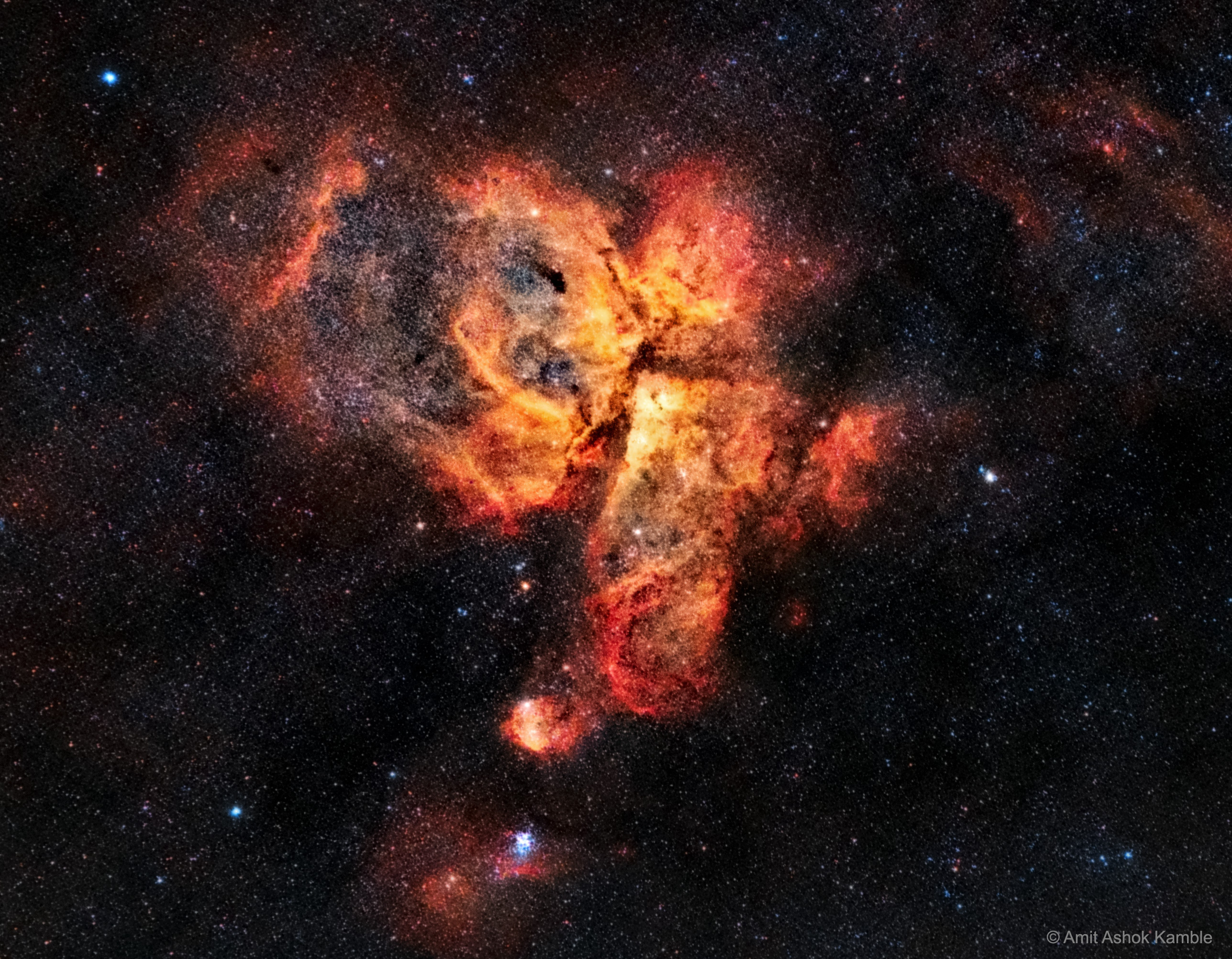
Image Credit & Copyright: Amit Ashok Kamble
Explanation: In one of the brightest parts of Milky Way lies a nebula where some of the oddest things occur. NGC 3372, known as the Great Nebula in Carina, is home to massive stars and changing nebulas. The Keyhole Nebula(NGC 3324), the bright structure just to the right of the image center, houses several of these massive stars and has itself changed its appearance. The entire Carina Nebula, captured here, spans over 300 light years and lies about 7,500 light-years away in the constellation of Carina. Eta Carinae, the most energetic star in the nebula, was one of the brightest stars in the sky in the 1830s, but then faded dramatically. While Eta Carinae itself maybe on the verge of a supernova explosion, X-ray images indicate that much of the Great Nebula in Carina has been a veritable supernova factory.

Inscription à :
Articles (Atom)