2017-09-02

Astronomy picture of the day - 2017 September 2 - Milky Way Voyager

See Explanation.  Clicking on the picture will download
 the highest resolution version available.
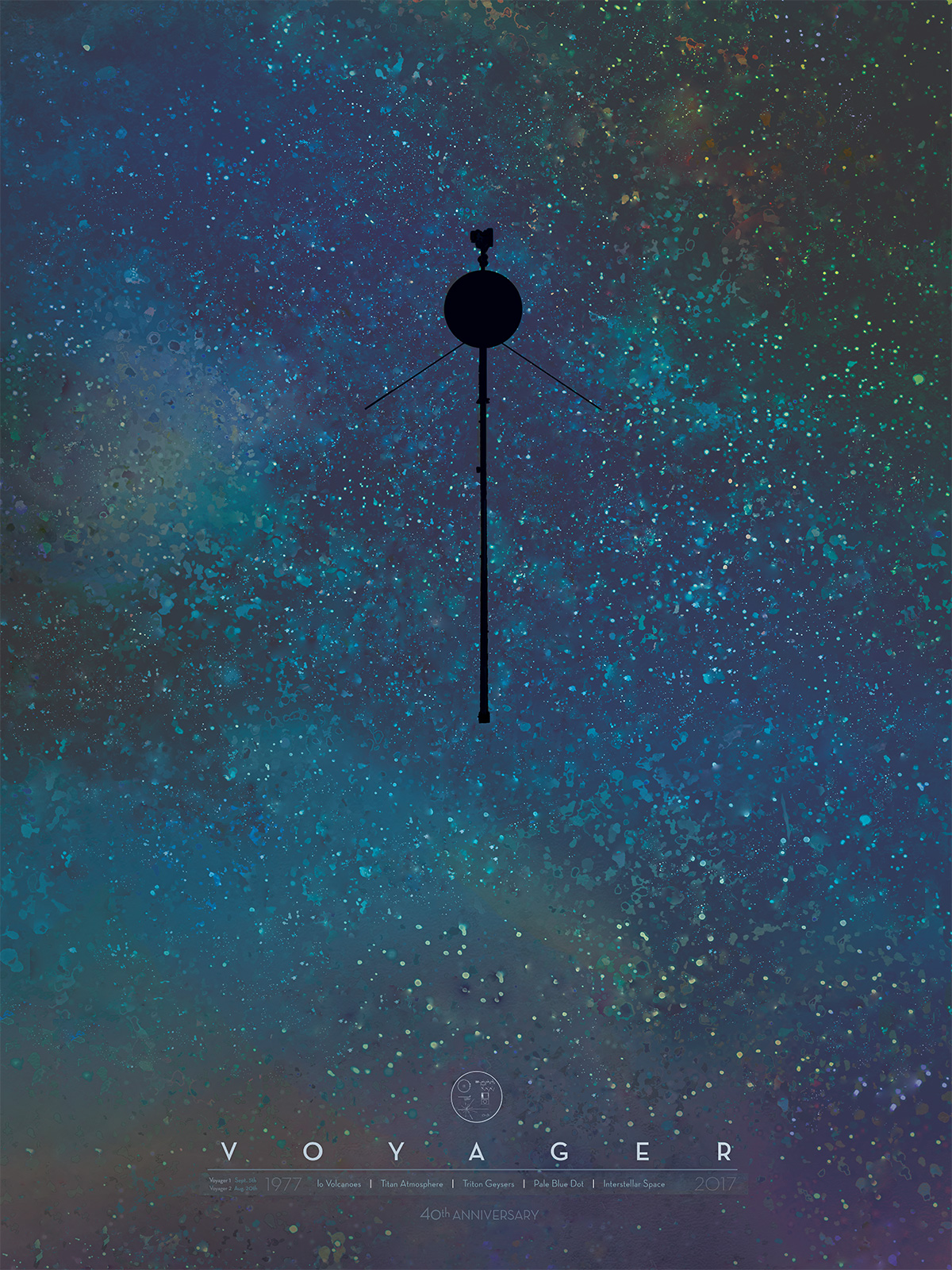
Milky Way Voyager 
Poster Illustration Credit: NASA, JPL-Caltech, Voyager
Explanation: Launched in 1977 on a tour of the outer planets of the Solar System, Voyager 1 and 2 have become the longest operating and most distant spacecraft from Earth. Nearly 16 light-hours from the Sun, Voyager 2 has reached the edge of the heliosphere, the realm defined by the influence of the solar wind and the Sun's magnetic field. Now humanity's first ambassador to the Milky Way, Voyager 1 is over 19 light-hours away, beyond the heliosphere in interstellar space. Celebrate the Voyagers' 40 year journey toward the stars with NASA on September 5.

2017-09-01

Astronomy picture of the day - 2017 September 1 - A First Glimpse of the Great American Eclipse

2017 September 1
See Explanation.  Clicking on the picture will download
 the highest resolution version available.
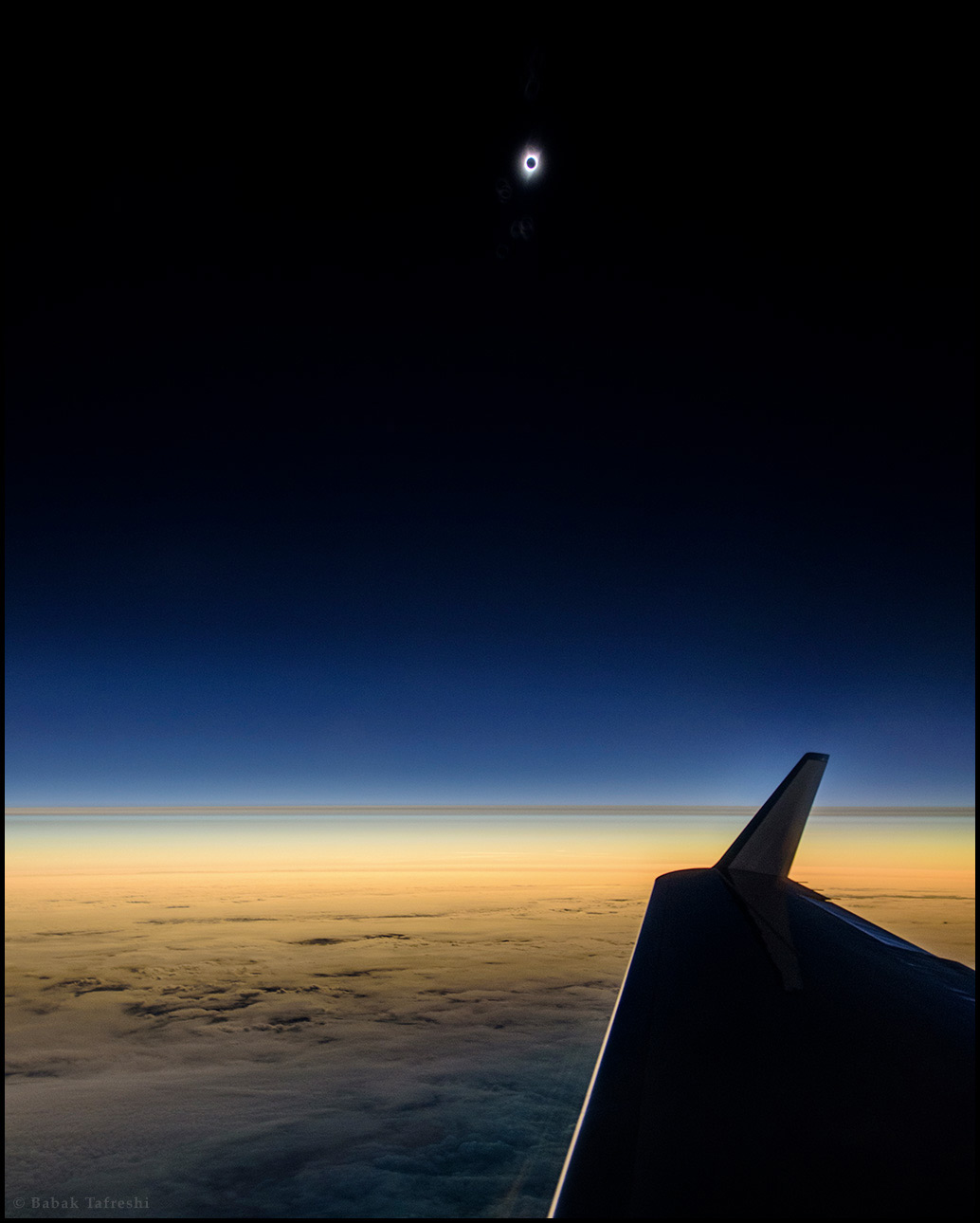
A First Glimpse of the Great American Eclipse 
Image Credit & Copyright: Babak Tafreshi (TWAN)
Explanation: Making landfall in Oregon, the Moon's dark umbral shadow toured the United States on August 21. Those gathered along its coast to coast path were witness to a total eclipse of the Sun, possibly the most widely shared celestial event in history. But first, the Moon's shadow touched the northern Pacific and raced eastward toward land. This dramatic snapshot was taken while crossing the shadow path 250 miles off the Oregon coast, 45,000 feet above the cloudy northern Pacific. Though from a shorter totality, it captures the eclipse before it could be seen from the US mainland. With the eclipsed Sun not far above, beautiful colors appear along the western horizon giving way to a clear, pitch-black, stratospheric sky in the shadow of the Moon.

2017-08-31

Artigo - Oceanario de Lisboa - Melhor aquario do mundo

Ocenario de Lisboa


O site de viagens Trip Advisor reuniu avaliações deixadas por viajantes de todo o mundo e atribuiu o título de Melhor Aquário do Mundo ao Oceanário de Lisboa, que é o segundo maior da Península Ibérica.

Desde que foi inaugurado, em 1998, tem recebido cerca de um milhão de visitantes por ano, que lá vão ver várias espécies de peixes, anfíbios, aves, invertebrados, mamíferos, plantas e algas, distribuídos por quatro habitats marinhos diferentes, desde as águas temperadas, às tropicais e frias, recriados em vários espaços.

O aquário principal, com cinco milhões de litros de água salgada, simula o puro oceano e é a principal atração, com tubarões, peixes-lua e outras tantas espécies a nadar em liberdade.

O Jogo - Portugal

Astronomy picture of the day - 2017 August 31 - Lunar View, Solar Eclipse

See Explanation.  Clicking on the picture will download
 the highest resolution version available.
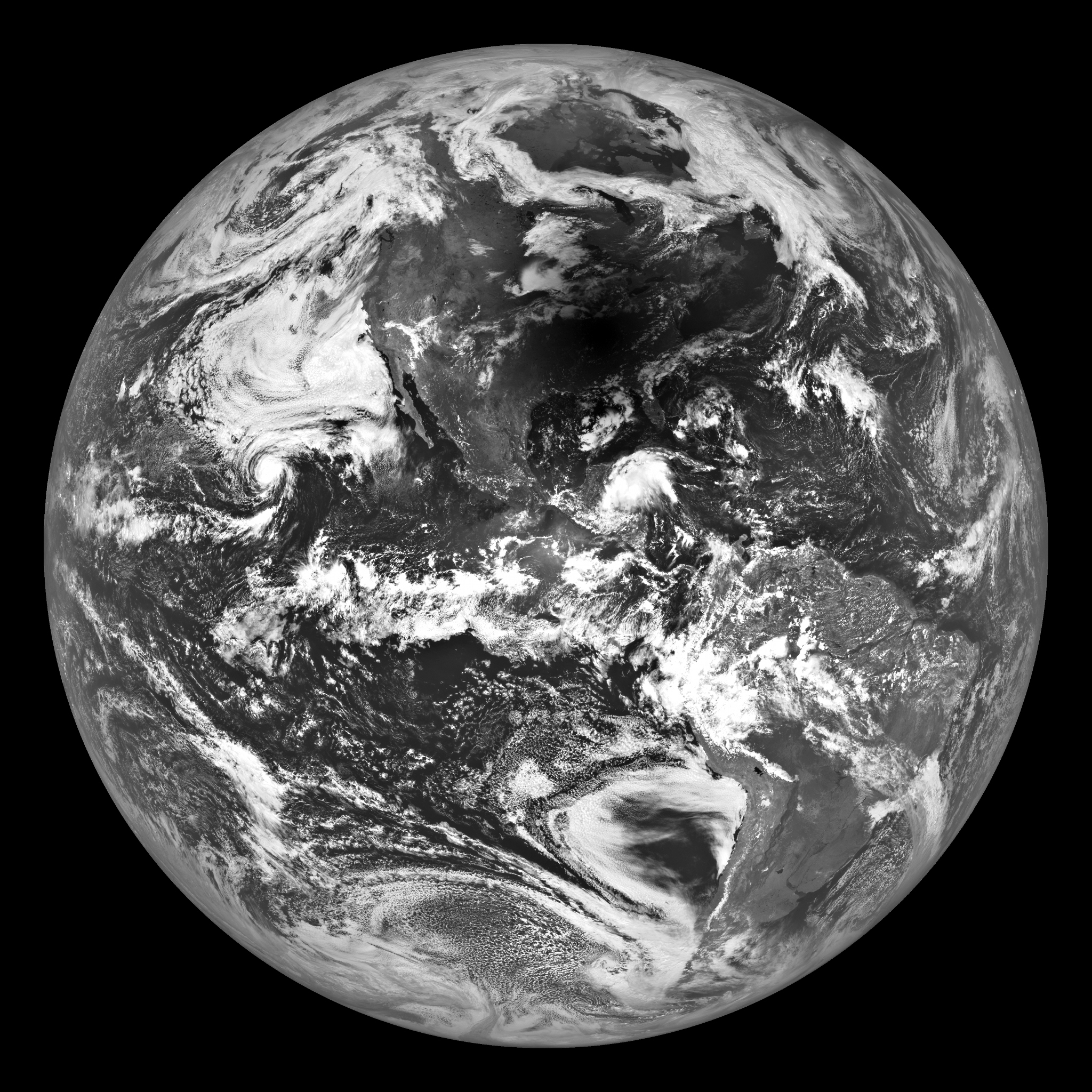
Lunar View, Solar Eclipse 
Image Credit: NASA / GSFC / Arizona State Univ. / Lunar Reconnaissance Orbiter
Explanation: Orbiting above the lunar nearside on August 21, the Lunar Reconnaissance Orbiter turned to look back on a bright, Full Earth. As anticipated its Narrow Angle Camera scanned this sharp view of our fair planet, catching the shadow of the Moon racing along a path across the United States at about 1,500 miles per hour. In fact, the dark lunar shadow is centered over Hopkinsville, Kentucky at 1:25:30 Central Daylight Time. From there, the New Moon blocked the Sun high in clear skies for about 2 minutes and 40 seconds in a total solar eclipse.

Artigo - Cuba desenvolveu vacina contra o cancro


Todos nós sabemos que o câncer hoje infelizmente é um dos negócios mais rentáveis.

Muitas empresas, como laboratórios farmacêuticos, faturam bilhões com essa doença.

Mas nós acreditamos na ciência do bem.

Existem sim pesquisadores que dedicam a vida para encontrar a cura de doenças consideradas incuráveis.

Um exemplo disso é o grupo de médicos e microbiologistas cubanos, que, com um orçamento muito limitado, conseguiu desenvolver a primeira vacina mundial contra o câncer de pulmão - a CIMAvax EGF.

Essa vacina já foi usada em mais de 4 mil pessoas que sofrem com a doença.

O resultado é incrível!

Ela é capaz de prolongar e melhorar o tempo de vida dos pacientes, mesmo quando o câncer já está bem avançado.

Foram necessários 16 anos de pesquisa para se chegar à fórmula da vacina.

O melhor é que ela não causa efeitos colaterais graves.

O mais interessante é que um país pobre e subdesenvolvido como Cuba conseguiu alcançar uma expressiva vitória contra a maior doença dos tempos modernos, mas os gigantes farmacêuticos, com toda a sua força econômica, não chegaram nem perto de algo parecido.


A vacina funciona atacando uma proteína chamada "fator de crescimento epidérmico", ou EGF, que permite que células cancerígenas do pulmão cresçam.

A CIMAvax estimula o sistema imunológico a criar anticorpos que se ligam ao EGF, impedindo que esta proteína alimente as células cancerosas.

A vantagem é que ela poupa a pessoa de se submeter às altas doses de quimioterapia, garantindo mais tempo de vida e com mais qualidade.

Com a administração dessa vacina, o paciente sofre menos falta de ar e, às vezes, esse sintoma até desaparece definitivamente.

Da mesma forma, ocorre com a dor.

Além disso, a pessoa volta a ganhar peso, melhora o apetite e passa a ter mais energia no dia a dia.

A vacina já está chegando em outros países, como na Bósnia, Herzegovina, Colômbia, Paraguai e Peru.

Cura Pela Natureza 
(Despoletado por Hélder Alvar)
2017-08-29

Astronomy picture of the day - 2017 August 29 - Saturn in Blue and Gold

See Explanation.  Clicking on the picture will download
 the highest resolution version available.
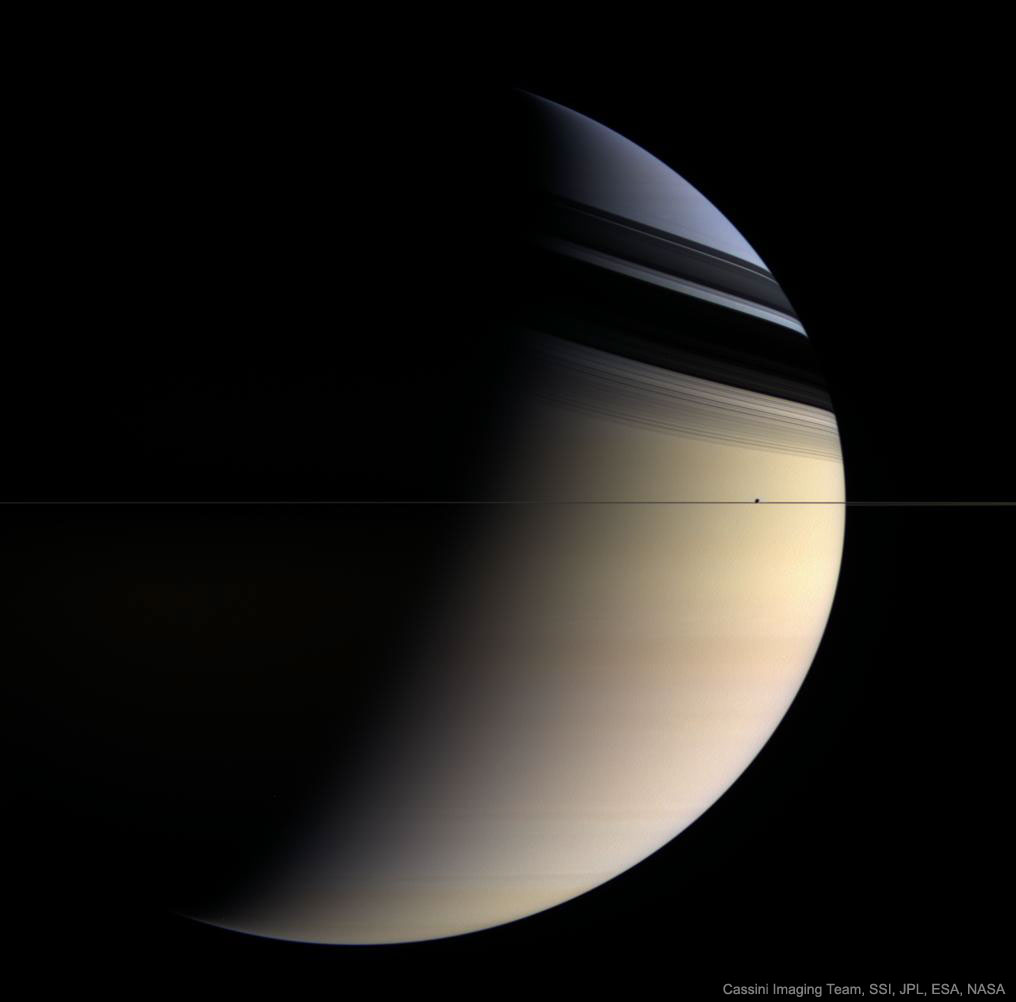
Saturn in Blue and Gold 
Image Credit: Cassini Imaging TeamSSIJPLESANASA
Explanation: Why is Saturn partly blue? The featured picture of Saturn approximates what a human would see if hovering close to the giant ringed world. The image was taken in 2006 March by the robot Cassini spacecraft now orbiting Saturn. Here Saturn's majestic rings appear directly only as a thin vertical line. The rings show their complex structure in the dark shadows they create on the image left. Saturn's fountain moon Enceladus, only about 500 kilometers across, is seen as the bump in the plane of the rings. The northern hemisphere of Saturn can appear partly blue for the same reason that Earth's skies can appear blue -- molecules in the cloudless portions of both planet's atmospheres are better at scattering blue light than red. When looking deep into Saturn's clouds, however, the natural gold hue of Saturn's clouds becomes dominant. It is not known why southern Saturn does not show the same blue hue -- one hypothesis holds that clouds are higher there. It is also not known why Saturn's clouds are colored gold. Next month, Cassini will end its mission with a final dramatic dive into Saturn's atmosphere.

2017-08-22

Artigo - Futebol, Corruptos e Cia. Ilimitada

Raramente aqui falo de futebol e mesmo dos triunfos do Benfica, tantos eles são que dava para enjoar os adversarios...Mas é que o Sporting, o seu "presidente" Bruno Carvalho e o fantastico JJ, não conseguindo protagonismo positivo no relvado lanção-se em poléticas palermices em que são mestres de obra...
Mas que culpa têm muitos dos excelentes atletas do Sporting que lhes tenha sido atribuido semelhantes e dirigentes parolos !
Mais um queixumezinho : querem agora, que Eliseu seja castigado pela "entrada" sobre Diogo Viana, no Benfica-Belenenses do passado sábado, que gerou «alarme social ! ».
E no entretanto o Sporting vai alegando, protestando, denunciando, como se o mundo além dele não existisse. Coitadinhos : até parece que o mundo inteiro conhece e està contra o Sporting (de Lisbonne) como é conhecido.
O Sporting espera agora uma análise rápida da Comissão de Instrutores, na expectativa de uma decisão em processo sumário, tendo em conta que há reunião do Conselho de Disciplina nesta terça.feira. (bla, bla, bla, bla,... faz vender jornais e até o "Correio da Manhã"
22-08-2017
JoanMira

L'image du jour - 22-08-2017 - Intérieur d'une maison coloniale,Venezuela

Intérieur d'une maison coloniale typique de San Juan Bautista, sur l'île Margarita au Venezuela.  (définition réelle 6 467 × 5 796)
Intérieur d'une maison coloniale typique de San Juan Bautista, sur l'île Margarita au Venezuela.

Astronomy picture of the day - 2017 August 22 - A Total Solar Eclipse over Wyoming

See Explanation.  Clicking on the picture will download
 the highest resolution version available.
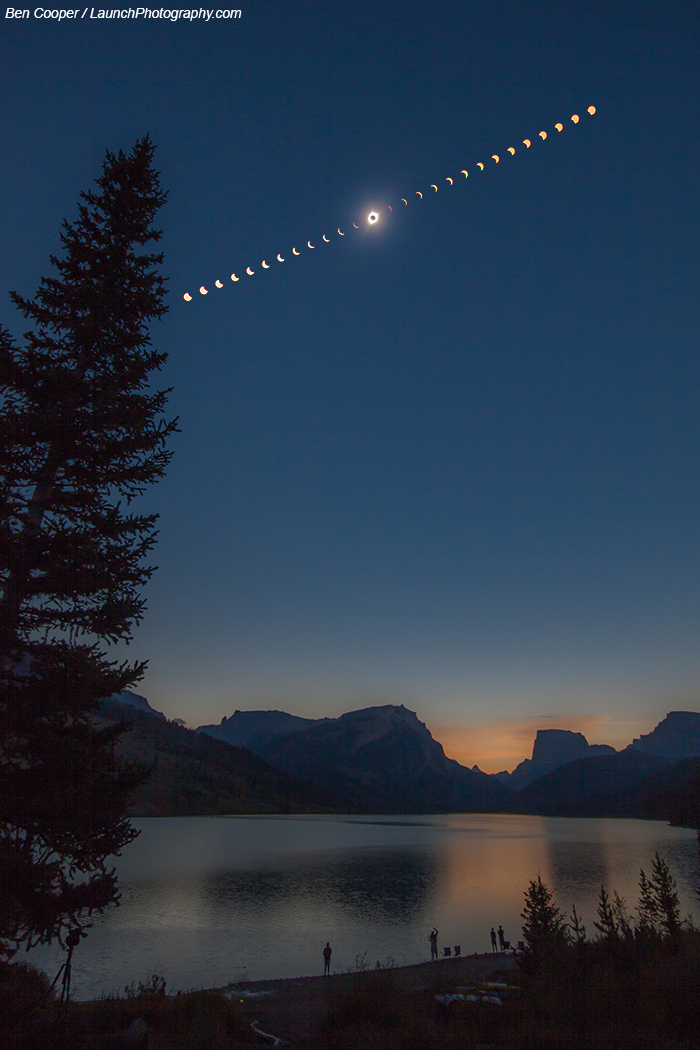
A Total Solar Eclipse over Wyoming 
Image Credit & Copyright: Ben Cooper
Explanation: Will the sky be clear enough to see the eclipse? This question was on the minds of many people attempting to view yesterday's solar eclipse. The path of total darkness crossed the mainland of the USA from coast to coast, from Oregon to South Carolina -- but a partial eclipse occurred above all of North America. Unfortunately, many locations saw predominantly clouds. One location that did not was a bank of Green River Lake, Wyoming. There, clouds blocked the Sun intermittantly up to one minute before totality. Parting clouds then moved far enough away to allow the center image of the featured composite sequence to be taken. This image shows the corona of the Sun extending out past the central dark Moon that blocks our familiar Sun. The surrounding images show the partial phases of the solar eclipse both before and after totality.

2017-08-20

Astronomy picture of the day - 2017 August 20 - Time-Lapse: A Total Solar Eclipse

Time-Lapse: A Total Solar Eclipse 
Video Credit & Copyright: Colin Legg
Explanation: Have you ever experienced a total eclipse of the Sun? This time-lapse movie depicts such an eclipse in dramatic detail, seen from Australia in 2012. As the video begins, a slight dimming of the Sun and the surrounding Earth is barely perceptible. As the Moon moves to cover nearly the entire Sun, darkness sweeps in from the left -- the fully blocked part of the Sun. At totality, only the bright solar corona extends past the edges of the Moon, and darkness surrounds you. Distant horizons are still bright, though, as they are not in the darkest part of the shadow. At mid-totality the darkness dips to the horizon below the eclipsed Sun, created by the shadow cone -- a corridor of shadow that traces back to the Moon. As the total solar eclipse ends -- usually after a few minutes -- the process reverses and Moon's shadow moves off to the other side. Tomorrow afternoon's total solar eclipse -- visible as at least a partial eclipse over all of North America -- can be experienced at social gatherings, some of which are being organized by local libraries.