2017-10-08

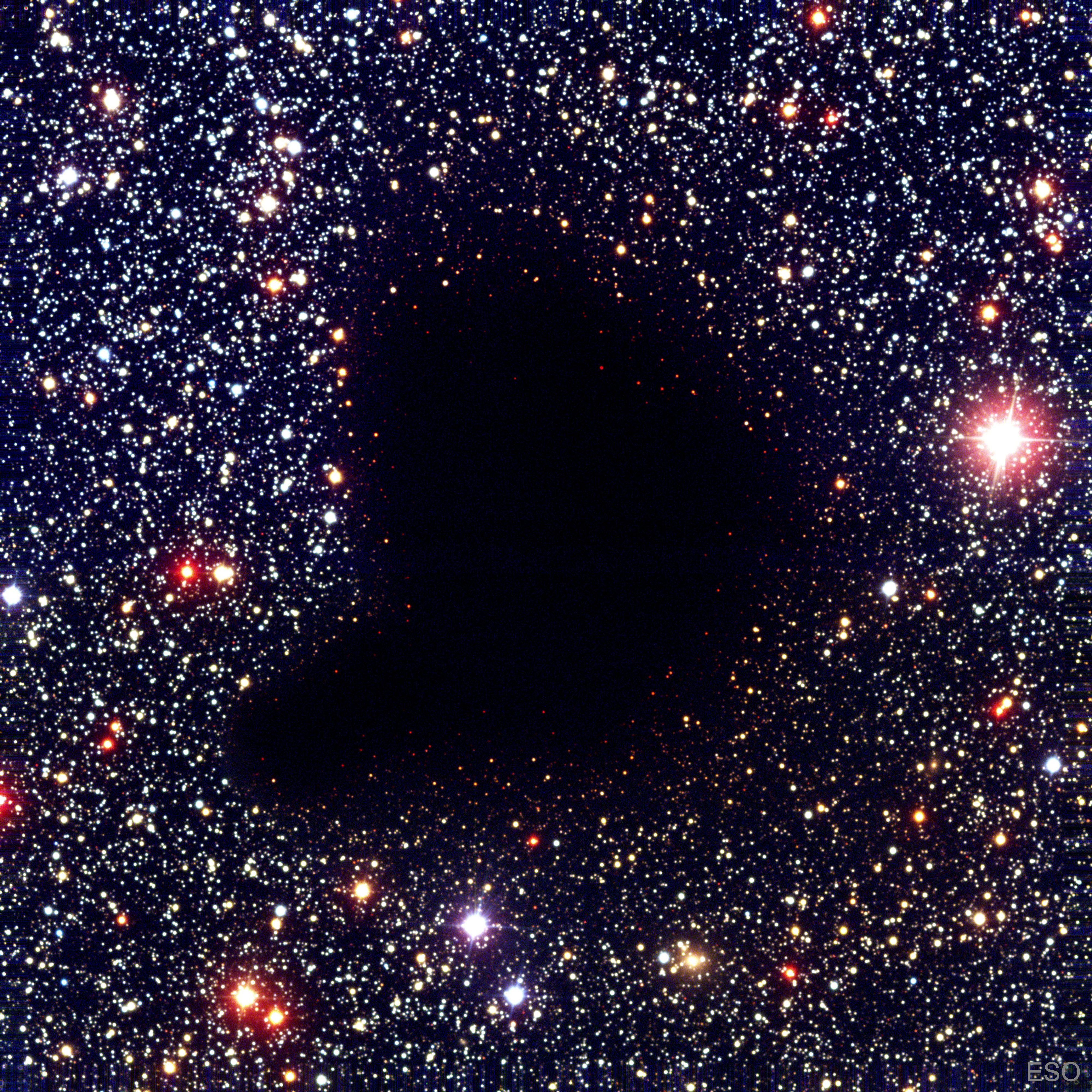
Astronomy picture of the day - 2017 October 8 - Dark Molecular Cloud Barnard 68

See Explanation.  Clicking on the picture will download
 the highest resolution version available.
Dark Molecular Cloud Barnard 68 
Image Credit: FORS Team8.2-meter VLT AntuESO
Explanation: Where did all the stars go? What used to be considered a hole in the sky is now known to astronomers as a dark molecular cloud. Here, a high concentration of dust and molecular gas absorb practically all the visible light emitted from background stars. The eerily dark surroundings help make the interiors of molecular clouds some of the coldest and most isolated places in the universe. One of the most notable of these dark absorption nebulae is a cloud toward the constellation Ophiuchus known as Barnard 68pictured here. That no stars are visible in the center indicates that Barnard 68 is relatively nearby, with measurements placing it about 500 light-years away and half a light-yearacross. It is not known exactly how molecular clouds like Barnard 68 form, but it is known that these clouds are themselves likely places for new stars to form. In fact, Barnard 68 itself has been found likely to collapse and form a new star system. It is possible to look right through the cloud in infrared light.

2017-10-07

Astronomy picture of the day - 2017 October 7 - Eclipsosaurus Rex

See Explanation.  Clicking on the picture will download
 the highest resolution version available.
Eclipsosaurus Rex 
Image Credit & CopyrightFred Espenak (MrEclipse.com)
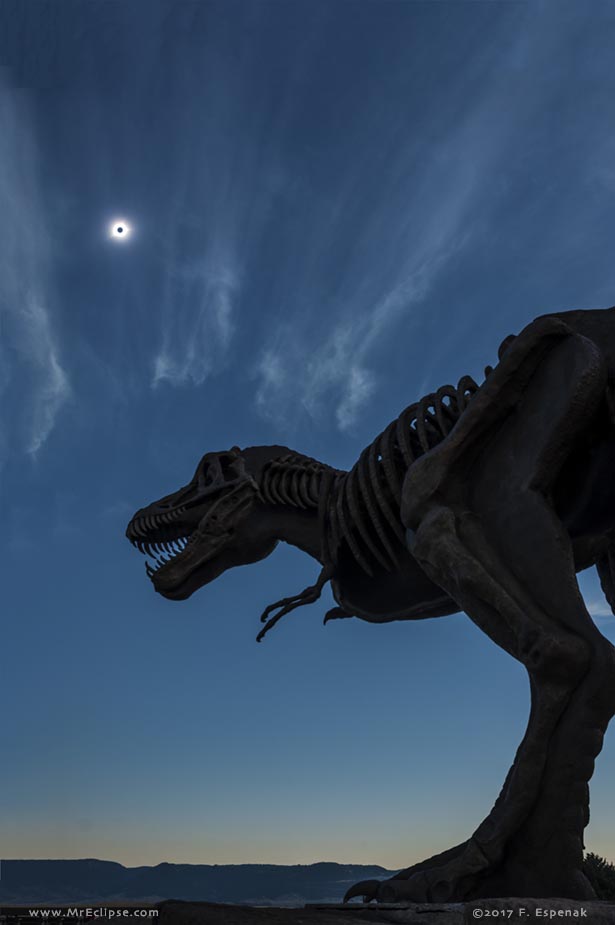
Explanation: We live in an era where total solar eclipses are possible because at times the apparent size of the Moon can just cover the disk of the Sun. But the Moon is slowly moving away from planet Earth. Its distance is measuredto increase about 1.5 inches (3.8 centimeters) per year due to tidal friction. So there will come a time, about 600 million years from now, when the Moon is far enough away that the lunar disk will be too small to ever completely cover the Sun. Then, at best only annular eclipses, a ring of fire surrounding the silhouetted disk of the too small Moon, will be seen from the surface of our fair planet. Of course the Moon was slightly closer and loomed a little larger 100 million years ago. So during the age of the dinosaurs there were more frequent total eclipses of the Sun. In front of the Tate Geological Museum at Casper College in Wyoming, this dinosaur statue posed with a modern total eclipse, though. An automated camera was placed under him to shoot his portrait during the Great American Eclipse of August 21.

2017-10-06

Expressões populares portuguesas - "Isto não é a casa da Joana".


Résultat de recherche d'images pour "imagem de casa de prostitutas"

Estar à vontade não é estar “à vontadinha”, já diz o bom português. E há pessoas que não entendem onde está o limite quando se 
relacionam com alguém.


Joana foi uma mulher do século XIV, condessa da Provença e rainha de Nápoles. Em 1347, Joana tinha 21 anos e decidiu impor regras aos bordéis de Avignon, para onde fugiu quando se tornou suspeita da morte do marido ou – porque a história tem duas versões, alerta o livro – foi expulsa da Igreja devido à vida boémia que levava.

A regra da Joana: todos os estabelecimentos de prostituição tinham de ter uma porta (fechada) para bater antes de entrar.

Astronomy picture of the day - 2017 October 6 - Global Aurora at Mars

2017 October 6
See Explanation.  Clicking on the picture will download
 the highest resolution version available.
Global Aurora at Mars 
Image Credit: MAVENLASP, University of ColoradoNASA
Explanation: A strong solar event last month triggered intense global aurora at Mars. Before (left) and during (right) the solar storm, these projections show the sudden increase in ultraviolet emission from martian aurora, more than 25 times brighter than auroral emission previously detected by the orbiting MAVEN spacecraft. With a sunlit crescent toward the right, data from MAVEN's ultraviolet imaging spectrograph is projected in purple hues on the night side of Mars globes simulated to match the observation dates and times. On Mars, solar storms can result in planet-wide aurora because, unlike Earth, the Red Planet isn't protected by a strong global magnetic field that can funnel energetic charged particles toward the poles. For all those on the planet's surface during the solar storm, dangerous radiation levels were double any previously measured by the Curiosity rover. MAVEN is studying whether Mars lost its atmosphere due to its lack of a global magnetic field.

2017-10-05

Astronomy picture of the day - 2017 October 5 - Pluto's Bladed Terrain

See Explanation.  Clicking on the picture will download
 the highest resolution version available.
Pluto's Bladed Terrain 
Image Credit: NASAJohns Hopkins Univ./APLSouthwest Research Institute
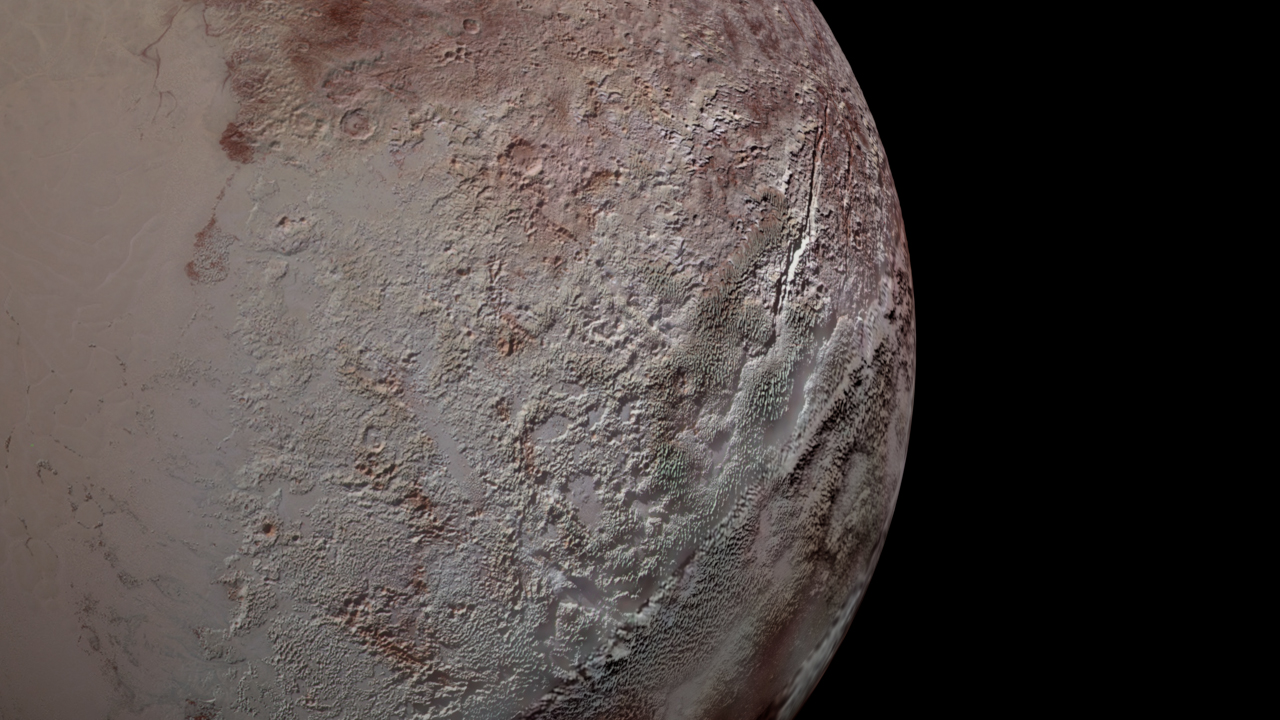
Explanation: Imaged during the New Horizons spacecraft flyby in July 2015, Pluto's bladed terrain is captured in this close-up of the distant world. The bizarre texture belongs to fields of skyscraper-sized, jagged landforms made almost entirely of methane ice, found at extreme altitudes near Pluto's equator. Casting dramatic shadows, the tall, knife-like ridges seem to have been formed by sublimation. By that process, condensed methane ice turns directly to methane gas without passing through a liquid phase during Pluto's warmer geological periods. On planet Earth, sublimation can also produce standing fields of knife-like ice sheets, found along the high plateau of the Andes mountain range. Known as penitentes, those bladed structures are made of water ice and at most a few meters tall.

2017-10-04

Lisboa, uma cidade fantastica - Video

LISBOA

Astronomy picture of the day - 2017 October 4 - The Soul Nebula in Infrared from Herschel

See Explanation.  Clicking on the picture will download
 the highest resolution version available.
The Soul Nebula in Infrared from Herschel 
Image Credit & LicenseESAHerschel Space Obs.NASAJPL-Caltech
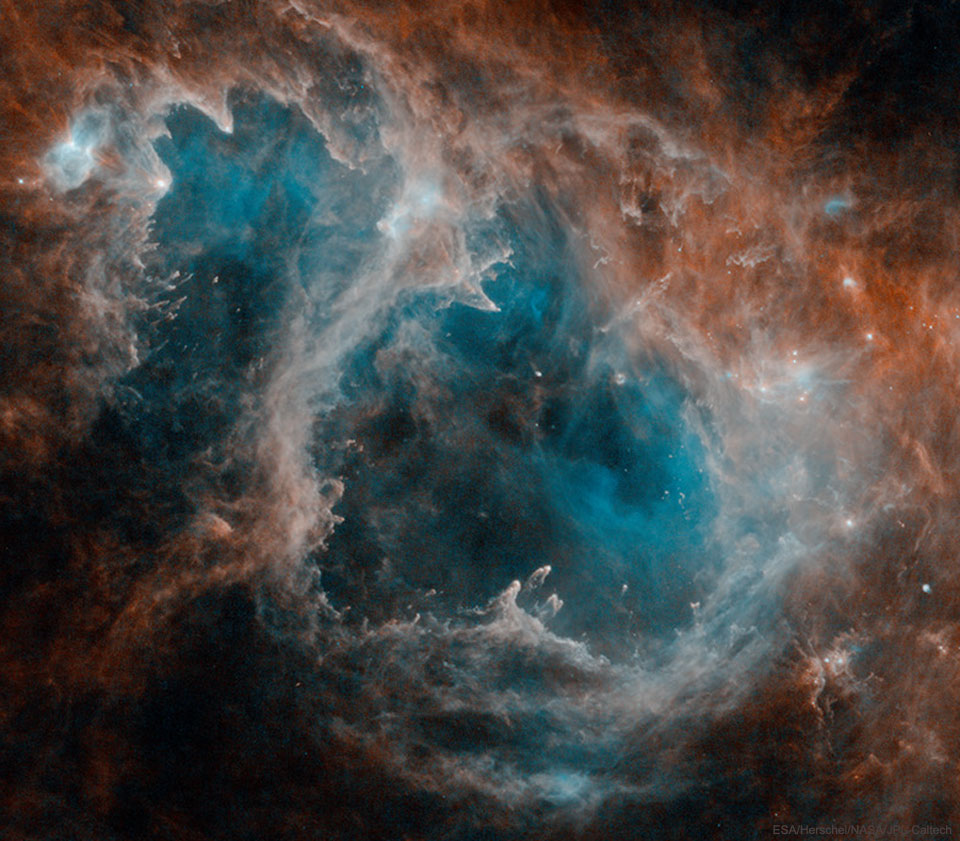
Explanation: Stars are forming in the Soul of the Queen of Aethopia. More specifically, a large star forming region called the Soul Nebula can be found in the direction of the constellation Cassiopeia, who Greek mythology credits as the vain wife of a King who long ago ruled lands surrounding the upper Nile river. The Soul Nebula houses several open clusters of stars, a large radio source known as W5, and huge evacuated bubbles formed by the winds of young massive stars. Located about 6,500 light years away, the Soul Nebula spans about 100 light years and is usually imaged next to its celestial neighbor the Heart Nebula (IC 1805). The featured image, impressively detailed, was taken last month in several bands of infrared light by the orbiting Herschel Space Observatory.

2017-10-03

"Lisboa vista do céu" - Video

"Lisboa vista do céu"

Astronomy picture of the day - 2017 October 3 - Ice Ring around Nearby Star Fomalhaut

See Explanation.  Clicking on the picture will download
 the highest resolution version available.
Ice Ring around Nearby Star Fomalhaut 
Image Credit: ALMA (ESO/NAOJ/NRAO), M. MacGregor; NASA/ESA Hubble, P. Kalas; B. Saxton (NRAO/AUI/NSF)
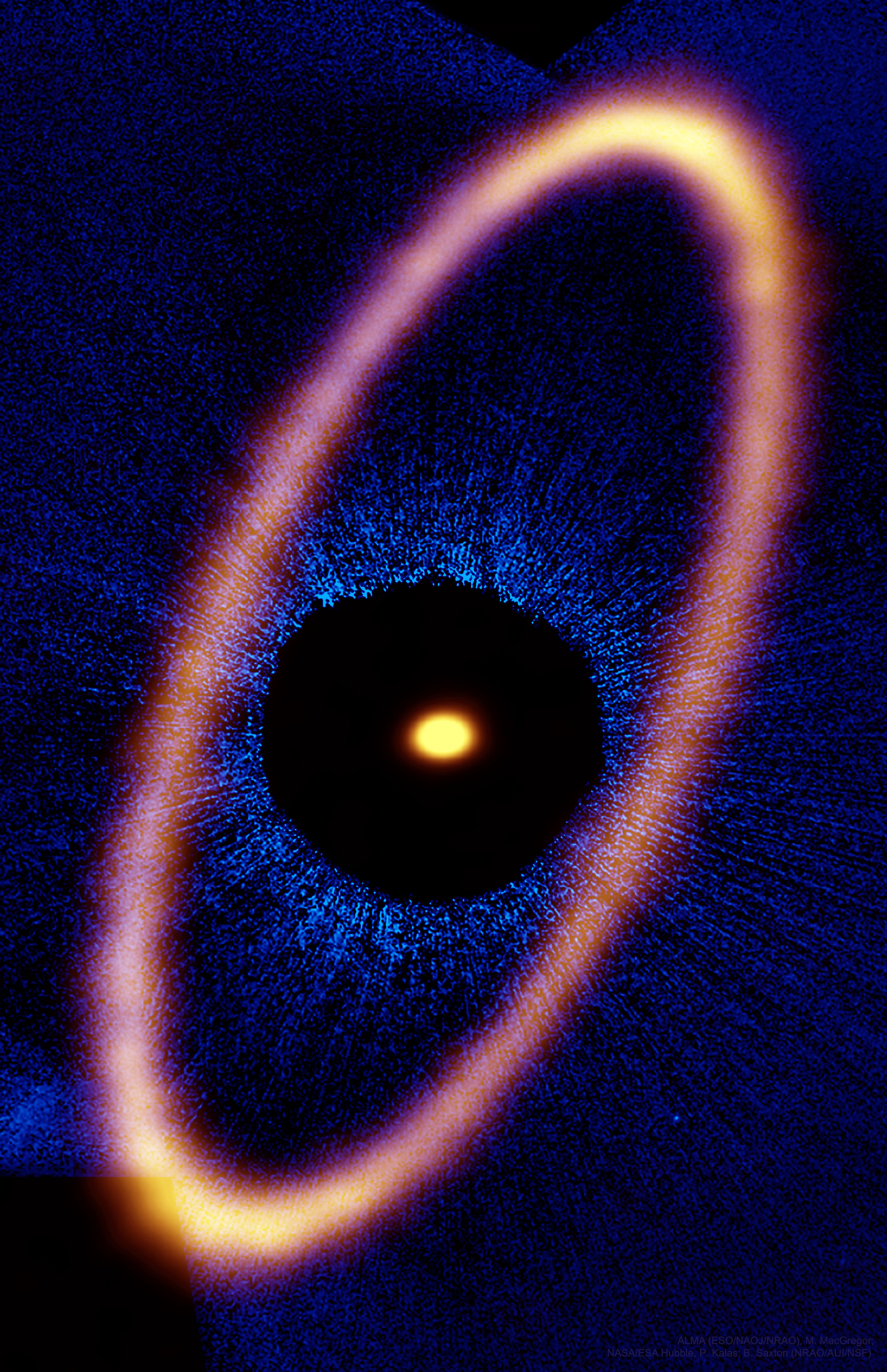
Explanation: Why is there a large ice ring around Fomalhaut? This interesting star -- easily visible in the night sky -- lies only about 25 light-years away and is known to be orbited by at least one planet, Dagon, as well as several inner dust disks. More intriguing, perhaps, is an outer ring, first discovered about 20 years ago, that has an unusually sharp inner boundary. The featured recent image by the Atacama Large Millimeter Array (ALMA) shows this outer ring with complete and unprecedented detail -- in pink -- superposed on a Hubble image of the Fomalhaut system in blue. A leading theory holds that this ring resulted from numerous violent collisions involving icy comets and planetesimals, the component objects of planets, while the ring boundaries are caused by the gravity of yet unseen planets. If correct, any interior planets in the Fomalhaut system are likely being continually pelted by large meteors and comets -- an onslaught last seen in our own planetary system four billion years ago in an episode called the Late Heavy Bombardment.

Playing For Change - "Haiti oh" - Video - Music - Live outside

"Haiti oh"