2018-01-30

Astronomy picture of the day - 2018 January 30 - Venus at Night in Infrared from Akatsuki

See Explanation.  Clicking on the picture will download
 the highest resolution version available.
Venus at Night in Infrared from Akatsuki
Image Credit: JAXAISASDARTSProcessing & Copyright: Damia Bouic
Explanation: Why is Venus so different from Earth? To help find out, Japan launched the robotic Akatsuki spacecraft which entered orbit around Venus late in 2015 after an unplanned five-year adventure around the inner Solar System. Even though Akatsuki was past its original planned lifetime, the spacecraft and instruments were operating so well that much of its original mission was reinstated. Also known as the Venus Climate Orbiter, Akatsuki'sinstruments investigated unknowns about Earth's sister planet, including whether volcanoes are still active, whether lightning occurs in the dense atmosphere, and why wind speeds greatly exceed the planet's rotation speed. In thefeatured image taken by Akatsuki's IR2 camera, Venus's night side shows a jagged-edged equatorial band of high dark clouds absorbing infrared light from hotter layers deeper in Venus' atmosphere. The bright orange and black stripe on the upper right is a false digital artifact that covers part of the much brighter day side of Venus. Analyses of Akatsuki images and data has shown that Venus has equatorial jet similar to Earth's jet stream.

2018-01-29

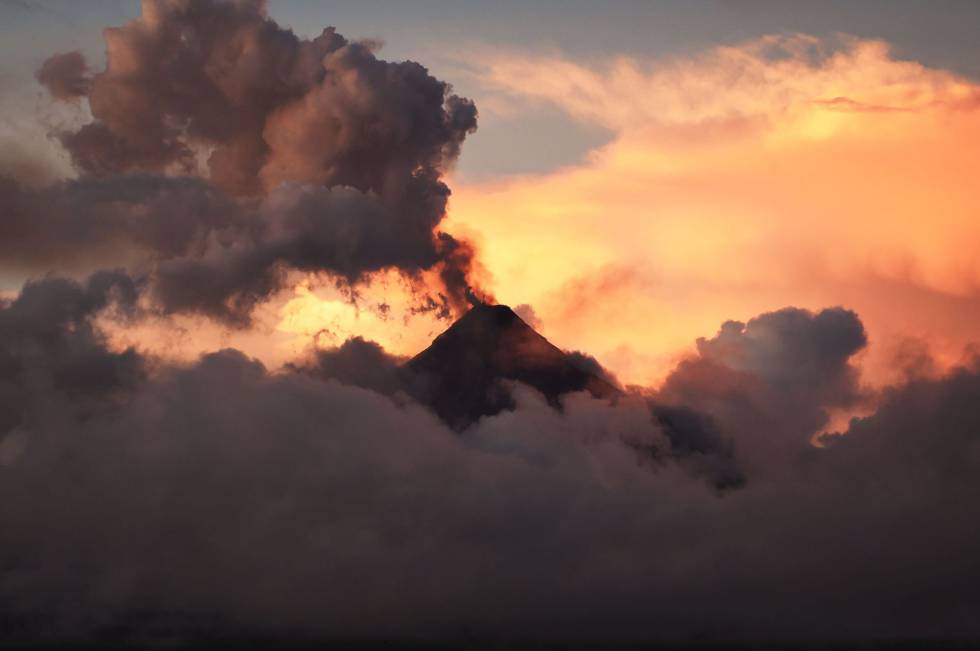
Imagenes del Mundo - Volcán Mayon - Filipinas

Vista del volcán Mayon desde la ciudad de Legazpi (Filipinas).

@naagaoshi - Imagens do inverno no Japão (1) - Fotografia

Imagens do inverno no Japão

Astronomy picture of the day - 2018 January 29 - The Spider and The Fly

See Explanation.  Clicking on the picture will download
 the highest resolution version available.
The Spider and The Fly 
Image Credit & Copyright: Joe Morris
Explanation: Will the spider ever catch the fly? Not if both are large emission nebulas toward the constellation of the Charioteer (Auriga). The spider-shaped gas cloud on the left is actually an emission nebula labelled IC 417, while the smaller fly-shaped cloud on the right is dubbed NGC 1931 and is both an emission nebula and a reflection nebula. About 10,000 light-years distant, both nebulas harbor young, open star clusters. For scale, the more compact NGC 1931 (Fly) is about 10 light-years across.

2018-01-28

Astronomy picture of the day - 2018 january 28 - A Total Lunar Eclipse Over Tajikistan

A Total Lunar Eclipse Over Tajikistan 
Video Credit & Copyright: Jean-Luc Dauvergne (Ciel et Espace); Music: Valère Leroy & Sophie Huet (Space-Music)
Explanation: If the full Moon suddenly faded, what would you see? The answer during the total lunar eclipse in 2011 was recorded in a dramatic time lapse video from Tajikistan. During a total lunar eclipse, the Earth moves between the Moon and the Sun, causing the moon to fade dramatically. The Moon never gets completely dark, though, since the Earth's atmosphere refracts some light. As the featured video begins, the scene may appear to be daytime and sunlit, but actually it is a nighttime and lit by the glow of the full Moon. As the Moon becomes eclipsed and fades, the wind dies down and background stars can be seen reflected in foreground lake. Most spectacularly, the sky surrounding the eclipsed moon suddenly appears to be full of stars and highlighted by the busy plane of our Milky Way Galaxy. The sequence repeats with a closer view, and the final image shows the placement of the eclipsed Moon near the EagleSwanTrifid, and Lagoon nebulas. Nearly two hours after the eclipse started, the moon emerges from the Earth's shadow and its bright full glare again dominates the sky. This Wednesday another total lunar eclipse will take place -- but this one will be during a rare Super Blue Blood Moon.

Maya Vronsky - "Cidade em Aguarela" - Aguarela

"Cidade em Aguarela" 

2018-01-27

Christian Fringe - "Manhã rústica" - Aguarela

"Manhã rústica" 

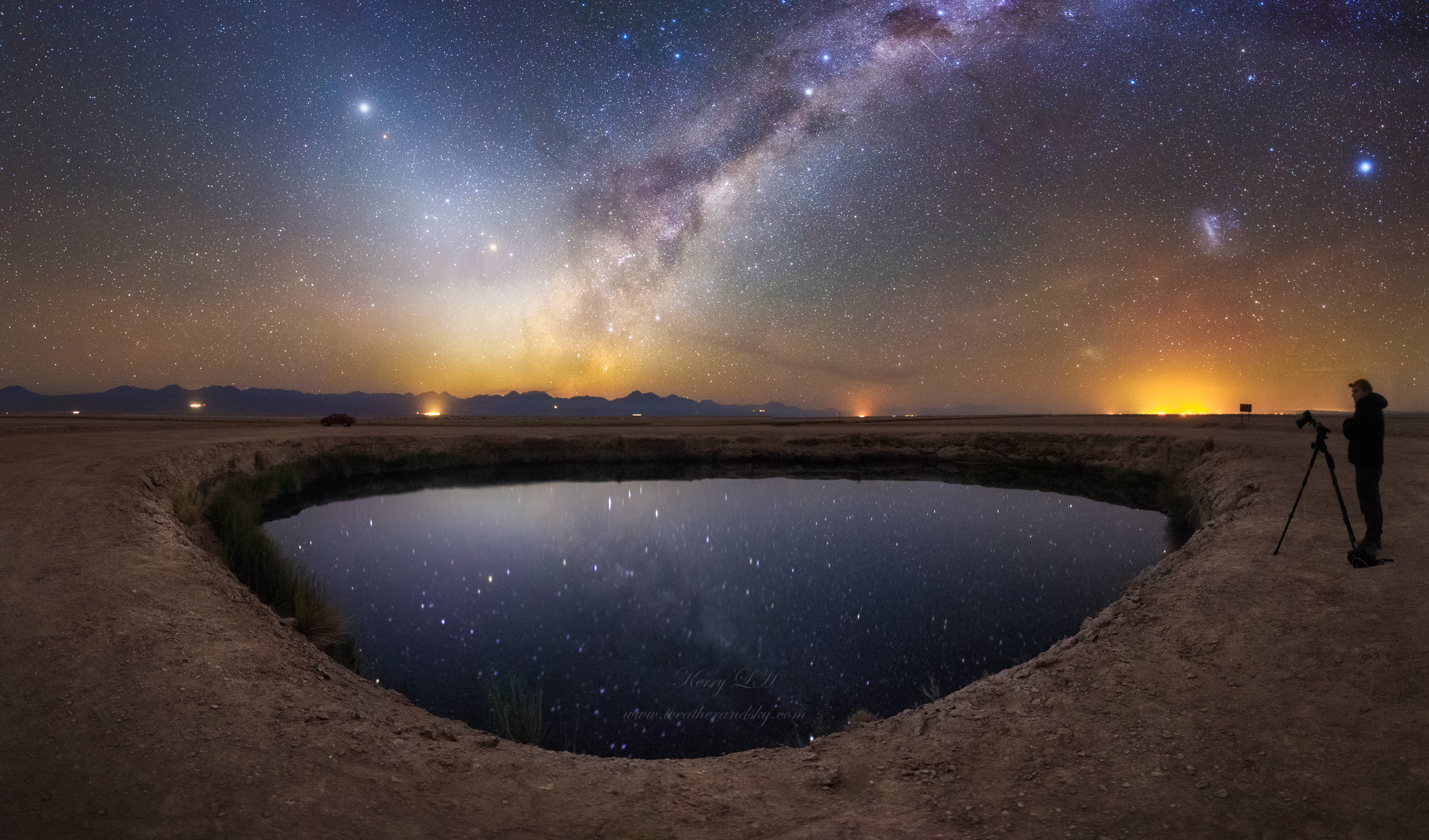
Astronomy picture of the day - 2018 January 27 - Laguna Starry Sky

See Explanation.  Clicking on the picture will download
 the highest resolution version available.
Laguna Starry Sky
Image Credit & CopyrightKerry-Ann Lecky Hepburn (Weather and Sky Photography)
Explanation: Staring toward the heavens, one of the many lagunas in the Atacama Desert salt flat calmly reflects a starry night sky near San Pedro de Atacama, Chile, planet Earth. Cosmic rifts of dust, star clouds, and nebulae of the central Milky Way galaxy are rising in the east, beyond a volcanic horizon. Caught in the six frame panorama serenely recorded in the early morning hours of January 15, planets Jupiter and Mars are close. Near the ecliptic, the bright planets are immersed in the Solar System's visible band of Zodiacal light extending up and left from the galactic center. Above the horizon to the south (right) are the Large and Small clouds of Magellan, satellite galaxies of the Milky Way.

2018-01-26

Toshiyuki Abe - "Pintura do sol" - Aguarela

"Pintura do sol" 

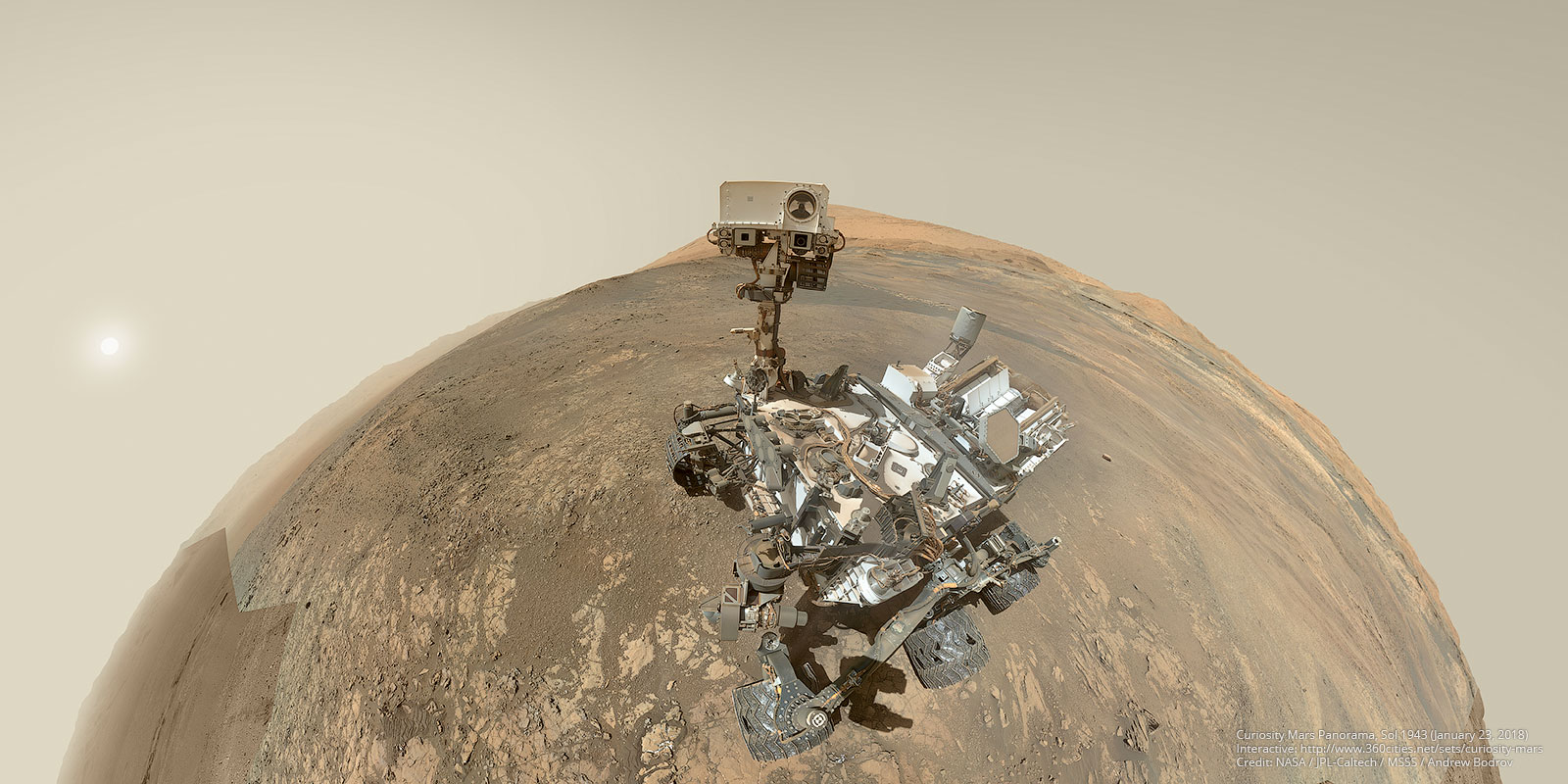
Astronomy picture of the day - 2018 January 26 - Selfie at Vera Rubin Ridge

See Explanation.  Clicking on the picture will download
 the highest resolution version available.
Selfie at Vera Rubin Ridge 
Image Credit: Image Credit: NASAJPL-CaltechMSSS - Panorama: Andrew Bodrov
Explanation: On sol 1943 of its journey of exploration across the surface of Mars, the Curiosity Rover recorded this selfie at the south rim of Vera Rubin Ridge. Of course a sol is a Martian solar day, about 40 minutes longer than an Earth day. Curiosity's sol 1943 corresponds to Earth date January 23, 2018. Also composed as an interactive 360 degree VR, the mosaicked panorama combines 61 exposures taken by the car-sized rover's Mars Hand Lens Imager (MAHLI). Frames containing the imager's arm have been edited out while the extended background used was taken by the rover's Mastcam on sol 1903. At the top of the rover's mast, sitting above the Mastcam, the laser-firingChemCam housing blocks out the distant peak of Mount Sharp.