Um dos fotógrafos mais célebres de seu tempo, Brassaï registrou Paris de forma irreverente. A noite parisiense exerceu um enorme fascínio sobre ele, que não cansou de fotografá-la.
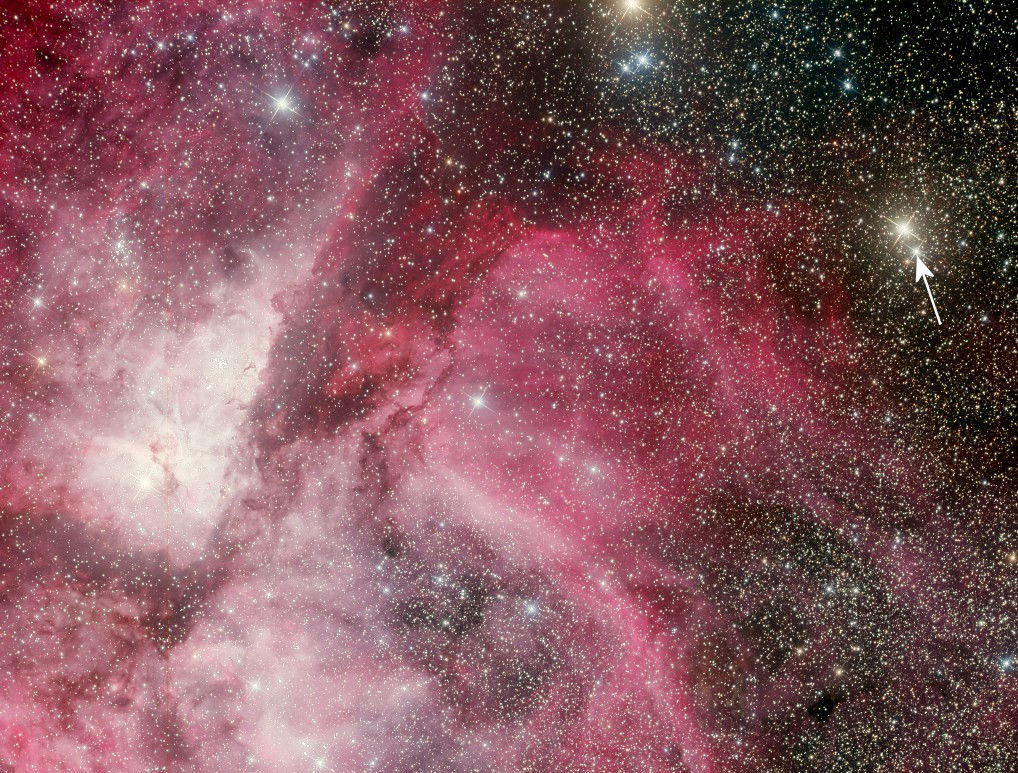
Announcing Nova Carinae 2018 Image Credit & Copyright: A. Maury & J. Fabrega
Explanation: How bright will Nova Carinae 2018 become? The new nova was discovered only last week. Although novas occur frequently throughout the universe, this nova, cataloged as ASASSN-18fv, is so unusually bright in theskies of Earth that it is now easily visible through binoculars in the southern hemisphere. Identified by the arrow, the nova occurs near the direction of the picturesque Carina Nebula. A nova is typically caused by a thermonuclear explosion on the surface of a white dwarf star that is accreting matter from a binary companion, although details of this outburst are currently unknown. Both professional and amateur astronomers will be monitoring this unusual stellar outburst in the coming weeks, looking to see how Nova Carinae2018 evolves, including whether it becomes bright enough to be visible to the unaided eye.
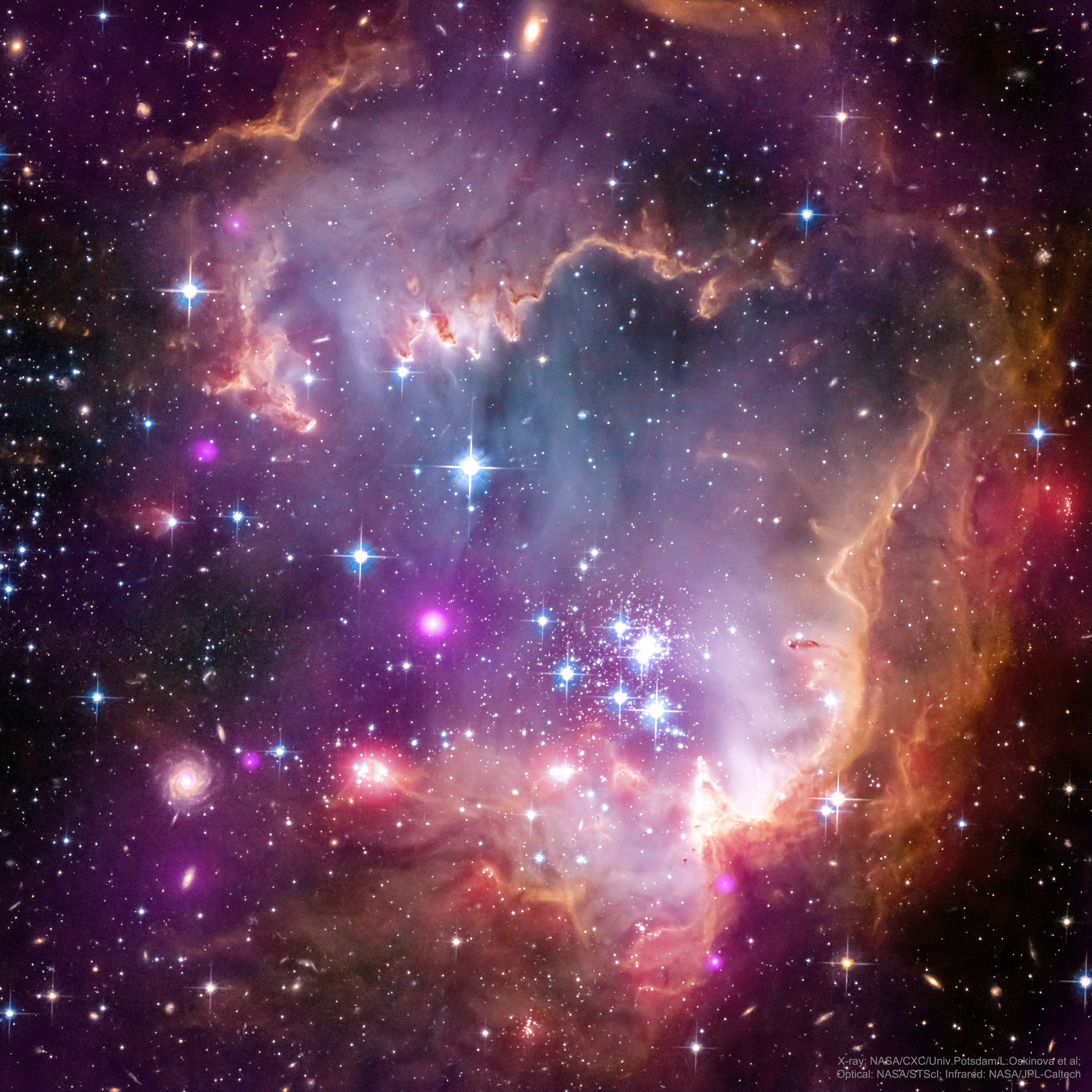
Explanation: Near the outskirts of the Small Magellanic Cloud, a satellite galaxy some 200 thousand light-years distant, lies 5 million year young star cluster NGC 602. Surrounded by natal gas and dust, NGC 602 is featured in thisstunning Hubble image of the region, augmented by images in the X-ray by Chandra, and in the infrared by Spitzer. Fantastic ridges and swept back shapes strongly suggest that energetic radiation and shock waves from NGC 602's massive young stars have eroded the dusty material and triggered a progression of star formation moving away from the cluster's center. At the estimated distance of the Small Magellanic Cloud, the Picture spans about 200 light-years, but a tantalizing assortment of background galaxies are also visible in this sharp multi-colored view. The background galaxies are hundreds of millions of light-years or more beyond NGC 602.