2015-11-04

Drawing from my mind - "Construindo" - 2013

"Construindo"

Bordeaux, 04-11-2015
JoanMira

Imagens - Estradas incriveis


CORBISEl túnel de Guoliang en las montañas de Taihang (Henan, China) se abrió en 1977 a la circulación. un paso de montaña tallado e
n la roca de 1,2 kilómetros, 4 metros de ancho y 5 de alto.

Fotos - "Por um caminho encantado" - Aufrery - 26-11-2014

"Por um caminho encantado"

Aufrery, 26-11-2014
JoanMira

Fotos - "Ui que medo" - 04-11-2015 -

"Ui, que medo!"

Bordeaux, 04-11-2015
JoanMira

Imagens do Mundo - Portugal - Evora - O Templo de Diana


Centre historique d'Évora
Cette ville-musée qui remonte à l'époque romaine a atteint son âge d'or au XVe siècle lorsqu'elle est devenue la résidence des rois de Portugal. Son caractère unique vient de ses maisons blanchies à la chaux et décorées d'azulejos et de balcons de fer forgé qui datent des XVIe-XVIIIe siècles. Ses monuments ont eu une influence décisive sur l'architecture portugaise au Brésil.

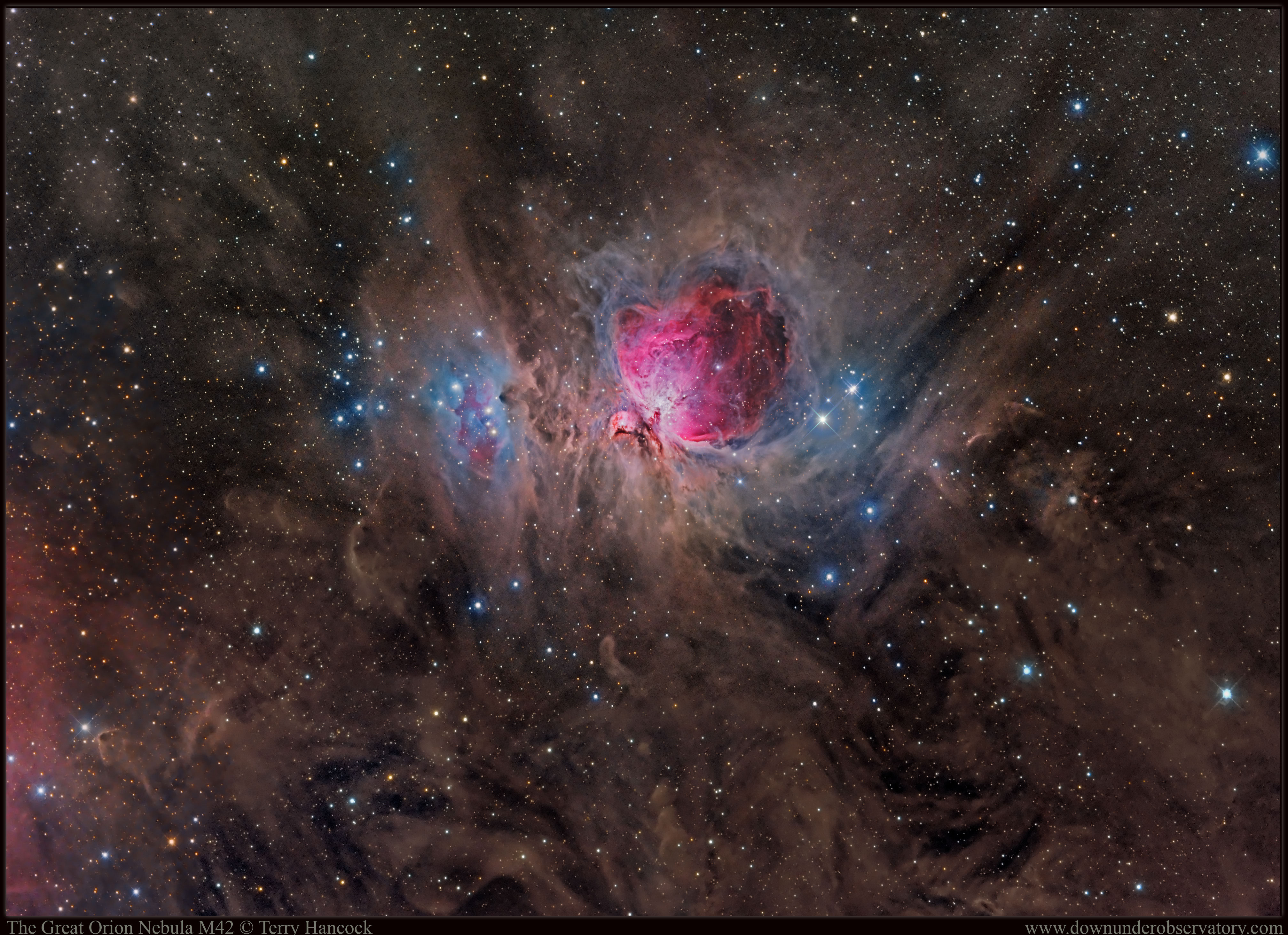
Astronomy picture of the day - 2015 November 4 - The Great Orion Nebula M42

See Explanation.  Clicking on the picture will download
 the highest resolution version available.
The Great Orion Nebula M42 
Image Credit & Copyright: Terry Hancock (Down Under Observatory)
Explanation: The Great Nebula in Orion, also known as M42, is one of the most famous nebulas in the sky. The star forming region's glowing gas clouds and hot young stars are on the right in this sharp and colorful image that includes the bluish reflection nebulae NGC 1977 and friends on the left. Located at the edge of an otherwise invisible giant molecular cloud complex, these eye-catching nebulas represent only a small fraction of this galactic neighborhood's wealth of interstellar material. Within the well-studied stellar nursery, astronomers have also identified what appear to be numerous infant planetary systems. The gorgeous skyscape spans nearly two degrees or about 45 light-years at the Orion Nebula's estimated distance of 1,500 light-years.

Texto - “Assis, um socialista a tramar a esquerda”


 Ver imagem original


Não vou aqui repetir os propósitos de semelhante traidor - quem estiver interessado pode lê-los no Correio da Manhã - apenas alvitrar que para esse tipo de individuos existem estructuras apropriadas....

Steps e Doors, que já sorriam, riem agora às gargalhadas! Pois não, um homem suposto ser de esquerda, a dar-lhes de novo o Poder de mãos beijadas! 

Será que ser de esquerda  ou de direita já nada significa? Será  que o Povo tem razão quando se demite do direito de voto porque "botar" nuns ou outros é sempre a mesma coisa? Será  que estes "burros" possam levar-nos a duvidar da democracia? Será  que o ego dos politicos se possa sobrepor de maneira tão descarada ao interesse comum? São tantas as questões…

Lembro-me de uma frase do meu trabalhador de pai, tentando granjear, de sol a sol, alguns miseros tostões, atirados à laia de esmola.

Lembro-me do que ele dizia, exausto, ao chegar a casa: "isto só  s'enderêta duma manêra..." E a frase era quase sempre a mesma: "Pôr esses malandros engravatados a trabalhar!”.

Bordeaux, 03-11-2015


JoanMira

2015-11-03

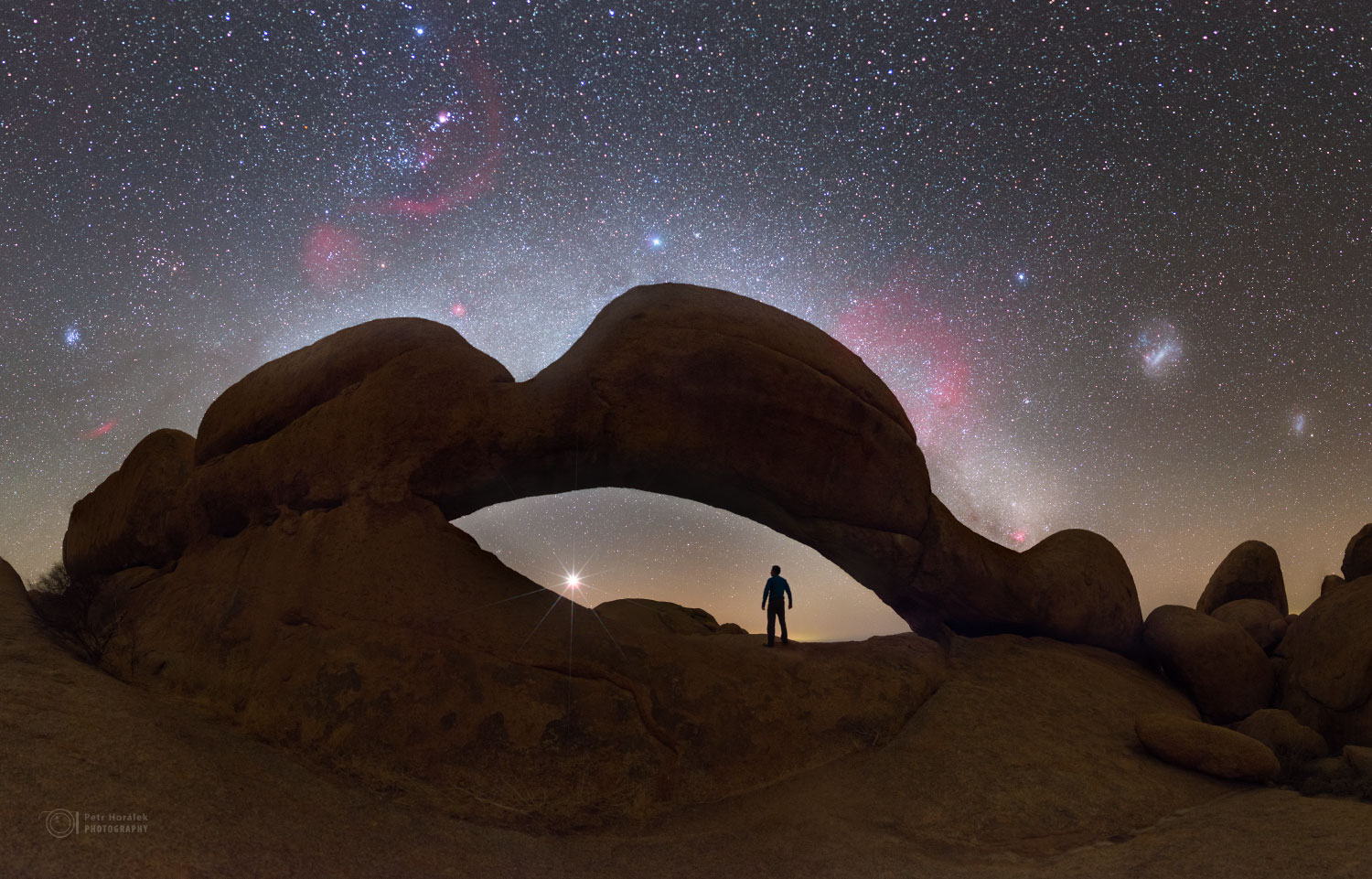
Astronomy picture of the day - 2015 November 3 - Seeking Venus under the Spitzkoppe Arch -

See Explanation.
Moving the cursor over the image will bring up an annotated version.
Clicking on the image will bring up the highest resolution version
available.
Seeking Venus under the Spitzkoppe Arch 
Image Credit & Copyright: Petr HorálekRollover Annotation: Judy Schmidt
Explanation: What's that in the sky? Although there was much to see in this spectacular panorama taken during the early morning hours of a day in late September, the brightest object in the sky was clearly the planet Venus. In thefeatured image, Venus was captured actually through a natural rock bridge, itself picturesque, in SpitzkoppeNamibia. The planet, on the left of the opening, was complemented by a silhouette of the astrophotographer on the right. Above and beyond the rock bridge were many famous icons of a dark night sky, including, from left to right, the Pleiades star cluster, the Orion Nebula, the bright star Sirius, and the Large and Small Magellanic Clouds. This week,Venus remains visible to the east in the pre-dawn sky, being complemented by Mars, which is angularly quite close.

2015-11-02

Fotografia - Lisboa antiga - Rua do Ouro - 1930


Rua do Ouro 1930

Astronomy picture of the day - 2015 November 2 - Comet ISON Being Destroyed by the Sun

Afficher l'image d'origine


Comet ISON Being Destroyed by the Sun 
Video Credit: NASAESASOHO
Explanation: Most comets don't survive a close encounter with the Sun. Two years ago this month, though, Comet ISON was thought by some to be big enough to withstand its perilous sungrazing dive. The featured video shows the drama as it was recorded by NASA's Solar and Heliospheric Observatory (SOHO) satellite. As many Earthlings watched in fascination, a bright area did emerge from closest approach, but it soon faded and dispersed. It is now assumed that no large fragments of Comet C/2012 S1 (ISON) survived. Besides the comet, the active Sun is seen to eject puffs of plasma known as coronal mass ejections. Launched in 1995, sun-orbiting SOHO has become a historic device in the discovery and tracking of comets known as sungrazers. Two months ago, a comet designated SOHO 3000 was named in honor of the record 3000th comet that was discovered on SOHO images, a total that amounts to about half of all known comets.