"Le vent nous portera"
2015-11-28
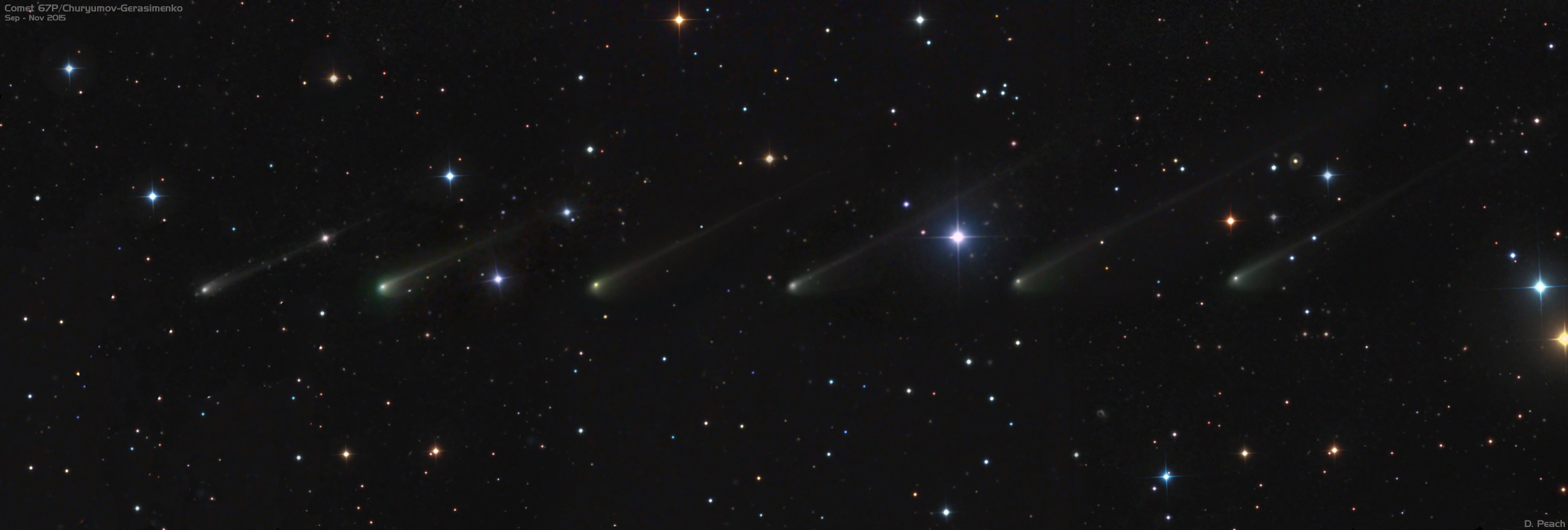
Astronomy picture of the day - 28-11-2015 - Rosetta and Comet Outbound
Image Credit & Copyright: Damian Peach/SEN
Explanation: Not a bright comet, 67P/Churyumov-Gerasimenko now sweeps slowly through planet Earth's predawn skies near the line-up of planets along the ecliptic. Still, this composite of telescopic images follows the comet's progress as it moves away from the Sun beyond the orbit of Mars, from late September (left) through late November (far right). Its faint but extensive coma and tails are viewed against the colorful background of stars near the eastern edge of the constellation Leo. A year ago, before its perihelion passage, the comet was less active, though. Then the Rosetta mission's lander Philae made it's historic landing, touching down on the surface of the comet's nucleus.
2015-11-27
Imagens do Mundo - Hannover - Alemanha
Un hombre corre por Herrenhaeuser Allee en Hannover (Alemania).
JULIAN STRATENSCHULTE (EFE)
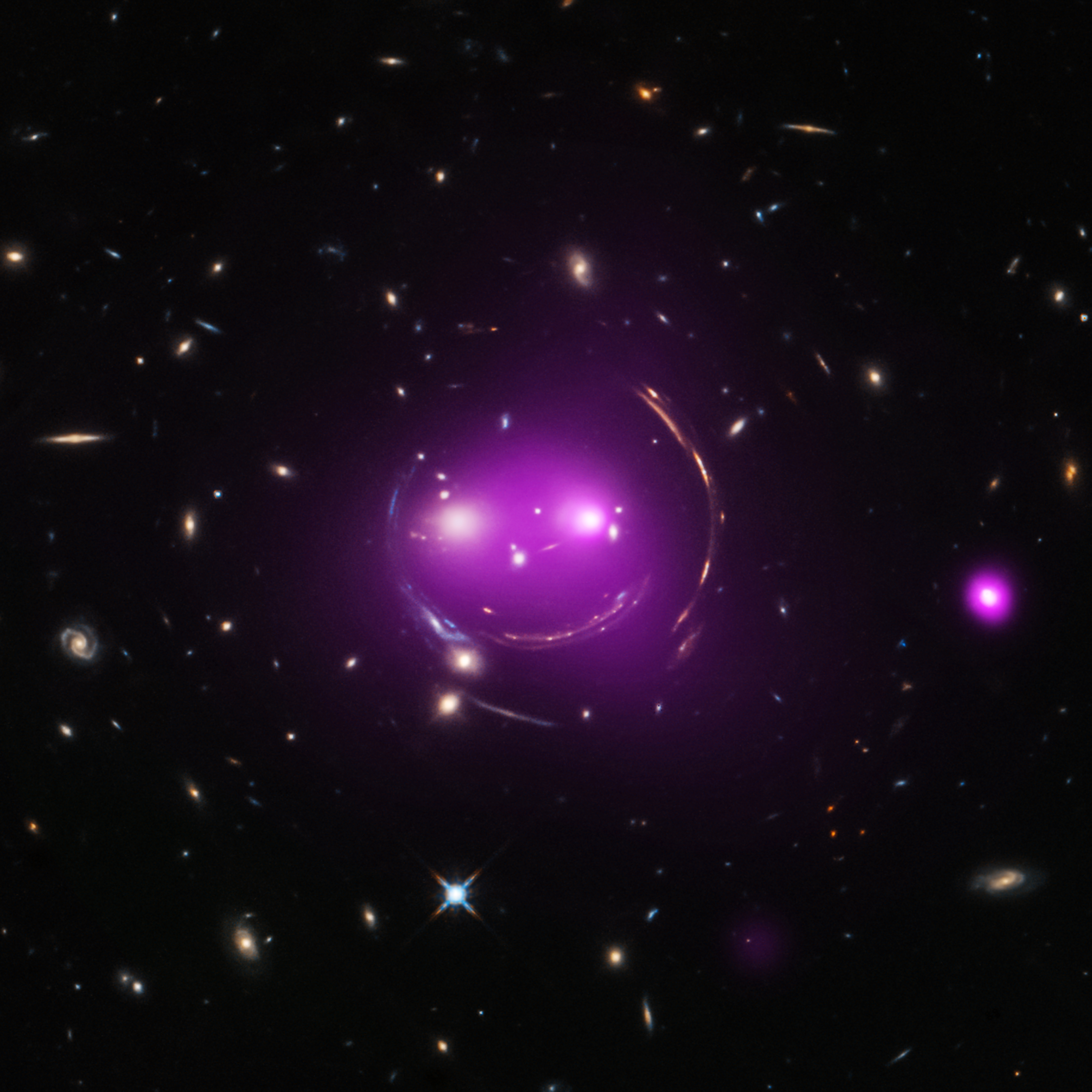
Astronomy picture of the day - 2015 November 27 - Gravity's Grin
Image Credit: X-ray - NASA / CXC / J. Irwin et al. ; Optical - NASA/STScI
Explanation: Albert Einstein's general theory of relativity, published 100 years ago this month, predicted the phenomenon of gravitational lensing. And that's what gives these distant galaxies such a whimsical appearance, seen through the looking glass of X-ray and optical image data from the Chandra and Hubble space telescopes. Nicknamed the Cheshire Cat galaxy group, the group's two large elliptical galaxies are suggestively framed by arcs. The arcs are optical images of distant background galaxies lensed by the foreground group's total distribution of gravitational mass dominated by dark matter. In fact the two large elliptical "eye" galaxies represent the brightest members of their own galaxy groups which are merging. Their relative collisional speed of nearly 1,350 kilometers/second heats gas to millions of degrees producing the X-ray glow shown in purple hues. Curiouser about galaxy group mergers? The Cheshire Cat group grins in the constellation Ursa Major, some 4.6 billion light-years away.
2015-11-26
Portugal. António Costa nommé Premier ministre
Après une dernière entrevue au matin du 24 novembre avec l’intéressé, le président portugais Aníbal Cavaco Silva a nommé le leader socialiste António Costa Premier ministre. Même si le président avait fait miroiter la possibilité d’un “gouvernement de gestion” – qui gèrerait les affaires provisoires jusqu’à de prochaines élections–, il a finalement fait le choix d’accepter que la coalition de gauche, majoritaire au parlement, forme un gouvernement. Le 10 novembre, l’alliance du Parti socialiste, du bloc de gauche (gauche radicale) et du Parti communiste portugais avait censuré le précédent gouvernement – minoritaire – de Pedro Passos Coelho.
La version en ligne de l’hebdomadaire portugais Expresso titre d’ailleurs sur les deux informations : “Costa nommé Premier ministre, Cavaco n’a pas voulu d’un gouvernement de gestion”. Selon l’hebdomadaire, Cavaco Silva aurait finalement jugé “qu’un gouvernement de gestion n’était pas dans l’intérêt national […] car la Constitution ne permettait pas une dissolution du Parlement avant le mois d’avril de l’année prochaine”.
Le gouvernement de Costa devrait être composé uniquement de personnalités issues du Parti socialiste et dont la liste avait été déjà ébruitée dans la presse. Selon Expresso, on pressent l’économiste Mário Centeno aux Finances, Manuel Caldeira Cabral à l’Economie et Augusto Santos Silva au ministère des Affaires étrangères. La Culture, qui redevient un ministère à part entière, pourrait revenir à l’actrice et député Inês de Medeiros ou à João Soares, le fils de l’ancien président Mário Soares.
Courrier International - France
Las 10 razas de perros más raras del mundo - 4) Perro sin pelo del Perú
También conocido como viringo o perro calato, ha sido reconocido oficialmente como patrimonio nacional de Perú. Estos perros fueron adorados por los incas. Según la tradición de su país, abrazarlos puede ayudar a solucionar problemas digestivos. (Foto: www.chiennoble.com)
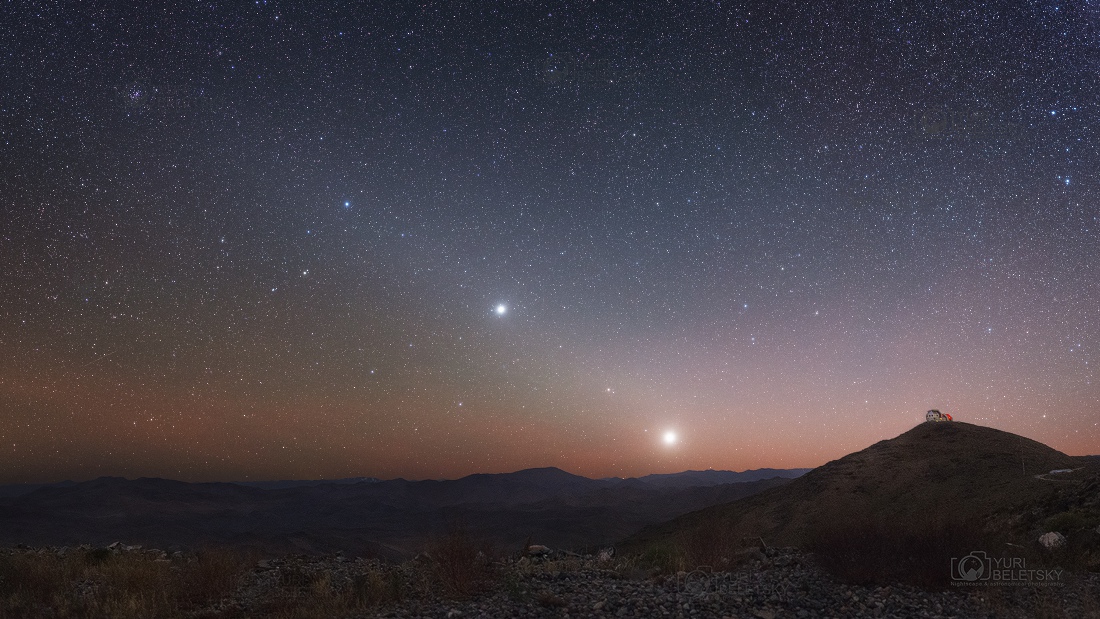
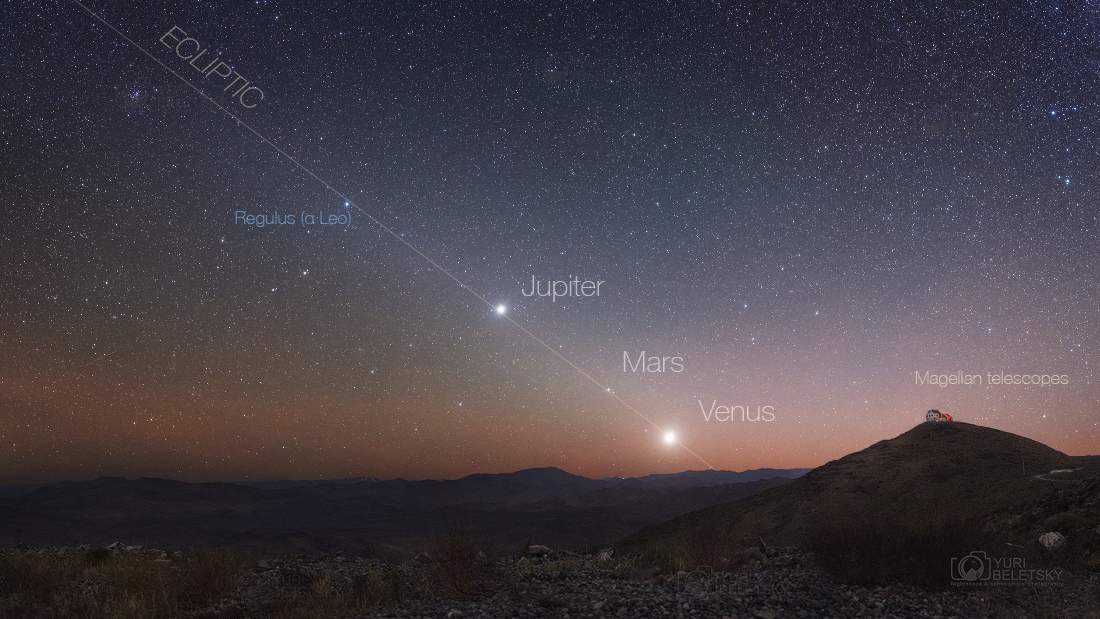
Astronomy picture of the day - 2015 November 26 - Planets of the Morning
Image Credit & Copyright: Yuri Beletsky (Carnegie Las Campanas Observatory, TWAN)
Explanation: Planet Earth's horizon stretches across this recent Solar System group portrait, seen from the southern hemisphere's Las Campanas Observatory. Taken before dawn it traces the ecliptic with a line-up familiar to November's early morning risers. Toward the east are bright planets Venus, Mars, and Jupiter as well as Regulus, alpha star of the constellation Leo. Of course the planets are immersed in the faint glow of zodiacal light, visible from the dark site rising at an angle from the horizon. Sometimes known as the false dawn, it's no accident the zodiacal light and planets both lie along the ecliptic. Formed in the flattened protoplanetary disk, the Solar System's planet's all orbit near the ecliptic plane, while dust near the plane scatters sunlight, the source of the faint zodiacal glow.
2015-11-25
Quem é José Luis Carneiro? (Recem-nomeado Secretario de Estado das Comunidades)
O líder da federação do Porto do PS – a maior distrital do partido – foi apoiante de António José Seguro, anterior líder socialista, e até há pouco tempo presidente da Câmara de Baião e da Comissão de Recursos Naturais do Comité das Regiões da UE. Tem 44 anos.
Novo Secretario de Estado das Comunidades Portuguesas: José Luis Carneiro
O novo Secretario das Comunidades Portuguesas é José Luis Carneiro. (Em actualização)...
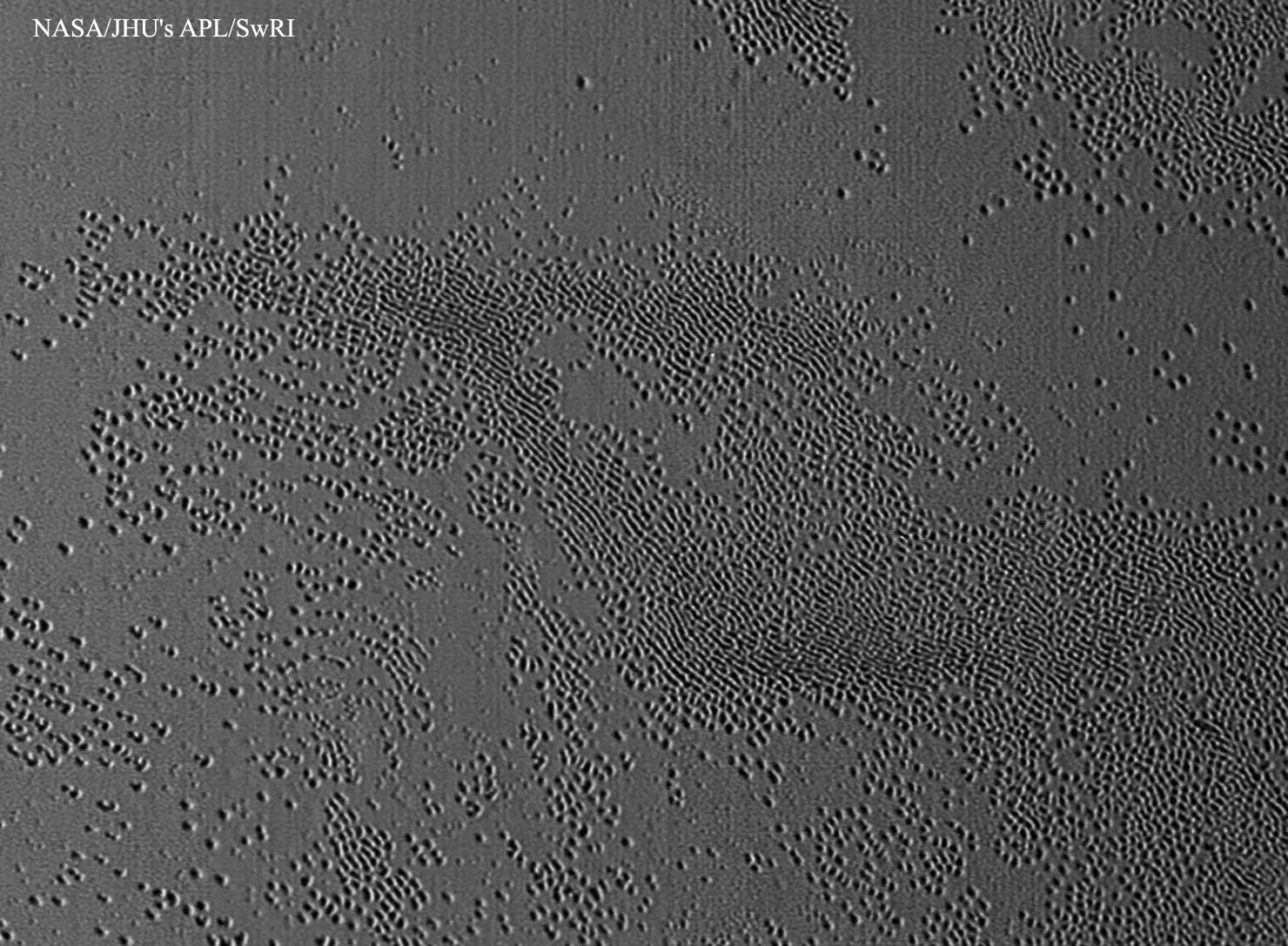
Astronomy picture of the day - 2015 November 25 - Unusual Pits Discovered on Pluto
Image Credit: NASA, Johns Hopkins U. APL, SwRI
Explanation: Why are there unusual pits on Pluto? The indentations were discovered during the New Horizons spacecraft's flyby of the dwarf planet in July. The largest pits span a kilometer across and dip tens of meters into a lake offrozen nitrogen, a lake that sprawls across Sputnik Planum, part of the famous light-colored heart-shaped region named Tombaugh Regio. Although most pits in the Solar System are created by impact craters, these depressions look different -- many are similarly sized, densely packed, and aligned. Rather, it is thought that something has caused these specific areas of ice to sublimate and evaporate away. In fact, the lack of overlying impact craters indicates these pits formed relatively recently. Even though the robotic New Horizons is now off to a new destination, it continues to beam back to Earth new images and data from its dramatic encounter with Pluto.
Inscription à :
Commentaires (Atom)