2016-02-03

Astronomy picture of the day - 2016 February 3 - Galaxy Wars: M81 versus M82

See Explanation.  Clicking on the picture will download
 the highest resolution version available.
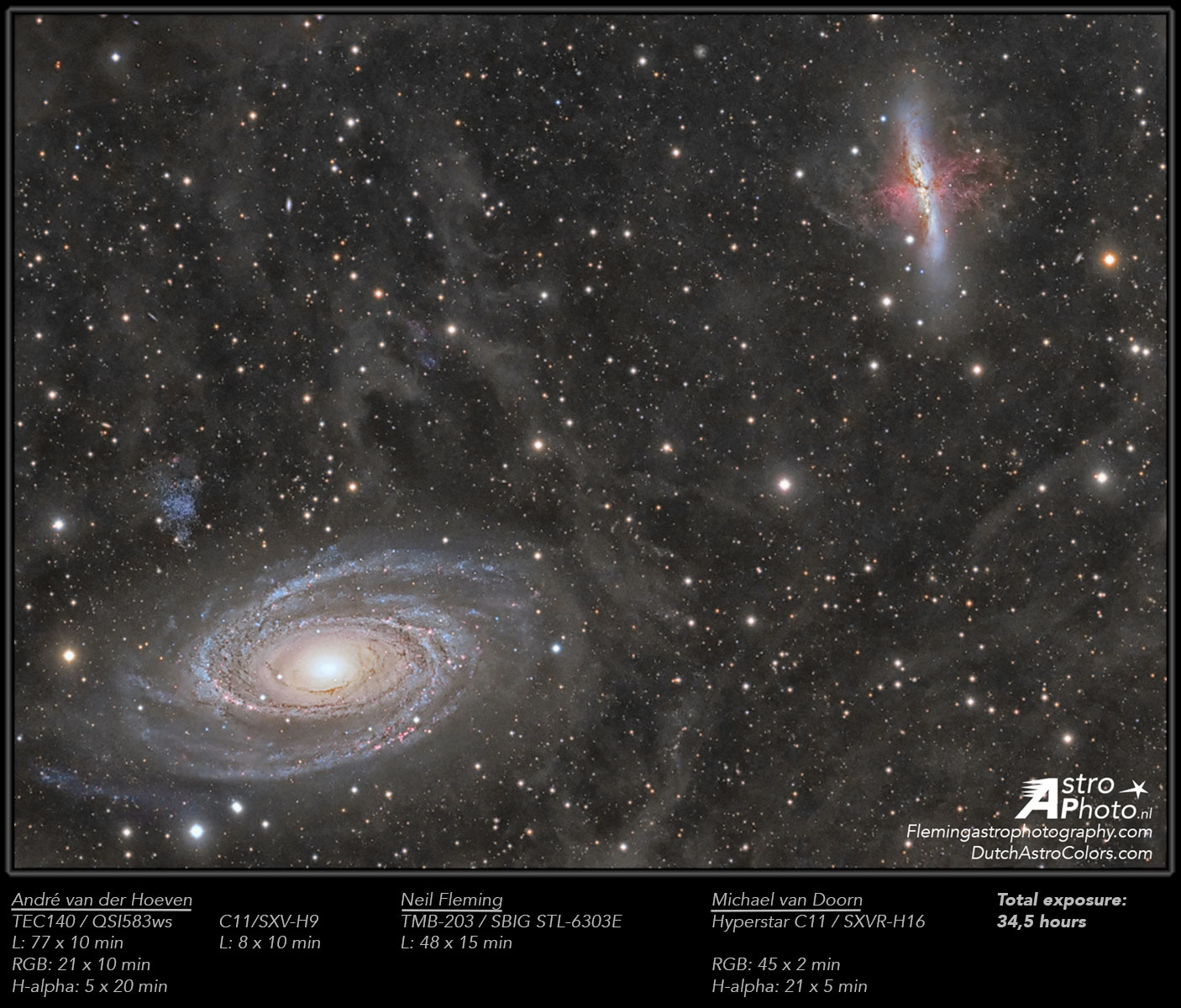
Galaxy Wars: M81 versus M82 
Image Credit & Copyright: André van der HoevenNeil Fleming & Michael Van Doorn
Explanation: In the lower left corner, surrounded by blue spiral arms, is spiral galaxy M81. In the upper right corner, marked by red gas and dust clouds, is irregular galaxy M82. This stunning vista shows these two mammoth galaxies locked in gravitational combat, as they have been for the past billion years. The gravity from each galaxy dramatically affects the other during each hundred million-year pass. Last go-round, M82's gravity likely raised density waves rippling around M81, resulting in the richness of M81's spiral arms. But M81 left M82 with violent star forming regions and colliding gas clouds so energetic the galaxy glows in X-rays. This big battle is seen from Earth through the faint glow of an Integrated Flux Nebula, a little studied complex of diffuse gas and dust clouds in our Milky Way Galaxy. In a few billion years only one galaxy will remain.

2016-02-02

Imagens do Mundo - Ondas e o farol de Porthcawl (Pais de Gales)

Olas rompren sobre el faro en Porthcawl (Gales).

Insolito - Lagartos travam duelo feroz no meio da rua (Video)


Batalha de lagartos no meio do asfalto


Motoristas que passavam por uma rua - a localidade não é conhecida - tiveram que lidar com um evento incomum. Dois lagartos-monitores resolveram duelar no meio do asfalto, enquanto carros e motos passavam. Quando toda a rivalidade parecia estar resolvida, os animais retomaram a feroz batalha na calçada. Assista:
 O Globo - Brasil

Astronomy picture of the day - 2016 February 2 - Comet 67P from Spacecraft Rosetta

See Explanation.  Clicking on the picture will download
 the highest resolution version available.
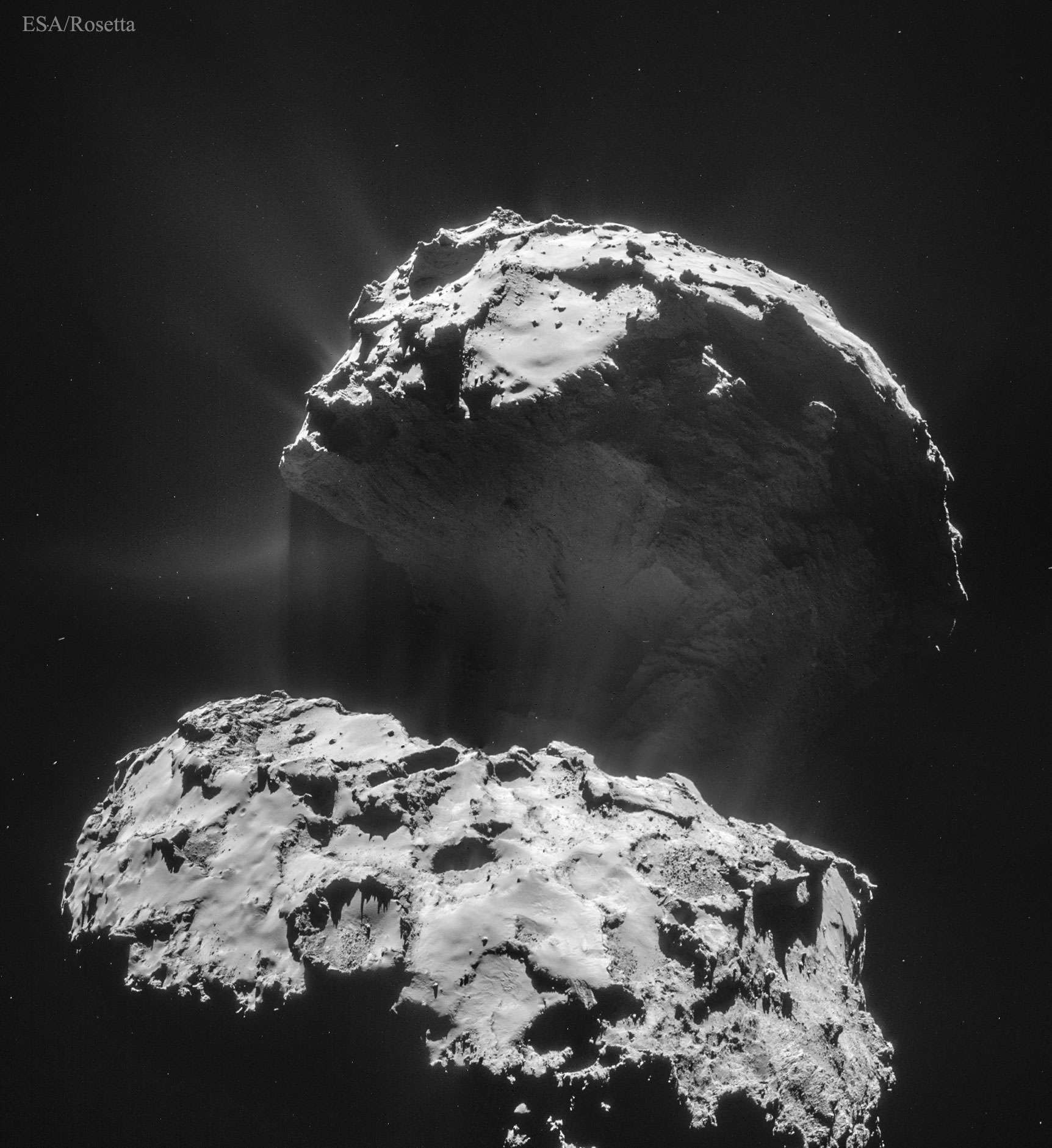
Comet 67P from Spacecraft Rosetta 
Image Credit & LicenceESARosetta, NAVCAM
Explanation: Spacecraft Rosetta continues to circle and map Comet Churyumov-Gerasimenko. Crossing the inner Solar System for ten years to reach the vicinity of the comet in 2014, the robotic spacecraft continues to image the unusual double-lobed comet nucleus. The featured image, taken one year ago, shows dust and gas escaping from the comet's nucleus. Although appearing bright here, the comet's surface reflects only about four percent of impinging visible light, making it as dark as coal. Comet 67P/Churyumov–Gerasimenko spans about four kilometers in length and has a surface gravity so low that an astronaut could jump off of it. With Rosetta in tow, Comet 67P passed its closest to the Sun last year and is now headed back to the furthest point -- just past the orbit of Jupiter.

2016-02-01

Imagens do Mundo - Carnaval: festa nas ruas do Rio de Janeiro

Cordão do Boitatá comemora seus 20 anos neste carnaval Fernando Lemos / Agência O Globo


Carnaval: festa nas ruas do Rio de Janeiro

Astronomy picture of the day - 2016 February 1 - Find the Man in the Moon

See Explanation.
Moving the cursor over the image will bring up an annotated version.
Clicking on the image will bring up the highest resolution version
available.
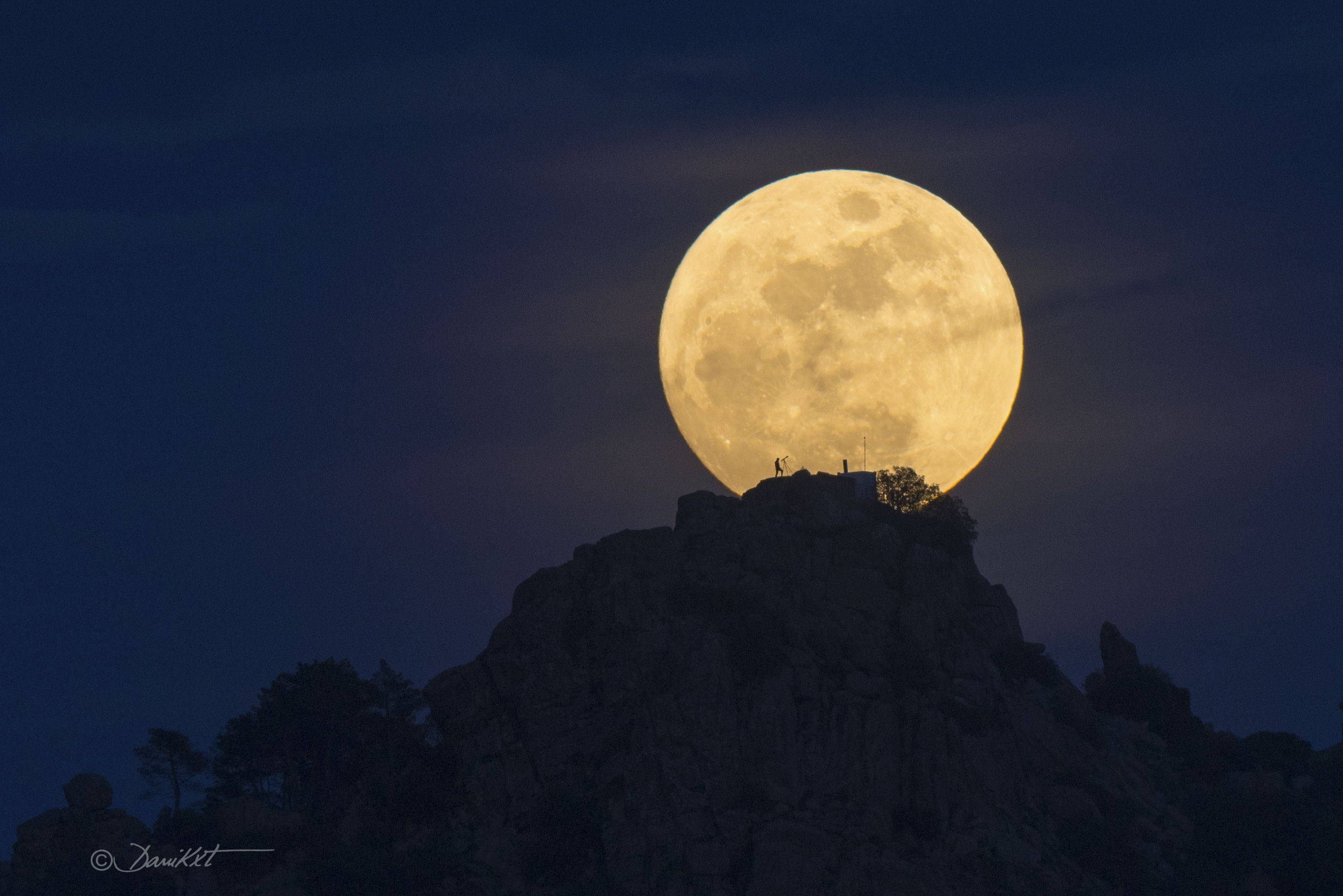
Find the Man in the Moon 
Image Credit & Copyright: Dani Caxete
Explanation: Have you ever seen the Man on the Moon? This common question plays on the ability of humans to see pareidolia -- imagining familiar icons where they don't actually exist. The textured surface of Earth's full Moon is home to numerous identifications of iconic objects, not only in modern western culture but in world folklore throughout history. Examples, typically dependent on the Moon's perceived orientation, include the Woman in the Moon and the Rabbit in the Moon. One facial outline commonly identified as the Man in the Moon starts by imagining the two dark circular areas -- lunar maria -- here just above the Moon's center, to be the eyes. Surprisingly, there actually is a man in this Moon image -- a close look will reveal a real person -- with a telescope -- silhouetted against the Moon. This featured well-planned image was taken in mid-January in Cadalso de los Vidrios in MadridSpain. Do you have a favorite object that you see in the Moon?

2016-01-31

Pedro Abrunhosa - "Pode o céu ser tão longe" - Video - Musica - Ao vivo

Afficher l'image d'origine
"Pode o céu ser tão longe"

Amares with Love


Ver imagem original


Amares: Projecto D'Avó With Love ganha asas e voa para a Alemanha

Tem como objectivo central transformar fronhas em sorrisos, dar sentido a muitas horas dos seniores, promovendo o envelhecimento activo e ter como consequência fazer muitas crianças felizes. 

O projecto D'Avó With Love cresceu, foi ganhando dimensão e conquistou agora o seu espaço; foi  inaugurado na Junta de Freguesia de Ferreiros, em Amares.

Contas feitas, até ao momento, o projecto já recebeu 700 fronhas, produziu 512 vestidos e ajudou 250 crianças de vários países africanos.

Sílvia Correia, coordenadora do Projecto D´Avó, disse que o projecto já se transformou numa marca. D'Avó já atingiu maturidade ao ponto de ter que ser protegida.

O projecto ja viajou para a Alemanha. 

Correio do Minho - Portugal

Astronomy picture of the day - 2016 January 31 - MWC 922: The Red Square Nebula

See Explanation.  Clicking on the picture will download
 the highest resolution version available.
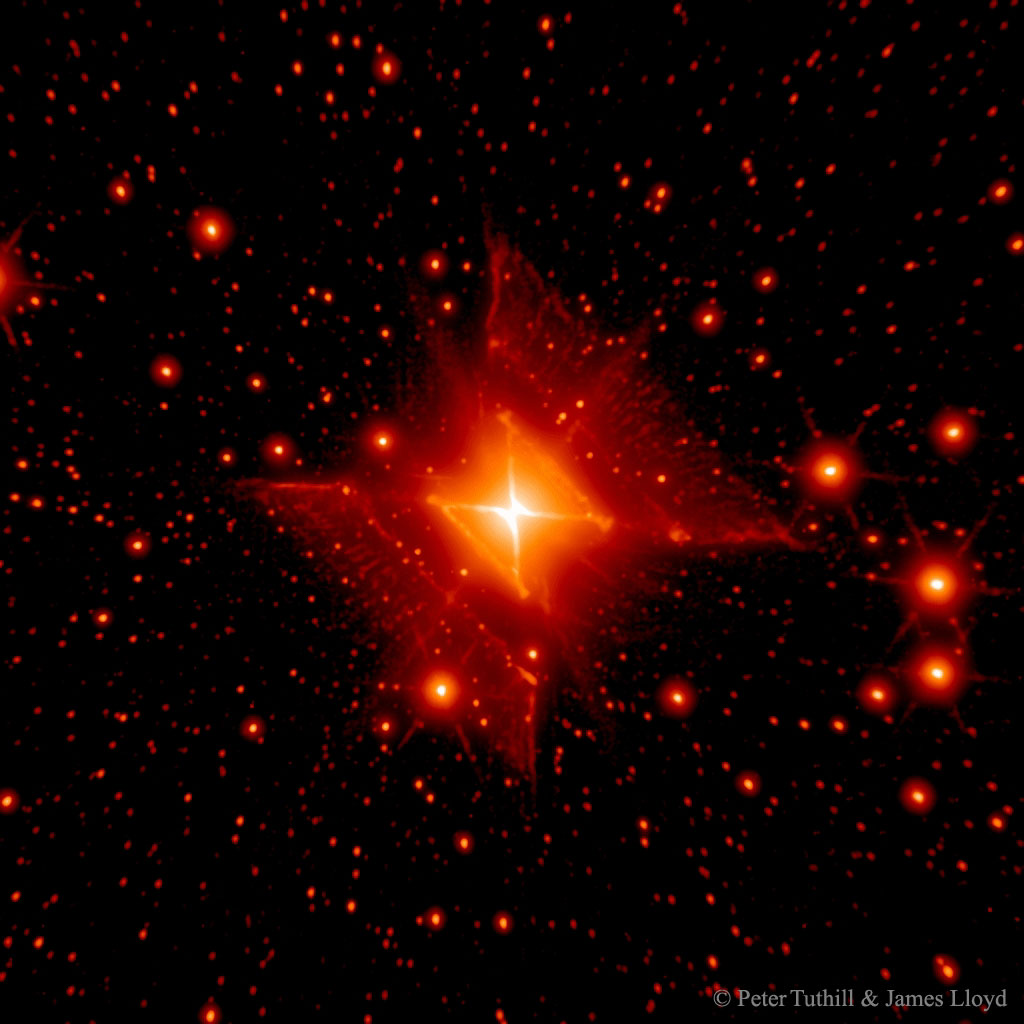
MWC 922: The Red Square Nebula 
Image Credit & Copyright: Peter Tuthill (Sydney U.) & James Lloyd (Cornell)
Explanation: What could cause a nebula to appear square? No one is quite sure. The hot star system known as MWC 922, however, appears to be embedded in a nebula with just such a shape. The featured image combines infraredexposures from the Hale Telescope on Mt. Palomar in California, and the Keck-2 Telescope on Mauna Kea in Hawaii. A leading progenitor hypothesis for the square nebula is that the central star or stars somehow expelled cones of gas during a late developmental stage. For MWC 922, these cones happen to incorporate nearly right angles and be visible from the sides. Supporting evidence for the cone hypothesis includes radial spokes in the image that might run along the cone walls. Researchers speculate that the cones viewed from another angle would appear similar to the gigantic rings of supernova 1987A, possibly indicating that a star in MWC 922 might one day itself explode in a similarsupernova.

2016-01-30

Expressões populares portuguesas - "Obras de Santa Engracia"

    Ver imagem original

A história do templo de Santa Engrácia, perto do Campo de Santa Clara - mais conhecido hoje em dia como o Panteão Nacional -, começa no século xvi, com a infanta D. Maria. Filha do rei D. Manuel e da sua terceira esposa, D. Leonor, chegou a ser a mulher mais rica de Portugal no seu tempo. A sua instrução e virtudes ganharam fama, teve muitos pretendentes, mas morreu solteira, sem deixar filhos. Dedicou a vida à Igreja, fundou vários conventos e, entre as várias obras que patrocinou, estava a Igreja de Santa Engrácia, que mandou construir em 1568. 
O problema foi que se seguiram 300 anos de peripécias... Uma tempestade praticamente destruiu o edifício em 1681 e, nos séculos seguintes, houve várias alterações de planos. Desde falta de dinheiro à falta de interesse ou de mão-de-obra, houve tudo e mais um par de botas para justificar a demora nas obras... Ainda inacabada, a Igreja de Santa Engrácia passou a ter estatuto de monumento nacional em 1910, e em 1916 tornou-se o Panteão Nacional. A obra só se completou por ordem de Salazar, quase 300 anos depois, em 1966! 
Só isto justifica a expressão, mas existe uma outra versão, mais romântica. 
No primeiro mês do ano de 1630, um cristão-novo de nome Simão Pires Solis é acusado de profanar o templo e de roubar as hóstias do relicário da capela-mor. Reza a lenda que o homem tinha sido visto a rondar a igreja na noite do assalto, montado num cavalo que tinha os cascos embrulhados em panos, para que não fizessem barulho. Simão Solis jura inocência, mas acaba por ser queimado vivo no Campo de Santa Clara. Na hora da morte, lança uma maldição à igreja ainda em construção, clamando: "É tão certo morrer inocente como as obras nunca mais acabarem." Mais tarde, descobriu-se a verdadeira razão da presença de Solis perto da igreja naquela noite: o rapaz afinal apenas esperava por Violante, filha de um fidalgo e noviça no Convento de Santa Clara? Apaixonados, teriam fugido...