Chimpanzé astronauta após uma missão bem sucedida no espaço em 1961
2016-08-11
Imagenes del Mundo - Cárcel Quezón City en Manila (Filipinas).
Imagenes del Mundo - Región de Aveiro, Portugal
SERGIO AZENHA AP
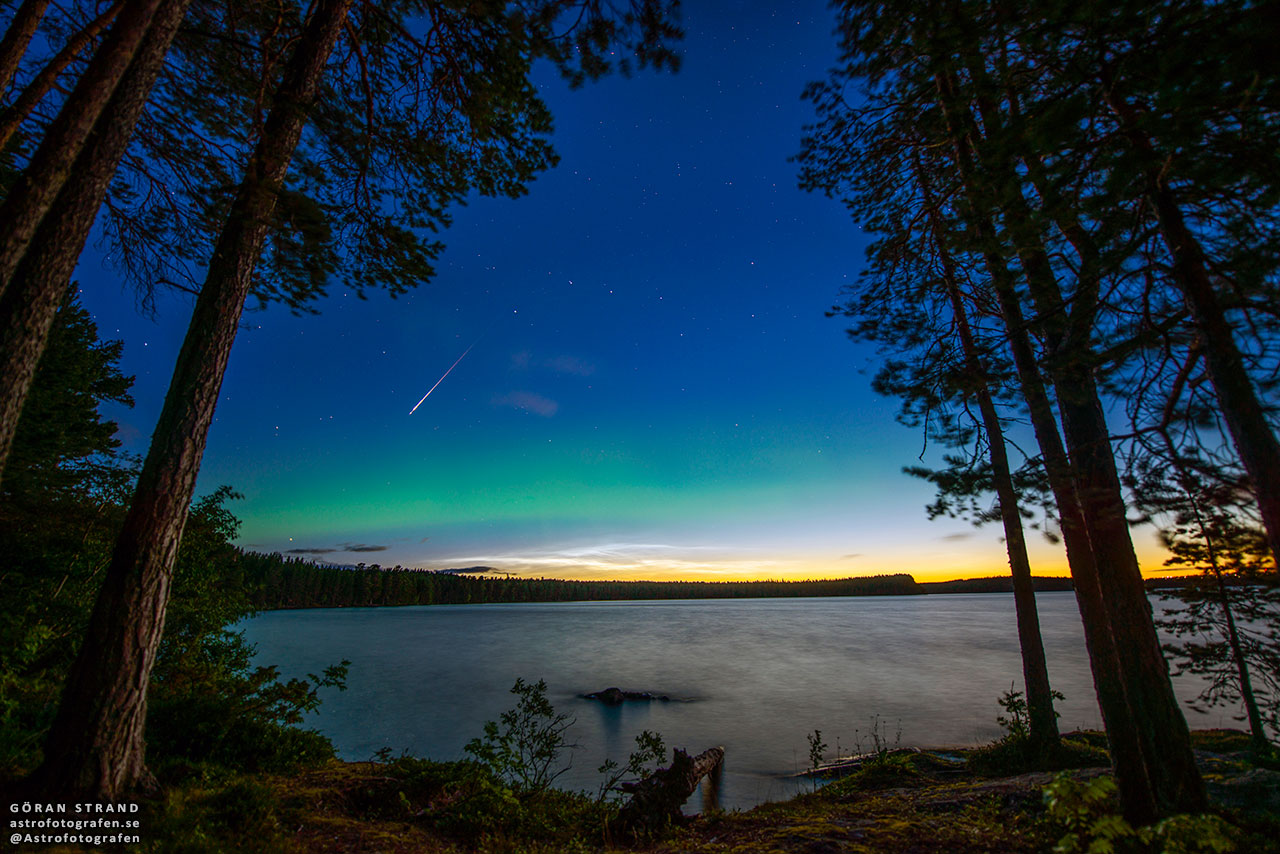
Astronomy picture of the day - 2016 August 11 - Perseid, Aurora, and Noctilucent Clouds
Image Credit & Copyright: Göran Strand
Explanation: Night skies over northern Sweden can hold some tantalizing sights in August. Gazing toward the Big Dipper, this beautiful northern skyscape captures three of them in a single frame taken last August 12/13. Though receding from northern skies for the season, night shining or noctilucent clouds are hanging just above the horizon. Extreme altitude icy condensations on meteoric dust, they were caught here just below an early apparition of a lovely green auroral band, also shining near the edge of space. The flash of a Perseid meteor near the peak of the annual shower punctuates the scene. In fact, this year's Perseid shower will peak in the coming days, offering a continuing chance for a night sky photographer's hat trick.
2016-08-10
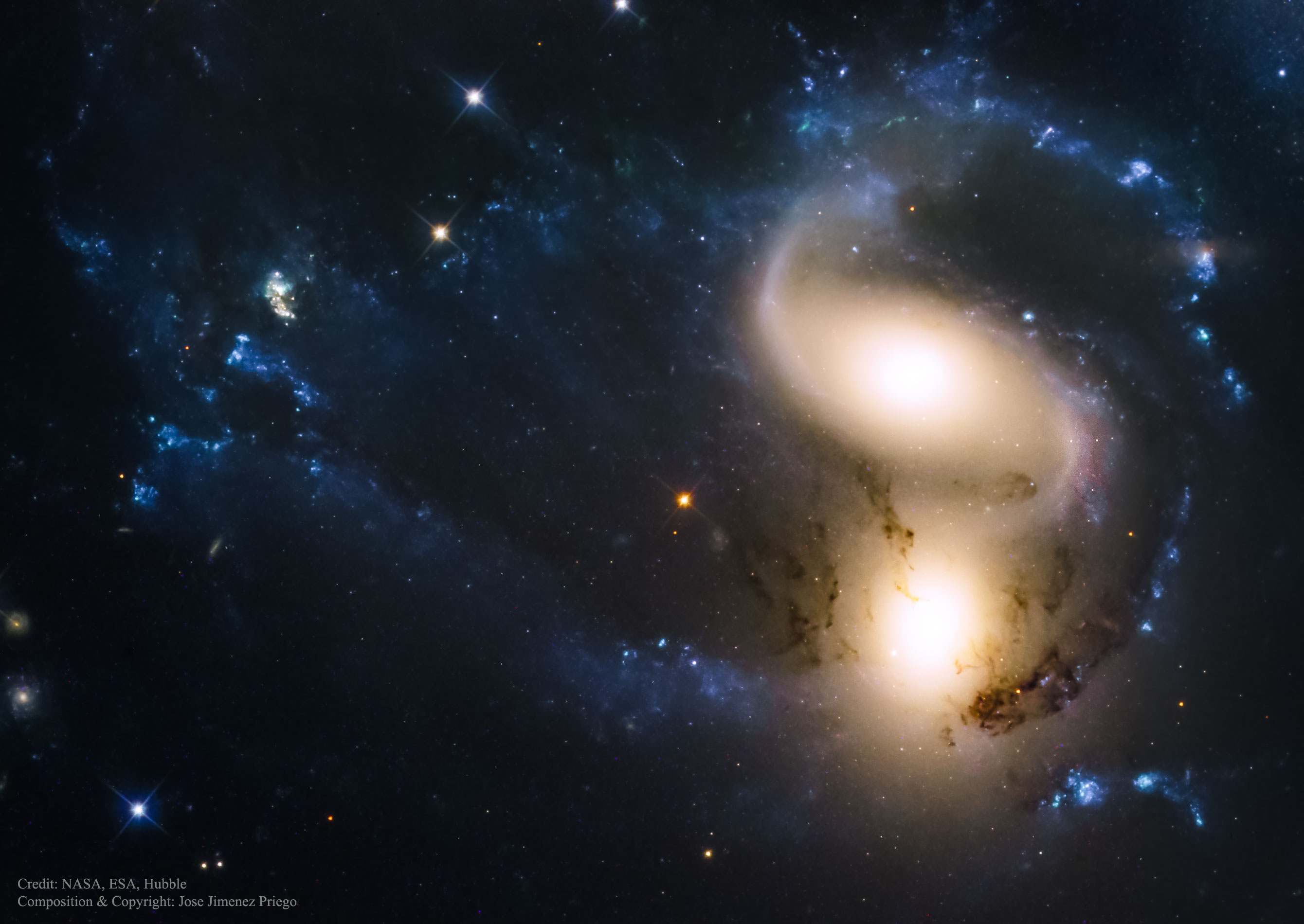
Astronomy picture of the day - 2016 August 10 - Colliding Galaxies in Stephan's Quintet
Image Credit: Hubble Legacy Archive, NASA, ESA; Processing & Copyright: Jose Jimenez Priego
Explanation: Will either of these galaxies survive? In what might be dubbed as a semi-final round in a galactic elimination tournament, the two spirals of NGC 7318 are colliding. The featured picture was created from images taken by the Hubble Space Telescope. When galaxies crash into each other, many things may happen including gravitational distortion, gas condensing to produce new episodes of star formation, and ultimately the two galaxies combining into one. Since these two galaxies are part of Stephan's Quintet, a final round of battling galaxies will likely occur over the next few billion years with the eventual result of many scattered stars and one large galaxy. Quite possibly, theremaining galaxy will not be easily identified with any of its initial galactic components. Stephan's Quintet was the first identified galaxy group, lies about 300 million light years away, and is visible through a moderately-sized telescopetoward the constellation of the Winged Horse (Pegasus).
A Madeira em chamas
A situação continua complicada no Funchal, na Madeira. A gerar maior preocupação, está o fogo na zona histórica de São Pedro e também um reacendimento nas Babosas, no Monte. Os incêndios que afetam a Madeira desde segunda-feira, já provocaram três mortos e dois feridos graves.
Fonte do Governo Regional da Madeira disse esta quarta-feira que três pessoas morreram na terça-feira, no Funchal, na sequência dos incêndios que deflagraram no concelho. As mortes ocorreram na zona da Pena, na freguesia de Santa Luzia, na travessa Silvestre Quintino de Freitas, sendo moradores de duas das residências atingidas pelo fogo.
Na terça-feira, fonte do Governo regional já tinha adiantado a morte de uma idosa que estava acamada numa das habitações afetadas. A mesma fonte do governo regional adiantou que uma pessoa está dada como desaparecida.
Os incêndios que deflagraram pelas 15:30 de segunda-feira no Funchal provocaram ainda dois feridos graves
Cerca de mil pessoas foram retiradas de casas e hotéis para vários locais do concelho do Funchal, Madeira, na sequência do fogo que na terça-feira atingiu a zona baixa da cidade, disse esta quarta-feira de madrugada o presidente da autarquia.......
TVI 24 - Portugal
2016-08-09
Astronomy picture of the day - 2016 August 9 - Mars at Closest Approach 2016
Video Credit & Copyright: Jesús Santos Garzás
Explanation: When does Mars appear the largest? This occurs when Earth sweeps past Mars in their respective orbits around the Sun, creating a momentary Sun-Earth-Mars alignment called opposition. The featured video shows theMars opposition that occurred earlier this year. All of the images were taken from Earth with a small telescope. Mars actually changes its size continuously -- the monthly jumps in size are an editing effect. During the first month in video, March, Earth's view toward Mars is from relatively far away and from a relatively sideways angle -- making Mars appear small and at less than full phase (gibbous). As months progress, Mars appears increasingly larger and fuller. The day Earth and Mars were closest together -- opposition -- was on May 22. By June, Earth had passed Mars, and part of the other side of Mars appeared shadowed. Mars will now appear increasingly smaller during 2016. Even if you watch Mars from Earth all along its orbit, though, Mars will never show a crescent phase.
Inscription à :
Commentaires (Atom)