2016-12-03

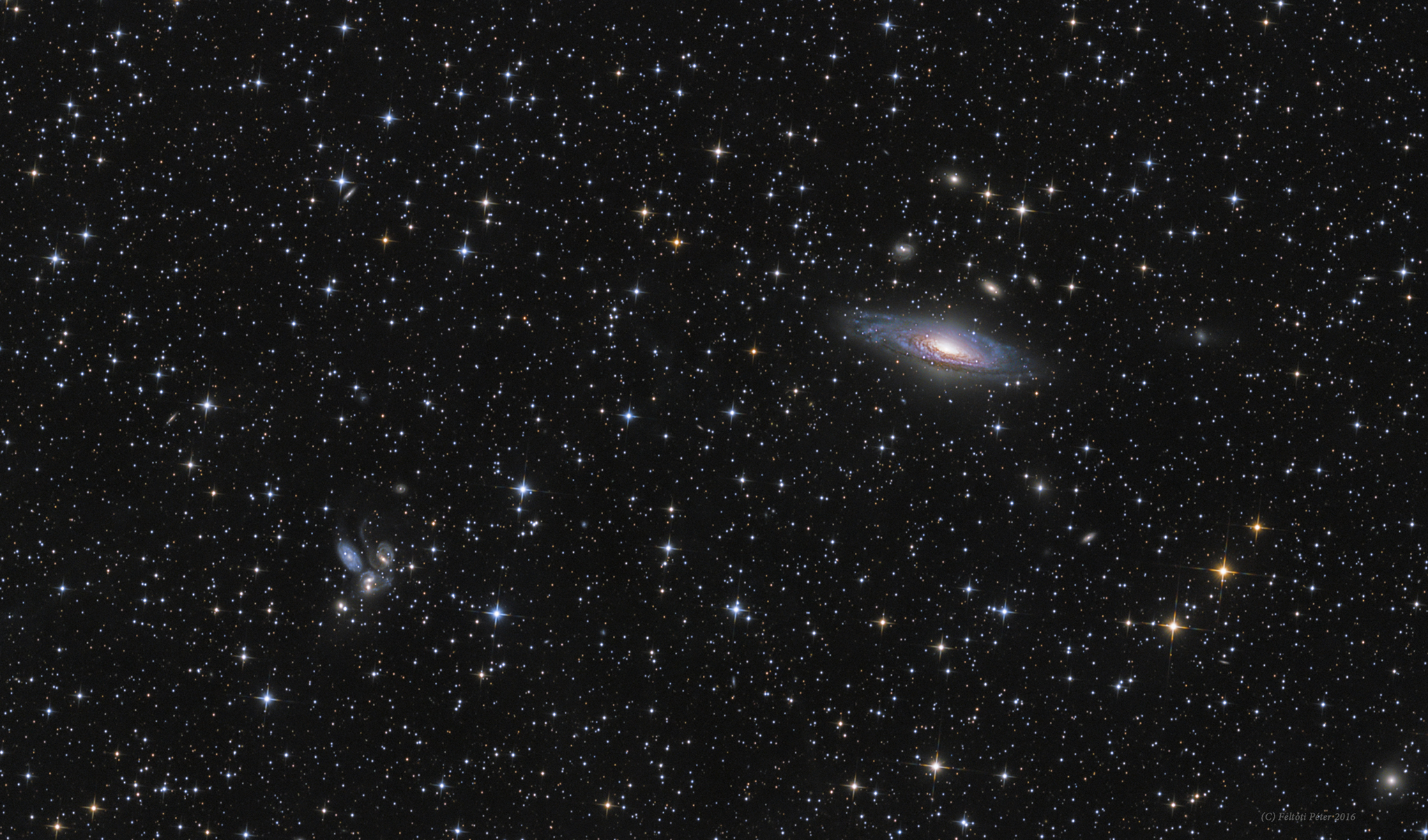
Astronomy picture of the day - 2016 December 3 - Galaxies in Pegasus

See Explanation.  Clicking on the picture will download
 the highest resolution version available.
Galaxies in Pegasus 
Image Credit & Copyright: Péter Feltóti
Explanation: This wide, sharp telescopic view reveals galaxies scattered beyond the stars of the Milky Way at the northern boundary of the high-flying constellation Pegasus. Prominent at the upper right is NGC 7331. A mere 50 million light-years away, the large spiral is one of the brighter galaxies not included in Charles Messier's famous 18th century catalog. The disturbed looking group of galaxies at the lower left is well-known as Stephan's Quintet. About 300 million light-years distant, the quintet dramatically illustrates a multiple galaxy collision, its powerful, ongoing interactions posed for a brief cosmic snapshot. On the sky, the quintet and NGC 7331 are separated by about half a degree.

2016-12-02

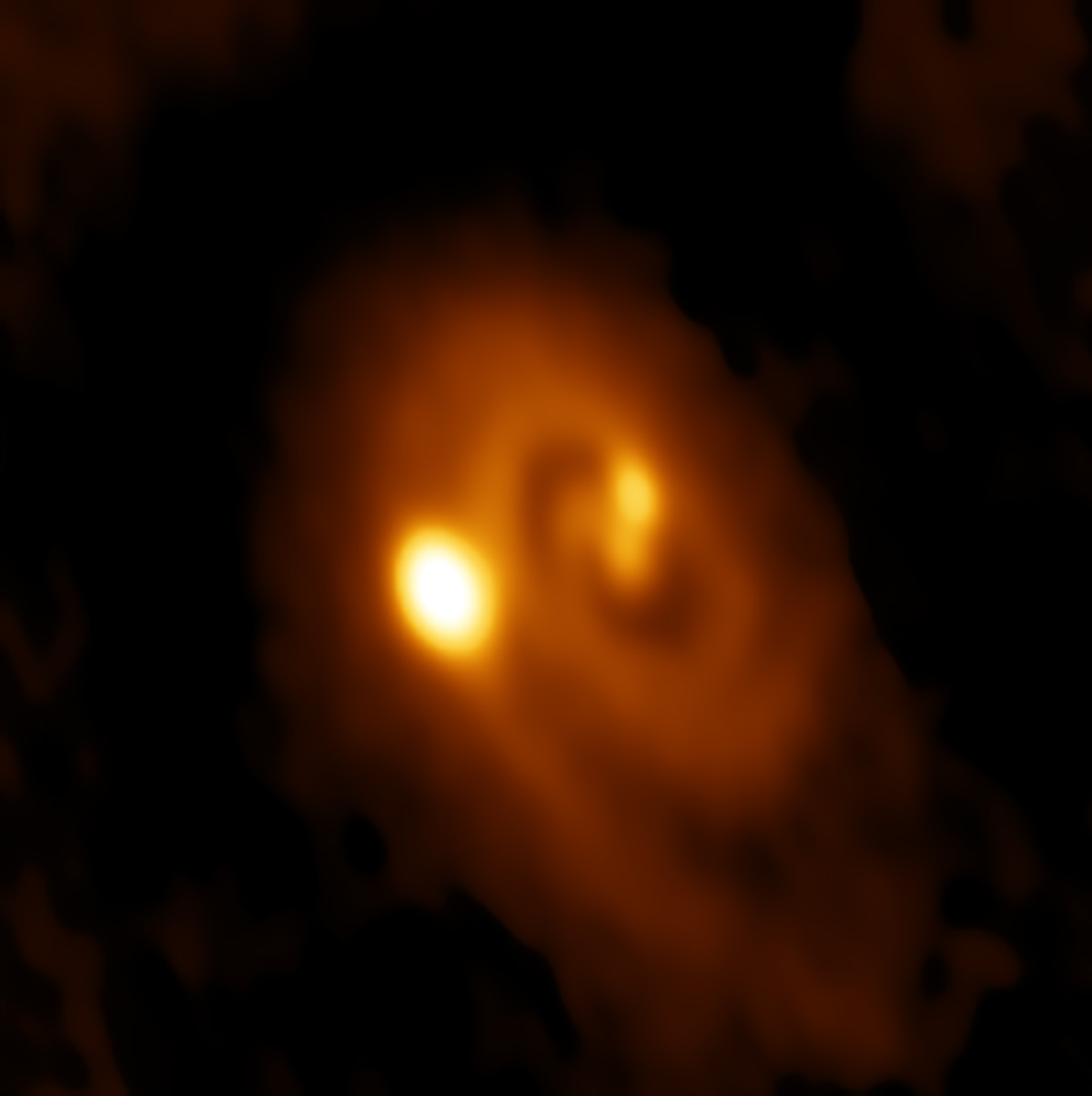
Astronomy picture of the day - 2016 December 2 - A Triple Star is Born

See Explanation.  Clicking on the picture will download
 the highest resolution version available.
A Triple Star is Born 
Image Credit: Bill Saxton, ALMA (ESO/NAOJ/NRAO), NRAO/AUI/NSF - Publication: John Tobin (Univ. Oklahoma/Leiden) et al.
Explanation: A triple star system is forming, enshrouded within this dusty natal disk some 750 light-years away in the Perseus molecular cloud. Imaged at millimeter wavelengths by the Atacama Large Millimeter/submillimeter Array(ALMA) in Chile, the extreme close-up shows two protostars separated by a mere 61 AU (1 AU is the Earth-Sun distance) with a a third some 183 AU from the central protostar. The ALMA image also reveals a clear spiral structure indicating instability and fragmentation led to the multiple protostellar objects within the disk. Astronomers estimate that the system, cataloged as L1448 IRS3B, is less than 150,000 years old. Captured at an early phase, the starforming scenario is likely not at all uncommon, since almost half of all sun-like stars have at least one companion.

2016-12-01

Joe Cocker - "Now that you're gone" - Video - Music

Afficher l'image d'origine
"Now that you're gone"

Expressões populares portuguesas - Ave de mau agouro

Afficher l'image d'origine

Significado: Diz-se de pessoa portadora de más notícias ou que, com a sua presença, anuncia desgraças.

Origem: O conhecimento do futuro é uma das preocupações inerentes ao ser humano. Quase tudo servia para, de maneiras diversas, se tentar obter esse conhecimento. As aves eram um dos recursos que se utilizava. Para se saberem os bons ou maus auspícios (avis spicium) consultavam-se as aves. No tempo dos áugures romanos, a predição dos bons ou maus acontecimentos era feita através da leitura do seu voo, canto ou entranhas. Os pássaros que mais atentamente eram seguidos no seu voo, ouvidos nos seus cantos e aos quais se analisavam as vísceras eram a águia, o abutre, o milhafre, a coruja, o corvo e a gralha. Ainda hoje perdura, popularmente, a conotação funesta com qualquer destas aves.

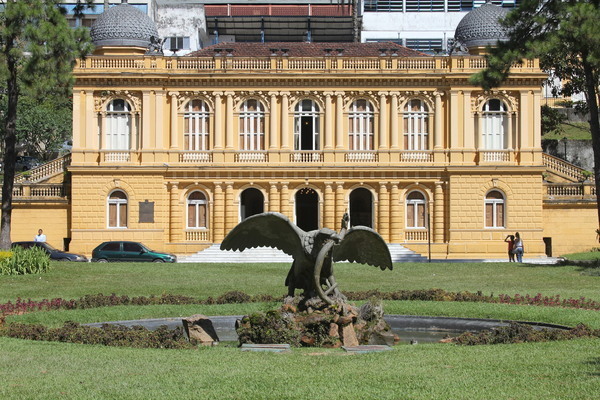
Palacios cariocas - Palácio Amarelo


Localizado no centro histórico da cidade de Petrópolis, na praça Visconde de Mauá, o Palácio Amarelo foi construído em meados do século XIX e, desde 1897, abriga a sede da Câmara Municipal de Petrópolis.

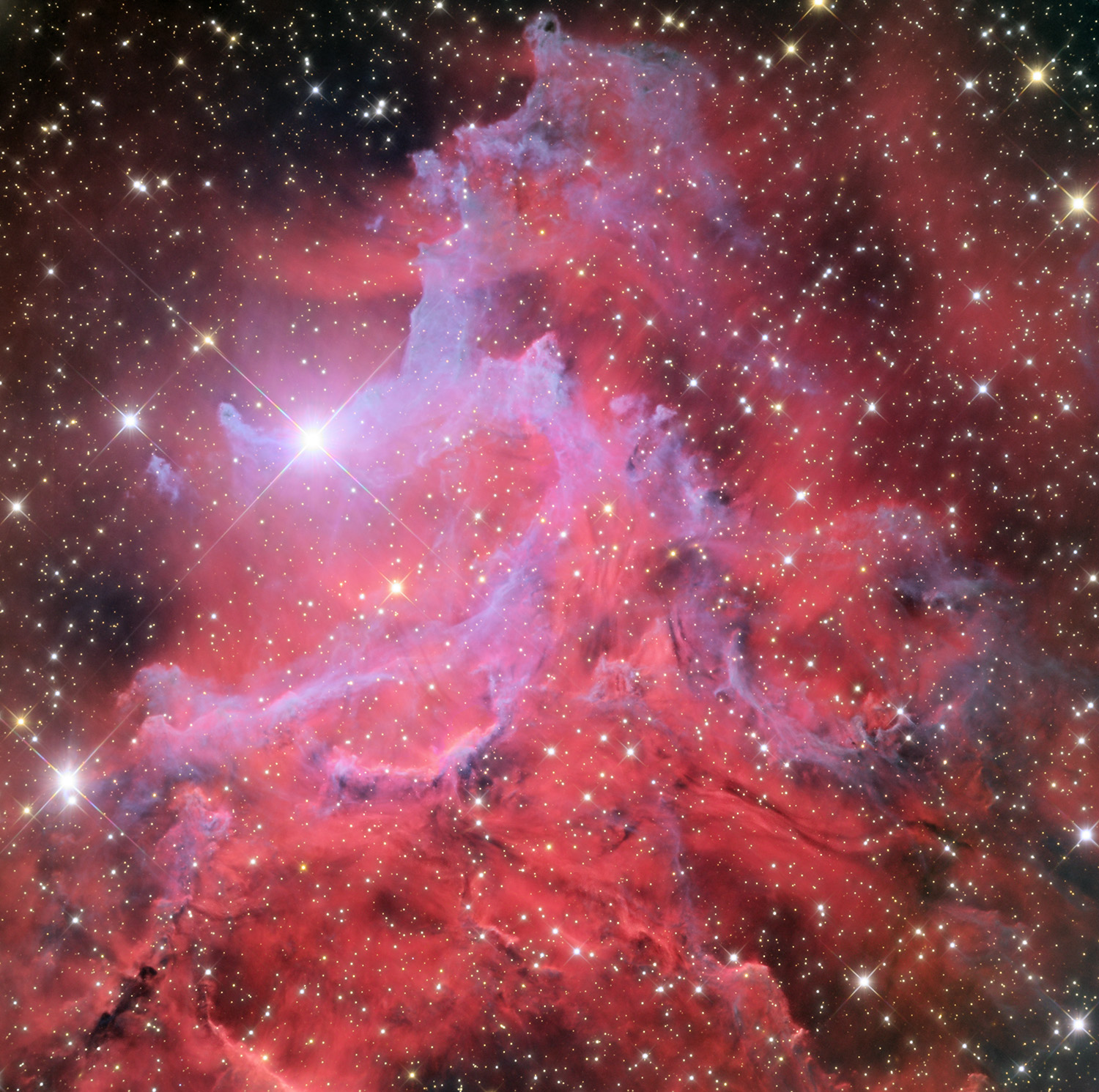
Astronomy picture of the day - 2016 December 1 - Flaming Star Nebula

See Explanation.  Clicking on the picture will download
 the highest resolution version available.
Flaming Star Nebula 
Image Credit & Copyright: Adam BlockMt. Lemmon SkyCenterUniv. Arizona
Explanation: A runaway star lights the Flaming Star Nebula in this cosmic scene. Otherwise known as IC 405, the Flaming Star Nebula's billowing interstellar clouds of gas and dust lie about 1,500 light-years away toward the constellation of Auriga. AE Aurigae, the bright star at upper left in the frame, is a massive and intensely hot O-type star moving rapidly through space, likely ejected from a collision of multiple star-systems in the vicinity of the Orion Nebula millions of years ago. Now close to IC 405, the high-speed star's ionizing ultraviolet radiation powers the visible reddish glow as the nebula's hydrogen atoms are stripped of their electrons and recombine. Its intense blue starlight is reflected by the nebula's dusty filaments. Like all massive stars AE Aurigae will be short-lived though, furiously burning through its supply of fuel for nuclear fusion and exploding as a supernova. The colorful telescopic snapshot spans about 5 light-years at the estimated distance of the Flaming Star Nebula.

2016-11-30

Rui Veloso - "Benvinda sejas Maria" - Video - Musica

"Benvinda sejas Maria"

Palacios cariocas - Palácio Imperial


O Palácio Imperial, localizado no centro histórico de Petrópolis, é o antigo Palácio de Verão do imperador brasileiro Dom Pedro II e, hoje em dia, funciona como Museu Histórico.
Uma curiosidade sobre este Museu, Dom Pedro mandou trazer mais de 100 espécies de árvores e flores de diversas regiões do mundo para o seu jardim, construído em torno do ano de 1850, e boa parte deste acervo se conserva até hoje, sendo uma atração à parte.


Astronomy picture of the day - 2016 November 30 - Milky Way over Shipwreck

See Explanation.
Moving the cursor over the image will bring up an annotated version.
Clicking on the image will bring up the highest resolution version
available.
Milky Way over Shipwreck 
Image Credit & Copyright: Sergio Montúfar (Planetario Ciudad de La Plata)
Explanation: What happened to this ship? It was carried aground by a giant storm that struck the coast of Argentina in 2002. The pictured abandoned boat, dubbed Naufragio del Chubasco, wrecked near the nearly abandoned town of Cabo Raso (population: 1). The rusting ship provides a picturesque but perhaps creepy foreground for the beautiful sky above. This sky is crowned by the grand arch of our Milky Way and features galaxies including the Large andSmall Magellanic Clouds, stars including Canopus and Altair, planets including Mars and Neptune, and nebulas including the LagoonCarina, and the Coal Sack. The mosaic was composed from over 80 images taken in early September. A 360-degree interactive panoramic version of this image is also available. The adventurous astrophotographer reports that the creepiest part of taking this picture was not the abandoned ship, but the unusual prevalence of black and hairy caterpillars.

2016-11-29

Avião com time da Chapecoense cai na Colômbia: mais de 70 mortos

BOGOTÁ — O avião que levava a equipe da Chapecoense para o primeiro jogo da final da Copa Sul-Americana caiu na madrugada desta terça-feira, nas proximidades de La Ceja, na Colômbia. O chefe da polícia de Antioquia, confirmou que há 76 mortos. São cinco os sobreviventes No voo estavam 72 passageiros e nove tripulantes. Seis pessoas tinham sido resgatadas com vida, mas uma delas morreu a caminho do hospital. A aeronave pertencia à companhia boliviana Lamia, e perdeu contato com a torre de controle ao sobrevoar o uma região montanhosa no município de La Ceja, perto de Medellín, no noroeste da Colômbia, por volta de 22h15m de segunda-feira (hora local). O avião teria sofrido falha elétrica, e o piloto descartou combustível antes de tentar pouso forçado.

Dentre os 72 passageiros, 48 eram integrantes da delegação da Chapecoense, que levou, além da comissão técnica, vários dirigentes. Estavam a bordo, ainda, 21 jornalistas e três convidados do clube.

O time da Chapecoense viajava para Medellin, onde na quarta-feira faria o primeiro jogo da final da Copa Sul-Americana, contra o Atlético Nacional.

O Globo - Brasil