2017-02-01

Astronomy picture of the day - 2017 February 1 - Four Planets Orbiting Star HR 8799

Afficher l'image d'origine
Four Planets Orbiting Star HR 8799 
Video Credit & CC BY LicenseJ. Wang (UC Berkeley) & C. Marois (Herzberg Astrophysics), NExSS (NASA), Keck Obs.
Explanation: Does life exist outside our Solar System? To help find out, NASA has created the Nexus for Exoplanet System Science (NExSS) to better locate and study distant star systems that hold hope of harboring living inhabitants. A new observational result from a NExSS collaboration is the featured time-lapse video of recently discovered planets orbiting the star HR 8799. The images for the video were taken over seven years from the Keck Observatory in Hawaii. Four exoplanets appear as white dots partially circling their parent star, purposefully occluded in the center. The central star HR 8799 is slightly larger and more massive than our Sun, while each of the planets is thought to be a few times the mass of Jupiter. The HR 8799 system lies about 130 light years away toward the constellation of the Flying Horse (Pegasus). Research will now continue on whether any known or potential planets -- or even moons of these planets -- in the HR 8799 star system could harbor life.

2017-01-31

Expressões populares portuguesas - Dar um lamiré

Afficher l'image d'origineSignificado: Sinal para começar alguma coisa. 

Origem: 

Trata-se da forma aglutinada da expressão «lá, mi, ré», que designa o diapasão, instrumento usado na afinação de instrumentos ou vozes; a partir deste significado, a expressão foi-se fixando como palavra autónoma com significação própria, designando qualquer sinal que dê começo a uma actividade. Historicamente, a expressão «dar um lamiré» está, portanto, ligada à música (cf. Dicionário Houaiss da Língua Portuguesa). Nota: Escreve-se lamiré, com o r pronunciado como em caro. 
13_Estudio_mario_Novais_avenida_almirante_reis_4_sem_data_13.jpg
Estúdio Mário Novais, Avenida Almirante Reis, Lisboa, sem data Colecções daFundação Calouste Gulbenkian, Lisboa, Portugal (Flickr Commons)

Astronomy picture of the day - 2017 January 31 - Where to See the American Eclipse

See Explanation.  Clicking on the picture will download
 the highest resolution version available.
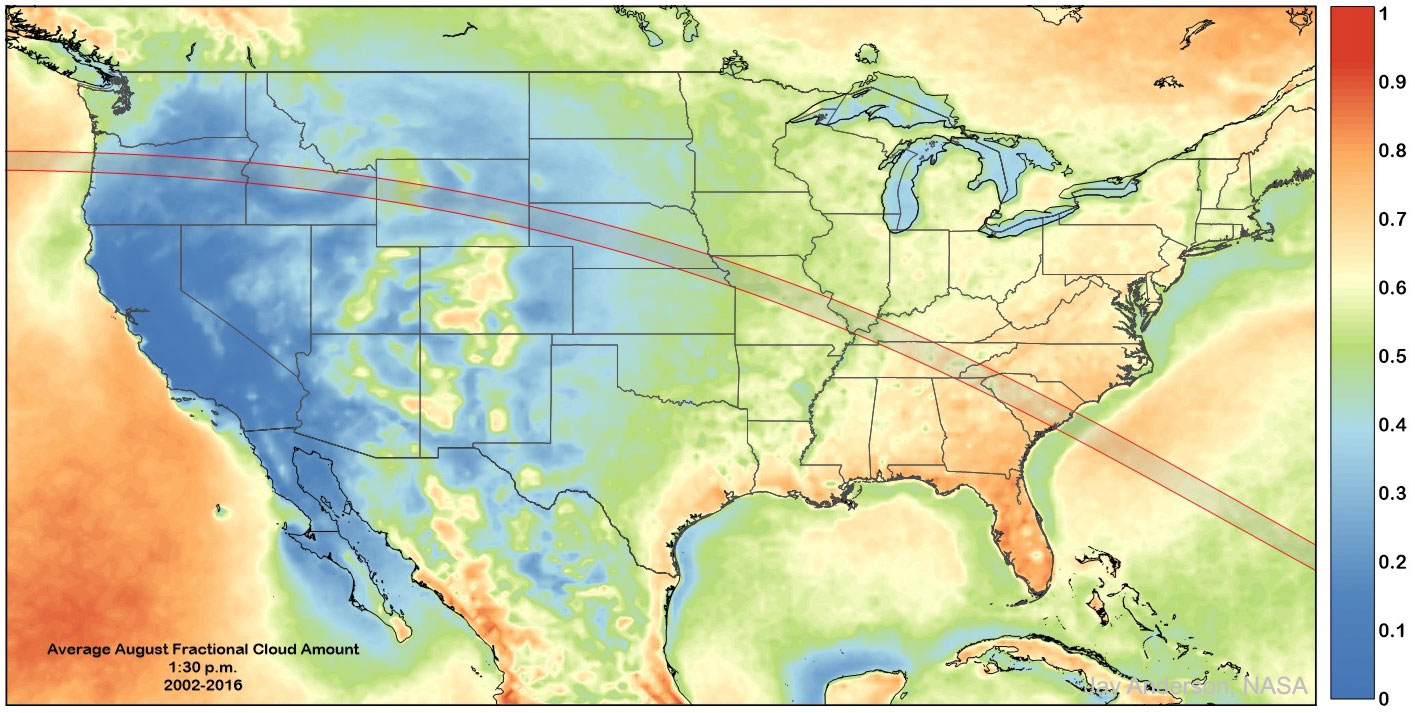
Where to See the American Eclipse 
Image Credit: Jay AndersonData: MODIS Satellite, NASA's GSFC
Explanation: Are you planning to see the American Eclipse on August 21? A few hours after sunrise, a rare total eclipse of the Sun will be visible along a narrow path across the USA. Those only near the path will see a partial eclipse. Although some Americans live right in path of totality, surely many more will be able to get there after a well-planned drive. One problem with eclipses, though, is that clouds sometimes get in the way. To increase your clear-viewingodds, you might consult the featured map and find a convenient destination with a historically low chance (more blue) of thick clouds overhead during totality. Given the large fraction of Americans carrying camera-equipped smartphones, this American Eclipse may turn out to be the most photographed event in the history of the world.

2017-01-30

Fotografia - Lisboa noturna - Rua Augusta

14_Estudio_Horacio_Novais_Rua_Augusta_Lisboa_sem_data_14.jpg
Estúdio Horácio Novais, Rua Augusta, Lisboa, sem data. Colecções da Fundação Calouste Gulbenkian, Lisboa, Portugal (Flickr Commons)

Astronomy picture of the day - 2017 January 30 - The Cat's Eye Nebula from Hubble

See Explanation.  Clicking on the picture will download
 the highest resolution version available.
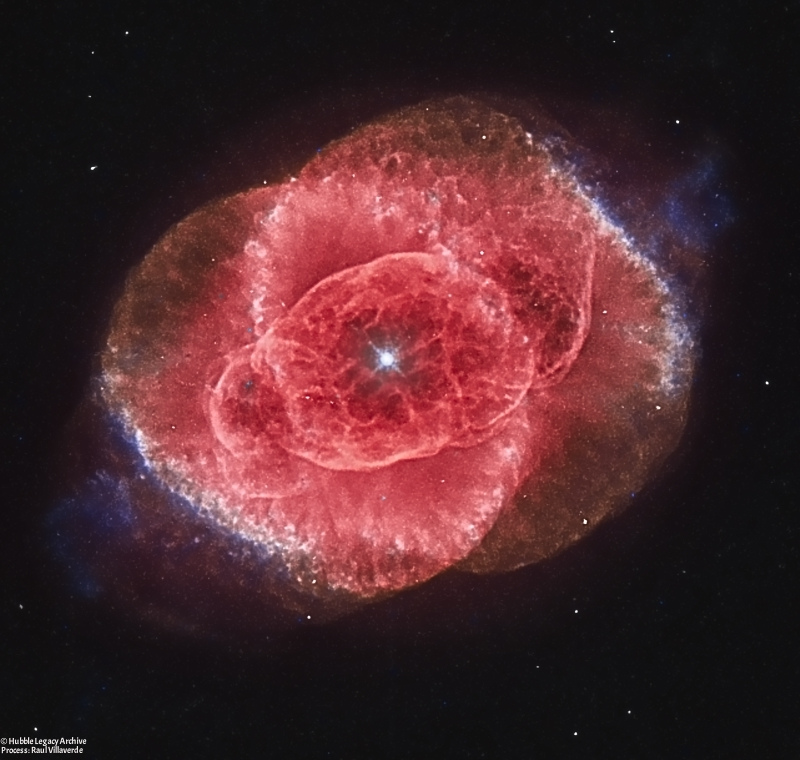
The Cat's Eye Nebula from Hubble 
Image Credit: NASAESAHubbleHLAReprocessing & Copyright: Raul Villaverde
Explanation: To some, it may look like a cat's eye. The alluring Cat's Eye nebula, however, lies three thousand light-years from Earth across interstellar space. A classic planetary nebula, the Cat's Eye (NGC 6543) represents a final, brief yet glorious phase in the life of a sun-like star. This nebula's dying central star may have produced the simple, outer pattern of dusty concentric shells by shrugging off outer layers in a series of regular convulsions. But the formation of the beautiful, more complex inner structures is not well understood. Seen so clearly in this digitally reprocessed Hubble Space Telescope image, the truly cosmic eye is over half a light-year across. Of course, gazing into this Cat's Eye, astronomers may well be seeing the fate of our sun, destined to enter its own planetary nebula phase of evolution ... in about 5 billion years.

2017-01-29

Astronomy picture of the day - 2017 January 29 -

See Explanation.
Moving the cursor over the image will bring up an annotated version.
Clicking on the image will bring up the highest resolution version
available.
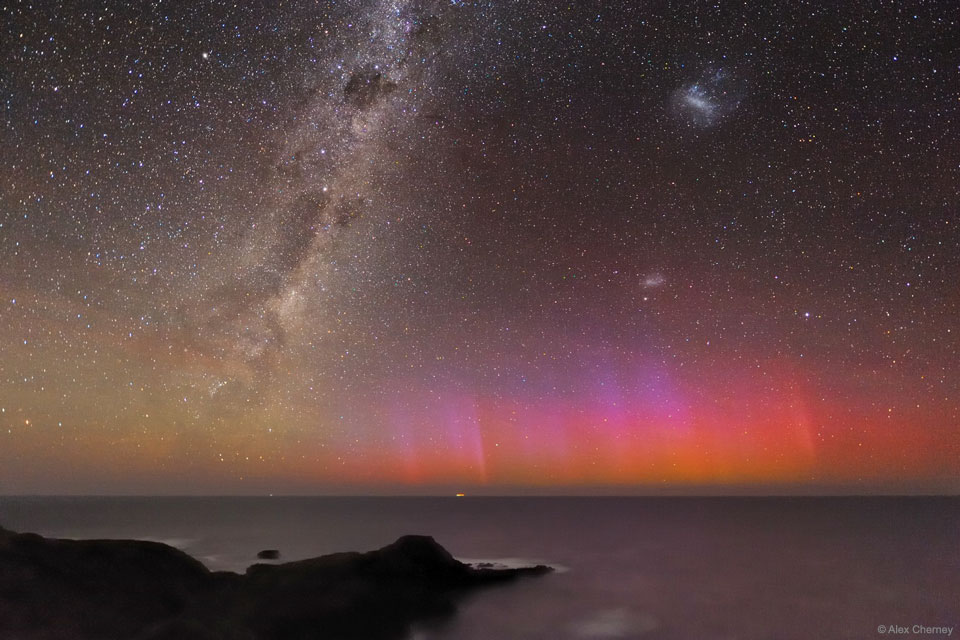
Red Aurora Over Australia 
Image Credit & Copyright: Alex Cherney (TerrastroTWAN)
Explanation: Why would the sky glow red? Aurora. A solar storm in 2012, emanating mostly from active sunspot region 1402, showered particles on the Earth that excited oxygen atoms high in the Earth's atmosphere. As the excited element's electrons fell back to their ground state, they emitted a red glow. Were oxygen atoms lower in Earth's atmosphere excited, the glow would be predominantly green. Pictured here, this high red aurora is visible just above the horizon last week near FlindersVictoriaAustralia. The sky that night, however, also glowed with more familiar but more distant objects, including the central disk of our Milky Way Galaxy on the left, and the neighboring Large andSmall Magellanic Cloud galaxies on the right. A time-lapse video highlighting auroras visible that night puts the picturesque scene in context. Why the sky did not also glow green remains unknown.

2017-01-28

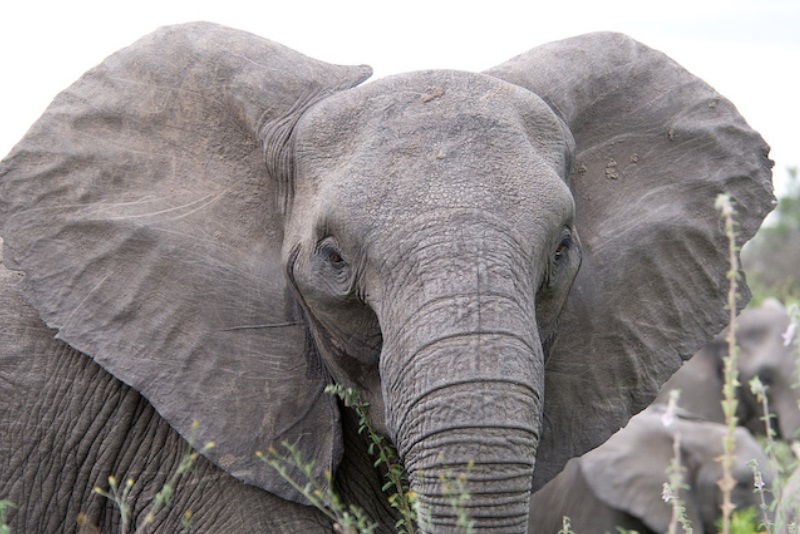
Expressões populares portuguesas - Memoria de elefante

Afficher l'image d'origineSignificado: 

Ter boa memória; recordar-se de tudo. 

Origem: 

O elefante fixa tudo aquilo que aprende, por isso é uma das principais atracções do circo

Fotografia - Lisboa noturna - Fogo de artifício e holofotes

15_Estudio_Horacio_Novais_Fogo_de_artificio_e_holofotes_Lisboa_sem_data_15.jpg
Estúdio Horácio Novais, Fogo de artifício e holofotes, Lisboa, sem data. Colecções da Fundação Calouste Gulbenkian, Lisboa, Portugal (Flickr Commons)

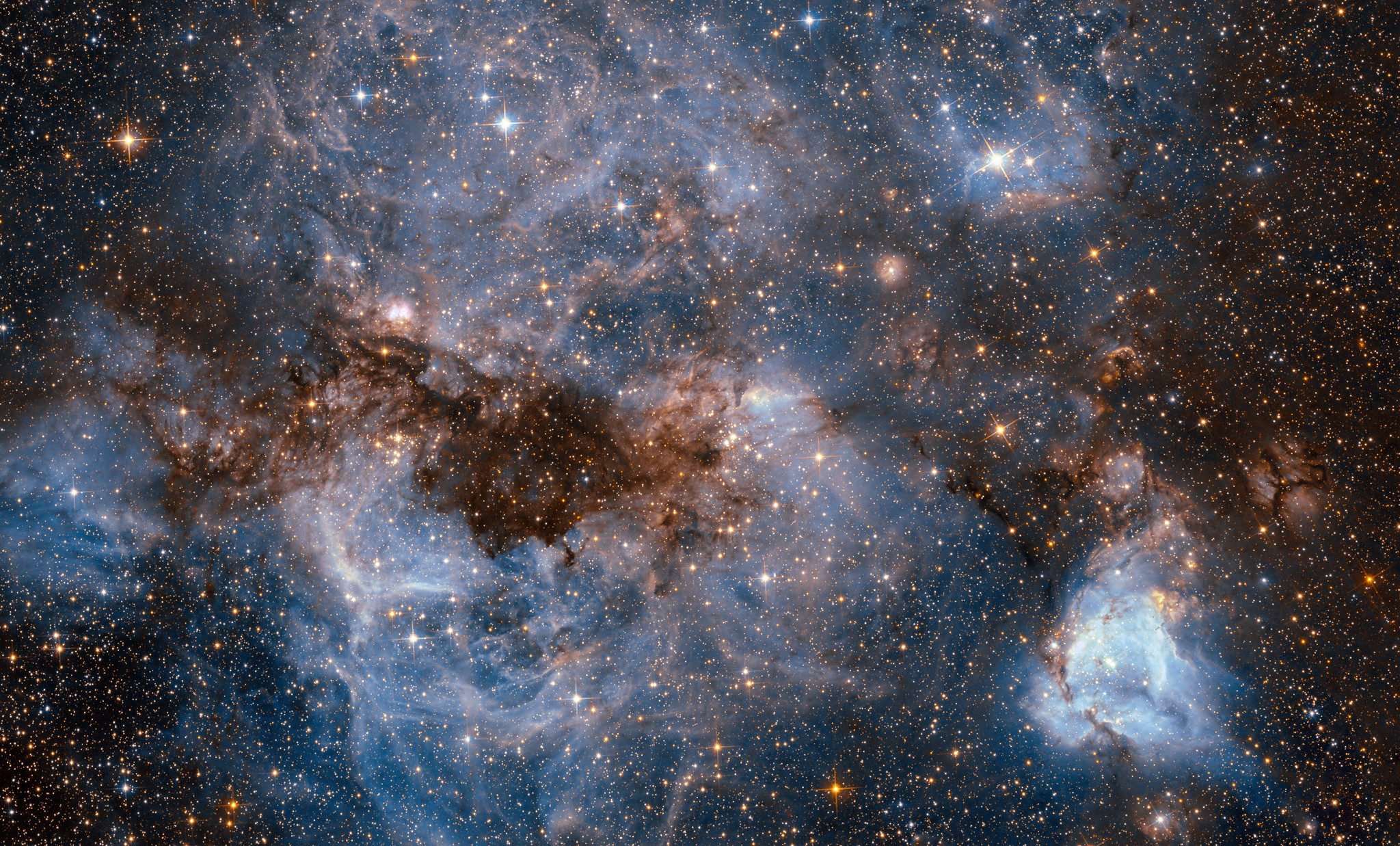
Astronomy picture of the day - 2017 January 28 - N159 in the Large Magellanic Cloud

See Explanation.  Clicking on the picture will download
 the highest resolution version available.
N159 in the Large Magellanic Cloud 
Image Credit: NASAESAHubble Space Telescope
Explanation: Over 150 light-years across, this cosmic maelstrom of gas and dust is not too far away. It lies south of the Tarantula Nebula in our satellite galaxy the Large Magellanic Cloud a mere 180,000 light-years distant. Massive stars have formed within. Their energetic radiation and powerful stellar winds sculpt the gas and dust and power the glow of this HII region, entered into the Henize catalog of emission stars and nebulae in the Magellanic Clouds as N159. The bright, compact, butterfly-shaped nebula above and left of center likely contains massive stars in a very early stage of formation. Resolved for the first time in Hubble images, the compact blob of ionized gas has come to be known as the Papillon Nebula.