2018-01-15

Astronomy picture of the day - 2018 January 15 - Rigel and the Witch Head Nebula

See Explanation.  Clicking on the picture will download
 the highest resolution version available.
Rigel and the Witch Head Nebula 
Image Credit & Copyright: Mario Cogo (Galax Lux)
Explanation: By starlight this eerie visage shines in the dark, a crooked profile evoking its popular name, the Witch Head Nebula. In fact, this entrancing telescopic portrait gives the impression that the witch has fixed her gaze on Orion's bright supergiant star Rigel. More formally known as IC 2118, the Witch Head Nebula spans about 50 light-years and is composed of interstellar dust grains reflecting Rigel's starlight. The blue color of the Witch Head Nebula and of the dust surrounding Rigel is caused not only by Rigel's intense blue starlight but because the dust grains scatter blue light more efficiently than red. The same physical process causes Earth's daytime sky to appear blue, although the scatterers in Earth's atmosphere are molecules of nitrogen and oxygen. Rigel, the Witch Head Nebula, and gas and dust that surrounds them lie about 800 light-years away.

2018-01-14

Cidades de Portugal - Alcácer do Sal - Santa Susana - Igreja

Alcácer do Sal - Santa Susana - Igreja

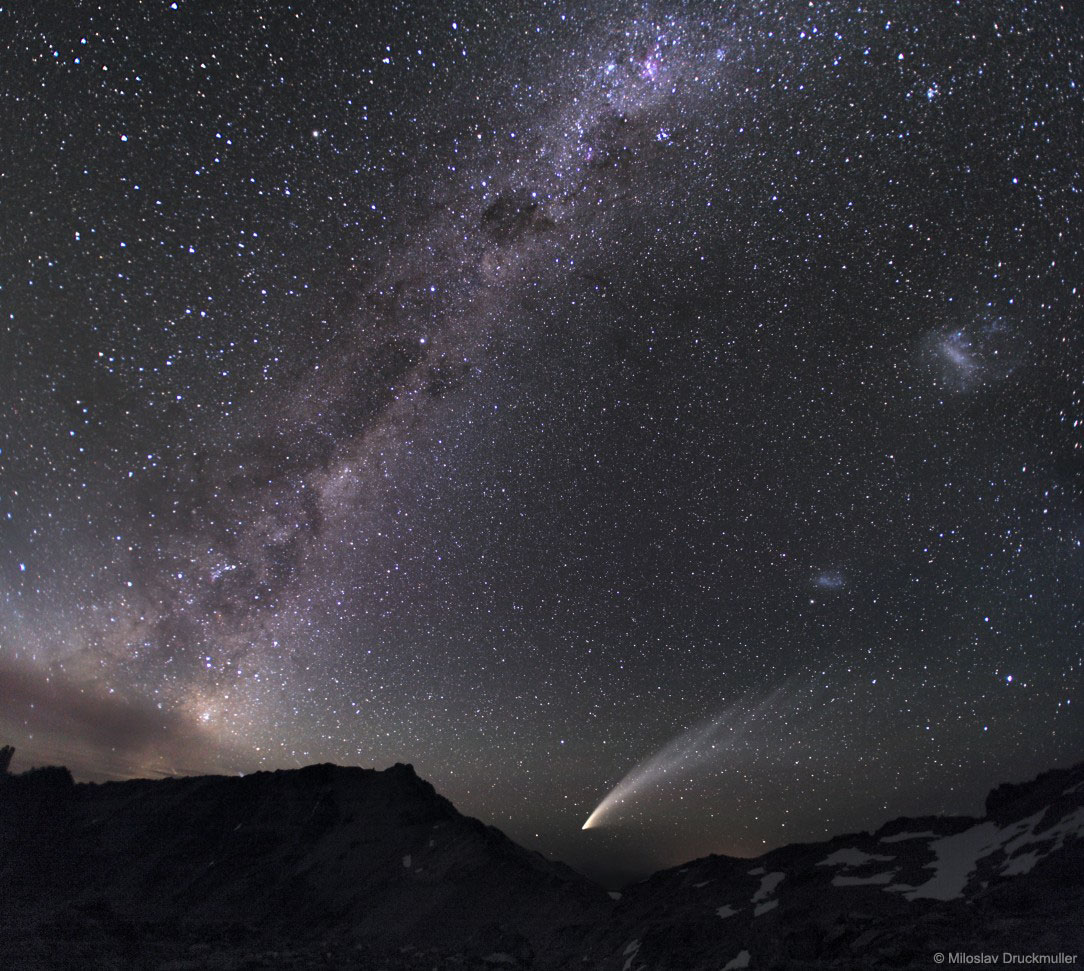
Astronomy picture of the day - 2018 January 14 - Three Galaxies and a Comet

See Explanation.  Clicking on the picture will download
 the highest resolution version available.
Three Galaxies and a Comet 
Image Credit & Copyright: Miloslav Druckmuller (Brno University of Technology)
Explanation: Diffuse starlight and dark nebulae along the southern Milky Way arc over the horizon and sprawl diagonally through this gorgeous nightscape. The breath-taking mosaic spans a wide 100 degrees, with the rugged terrainof the PatagoniaArgentina region in the foreground. Along with the insider's view of our own galaxy, the image features our outside perspective on two irregular satellite galaxies - the Large and Small Magellanic Clouds. The scene also captures the broad tail and bright coma of Comet McNaught, the Great Comet of 2007.

Tragédia em Tondela : pelo menos oito mortos


Um incêndio numa associação de Vila Nova da Rainha, no concelho de Tondela, provocou oito mortos e 34 feridos, um número confirmado pelos bombeiros. No edifício estariam cerca de 70 pessoas que participavam num torneio de sueca ou assistiam ao jogo de futebol entre o Sporting de Braga e o Benfica.

Os feridos foram levados para os hospitais de Coimbra e Aveiro, avançou o comandante da Proteção Civil que disse ainda aos jornalistas que está a ser feito uma perícia à zona envolvente da associação recreativa.

José António Jesus, presidente da Câmara Municipal de Tondela, avançou aos jornalistas que o incêndio terá tido origem numa explosão da salamandra no teto falsos da cobertura, apesar de estar ainda a ser feita a perícia ao local. "De facto uma tragédia que se verificou", referindo-se ao número elevado de vítimas. "Estávamos num segundo piso, a grande quantidade monóxido de carbono" foi responsável pela desorientação na fuga, uma vez que "as pessoas tivessem noção onde estavam".

"Maioritariamente são pessoas adultas deste concelho", afirma o presidente que não nega a possibilidade de estarem ainda cidadãos de concelhos vizinhos que participavam no torneio.

A região de Tondela foi também uma das zonas fustigadas pelos incêndios de 15 de outubro.

Ionline - Portugal

2018-01-13


Albufeira no inverno

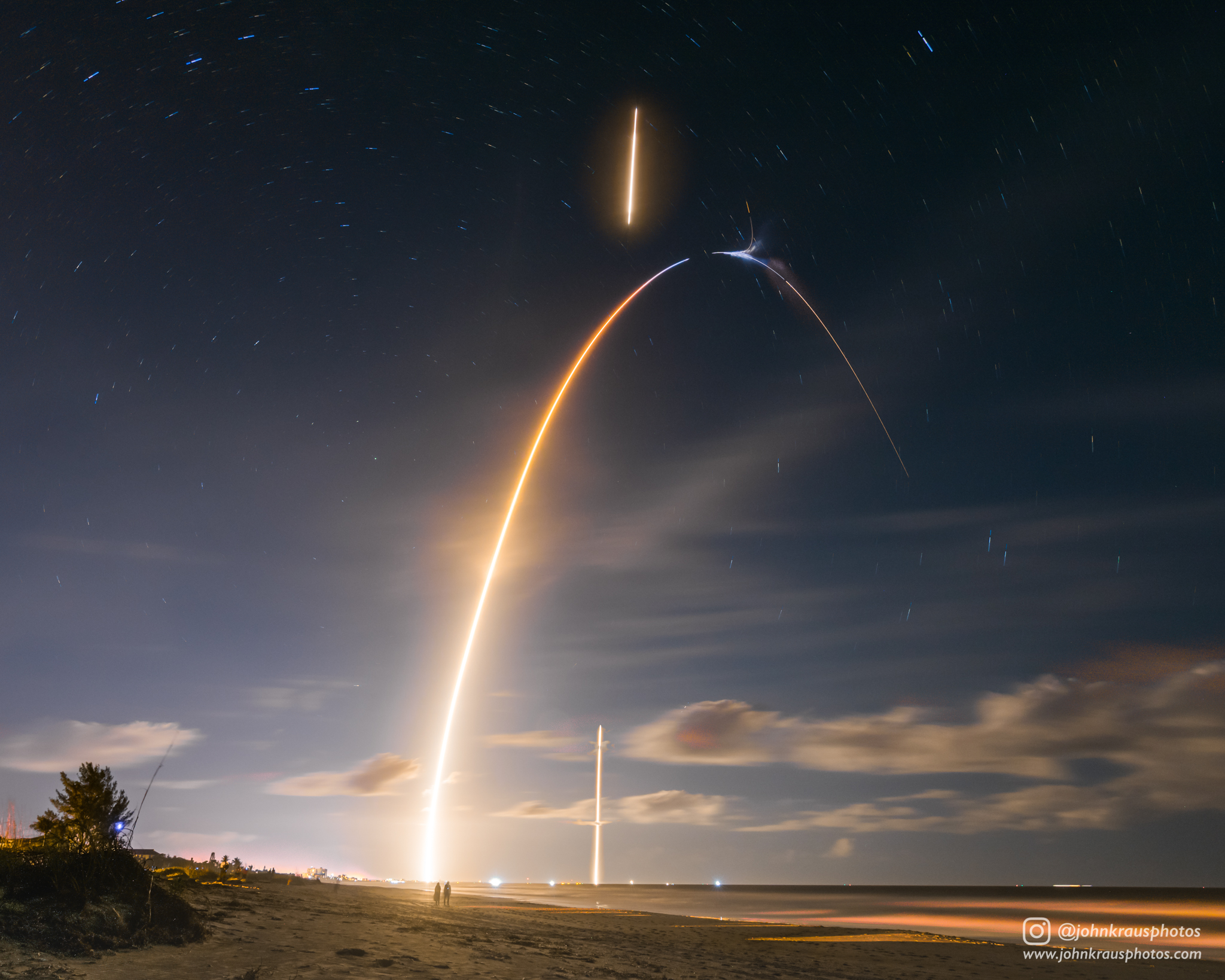
Astronomy picture of the day - 2018 January 13 - Launch and Landing

See Explanation.  Clicking on the picture will download
 the highest resolution version available.
Launch and Landing 
Image Credit & CopyrightJohn Kraus
Explanation: A composite of three consecutive exposures, this night skyscape follows the January 7 launch and first stage landing of a Falcon 9 rocket from a beach on planet Earth's space coast. With the launch from Cape Canaveral Air Force Station, the bright streak beginning farthest left traces the initial phase of the rocket's flight. A visible upward hook marks the first stage beginning its return trajectory with a "boostback burn" near the top of the arc, while the second stage separates and continues toward orbit. Above the top of the launch arc due to perspective, a bright streak shows the returning first stage slowing and descending toward the Cape. Centered below, the streak at the horizon is a 17 second burn finally slowing the first stage to a successful vertical landing about 8 minutes after launch at Landing Zone 1. During the scene's effective long exposure time, the background stars leave short trails in the night sky of the rotating planet.

2018-01-12

Cidades de Portugal - Aguiar da Beira - Pelourinho (sec.XVI)

Pelourinho (sec. XVI)

Cidades de Portugal - Abrantes - Praça Raimundo Soares

Praça Raimundo Soares

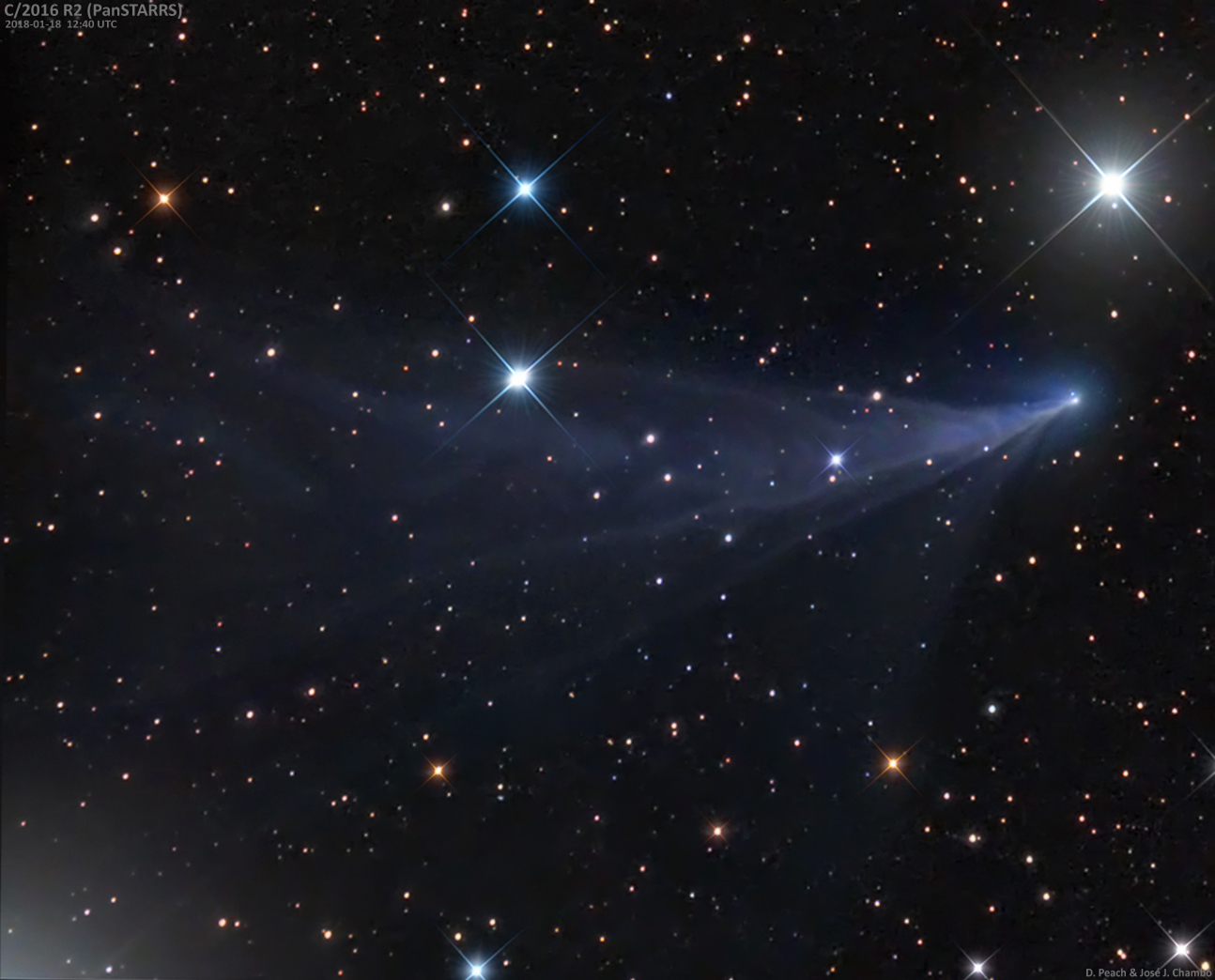
Astronomy picture of the day - 2018 January 12 - Blue Comet PanSTARRS

See Explanation.  Clicking on the picture will download
 the highest resolution version available.
Blue Comet PanSTARRS 
Image Credit & CopyrightDamian PeachJose J. Chambo
Explanation: Discovered with the PanSTARRS telescope on September 7, 2016, this Comet PanSTARRS, C/2016 R2, is presently about 24 light minutes (3 AU) from the Sun, sweeping through planet Earth's skies across the background of stars in the constellation Taurus. An inbound visitor from our Solar System's distant Oort Cloud, its beautiful and complex ion tail is a remarkable shade of blue. Still relatively far from the Sun, the comet's already well-developed ion tail is very impressive. Emission from unusually abundant ionized carbon monoxide (CO+) atoms fluorescing in the increasing sunlight is largely responsible for the pretty blue tint. This color image of the blue comet is a combination of data taken from two different telescopes during the night of January 7. Located at the apex of the V-shaped Hyades star cluster in Taurus, bright star Gamma Tauri is responsible for the glow at the bottom left corner of the frame.

2018-01-11

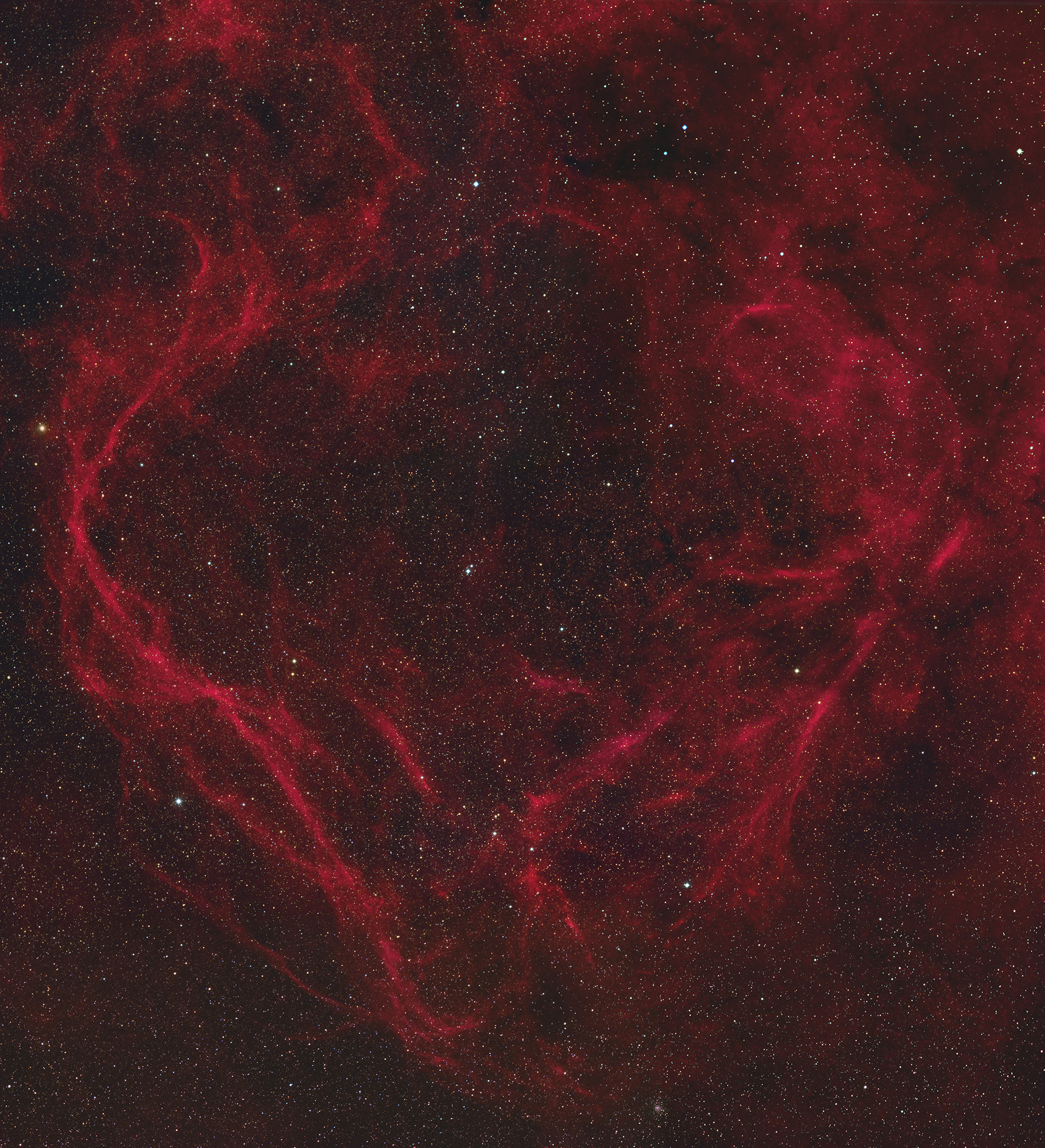
Astronomy picture of the day - 2018 January 11 - RCW 114: A Dragon's Heart in Ara

See Explanation.  Clicking on the picture will download
 the highest resolution version available.
RCW 114: A Dragon's Heart in Ara 
Image Credit & CopyrightAndrew Campbell
Explanation: Large and dramatically shaped, this cosmic cloud spans nearly 7 degrees or 14 full moons across planet Earth's sky toward the southern constellation Ara. Difficult to image, the filamentary apparition is cataloged as RCW 114 and traced in this telescopic mosaic by the telltale reddish emission of ionized hydrogen atoms. In fact, RCW 114 has been recognized as a supernova remnant. Its extensive filaments of emission are produced as the still expanding shockwave from the death explosion of a massive star sweeps up the surrounding interstellar medium. Consistent estimates place its distance at over 600 light-years, indicating a diameter of about 100 light-years or so. Light from the supernova explosion that created RCW 114 would have reached Earth around 20,000 years ago. A neutron star or pulsar has recently been identified as the collapsed remains of the stellar core.