2015-06-26

Maria Barroso em estado crítico - Mulher de Mario Soares em estado de coma


Maria Barroso, mulher de Mário Soares, encontra-se em coma no Hospital da Cruz Vermelha, em Lisboa, na sequência de uma queda ocorrida na noite de quinta-feira. A antiga primeira-dama, de 90 anos, sofreu uma hemorragia intracraniana. Contactado pelo Correio da Manhã, João Soares preferiu não fazer comentários. Fonte hospital confirmou ao CM o internamento, embora não tenha adiantado pormenores sobre o estado de saúde de Maria Barroso, a pedido da família. 

O Hospital da Cruz Vermelha portguesa divulgou esta sexta-feira um comunicado sobre o estado de saúde da antiga primeira-dama: "O Hospital da Cruz Vermelha informa que a Dra. Maria de Jesus Simões Barroso Soares se encontra internada na Unidade de Cuidados Intensivos deste Hospital em estado muito crítico, na sequência de um traumatismo craniano complicado por hematoma subdural".

Durante os dois mandatos de Mário Soares como Presidente da República (1986/1995), Maria de Jesus Barroso dedicou-se a várias causas contra a exclusão social, a luta contra o racismo e xenofobia, tendo depois presidido à Cruz Vermelha Portuguesa entre 1997 e 2003.

Correio da Manhã - Portugal 

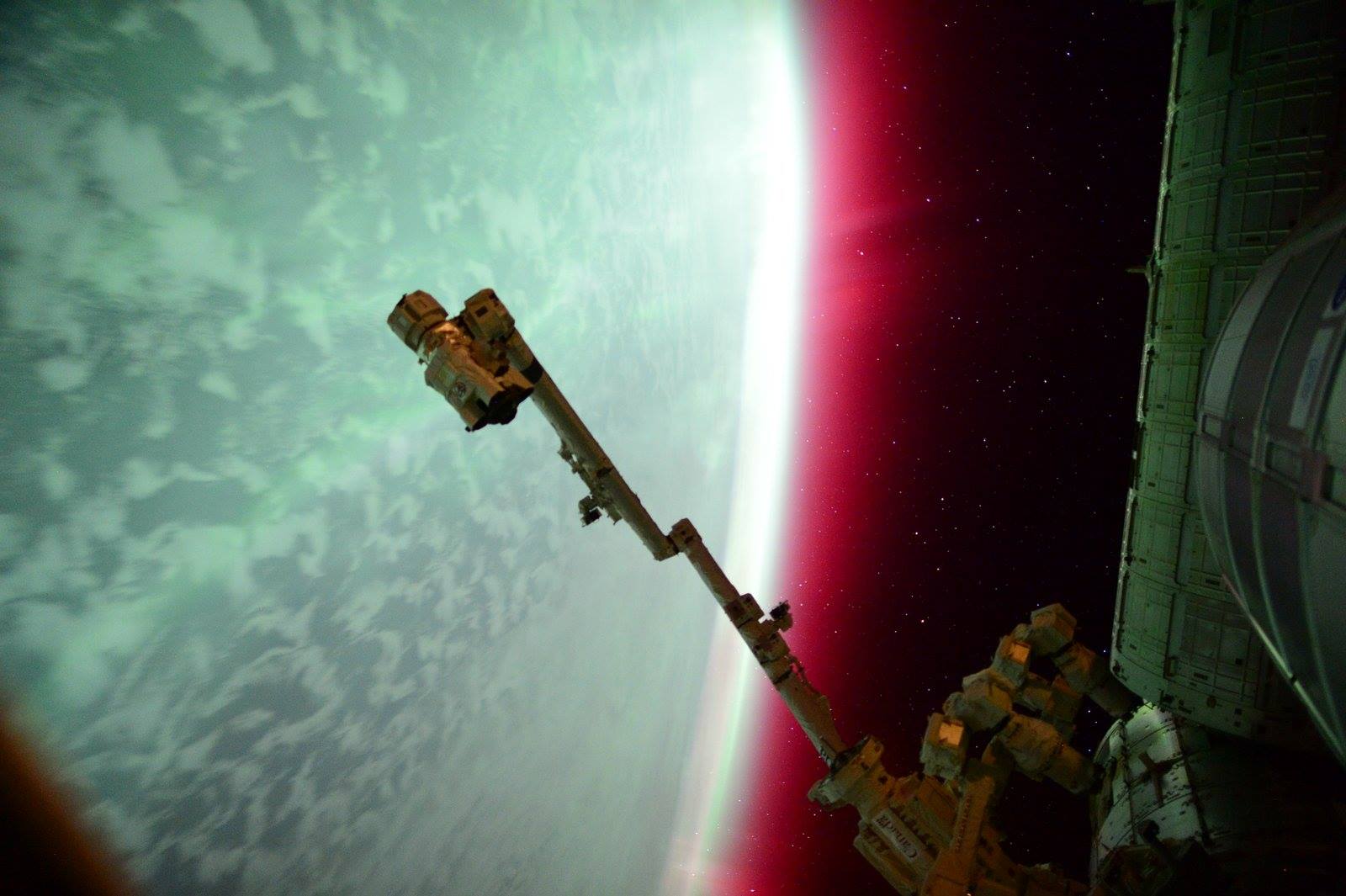
Astronomy picture of the day - 2015 June 26 - Planet Aurora

See Explanation.  Clicking on the picture will download
 the highest resolution version available.
Planet Aurora 
Image Credit: Scott Kelly, Expedition 44NASA
Explanation: What bizarre alien planet is this ? It's planet Earth of course, seen through the shimmering glow of aurorae from the International Space Station. About 400 kilometers (250 miles) above, the orbiting station is itself withinthe upper realm of the auroral displays, also watched from the planet's surface on June 23rd. Aurorae have the signature colors of excited molecules and atoms at the low densities found at extreme altitudes. The eerie greenish glow of molecular oxygen dominates this view. But higher, just above the space station's horizon, is a rarer red band of aurora from atomic oxygen. The ongoing geomagnetic storm began after a coronal mass ejection's recent impact on Earth's magnetosphere.

2015-06-25

Imagem de Carlos Gardel


Retrato de Carlos Gardel, en 1935.

Aconteceu a 25 de junho

 1978 - Final do Campeonato do Mundo de Futebol de 1978
Foto AFP do Jogo Argentina-Holanda, ocorrido a 25 de Junho de 1978
A a 25 de Junho de 1978, a Argentina derrota a Holanda, por 3-1, na partida final do Campeonato do Mundo de Futebol.
 1975 - Independência de Moçambique
Foto AFP do Jogo Argentina-Holanda, ocorrido a 25 de Junho de 1978
A a 25 de Junho de 1975, Moçambique torna-se independente de Portugal.


O Leme - Portugal

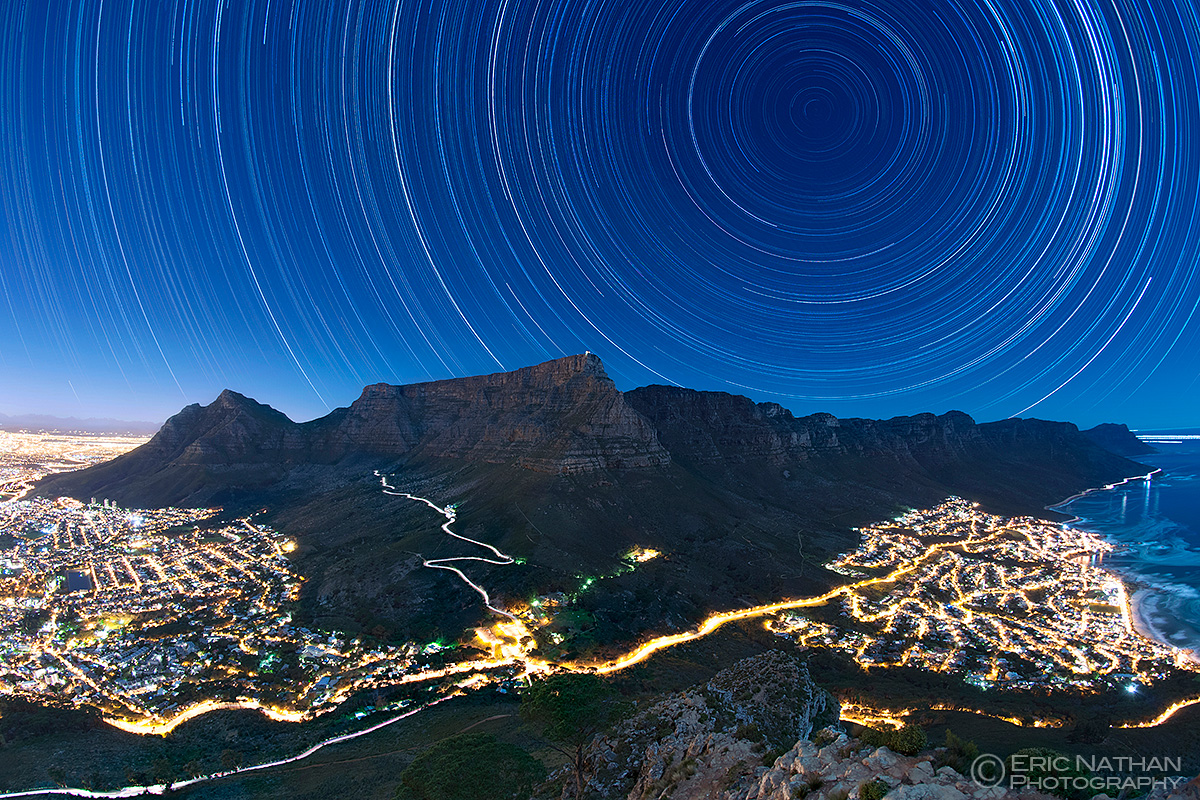
Astronomy picture of the day - 2015 June 25 - Star Trails above Table Mountain

See Explanation.  Clicking on the picture will download
 the highest resolution version available.
Star Trails above Table Mountain 
Image Credit & CopyrightEric Nathan
Explanation: Stars trail above and urban lights sprawl below in this moonlit nightscape from Cape Town, South Africa, planet Earth. The looming form of Table Mountain almost seems to hold terrestrial lights at bay while the stars circle the planet's South Celestial Pole. This modern perspective on the natural night sky was captured in June 2014, the scene composed of over nine hundred, stacked 30 second exposures. The stunning result was chosen as the winner in the Against the Lights category, a selection from over 800 entries in The World at Night's 2015 International Earth and Sky Photo Contest.

2015-06-24

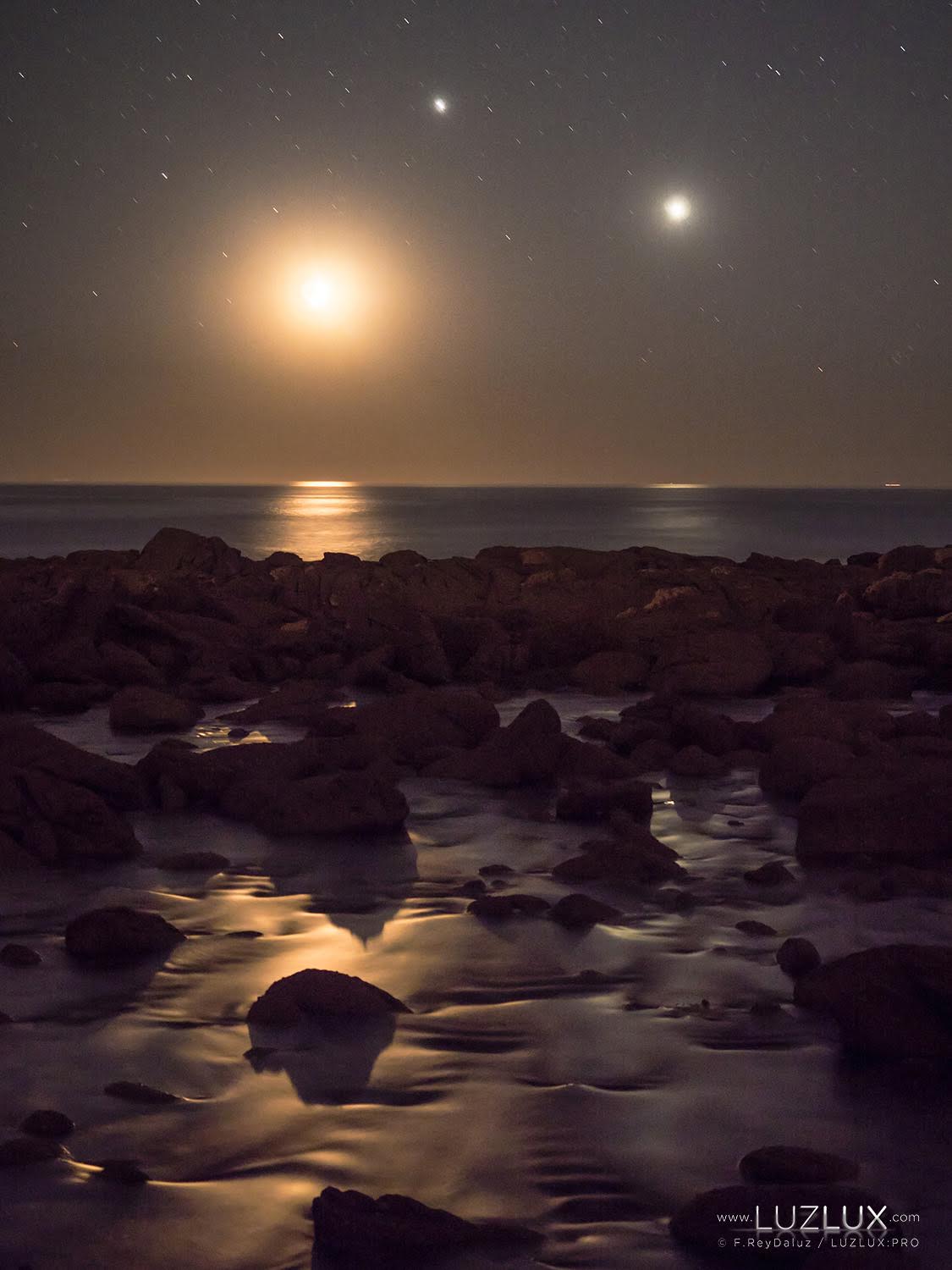
Astronomy picture of the day - 2015 June 24 - Triple Conjunction Over Galician National Park

See Explanation.  Clicking on the picture will download
 the highest resolution version available.
Triple Conjunction Over Galician National Park 
Image Credit & Copyright: Fernando Rey (LuzLux)
Explanation: What are those bright objects hovering over the horizon? Planets -- and the Moon. First out, the horizon featured is a shoreline of the Atlantic Ocean that occurs at the Galicia National Park in northern Spain. Next furthest out, on the left, is the Moon. Easily the brightest object on the night sky, the Moon here was in only a crescent phase. The next furthest out, on the right, is the planet Venus, while planet Jupiter is seen at the top of the triangle. The long exposure from our rapidly rotating Earth made all of celestial objects -- including the far distant stars -- appear as slight arcs. The featured image was taken last Sunday night. Although the Moon's orbit has now taken it away from this part of the sky, the planets Venus and Jupiter can be seen superposed just after sunset until mid-August. The closest apparent separation of Venus and Jupiter will occur in one week, when the two planets will appear separated by less than the angular diameter of the Moon.

Imagenes del mundo - cachorros gemelos de panda gigante - China

Una pareja de cachorros gemelos de panda gigante en una incubadora en el centro de investigación del Panda Gigante de Chengdu, en la provincia china de Sichuan.

2015-06-23

Aconteceu a 13 de fevereiro

 1906 - Nascimento do pensador português Agostinho da Silva      Faleceu a 3 de Abril de 1994
A 13 de Fevereiro de 1906, nasce, no Porto, Agostinho da Silva, pensador português.

 
 1946 - Amendoeiras em flor, sob a carícia dum sol de Inverno
Fotografia de Manuel Martins
Em pleno Inverno, o jornal portuense O Primeiro de Janeiro de 13 de Fevereiro de 1946, deleita os seus leitores com o texto a seguir transcrito:
«Num caprichoso contraste de condições atmosféricas, as amendoeiras vão já florindo em Portugal - não só nas temperadas paragens do Algarve, mas também nos acidentados terrenos da nevada região da Beira Baixa, compreendida entre o o planalto de Figueira de Castelo Rodrigo e os termos transmontanos de Freixo de Espada à Cinta. […] Portugal reafirma as características dos seus variados e pitorescos panoramas - que se definem, também, em graça e beleza, no cenário matinal das amendoeiras que vão florindo agora, sob a cariciosa bênção dum sol de Inverno.»
In O Primeiro de Janeiro nº 42, de 13-02-1946, 78º ano de publicação, p. 1
 1949 - Óscar Carmona é reeleito Presidente da República Portuguesa
A 13 de Fevereiro de 1949, Óscar Carmona é reeleito Presidente da República Portuguesa.
Fonte: Diário de Lisboa nº 9414, de 13-02-1949, 28º ano de publicação, pp. 1, 4 e 5
«Será a primeira de três ocasiões (1949, 1951, 1958) em que a oposição, aproveitando a abertura relativa do pós-guerra, apresentou candidato (9.7.1948). O escolhido foi [...] o general Norton de Matos (n. 1887-m. 1955). A campanha "livre" foi fixada oficialmente (1.1 a 11.2.1949). Norton de Matos protestou por telegrama e por carta junto de Salazar quanto à fiscalização independente dos cadastros eleitorais e da própria votação, referindo na sua última carta (30.12.1948) - "nas actuais condições só o [concorrer ao acto eleitoral] poderão fazer com candidatos que se prestem a colaborar no fingimento de eleições livres" - e acabou por desistir da candidatura (7.2.1949).»
 1965 - Assassinato de Humberto Delgado      Nasceu a 15 de Maio de 1906
A 13 de Fevereiro de 1965, Humberto da Silva Delgado é assassinado pela PIDE, polícia política do Estado Novo. Foi candidato independente às eleições presidenciais de 1956. Questionado sobre qual o destino que daria a Salazar, se fosse eleito, teve a coragem de afirmar: "Obviamente, demito-o".
  
 2005 - Morte da Irmã Lúcia      Nasceu a 22 de Março1 de 1907
A 13 de Fevereiro de 2005, faleceu, em Coimbra, a Irmã Lúcia de Jesus dos Santos. Afirma ter visto e falado com Nossa Senhora, em Fátima, no ano de 1917. Decorre, actualmente, o seu processo de beatificação.
De acordo com as suas memórias, a data de 22 de Março, que aparece no seu registo de nascimento, não estaria correcta
O Leme - Portugal

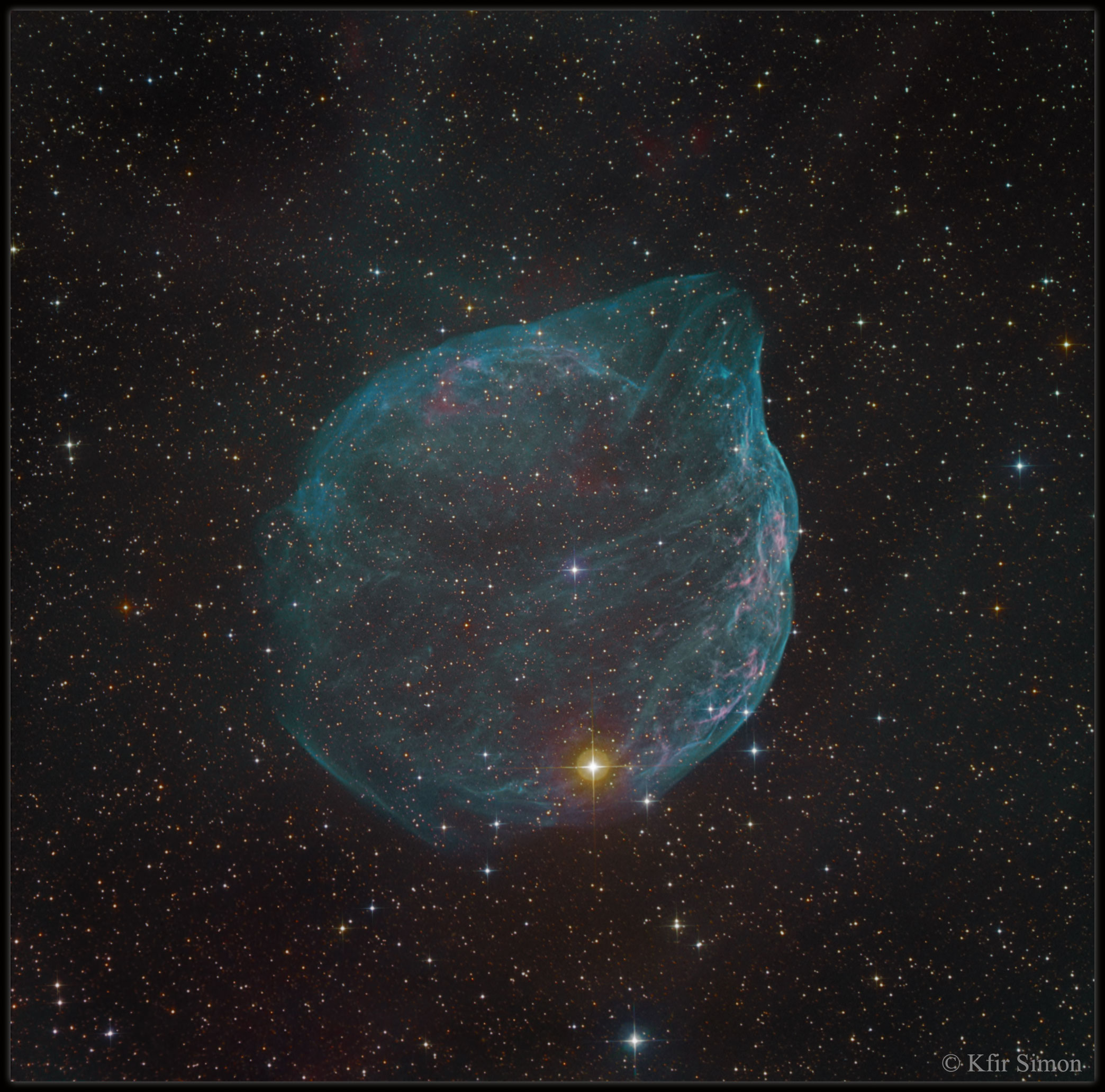
Astronomy picture of the day - 2015 June 23 - Sharpless 308: Star Bubble

See Explanation.  Clicking on the picture will download
 the highest resolution version available.
Sharpless 308: Star Bubble 
Image Credit & Copyright: Kfir Simon
Explanation: Blown by fast winds from a hot, massive star, this cosmic bubble is huge. Cataloged as Sharpless 2-308 it lies some 5,200 light-years away toward the constellation of the Big Dog (Canis Major) and covers slightly more of the sky than a Full Moon. That corresponds to a diameter of 60 light-years at its estimated distance. The massive star that created the bubble, a Wolf-Rayet star, is the bright one near the center of the nebula. Wolf-Rayet stars have over 20 times the mass of the Sun and are thought to be in a brief, pre-supernova phase of massive star evolution. Fast winds from this Wolf-Rayet star create the bubble-shaped nebula as they sweep up slower moving material from an earlier phase of evolution. The windblown nebula has an age of about 70,000 years. Relatively faint emission captured in the expansive image is dominated by the glow of ionized oxygen atoms mapped to a blue hue.

2015-06-22

Astronomy picture of the day - 2015 June 22 - New Horizons (Video)

New Horizons 
Video Credit & Copyright: National Space Society
Explanation: In three weeks, the robotic New Horizons spacecraft will reach Pluto. As the featured video makes clear, though, humanity has been on an unprecedented epoch of robotic exploration of our Solar System's planets for the past half century. The video highlights artistic illustrations of Mariner 2 flying by Venus in 1962, Mariner 4 flying past Mars in 1965, Pioneer 10 flying past Jupiter in 1973, Mariner 10 flying past Mercury in 1974, Pioneer 11 flying past Saturn in 1979, and Voyager 2 flying past Uranus in 1986 and then Neptune in 1989. Next is a hypothetical sequence depicting New Horizons flying past Pluto next month. Assuming things work as planned, dwarf planet Pluto will then become the farthest world yet explored by humans. Of course, these Pluto illustrations are only a guess. How Pluto and its moons will really look may be a mixture of familiar things, such as craters, and unfamiliar things, such as …